Can Humans Reproduce in Space? New Study Reveals Sperm Navigation Loss
A new lab study finds sperm struggle to navigate and fertilize eggs in simulated microgravity, hinting at hidden reproductive challenges for long-term space travel.
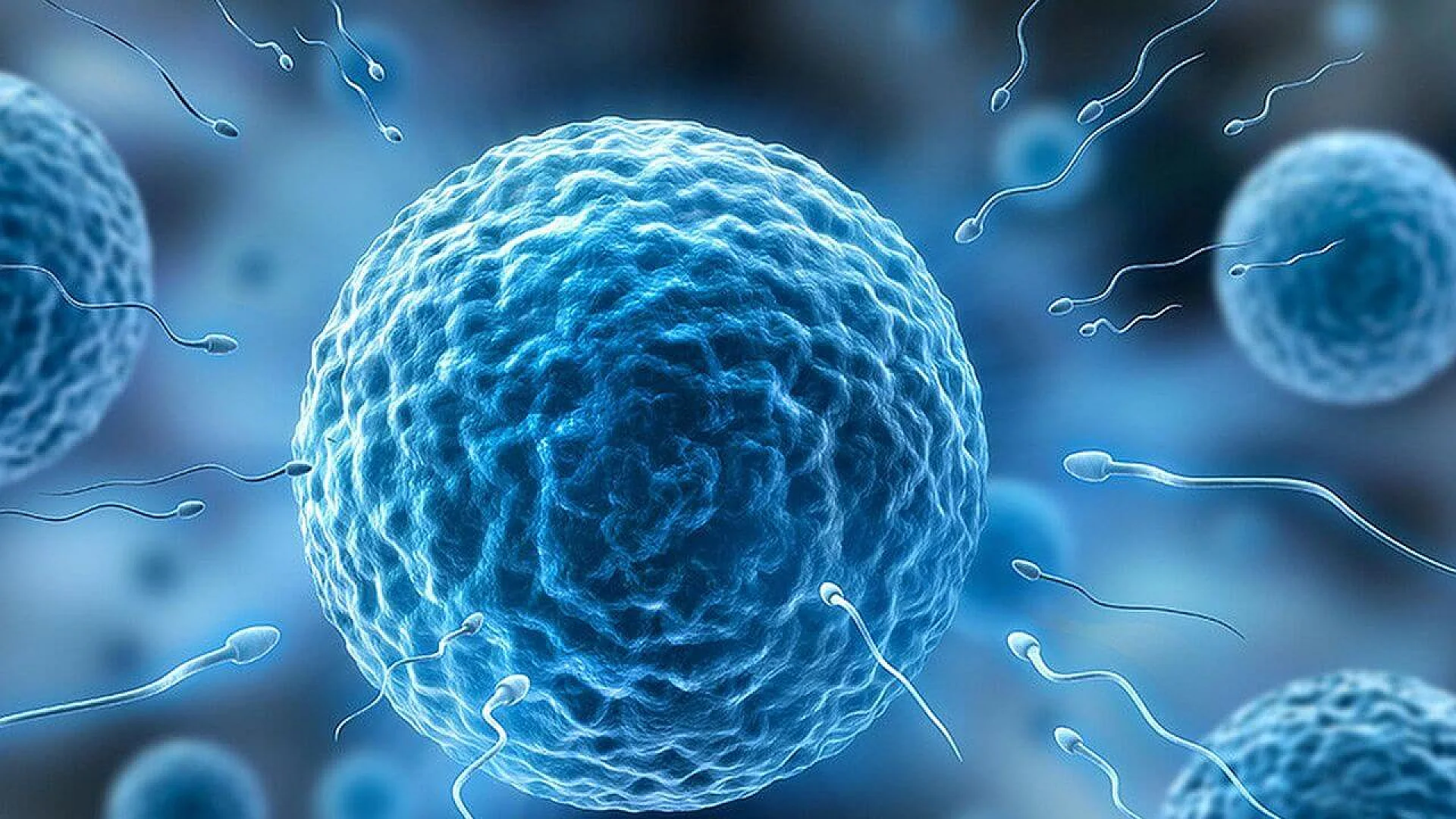
For decades, space agencies have focused on propulsion, radiation shielding, and life-support systems. Yet one of the most fundamental questions about life beyond Earth has remained largely unanswered: could humans reproduce in space?
It is a deeply practical concern. Long-term missions to the Moon, Mars, and beyond would eventually require sustainable human presence. That means understanding whether the earliest stages of life, fertilization and embryo development, can unfold normally in environments where gravity behaves very differently.
A new laboratory study is now offering one of the clearest glimpses yet into how microgravity might interfere with reproduction. The results suggest that sperm may struggle to navigate without gravity’s subtle guidance, and fertilization success could decline after only a few hours of exposure.
The findings add a new dimension to the growing field of space biology, which is rapidly expanding as commercial and governmental spaceflight accelerates.
The Central Question: How Does Gravity Help Sperm Find Eggs?
On Earth, gravity quietly shapes biological processes in ways we rarely notice. For sperm cells, which must travel through the female reproductive tract to reach an egg, physical cues such as fluid flow, surface contact, and chemical signals help guide the journey.
Scientists have long known that sperm rely on several navigation strategies at once. These include:
- Motility, the ability to swim forward
- Chemotaxis, movement guided by chemical signals released by the egg and surrounding tissues
- Surface sensing, interactions with the walls of the reproductive tract
Gravity’s role in this process has been less clear. Does it provide orientation cues? Does it influence how sperm interact with their environment?
To investigate, researchers turned to a tool designed to mimic weightlessness on Earth.
Simulating Weightlessness in the Lab
Because experiments in true spaceflight are expensive and rare, the research team used a rotating device called a 3D clinostat. This instrument continuously rotates biological samples in multiple directions so that cells experience a constantly changing orientation. Over time, the effect cancels out the sense of up and down, producing a laboratory approximation of microgravity.
Using this setup, the team studied sperm from three mammalian groups:
- Humans
- Mice
- Pigs
The goal was to see whether sperm could still navigate effectively in an environment without a consistent gravitational reference.
To test navigation, the researchers built a tiny maze-like channel designed to mimic the structure of the female reproductive tract. Sperm were released into the channel and observed as they attempted to move through it under normal gravity and simulated microgravity.
Sperm Could Still Swim, But They Lost Their Sense of Direction
One of the study’s most surprising findings was what did not change.
The sperm did not lose their ability to swim. Their basic movement patterns remained intact under simulated microgravity.
But something else shifted dramatically.
Far fewer sperm successfully navigated the channel when gravity was removed. Across all three species, the number reaching the end of the maze dropped significantly.
This suggests that the problem is not motion itself. Instead, the challenge appears to be orientation and guidance.
Researchers believe sperm may rely partly on subtle physical interactions with surfaces and fluid flow that are influenced by gravity. Without these cues, sperm may struggle to maintain a consistent sense of direction, even though they can still move normally.
In simple terms, they can swim, but they may not know where they are going.
Chemical Signals Become Even More Important Without Gravity
Despite the navigation challenges, the study uncovered a hopeful clue.
When scientists introduced a strong chemical signal using the hormone progesterone, human sperm were able to reach the end of the maze even in simulated microgravity.
This finding highlights the importance of chemotaxis, the ability of sperm to follow chemical trails released by reproductive tissues.
It suggests sperm may have adaptive mechanisms that help compensate when physical guidance cues disappear. In microgravity, chemical signaling could become the dominant navigation system.
This does not eliminate the problem, but it reveals that the reproductive system has some built-in resilience.
Fertilization Rates Dropped After Microgravity Exposure
Navigation was only part of the story. The researchers also wanted to know whether sperm exposed to microgravity could still fertilize eggs successfully.
To test this, mouse sperm were exposed to simulated microgravity for several hours before being introduced to eggs.
The results were striking.
Fertilization success fell by about 30 percent compared with sperm kept under normal gravity conditions.
The effects appeared to worsen with longer exposure. Prolonged microgravity was linked to:
- Delays in early embryo development
- Reduced numbers of cells that contribute to forming the fetus in early stages
These early developmental stages are crucial. Problems at this point can influence whether an embryo implants successfully and develops normally.
Whether the same effects occur in humans remains uncertain. However, the similarity between mouse and human sperm behavior in the navigation experiments raises important questions.
Why This Matters
If humans are to live and reproduce beyond Earth, reproduction must function reliably in space environments.
This research suggests several potential challenges:
- Sperm navigation may become less efficient in microgravity
- Fertilization success could decrease
- Early embryo development might be affected
Even small changes in these processes could have major implications for long-duration missions or permanent settlements beyond Earth.
Understanding these risks early allows scientists to explore potential solutions, from artificial gravity environments to medical or technological interventions.
The Bigger Picture: Reproduction in Space Is Largely Uncharted
Despite decades of human spaceflight, research on reproduction in space remains surprisingly limited.
Most previous studies have focused on:
- Bone density loss
- Muscle atrophy
- Radiation exposure
- Cardiovascular and immune changes
Reproduction has received far less attention, even though it is central to the idea of sustained human presence beyond Earth.
This study builds on earlier work showing that fluctuating gravity can reduce sperm movement and health. The new findings extend that knowledge by showing how navigation and fertilization may also be affected.
Together, the results point to a complex picture. Gravity appears to influence multiple stages of reproduction, from sperm behavior to early embryo development.
What Scientists Still Do Not Know
As important as these findings are, they represent an early step in understanding reproduction in microgravity.
Several key uncertainties remain:
- The experiments simulated microgravity rather than using true spaceflight conditions
- Human fertilization was not directly tested
- The long-term effects of chronic microgravity exposure are still unknown
- Space radiation, another major factor in space travel, was not part of the study
Future research will need to explore how these factors interact. Real spaceflight experiments, though difficult, will be essential to confirm laboratory findings.
Could Technology Help Overcome These Challenges?
The study’s results hint at possible paths forward.
If chemical signaling can help guide sperm in microgravity, scientists may explore ways to enhance or support these mechanisms. Artificial gravity environments, such as rotating habitats, could also help restore natural biological cues.
Understanding the molecular and mechanical sensitivity of reproductive cells could eventually lead to medical strategies that support fertility in space.
These ideas remain speculative, but they demonstrate how early research can guide long-term planning.
A New Frontier in Space Biology
Space exploration is often framed in terms of rockets and engineering. Yet the success of long-term missions may depend just as much on biology.
Reproduction represents one of the most complex and delicate biological processes. Studying how it behaves in microgravity forces scientists to rethink assumptions rooted in Earth’s constant gravitational pull.
This new research underscores how much remains to be discovered about life beyond our planet. It also highlights the importance of studying reproduction now, before humanity commits to permanent off-world settlements.
As commercial spaceflight grows and missions stretch further into the solar system, the ability to sustain life across generations may become one of the most important challenges of all.
The Road Ahead
The study’s authors emphasize the need for continued research across every stage of reproduction, from sperm and eggs to embryo development.
Understanding how gravity shapes these processes is not only important for space exploration. It also deepens our knowledge of reproductive biology more broadly.
In the end, the question of whether humans can reproduce in space is not just about survival. It is about whether life can truly extend beyond Earth.
For now, the answer remains uncertain. But studies like this are beginning to illuminate the path forward.
The research was published in Communications Biology on March 26, 2026.
This content has been reviewed by subject-matter experts to ensure scientific accuracy. Learn more about us and our editorial process.
Last reviewed on .
Article history
- Latest version
Reference(s)
- Lyons, Hannah E.., et al. “Simulated microgravity alters sperm navigation, fertilization and embryo development in mammals.” Communications Biology, vol. 9, no. 1, 26 March 2026, doi: 10.1038/s42003-026-09734-4. <https://doi.org/10.1038/s42003-026-09734-4>.
- Posted by Aisha Ahmed