Intact Starship Floats After 13th Test: Engineers Scramble To Save It
Intact Starship survives Indian Ocean splashdown, offering SpaceX a rare hardware view despite rough seas endangering recovery.
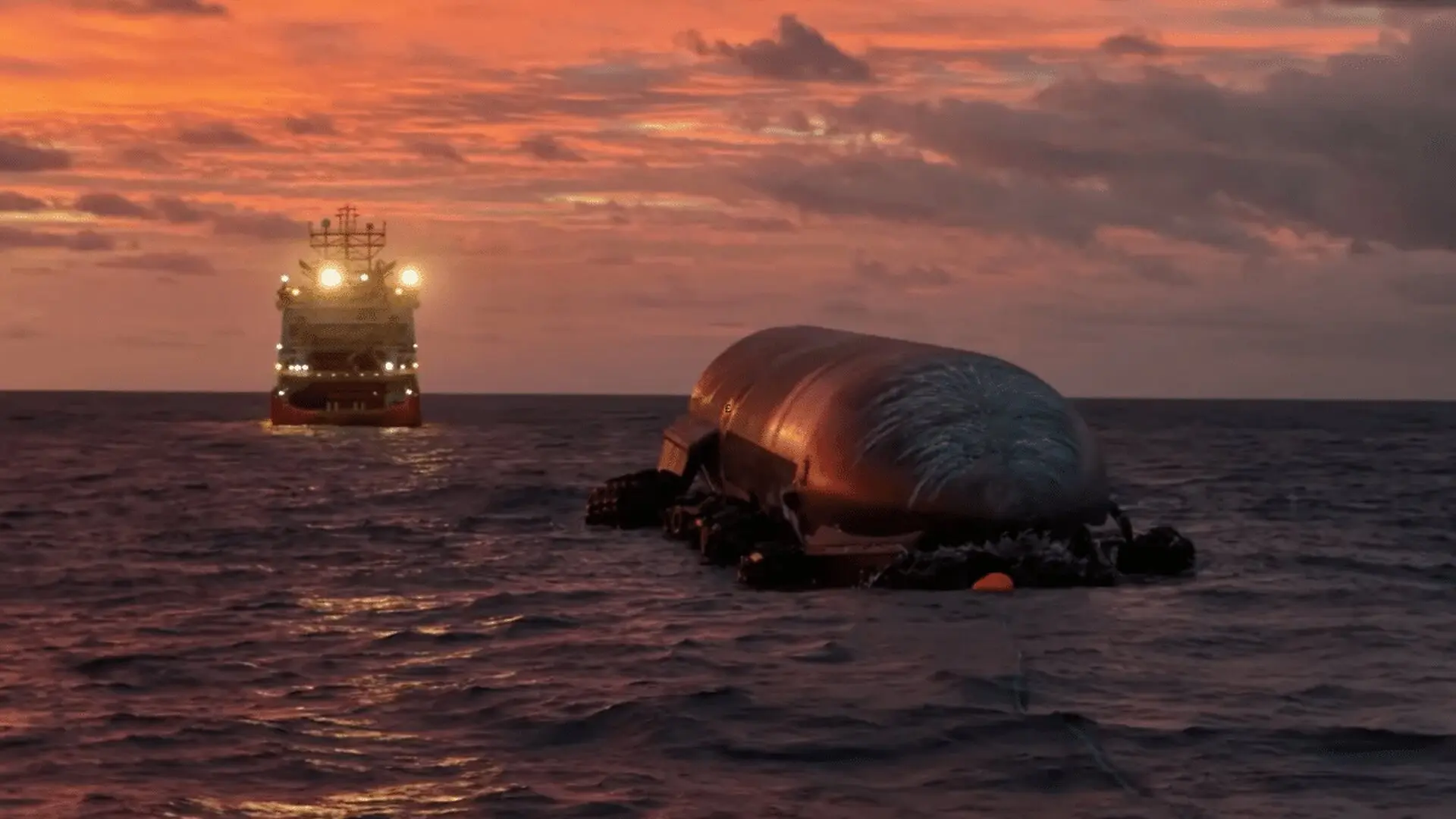
SpaceX is confronting an unprecedented situation after its 13th test flight saw the Starship upper stage remain largely intact following a splashdown in the Indian Ocean. While the ongoing recovery effort faces mounting difficulties, the floating vehicle now offers engineers a rare chance to examine hardware that has survived a full atmospheric re‑entry.
Launch and Mission Overview
Starship Flight 13 lifted off from SpaceX’s Starbase complex in South Texas on July 24, 2026, embarking on a sub‑orbital flight intended to bring the reusable launch system closer to routine service. The Super Heavy booster was guided toward a landing in the Gulf of Mexico, while the 171‑foot (52‑meter) upper stage—known as Ship—was slated for a controlled splashdown in the Indian Ocean off Western Australia.
Demonstrating Payload Capability
During the ascent phase, Ship released 20 operational Starlink V3 satellites, showcasing the vehicle’s ability to carry and deploy the next generation of the broadband constellation. Although the satellites re‑entered the atmosphere later that same day, the deployment underscored how Starship could serve as the primary transport for larger payloads envisioned in SpaceX’s future satellite network.
Unexpected Integrity After Ocean Impact
Contrary to mission expectations, the Starship upper stage did not break apart upon hitting the water. Instead, the craft stayed substantially whole, drifting thousands of miles from its Texas launch site and providing a tangible piece of hardware for on‑site inspection.
Recovery Operations Meet Rough Conditions
SpaceX mobilized a recovery team to guide the 52‑meter vehicle toward a port in Western Australia. By August 7, the company reported that crews were contending with “challenging conditions and increasingly rough seas” as they attempted the tow.
The SpaceX Recovery team is still working to recover Flight 13’s Starship from the Indian Ocean. They’ve been overcoming challenging conditions and increasingly rough seas as they attempt to guide the 52m long spacecraft to port pic.twitter.com/ECT5FyCvr7
— SpaceX (@SpaceX) August 7, 2026
Insights Gleaned from Close‑up Inspection
Even if the vessel never reaches land, the recovery attempt has already yielded detailed photographs of critical components, including the heat‑shield tiles and engine bays. According to Musk, these images will enable engineers to compare real‑world post‑reentry wear with predictions derived from onboard telemetry and ground‑based observations.
Heat‑Shield Progress and Reusability Goals
During SpaceX’s quarterly earnings call on August 4, Musk asserted, “I don’t want to jinx it or anything, but I think I’d consider the heat shield problem solved at this point.” The statement reflects the company’s focus on achieving a thermal‑protection system capable of withstanding repeated orbital‑velocity entries without extensive refurbishment—a prerequisite for the rapid‑turnaround cadence envisioned for Starship.
Ocean Recovery Highlights Design Constraints
The full launch system stretches roughly 408 feet (124 meters), and both the booster and upper stage are engineered for swift reuse. Leaving a 52‑meter craft adrift in open water introduces challenges unrelated to spaceflight: wave‑induced loads, corrosive saltwater, unpredictable weather, and the logistical complexities of towing a vehicle that was never meant to function as a ship. Prolonged exposure risks further degradation of components that have already survived launch, re‑entry, and water impact.
Even if the Starship cannot be brought ashore, the data captured during the sea‑based effort will inform the next design iteration. In a development program that prizes rapid iteration, the knowledge gained from an incomplete recovery can be as valuable as the physical hardware itself.
This article has been fact checked for accuracy, with information verified against reputable sources. Learn more about us and our editorial process.
Last reviewed on .
Article history
- Latest version
Reference(s)
- “https://twitter.com/SpaceX/status/2085786988225925349/video/1.” <https://t.co/ECT5FyCvr7>.
Cite this page:
- Posted by Divya Iyer