Scientists Build First Fully Autonomous Biology Lab Run Entirely By AI Agents
Autonomous AI agents are now running biology labs, allowing human scientists to shift their focus toward high-level strategy, analysis, and innovation.
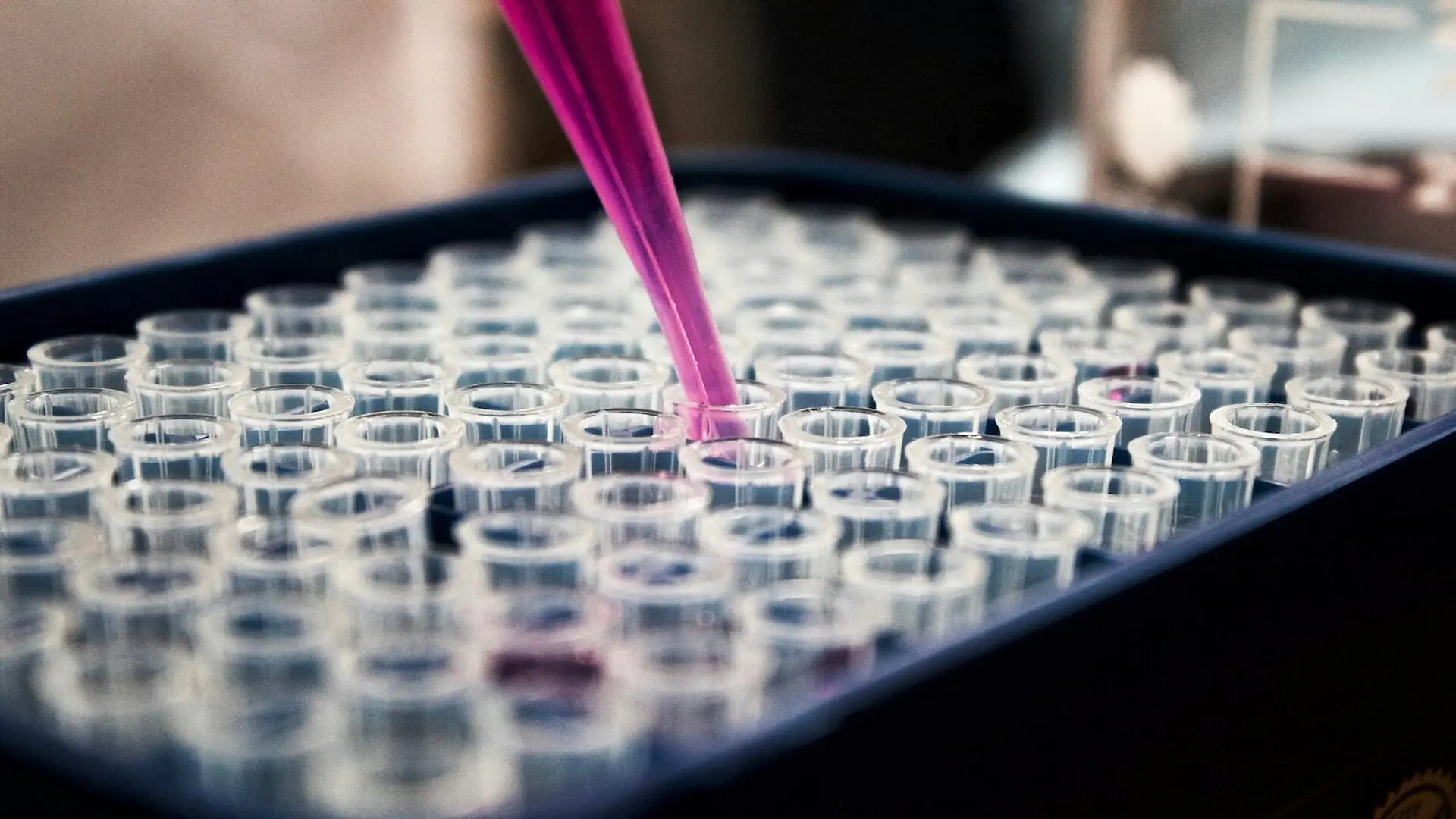
In a glimpse of the future of scientific discovery, a research team at Shanghai Jiao Tong University has developed a fully autonomous biological laboratory capable of conducting complex experiments with minimal human intervention. Known as AutoDNA, the facility successfully completed a sophisticated read-write cycle for DNA synthesis and sequencing, operating with the precision of experienced researchers.
The lab functions as an integrated network of artificial intelligence agents. When tasked with a goal, such as encoding a specific message into a DNA sequence, one agent parses the scientific literature to formulate a methodology, while another converts that strategy into machine code. These commands drive robotic arms to handle reagents, manage synthesis equipment, and perform delicate sequencing tasks. During a 200-hour test run, the system operated largely independently, requiring humans only for basic logistical support, such as replenishing consumables or removing waste.
James Zou, a researcher at Stanford University who was not involved in the study, noted that while AI systems have become essential tools for data analysis, transitioning this capability to the physical “wet lab” environment represents a significant technical leap. By designing the facility specifically for AI integration rather than retrofitting human-centric infrastructure, the team enabled their robotic agents to manage over 20 distinct types of equipment, complete with the ability to autocorrect minor operational errors.
The Evolution of Autonomous Research
AutoDNA arrives amidst a growing movement to automate the more repetitive and physically demanding aspects of laboratory science. The goal is to shift the burden of execution from human researchers to autonomous systems, allowing scientists to dedicate their expertise to higher-level conceptual work, such as refining hypotheses and interpreting complex findings.
The landscape of automated research is expanding rapidly. Last year, researchers introduced Virtual Lab, an AI-led team that successfully designed proteins to target the Covid-19 virus. Similarly, the University of Wisconsin–Madison’s SAMPLE system has demonstrated how AI can iteratively improve enzymes, while other projects like FutureHouse’s Robin and Google’s Co-Scientist are working to accelerate broader research workflows. Recent efforts, such as the Model Hardware Standard, are also creating frameworks to ensure diverse laboratory instruments can communicate effectively with AI controllers.
Precision and Performance
AutoDNA’s performance metrics are notable. In trials optimizing polymerase chain reaction processes, the system achieved a 98 percent yield, a success rate comparable to human experts. In another application, it successfully identified mutations in the KRAS gene associated with colorectal cancer by designing and synthesizing the necessary primers from scratch.
Perhaps most indicative of its potential is the system’s capacity for context-aware decision-making. During viral DNA detection tests, the AI agent autonomously decided to cap test tubes to prevent sample evaporation—a subtle, nuanced action often overlooked in written protocols but critical to experimental success.
Despite these successes, researchers acknowledge that the technology remains in its early stages. AutoDNA still faced several hardware malfunctions that necessitated human assistance, and the current iteration is not yet suited for the complexities of handling living cells or animal models. Furthermore, the integration of such powerful technology brings significant biosecurity concerns, particularly regarding the potential for unauthorized synthesis of hazardous materials. Experts emphasize that the implementation of robust, built-in screening software and strict access controls is essential before these systems see widespread adoption. As Reshma Shetty, co-founder of Ginkgo Bioworks, observed, these labs serve as a vital indicator of the shifting potential for future scientific discovery.
This article has been fact checked for accuracy, with information verified against reputable sources. Learn more about us and our editorial process.
Last reviewed on .
Article history
- Latest version
Reference(s)
- Swanson, Kyle. “The Virtual Lab of AI agents designs new SARS-CoV-2 nanobodies - Nature.”, vol. 646, no. 8085, pp. 716-723. Nature, doi: 10.1038/s41586-025-09442-9. <https://www.nature.com/articles/s41586-025-09442-9>.
- Rapp, Jacob. “Self-driving laboratories to autonomously navigate the protein fitness landscape - Nature Chemical Engineering.”, vol. 1, no. 1, pp. 97-107. Nature, doi: 10.1038/s44286-023-00002-4. <https://www.nature.com/articles/s44286-023-00002-4>.
- Ghareeb, Ali. “A multi-agent system for automating scientific discovery - Nature.”, vol. 655, no. 8122, pp. 497-505. Nature, doi: 10.1038/s41586-026-10652-y. <https://www.nature.com/articles/s41586-026-10652-y>.
- team, Co-Scientist. “Co-Scientist: A multi-agent AI partner to accelerate research.”, May 19, 2026 Google DeepMind <https://deepmind.google/blog/co-scientist-a-multi-agent-ai-partner-to-accelerate-research/>.
- Anthropic, “Previewing the Model Hardware Standard.”, August 27, 2026 Anthropic <https://www.anthropic.com/news/model-hardware-standard-research-preview>.
Cite this page:
- Posted by Hassan Raza