Scientists Just Built a 36-Gene Synthetic Cell That Can Actually Divide and Grow
Scientists have successfully created an artificial cell capable of replicating its own genetic material, providing a breakthrough tool to study life’s origins.
Synthetic biologists have achieved a significant milestone in the effort to construct life from scratch. A team led by Kate Adamala at the University of Minnesota has successfully assembled a cell-like system, dubbed SpudCell, capable of performing essential biological functions, including growth and division. This breakthrough, which emerged from years of rigorous trial-and-error experimentation, represents a departure from traditional genetic engineering, which typically relies on modifying existing organisms.
SpudCell is composed of a fatty membrane encapsulating a water-based interior that houses a minimal genome of 36 genes. Within this synthetic environment, specialized proteins translate genetic instructions into the machinery required for the cell to function. To facilitate division, the researchers introduced specific proteins that bind to the outer membrane, causing it to bud and eventually pinch off into daughter cells.
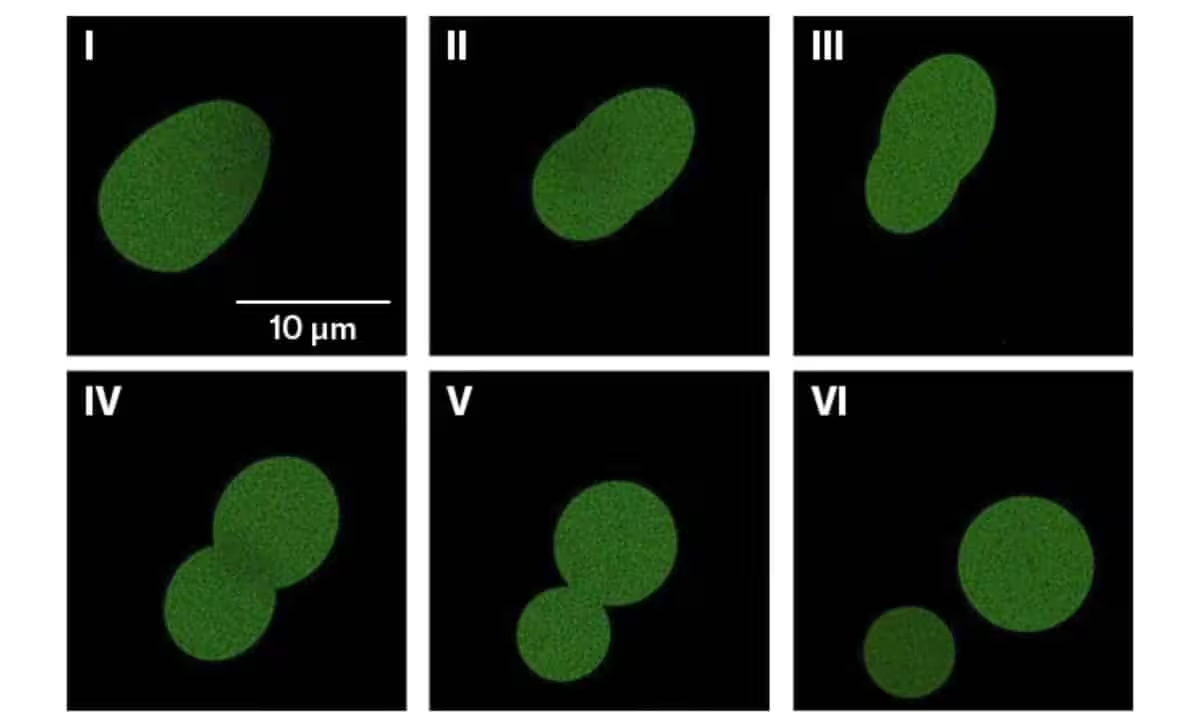
By early 2024, the laboratory confirmed that SpudCell could complete five consecutive cycles of reproduction. Crucially, analytical measurements verified that the system was accurately copying its genetic material, rather than simply fragmenting. Despite this progress, the artificial cell remains fundamentally dependent on an external feeding system that supplies essential building blocks, such as fats and proteins, because it lacks the capacity to synthesize its own ribosomes.
Robert Dorit, an evolutionary biologist at Smith College, characterized the high degree of external support required for the system’s survival as “very intensive cellular CPR.” While the cells are not yet autonomous, he noted that the ability to reliably transmit genetic material during division sets a new standard for synthetic biology.
The implications of this work extend far beyond the laboratory. At a 2025 synthetic biology meeting at Stanford University, the results caught the attention of biologist Drew Endy. He compared the development of SpudCell to the early achievements of the Wright brothers, noting that while the system is rudimentary, it represents a proof-of-concept that fundamentally changes the field’s trajectory. “It’s just barely a plane, and this is like, SpudCell’s just barely a cell,” Endy remarked.
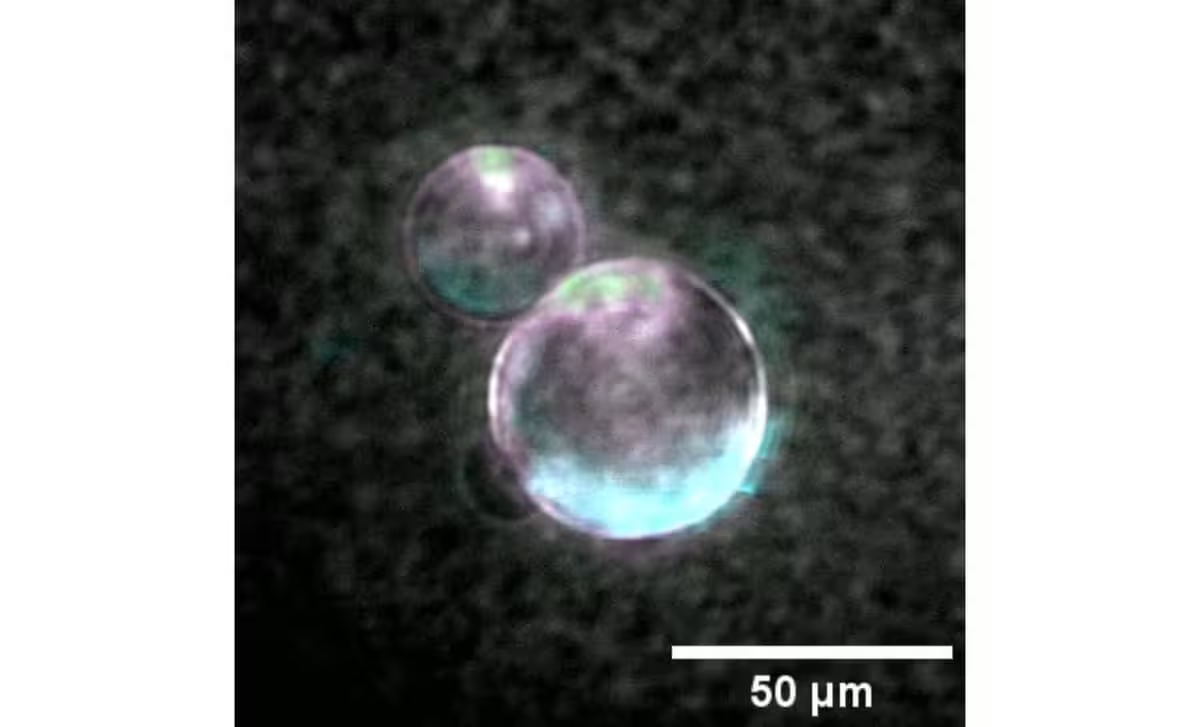
To accelerate innovation, Adamala and Endy have launched Biotic, an initiative backed by a $10 million philanthropic donation intended to establish SpudCell as a standardized platform for synthetic biological research. By adopting a common foundation similar to a computer operating system, the organizers hope to enable laboratories to develop interchangeable modules for tasks ranging from the sustainable production of jet fuel and textiles to the creation of decentralized, on-demand medical treatments.
The project’s public debut was unconventional; after a manuscript was rejected by the journal Cell, the team opted to release their findings as a preprint on July 1, 2026. This move sparked intense scientific and public interest, as well as debates over the safety of synthetic life.
Despite the excitement, Adamala remains cautious about the definition of her creation. She does not classify SpudCell as “alive,” citing its inability to sustain reproduction indefinitely and its reliance on intensive human intervention. Nevertheless, the research is pushing the boundaries of how scientists perceive the transition from nonliving chemistry to living systems. As the community looks toward 2050—a target date the researchers have dubbed “Bloomsday”—the focus remains on balancing this rapid technological advancement with the development of built-in safety mechanisms, such as “kill switches” and molecular firewalls, to manage the risks inherent in engineering synthetic biology.
This article has been fact checked for accuracy, with information verified against reputable sources. Learn more about us and our editorial process.
Last reviewed on .
Article history
- Latest version
Reference(s)
- “Biotic | Biology is Open Technology Inspiring Civilization.”, August 7, 2026 Biotic <https://biotic.org/>.
- Gaut, Nathaniel. “A Chemically Defined Synthetic Cell Capable Of Growth And Replication.” bioRxiv, July 2, 2026, pp. 2026.07.01.735724 bioRxiv, doi: 10.64898/2026.07.01.735724v1. <https://www.biorxiv.org/content/10.64898/2026.07.01.735724v1>.
Cite this page:
- Posted by Hassan Raza