Scientists Uncover Never Before Seen Embalming Technique Inside 280 Year Old Mummy
A mysterious mummy found in an Austrian crypt has finally revealed the secret behind its centuries-long preservation, solving a long-standing historical puzzle.
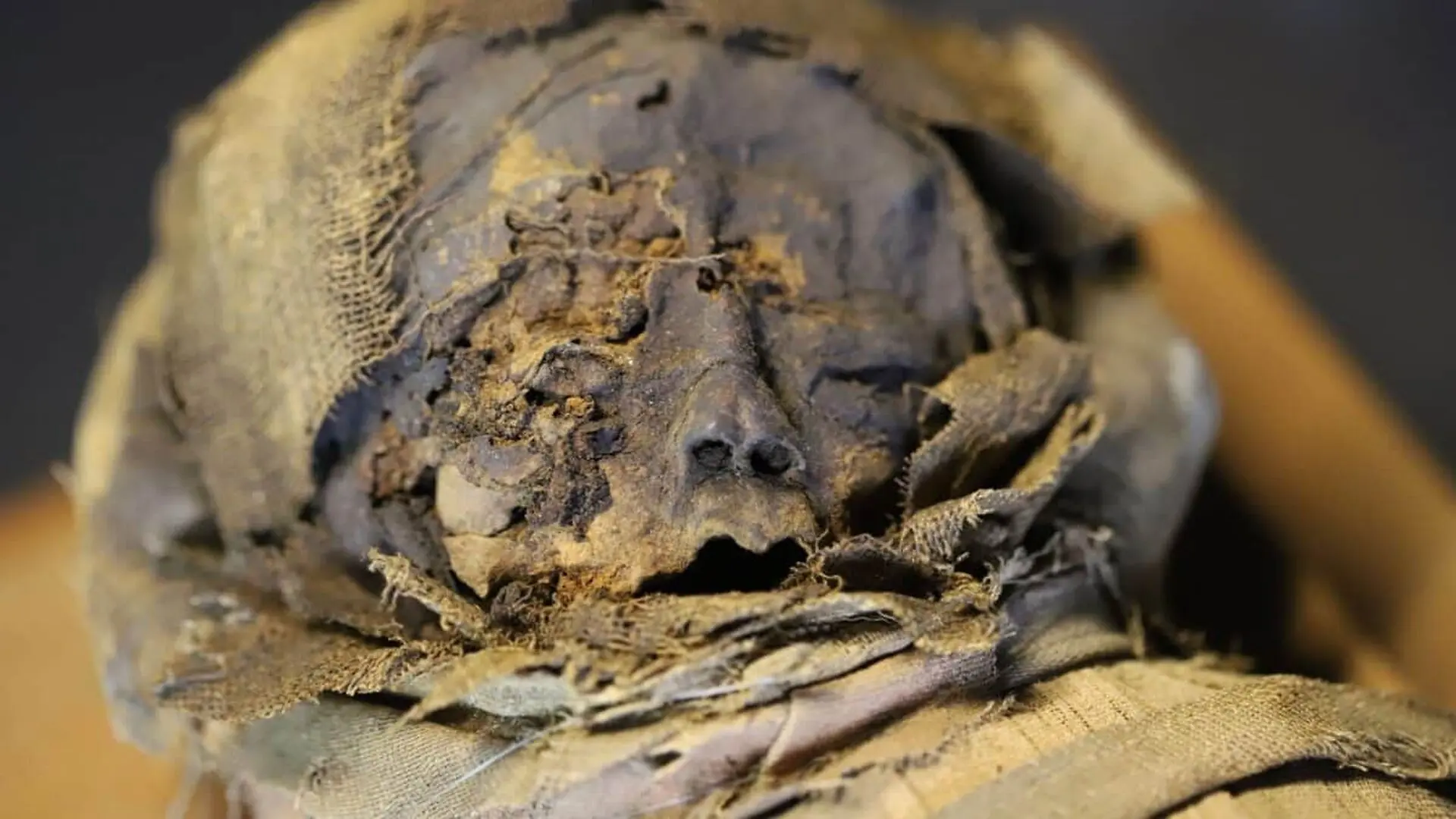
A well-preserved 18th-century mummy residing in an Austrian church crypt has unveiled a previously undocumented embalming technique. By analyzing the remains, scientists discovered a deliberate internal procedure designed to extract fluids and stave off the natural processes of decay.
The remains are located in the crypt of a church in St. Thomas am Blasenstein, Austria, and are widely believed to be those of Franz Xaver Sidler von Rosenegg, a local parish vicar who passed away in 1746. While the lower body and head have succumbed to significant deterioration over the centuries, the upper torso remains in a remarkably intact state, prompting researchers to investigate the methods used to secure such preservation.
A team of scientists, led by pathologist Dr. Andreas Nerlich of Ludwig-Maximilians-Universität, conducted a comprehensive investigation involving CT scans, autopsy, radiocarbon dating, and stable isotope analysis. Their findings, published in Frontiers in Medicine, provide new insight into 18th-century mortuary practices and offer a profile of the vicar’s health and lifestyle.
Innovative Preservation Through Internal Absorbents
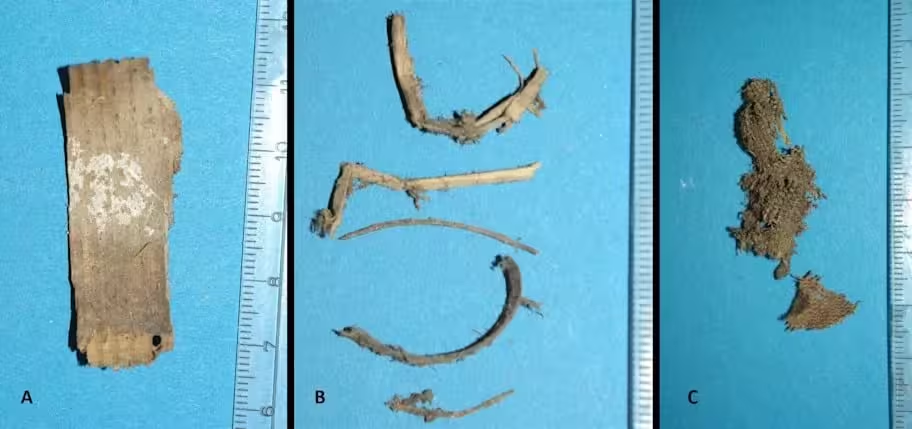
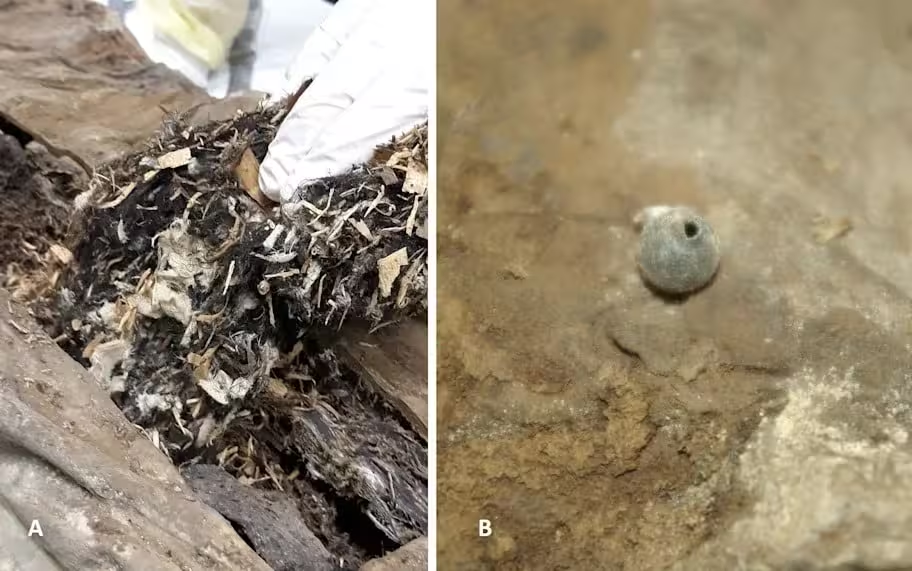
The secret to the mummy’s condition lay tucked within the pelvic and abdominal cavities. Investigators identified a collection of foreign materials, specifically wood chips, twigs, and remnants of dry fabric. These items were not inserted through a surgical abdominal incision but were instead introduced via the rectal canal. The researchers concluded that these materials functioned as internal sponges, actively pulling moisture from the body to inhibit bacterial growth and decomposition.
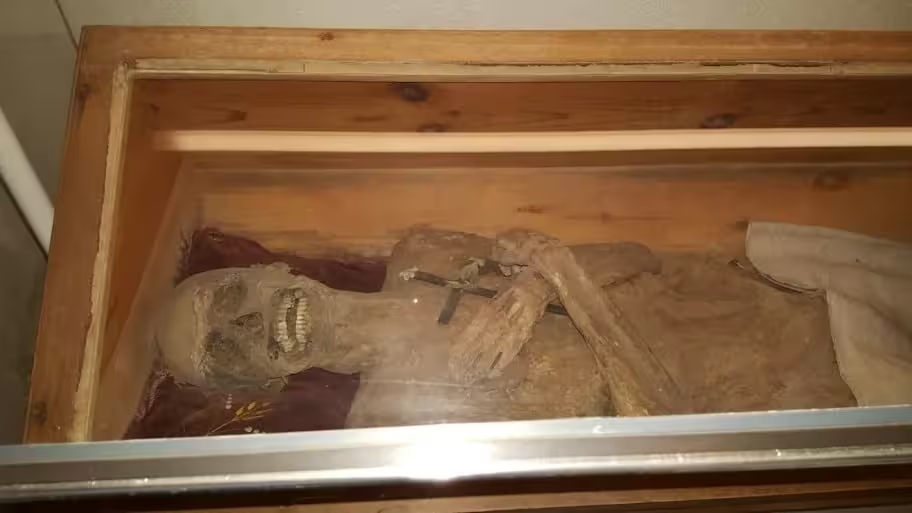
In addition to the physical absorbents, the team detected the presence of zinc chloride, a compound known for its potent desiccating properties. Dr. Nerlich noted that this specific combination of methods appears unique in the historical record, though he suggests it may have been practiced more broadly. In many cases, subsequent decay or damage to the abdominal wall in other historical corpses may have caused such evidence to be lost, effectively hiding the practice from modern forensic examination.
Unveiling the Life of a Local Vicar
Beyond the preservation techniques, the analysis shed light on the individual himself. Radiocarbon dating and stable isotope studies confirmed the identity of the remains as those of Sidler von Rosenegg, establishing that he died between the ages of 35 and 45. Isotopic data further suggested a diet consistent with a middle-class 18th-century lifestyle, composed mainly of Central European grains, animal products, and possibly freshwater fish. His skeleton showed no significant signs of chronic heavy labor, indicating the vicar likely led a sedentary life.
Strategic Preparation for an Unfinished Journey
The researchers hypothesize that this specialized embalming was performed to facilitate the transport of the body. Historical documentation references the “preparation” of corpses for long-distance transit or extended funeral rites, but these records lack technical detail. Dr. Nerlich believes the vicar was likely slated for transport to his home abbey, a plan that may have been abandoned for reasons lost to time.
“We have some written evidence that cadavers were ‘prepared’ for transport or elongated laying-out of the dead – although no report provides any precise description,” stated Nerlich. “Possibly, the vicar was planned for transportation to his home abbey, which might have failed for unknown reasons.”
This article has been fact checked for accuracy, with information verified against reputable sources. Learn more about us and our editorial process.
Last reviewed on .
Article history
- Latest version
Cite this page:
- Posted by Hassan Raza