Scientists Uncover Two Unknown Prehistoric Sharks Hidden Deep Inside Mammoth Cave
A remarkable discovery inside a U.S. cave has unearthed 300-million-year-old shark fossils, offering a rare glimpse into a long-lost prehistoric world.
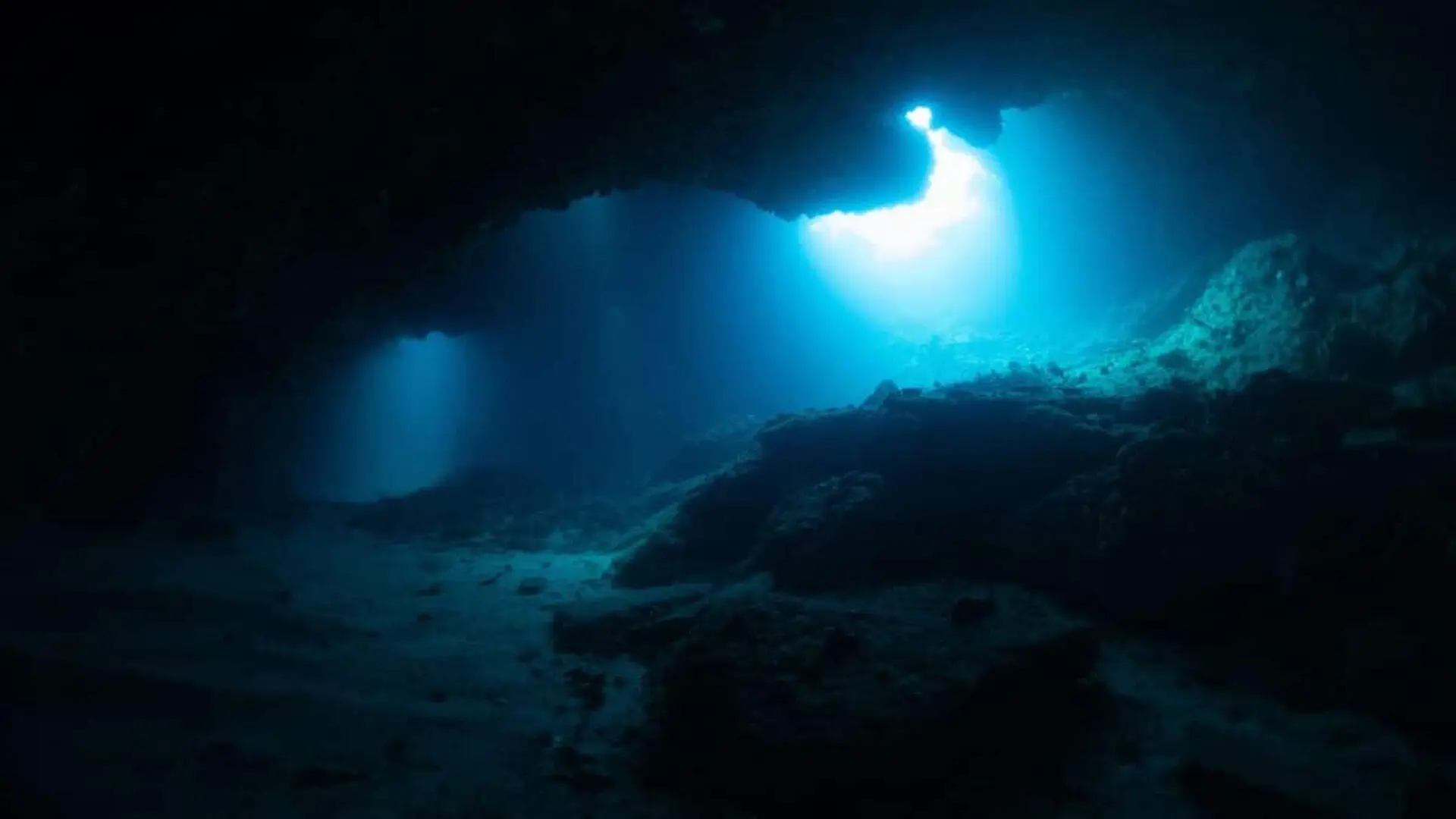
Paleontologists have unearthed the fossilized remains of two previously unknown shark species that once patrolled the shallow, ancient seas covering modern-day Kentucky and Alabama. Dating back more than 325 million years, these predators belonged to the ctenacanths, a now-extinct group of cartilaginous fish that thrived long before the continents took their current shape.
The discovery, detailed in the Parks Stewardship Forum, highlights the geological richness of Mammoth Cave National Park. As underground rivers carved through the limestone over eons, they exposed rock layers spanning roughly 340 to 325 million years, preserving a treasure trove of prehistoric marine life, including mollusks, corals, and a wide array of ancient fish.
Ancient Apex Predators Revealed
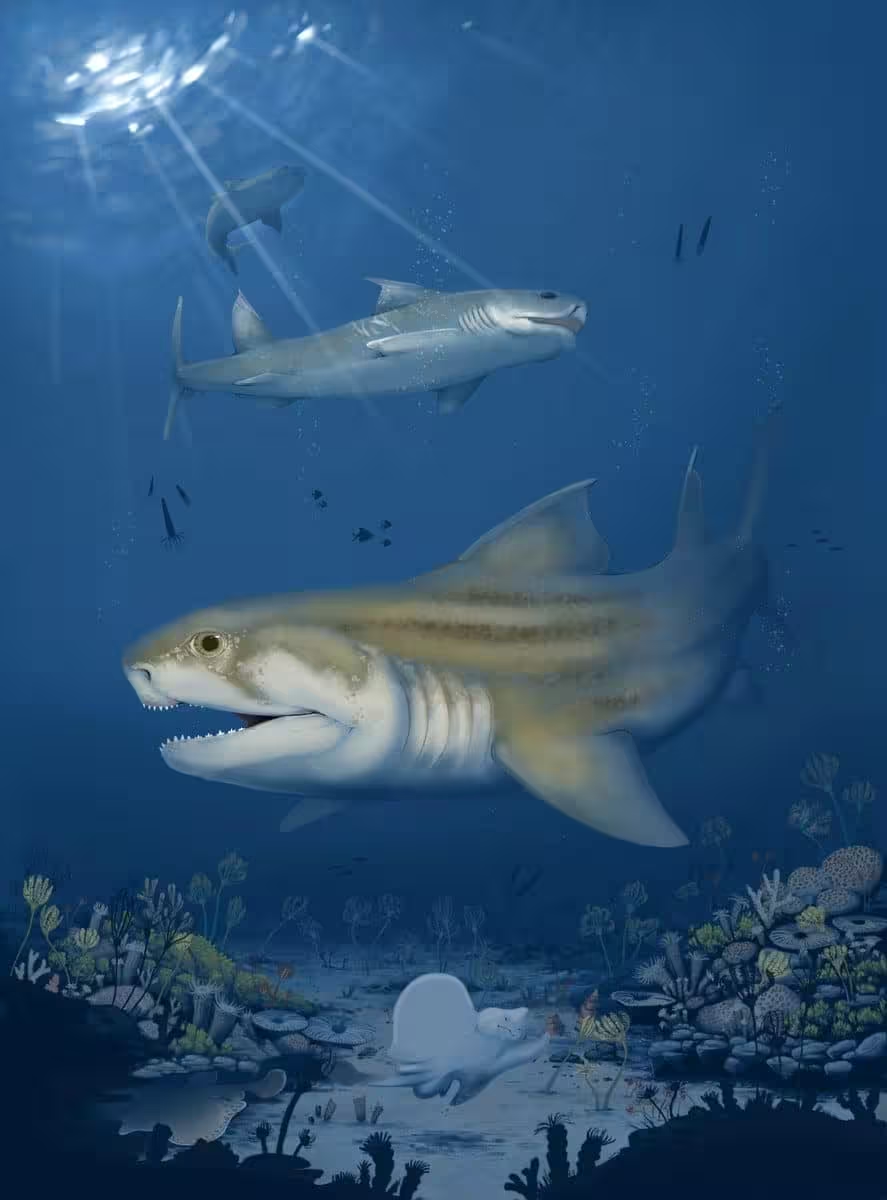
The study identifies the two new species as Troglocladodus trimblei and Glikmanius careforum. Analysis of the fossilized remains indicates that both species were significant predators in their environment, reaching estimated lengths of 3 to 3.7 meters (10 to 12 feet)—comparable in size to modern oceanic whitetip sharks.
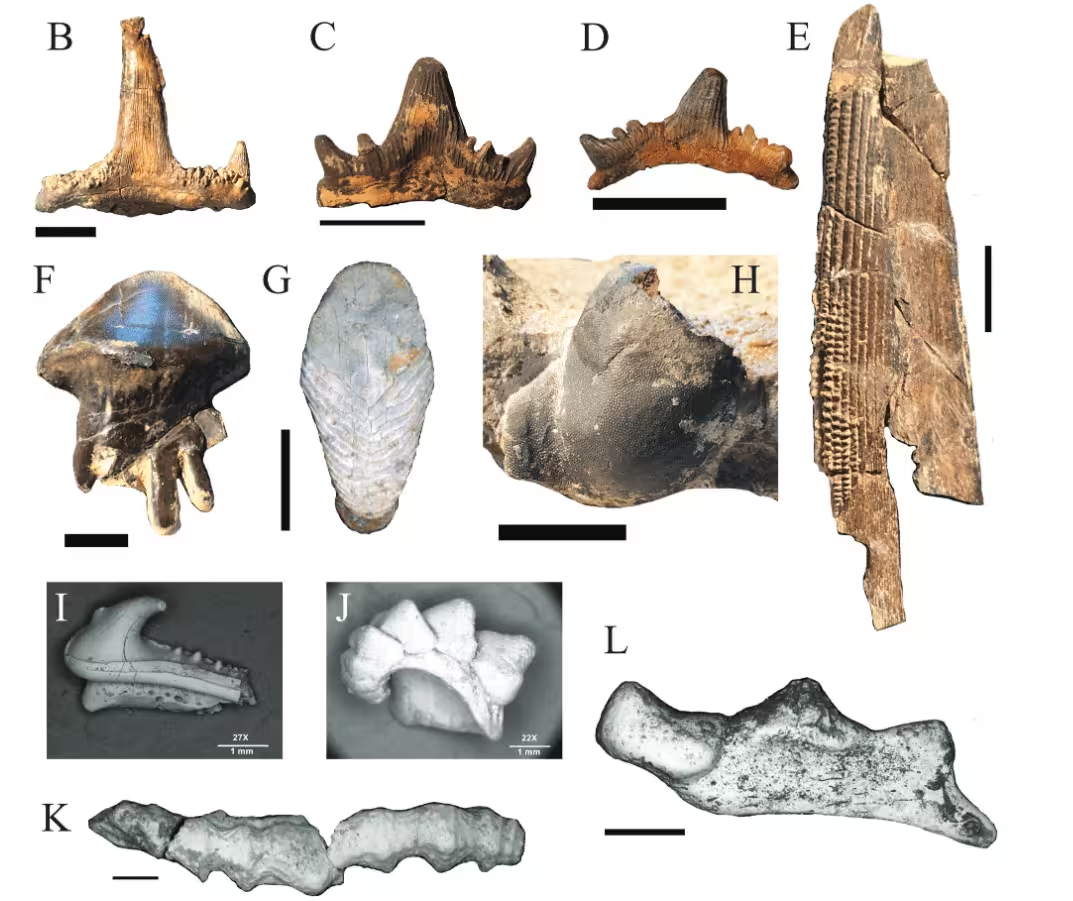
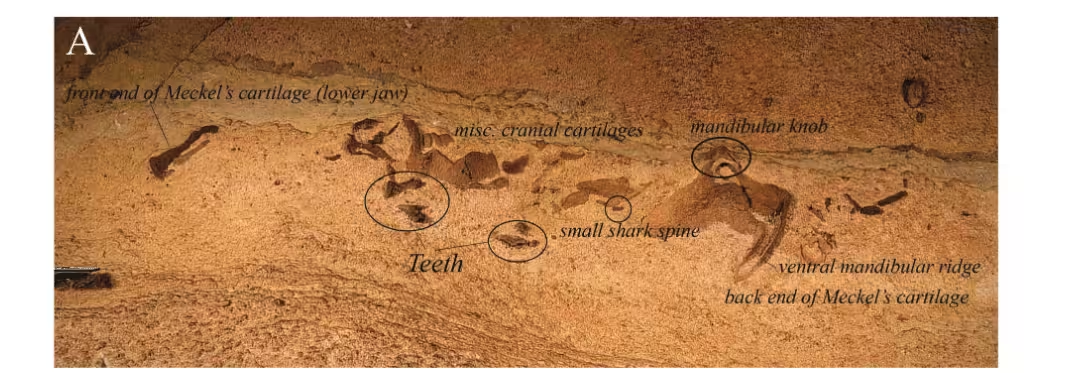
Troglocladodus trimblei was identified primarily through fossil teeth found across multiple rock formations. Meanwhile, Glikmanius careforum yielded more substantial evidence, including portions of a juvenile’s jaw and gills, providing researchers with a clearer understanding of its physical anatomy and potential behavior.
Shifting the Evolutionary Timeline
Perhaps most striking is the revelation regarding the lineage of Glikmanius careforum. The discovery suggests this particular ctenacanth appeared in the fossil record approximately 50 million years earlier than experts previously anticipated.
“The discovery pushes the origins of this ctenacanth shark back over 50 million years earlier than expected,” the researchers noted.
Given its robust jaw structure, experts believe Glikmanius careforum functioned as a formidable predator, likely feeding on smaller sharks, bony fish, and squid-like creatures known as orthocones. This predatory role places it at the center of a complex marine ecosystem that existed during the Carboniferous period.
Collaborative Scientific Discovery
The ongoing paleontological survey at Mammoth Cave has now identified over 70 distinct species of ancient fish, with roughly 90% categorized as cartilaginous. Barclay Trimble, the park’s superintendent, emphasized that these findings are the result of multi-agency cooperation.
“Every new discovery at Mammoth Cave is possible due to collaborations. Our park team is honored to work alongside the National Park Service Paleontology Program and now the University of Alabama Geological Sciences Department whose coordinated efforts have made this latest announcement possible,” Trimble stated.
The cave system continues to serve as a vital window into a submerged past, offering researchers a rare opportunity to map the food chains and evolutionary milestones of ancient sharks that once dominated the seas.
This article has been fact checked for accuracy, with information verified against reputable sources. Learn more about us and our editorial process.
Last reviewed on .
Article history
- Latest version
Reference(s)
- <https://escholarship.org/uc/item/9rz2v701>.
- “Management - Mammoth Cave National Park (U.S. National Park Service).” <https://www.nps.gov/maca/learn/management/index.htm>.
Cite this page:
- Posted by Hassan Raza