Perseverance Rover Uncovers Organic Carbon Clues in Ancient Martian River Rocks
Biology

Perseverance Rover Uncovers Organic Carbon Clues in Ancient Martian River Rocks

Scientists have discovered organic carbon in ancient Martian river rocks, providing a compelling new clue in the ongoing search for past life on the Red Planet.
By Hassan Raza
Published:
Email this Article
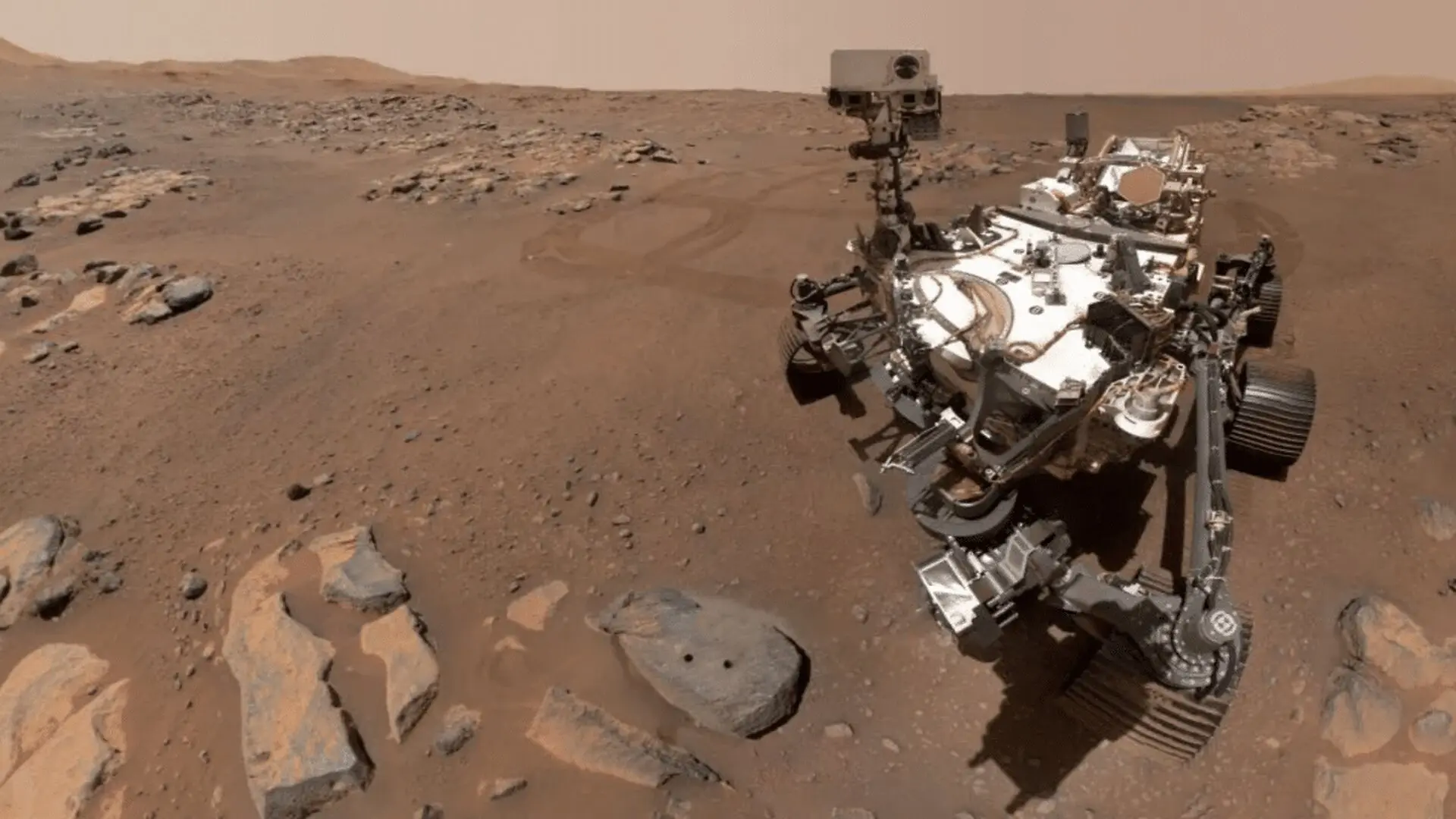
Mars Rover Finds Ancient Carbon Clues That Could Change The Search For Alien Life Scaled
Credit: NASA/JPL-Caltech/MSSS | Dungrela Publishing

New data harvested from the Martian surface has unveiled the presence of organic carbon compounds, offering fresh perspective on the Red Planet’s ability to sequester the chemical precursors of life. These findings, detailed in the journal Science Advances, center on rock formations deposited within a long-vanished river system, suggesting that geological conditions billions of years ago may have been conducive to the long-term preservation of complex chemistry.

While the discovery does not confirm the existence of ancient Martian organisms, it provides critical evidence that the fundamental building blocks of biological systems were present in the planet’s early history.

Geological Archives of a Wetter Mars

The analyzed samples were recovered from a region that once hosted an active water cycle. River environments represent prime real estate in the hunt for exobiology because the continuous flow of water facilitates the transport and deposition of chemical signatures, effectively entombing them within sediment that can persist for eons.

The research relies on ongoing investigations by NASA’s Perseverance rover, which is currently traversing Jezero Crater. Geologists believe this site served as a lake basin fed by ancient rivers, making it one of the most significant targets for studying the potential habitability of early Mars.
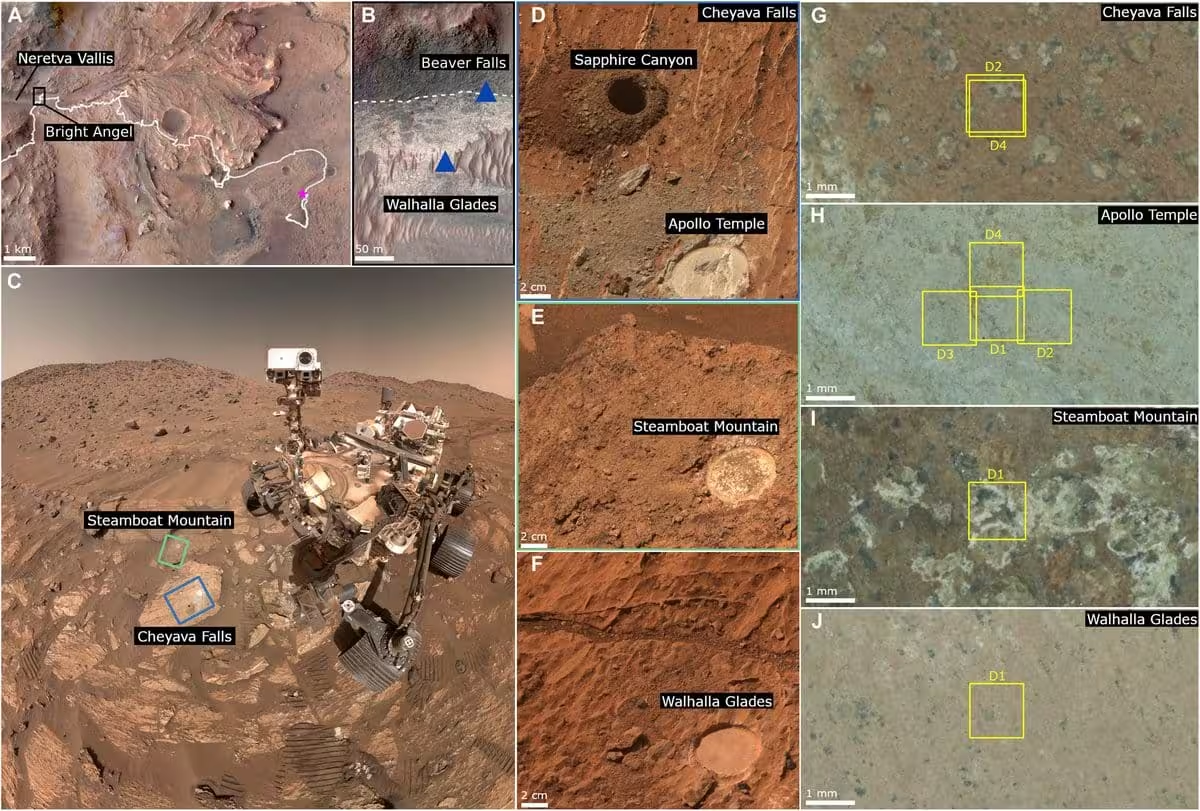
Sciadv.adx0047 F1
Geologic context of the Bright Angel outcrop.(A) Location of Bright Angel in Jezero crater, Mars (the white line shows the path that the rover traversed and the pink star marks the landing site on the crater floor). (B) Zoomed-in view of the black box in (A). Light-toned rocks at Bright Angel visible from orbit (blue triangles denote targets analyzed with SHERLOC). The white dashed line indicates the approximate location of the contact between the Beaver Falls workspace and the Margin unit. (C) WATSON self-portrait on sol 1218 at the Bright Angel outcrop showing the Beaver Falls workspace. (D) Zoomed-in view of the blue box in (C). Mastcam-Z image (sol 1217, zcam09264) of the Cheyava Falls rock showing the Apollo Temple abrasion and postcoring of Sapphire Canyon. (E) Zoomed-in view of the green box in (C). Mastcam-Z image (sol 1217, zcam09264) of the Steamboat Mountain abrasion. (F) Mastcam-Z image (sol 1180, zcam09222) of the Walhalla Glades abrasion. (G) Colorized ACI of the Cheyava Falls natural surface, (H) the Apollo Temple abrasion, (I) the Steamboat Mountain abrasion, and (J) the Walhalla Glades abrasion. Yellow boxes indicate the locations of spectroscopy detail scans reported in this study. Photo credit: NASA/JPL-Caltech/ASU/MSSS.

Experts emphasize that detecting organic carbon is not synonymous with finding life. These molecules can also arise through non-biological pathways, such as volcanic activity, hydrothermal interactions between minerals and water, or the influx of carbonaceous material from impacts.

By meticulously examining the structural arrangement and mineralogical context of these deposits, researchers hope to determine their origin. Because the rocks originate from a period when Mars was warmer and potentially more Earth-like, they represent a vital link in understanding the planet’s evolutionary trajectory.
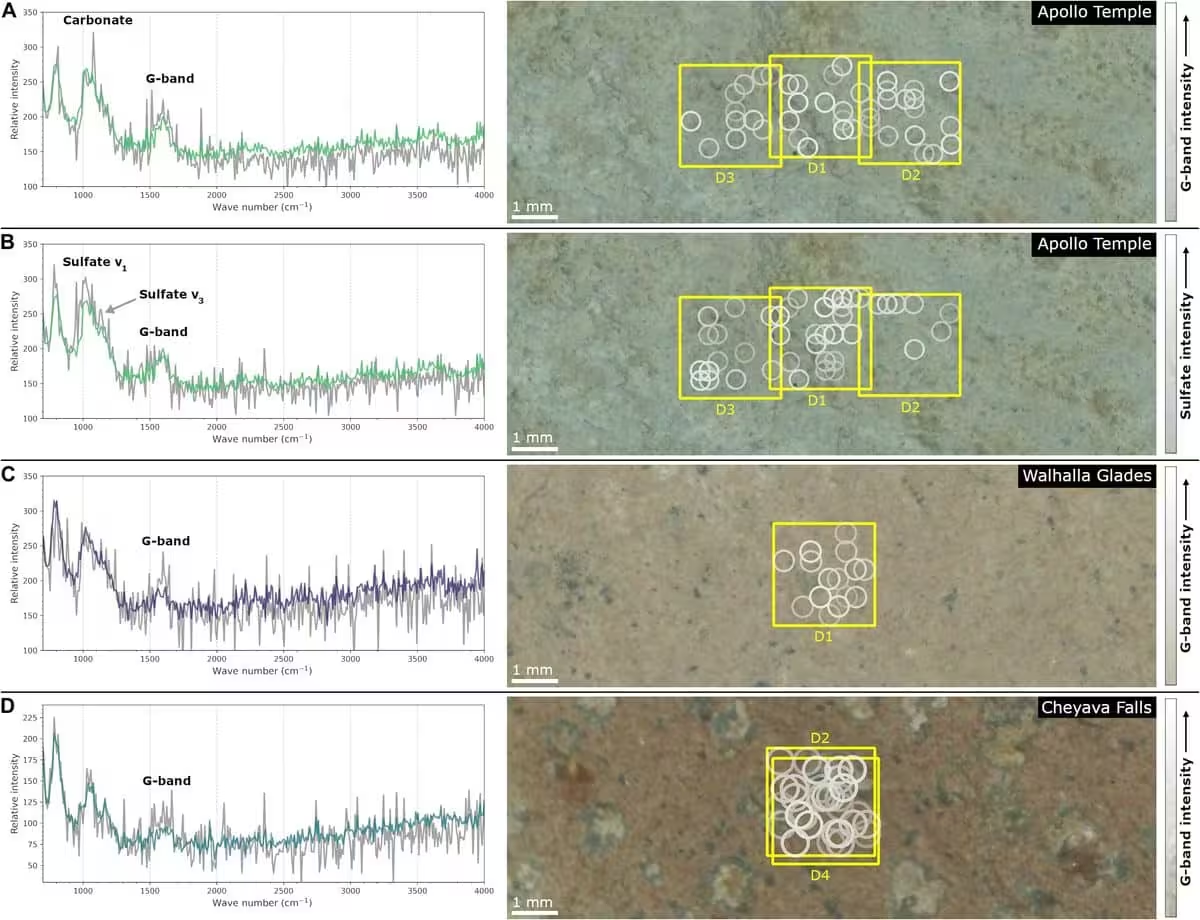
Sciadv.adx0047 F2 (1)
Raman G-band distribution in Bright Angel rocks.Annuli represent the 248.6-nm incident laser irradiance at the surface for points with the most intense Raman band associated with the relative intensity scale shown on the far right, where points with the most intense spectral peaks are 100% opaque and appear as white annuli, and weaker peaks are partially transparent, revealing the underlying ACI image. Scale bars on the right depict the relative scale of intensity for the G-band (A, C, and D) and sulfate ν1 band (B). Spectra on the left show the trimmed mean of all points for each target (colored; equivalent to Fig. 3) and the trimmed mean of a subset of spectra, corresponding to the annuli highlighted in the context images on the right (white). (A) Apollo Temple high G-band intensity distribution. Points exhibit a broader G-band than the trimmed mean spectrum (green) and are associated with carbonate Raman features. (B) Apollo Temple sulfate intensity distribution, with high-intensity sulfate points (gray spectra) and trimmed mean Apollo Temple spectra (green). Sulfate-associated G-band peak parameters are similar to the trimmed mean Apollo Temple G-band (green spectra). (C) Walhalla Glades high G-band intensity distribution. Strongest G-band points (gray spectra) appear to surround the dark grains in the matrix and exhibit a narrower peak relative to the trimmed mean spectrum (purple spectra). (D) Cheyava Falls high G-band intensity distribution. High G-band (gray spectra) and trimmed mean spectra (teal).

Decoding Biological Signatures

The study highlights why carbon-based chemistry serves as the primary metric for planetary scientists. On Earth, complex organic macromolecules are hallmarks of biological activity and serve as the only remaining evidence of microbial life in the oldest rock records.

“Carbon is the primary building block for life on Earth, and all living things are made up of complex organic macromolecules,” explains co-lead author Ashley Murphy of the Planetary Science Institute. “On Earth, [macromolecular carbon] is often found in extremely old rocks and in some cases it is the only organic evidence of past microbial life.”

Murphy notes that because early Mars shared environmental parallels with Earth, the presence of these macromolecules in ancient Martian strata is a logical expectation. The team is currently assessing whether these deposits indicate that the necessary ingredients for life were present in the Martian past.
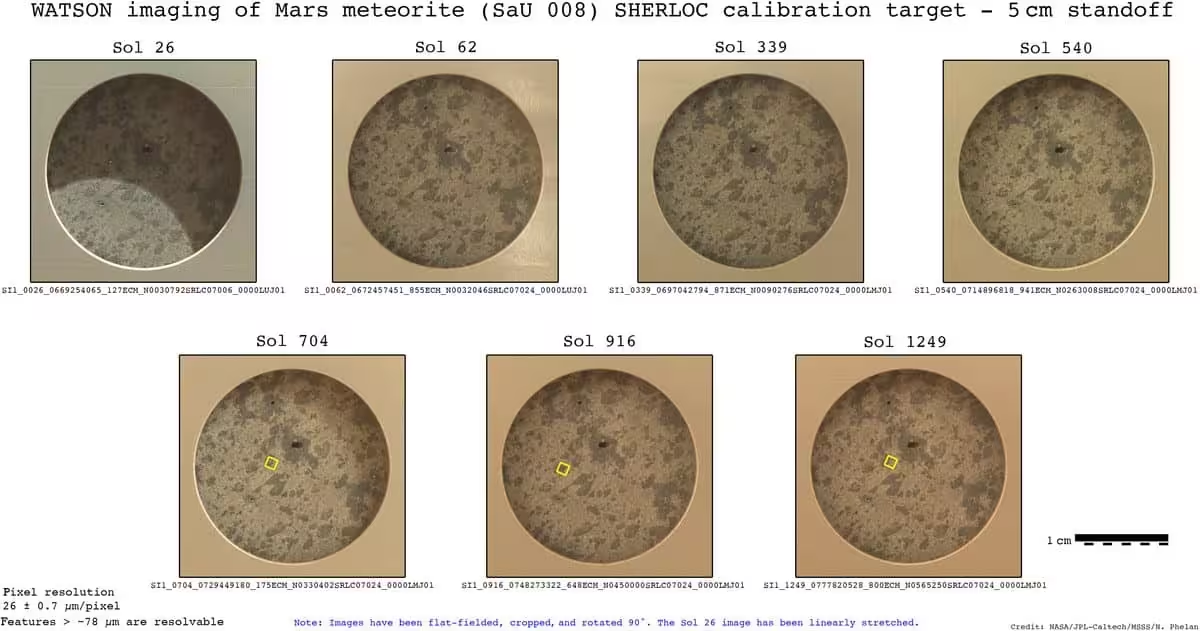
Sciadv.adx0047 F6
WATSON images of SHERLOC calibration target (SCT) SaU 008 meteorite showing dust accumulation over time.Yellow boxes indicate where SHERLOC scans were collected. Imagery on sols 704 and 1249 correspond to spectra collected from the same area of the target on sols 712 and 1256, respectively. The image from sol 916 corresponds to spectra collected from a different area of the target on sol 935. Figure 5 shows how different scanned areas result in a ~5-cm−1 G-band peak center and a ~24-cm−1 FWHM difference due to interrogating different populations of carbon within the meteorite (55).

Researchers are leveraging Earth’s ancient geological record as a comparative baseline. While Earth’s crust is frequently recycled by tectonics, erosion, and biological processes, the Martian surface has remained remarkably stable. This lack of geological turnover makes Mars a pristine, if challenging, laboratory for identifying the molecular traces of potential ancient life.

Fact Checked

This article has been fact checked for accuracy, with information verified against reputable sources. Learn more about us and our editorial process.

Last reviewed on .

Article history

  • Latest version

Reference(s)

  1. Murphy, Ashley E.., et al. “Spatially distributed complex organic matter detected in an ancient river valley in Jezero crater, Mars.” Science Advances, vol. 12, no. 26, June 26, 2026 American Association for the Advancement of Science (AAAS), doi: 10.1126/sciadv.adx0047. <https://www.science.org/doi/10.1126/sciadv.adx0047>.

Cite this page:

Raza, Hassan. “Perseverance Rover Uncovers Organic Carbon Clues in Ancient Martian River Rocks.” BioScience. BioScience ISSN 2521-5760, 07 September 2026. <https://www.bioscience.com.pk/en/subject/biology/mars-rover-finds-ancient-carbon-clues-that-could-change-the-search-for-alien-life>. Raza, H. (2026, September 07). “Perseverance Rover Uncovers Organic Carbon Clues in Ancient Martian River Rocks.” BioScience. ISSN 2521-5760. Retrieved September 07, 2026 from https://www.bioscience.com.pk/en/subject/biology/mars-rover-finds-ancient-carbon-clues-that-could-change-the-search-for-alien-life Raza, Hassan. “Perseverance Rover Uncovers Organic Carbon Clues in Ancient Martian River Rocks.” BioScience. ISSN 2521-5760. https://www.bioscience.com.pk/en/subject/biology/mars-rover-finds-ancient-carbon-clues-that-could-change-the-search-for-alien-life (accessed September 07, 2026).
End of the article