Scientists Have Identified the World’s Oldest Cheese Found on 3,600-Year-Old Mummies
DNA analysis of mysterious white lumps found on ancient mummies has uncovered the world’s oldest evidence of a 3,600-year-old fermented food tradition.
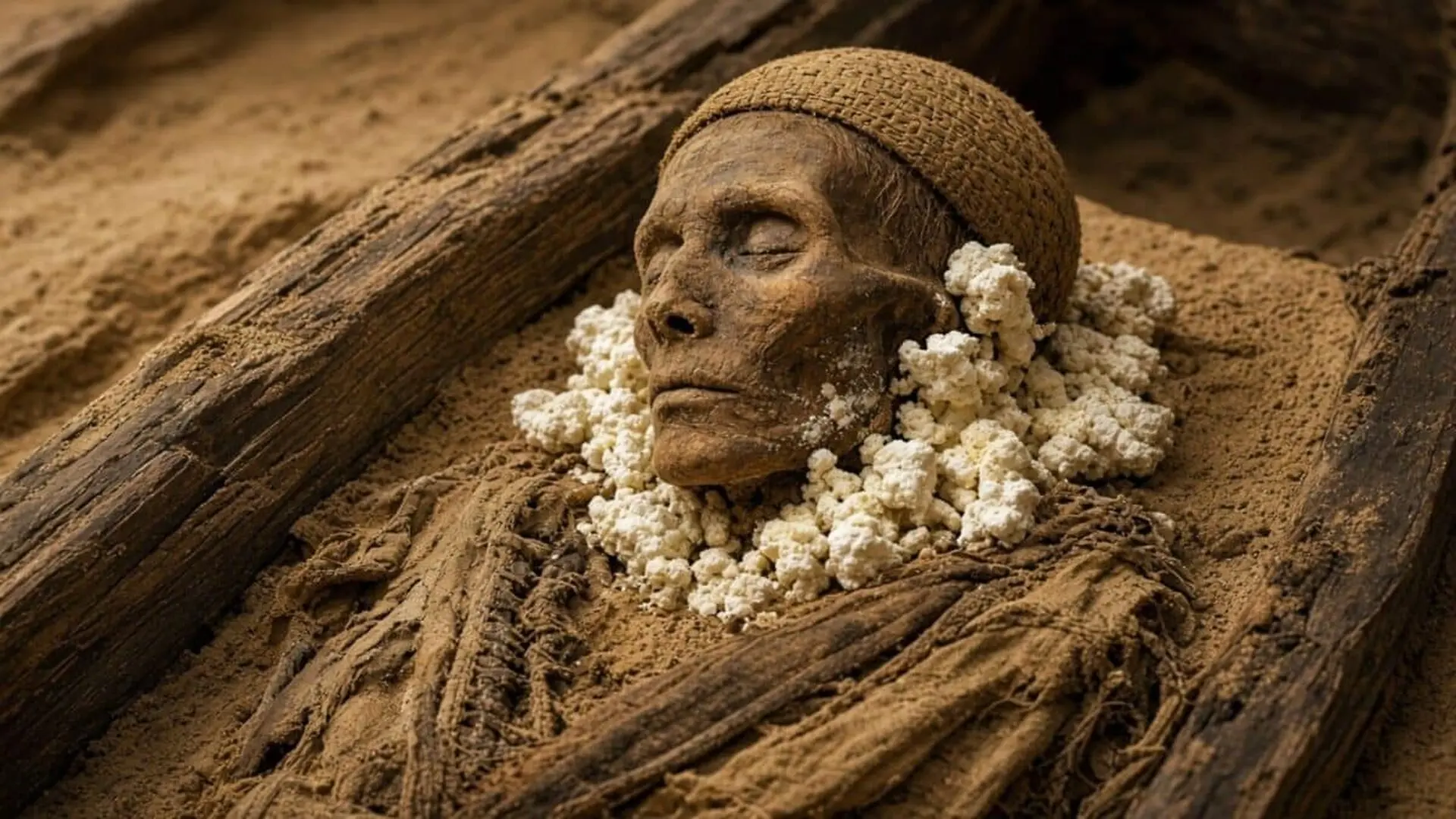
In 2003, archaeologists working at the Xiaohe Cemetery in the remote Tarim Basin of northwest China uncovered a series of exceptionally preserved mummies. Among the burial offerings, one individual stood out for a peculiar, hardened white substance smeared across her head and neck. While researchers at the time hypothesized that the residue might be a fermented dairy product, the technology to confirm this did not yet exist.
More than two decades later, a breakthrough in paleogenetics has transformed that unidentified material into a scientific landmark. According to findings published in the journal Cell, the ancient remnants represent the oldest cheese ever discovered, dating back approximately 3,600 years. Because organic matter typically degrades long before such a timeframe, the survival of these curds offers an unprecedented window into the dietary habits of Bronze Age civilizations.
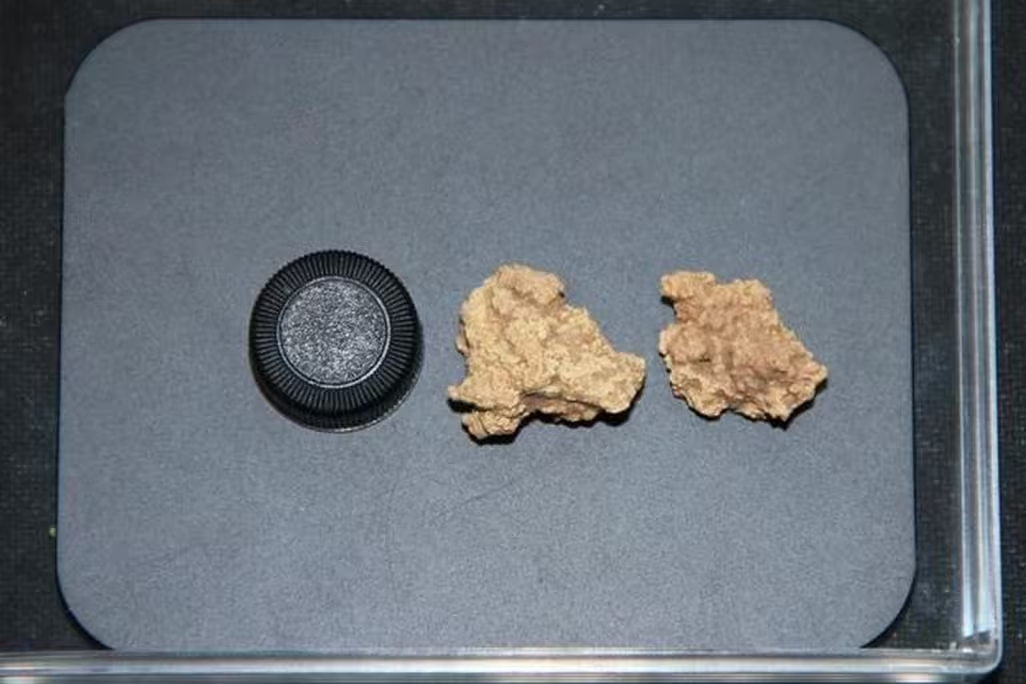
To identify the dairy, a team led by paleogeneticist Qiaomei Fu of the Chinese Academy of Sciences successfully sequenced mitochondrial DNA from samples taken from three different tombs. The results revealed that the Bronze Age residents of the region produced cheese using cow and goat milk, though, unlike their contemporaries in the Middle East and Greece, they opted to keep the two types of milk distinct rather than blending them.
Unlocking the Microbial History of Kefir
The true scientific value of the discovery lies within the preserved microorganisms trapped inside the cheese. Genetic analysis confirmed the presence of Lactobacillus kefiranofaciens and Pichia kudriavzevii, both of which are foundational components of kefir grains. These complex communities of yeast and bacteria serve as a biological starter, allowing for the fermentation of milk through the transfer of cultures between batches.
By studying this ancient DNA, researchers have gained a new perspective on the evolution of dairy production. Modern kefir production is dominated by a genetic lineage of Lactobacillus bacteria associated with the North Caucasus region, a dominance that has long fueled the assumption that kefir originated exclusively in that part of the world. However, the DNA from the Xiaohe samples is more closely related to the Tibetan group, suggesting that kefir fermentation was an established practice in the Xinjiang region long before historical records began.
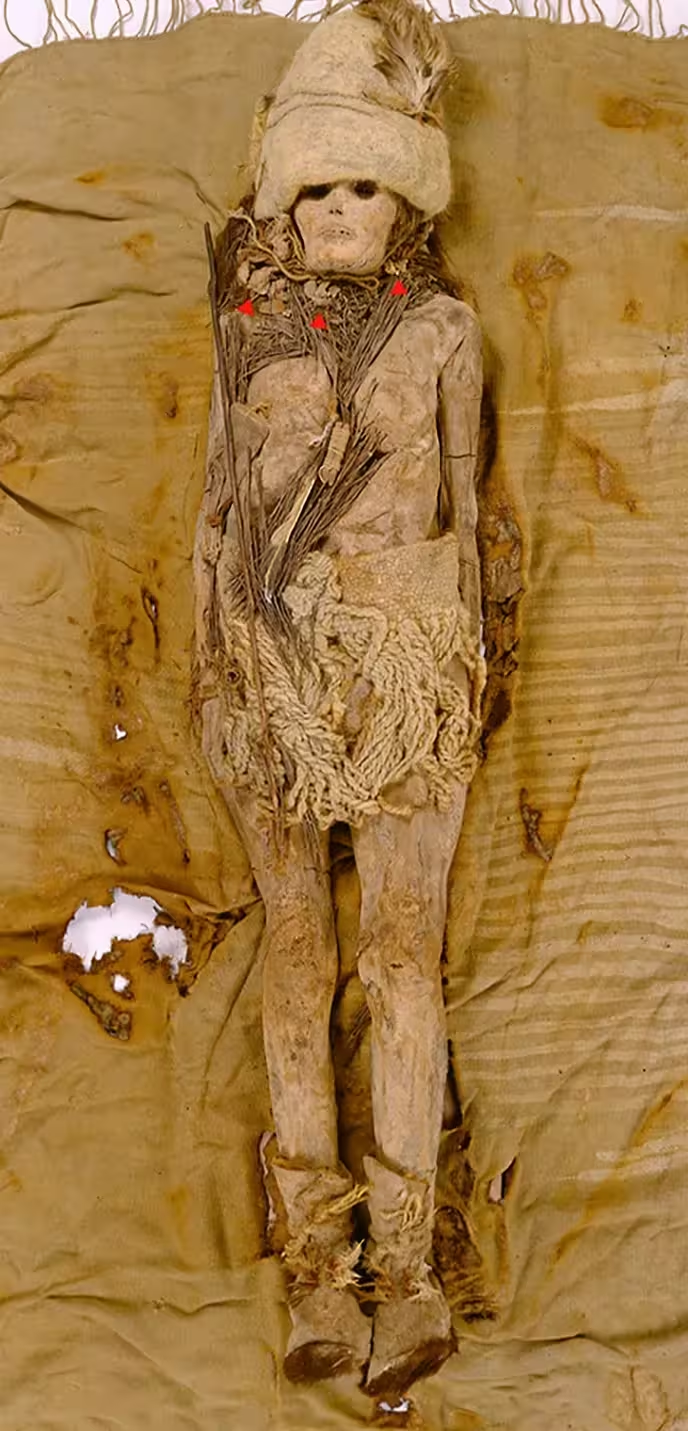
This discovery implies that these essential microbes were spread across Eurasia through the movements of nomadic communities, facilitating a cross-regional exchange that predates written history. These cultures likely carried the microbes along with their dairy supplies or within the porous, reusable containers used for transit.
Adaptation Over Millennia
The study also highlights how the bacteria themselves have evolved alongside their human hosts. Through the exchange of genetic material with related strains over thousands of years, the microorganisms gradually altered their characteristics to improve stability and fermentation efficiency.
Comparing the ancient samples to their modern counterparts, researchers identified significant shifts, particularly regarding how these bacteria interact with the human immune system. Contemporary strains are less likely to trigger an inflammatory response in the human gut, a shift that likely occurred due to the long-term, symbiotic relationship between humans and their fermented staples as documented in sources such as ScienceDirect.
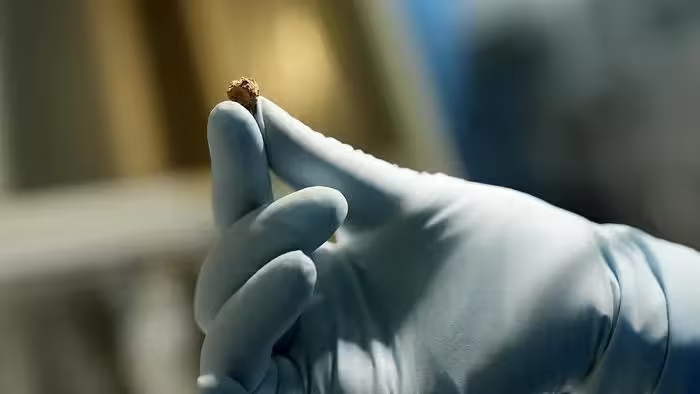
As noted by co-author Yichen Liu, these early societies were propagating these complex microbial ecosystems generation after generation without any formal understanding of the organisms at play. For historians and scientists, such as Paul Kindstedt of the University of Vermont, as reported by Smithsonian Magazine, this genetic legacy serves as a living document of human migration and cultural interaction, revealing the deep, largely invisible history of food technology in the ancient world.
This article has been fact checked for accuracy, with information verified against reputable sources. Learn more about us and our editorial process.
Last reviewed on .
Article history
- Latest version
Reference(s)
- <https://www.cell.com/cell/fulltext/S0092-8674(24)00899-7>.
- Yang, Yimin., et al. “Proteomics evidence for kefir dairy in Early Bronze Age China.” Journal of Archaeological Science, vol. 45, May 1, 2014, pp. 178-186. Elsevier BV, doi: 10.1016/j.jas.2014.02.005. <https://www.sciencedirect.com/science/article/abs/pii/S0305440314000466>.
- Anderson, Sonja. “The World's Oldest Cheese Was Buried in a Chinese Tomb 3,600 Years Ago. Now, Scientists Have Sequenced Its DNA.”, September 27, 2024 Smithsonian Magazine <https://www.smithsonianmag.com/smart-news/the-worlds-oldest-cheese-was-buried-in-a-chinese-tomb-3600-years-ago-now-scientists-have-sequenced-its-dna-180985152/>.
Cite this page:
- Posted by Hassan Raza