Microscopic Creature Thawed From 24,000 Year Old Siberian Permafrost Begins Reproducing
After spending 24,000 years frozen in Siberian permafrost, a microscopic animal has been revived, offering new insights into extreme biological survival.
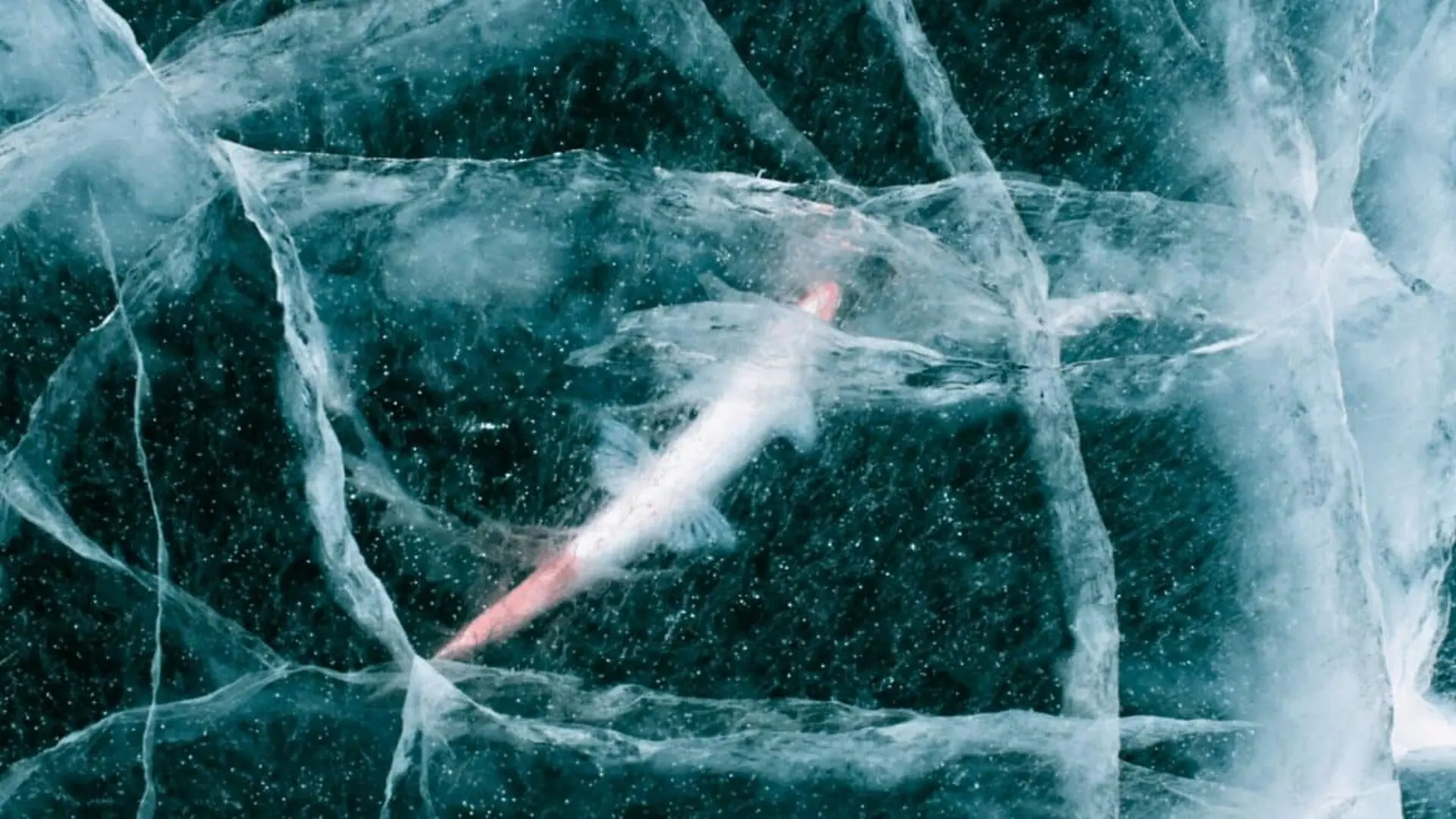
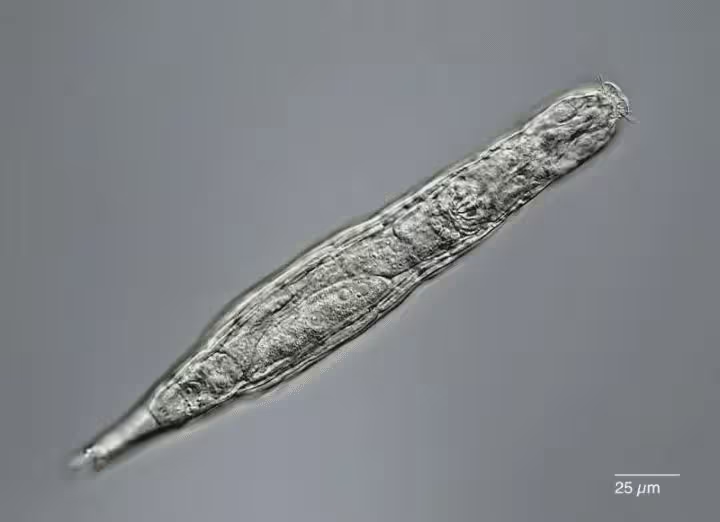
In a remarkable demonstration of biological resilience, scientists have successfully revived a microscopic animal that spent roughly 24,000 years locked within the Siberian permafrost. The creature, a bdelloid rotifer, was discovered deep underground and returned to life after being carefully thawed in a laboratory setting.
The findings, detailed in a 2021 study published in Current Biology by a team led by Lyubov Shmakova and Stas Malavin, represent the longest period of suspended animation ever recorded for this group of organisms. Unlike single-celled microbes, which are frequently found to endure extreme conditions, the rotifer is a complex, multicellular animal, making its survival particularly noteworthy.
To ensure the validity of their findings, the research team employed rigorous protocols to avoid contamination from contemporary organisms. The specimen was extracted from a core taken 3.5 meters below the surface. While the researchers did not date the rotifer itself, they performed radiocarbon dating on organic materials found in the same sediment layer, confirming that the environment had remained continuously frozen for approximately 24,000 years. Additional genetic analysis, specifically looking at actin gene sequences, further corroborated that the creature originated from that ancient geological layer.
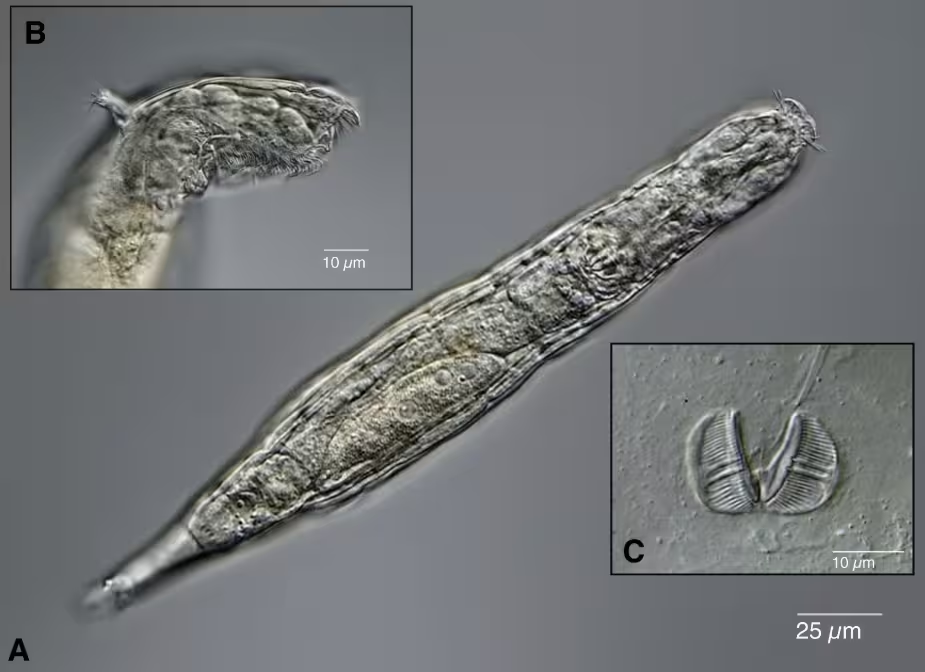
Morphological and molecular testing identified the animal as a member of the genus Adineta, showing striking similarities to modern specimens of Adineta vaga found in Belgium. Once thawed, the ancient rotifer demonstrated its ability to thrive by reproducing through parthenogenesis, a process that allows for cloning without the need for mating. The team established a laboratory culture from these offspring, allowing for controlled experiments to better understand how these tiny animals withstand such extreme conditions.
Strategies for Surviving the Deep Freeze
Bdelloid rotifers have long been known for their toughness, often utilizing a state known as cryptobiosis to endure harsh environments. This metabolic slowdown protects their cellular structures from the damage typically caused by freezing temperatures. By studying the clonal descendants of the ancient specimen, the researchers tested the limits of this durability.
In laboratory trials, the team cooled the rotifers at a rate of one degree Celsius per minute and kept them in a frozen state for a week. The creatures survived the ordeal, confirming that the species possesses a robust, inherent resistance to sub-zero temperatures. While this experiment did not replicate the multi-millennial timeline of the Siberian permafrost, it provided essential evidence that the physiological mechanisms allowing for such longevity remain active in these descendants today.
This discovery provides deeper insight into how multicellular life can navigate long-term environmental shifts, suggesting that for certain organisms, death is not necessarily the inevitable result of being encased in ice for thousands of years.
This article has been fact checked for accuracy, with information verified against reputable sources. Learn more about us and our editorial process.
Last reviewed on .
Article history
- Latest version
Cite this page:
- Posted by Hassan Raza