Archaeologists Uncover 4,000 Years of Ritual History at Mysterious Ancient Site
Archaeologists have uncovered a hidden Roman monument in Suffolk, revealing an ancient site that was continuously reused over thousands of years.
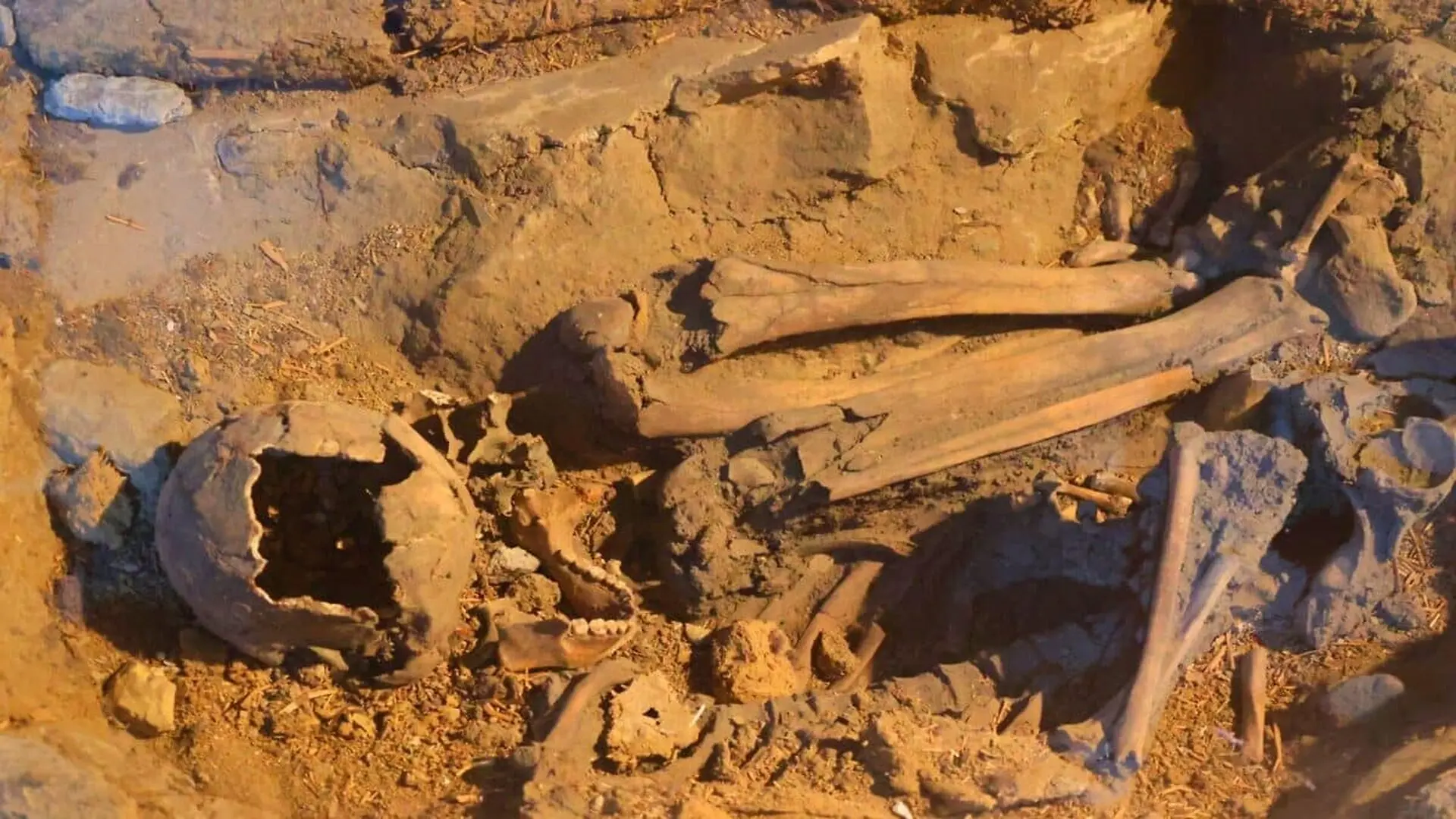
Archaeologists working in Red Lodge, Suffolk, have unearthed a site that served as a persistent focal point for human activity for more than three millennia. The location, which began as a Bronze Age burial mound, eventually evolved into a complex Roman religious sanctuary before potentially functioning as an execution ground during the Middle Ages.
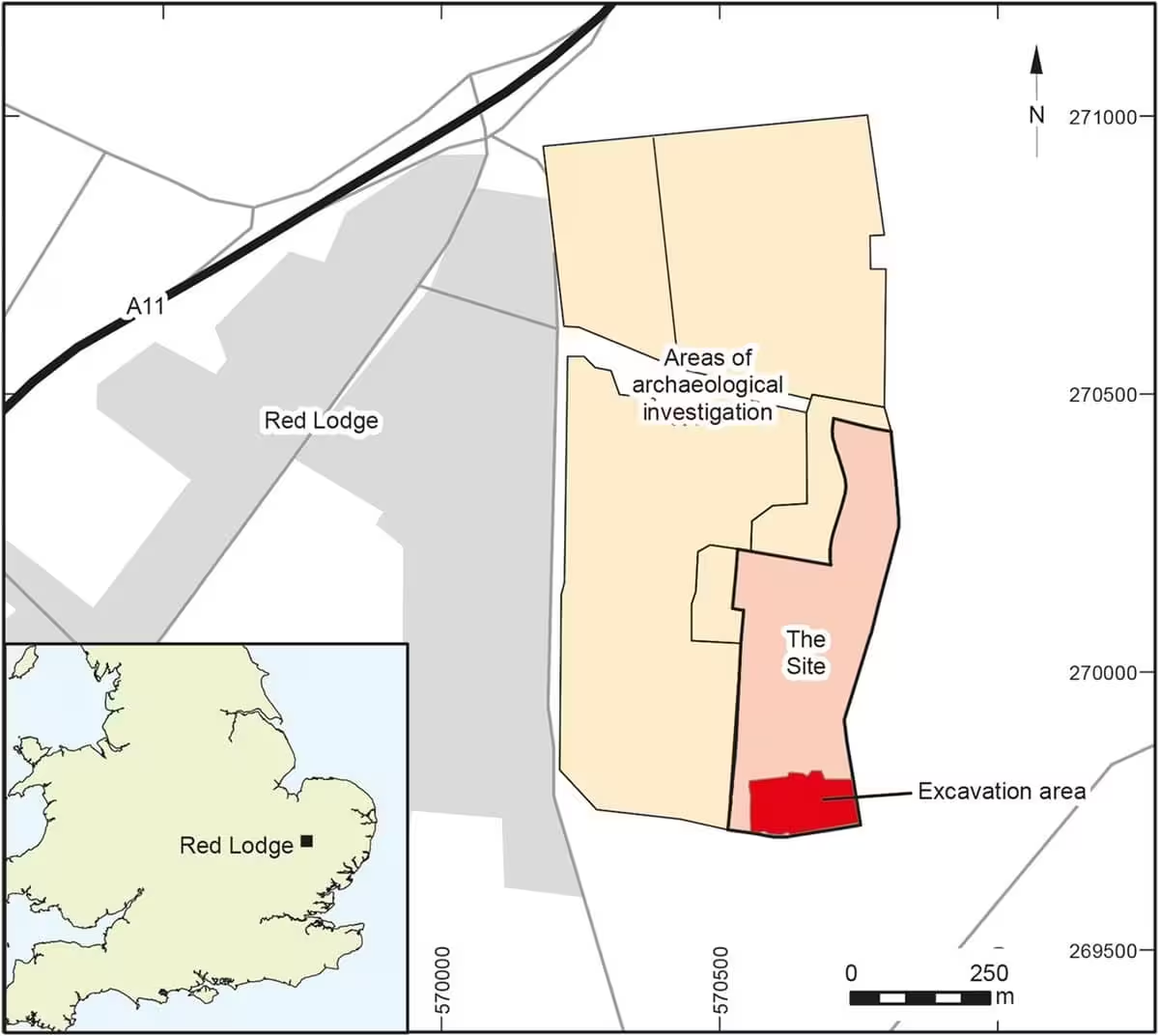
The discovery emerged during a 2016 survey conducted by Archaeology South-East, a division of University College London, ahead of a planned residential development on a nine-hectare site. What initially appeared to be a routine pre-construction assessment revealed a deep, layered history stretching from the Neolithic era through the medieval period, with the Roman occupation representing the site’s most elaborate phase of use.
From Ancient Barrow to Sacred Grounds
The site’s origins trace back to the Early Bronze Age, marked by the construction of a substantial circular burial mound. While centuries of agricultural activity have leveled the earthwork, the encircling ditch, measuring 45 meters in diameter, remains intact. Optically stimulated luminescence dating suggests the monument was constructed between 2200 and 1600 B.C., with the ditch reaching depths of 1.80 meters and widths of 6.20 meters. The presence of natural silting suggests the ditch was left to decay gradually rather than being filled in, and the deliberate lack of contemporary structures nearby indicates that the mound was intentionally preserved as a landmark for generations.
Ritual Practices at the Roman Cult Site
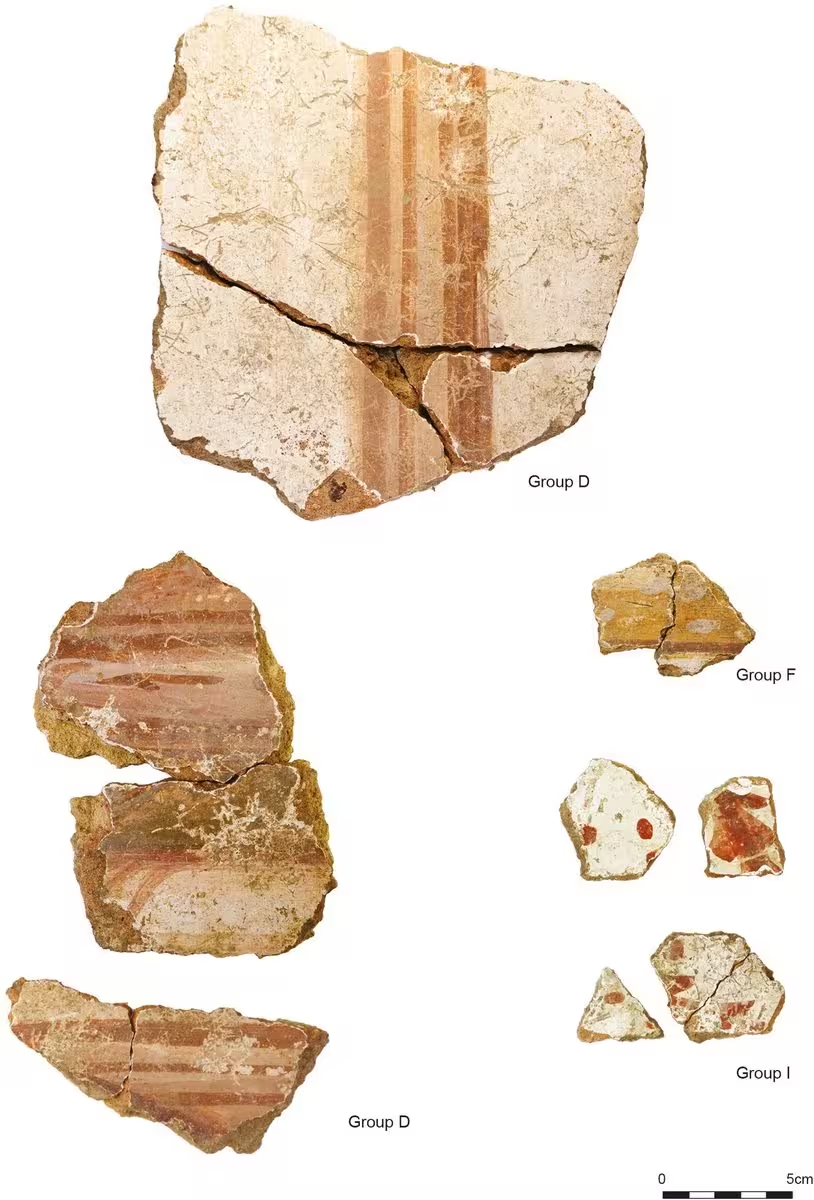
During the 2nd century A.D., the site underwent a significant transformation as the Roman inhabitants enclosed the ancient mound within a rectangular boundary, or temenos, covering approximately 3.2 hectares. By the late 3rd century, a timber-framed cult building with wattle-and-daub walls and a tiled roof had been constructed near the mound. Excavators recovered roughly 48 kilograms of painted plaster from the structure, featuring intricate red and white panels adorned with leaf patterns and purple decorative elements.
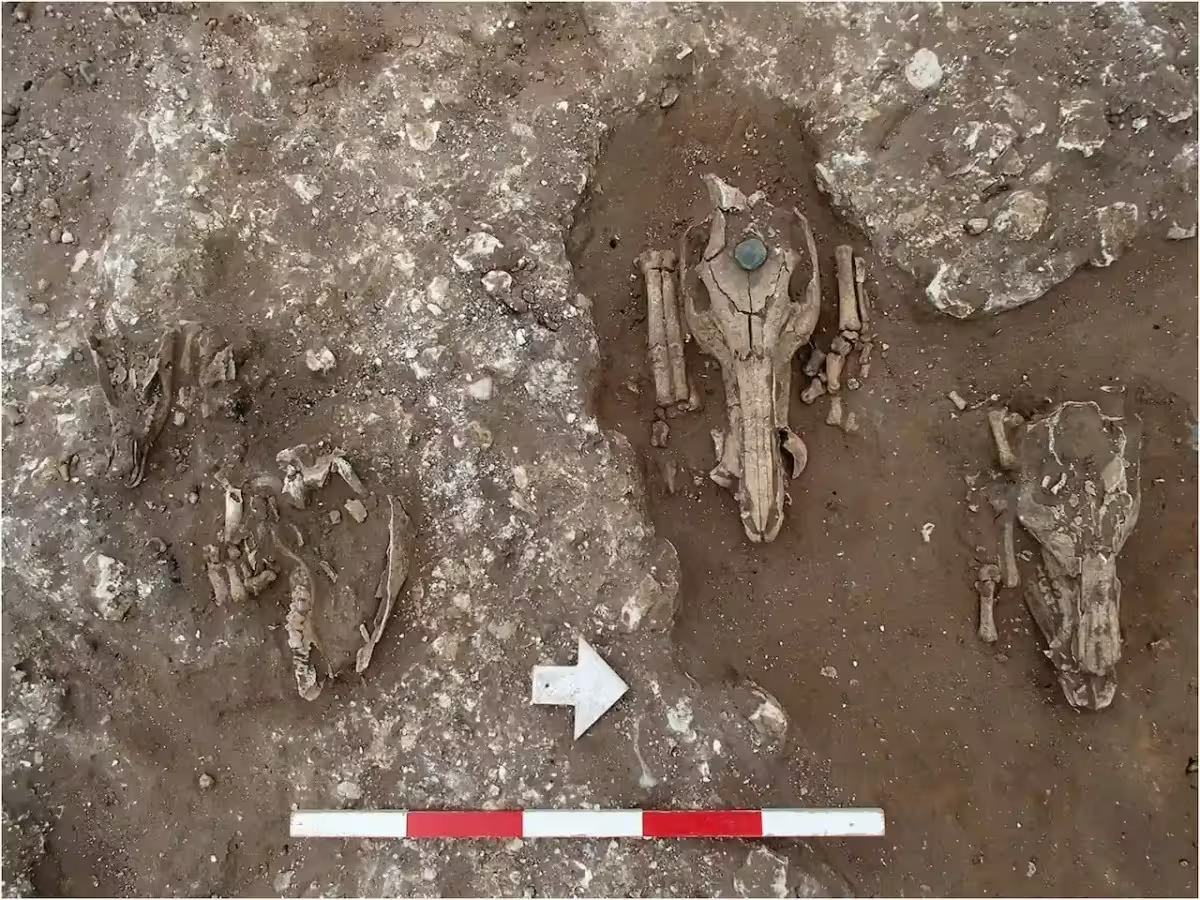
The sanctuary was a hub for ritual offerings, most notably the burial of pig skulls paired with articulated limbs, oriented toward the cult building. Radiocarbon dating places these deposits between A.D. 84 and 400. Other finds included a young cow, a dog interred with a horse scapula, and a nearly complete rooster. The site also yielded more than fifty coins, various pieces of jewelry, and two Neolithic flint axes, which were likely treated as sacred talismans by the Roman worshippers.
A Grim Medieval Chapter
The religious complex appears to have faded into disuse by the mid-4th century, though it was not destroyed, but rather abandoned. The site’s final chapter surfaced in the discovery of a 25 to 35-year-old man buried face-down in the soil of the temenos ditch. Initially thought to be a late Roman occupant, radiocarbon testing revealed the burial occurred during the 12th or 13th century.
This discovery, paired with a 1238 document referencing a specific structure near the boundary of Freckenham and Herringswell, has led investigators to theorize that the ancient mound served as a medieval execution site. The findings, documented in the journal Britannia, illustrate how the landscape was continuously repurposed over thousands of years, with each era leaving its distinct mark on the same patch of earth.
This article has been fact checked for accuracy, with information verified against reputable sources. Learn more about us and our editorial process.
Last reviewed on .
Article history
- Latest version
Reference(s)
- Forshaw, Angus. “A Reused Bronze Age Barrow and Roman Religious Shrine Site at Red Lodge, Suffolk | Britannia | Cambridge Core.”, October 14, 2307, pp. 1-31. Cambridge Core, doi: 10.1017/S0068113X26100841. <https://www.cambridge.org/core/journals/britannia/article/reused-bronze-age-barrow-and-roman-religious-shrine-site-at-red-lodge-suffolk/FB16F8A007E47E0F4967244E61FC163E>.
Cite this page:
- Posted by Hassan Raza