81 Million Year Old Fossil Reveals The Final Moments Of A Prehistoric Squid Attack
An ancient fossil unearthed after millions of years is revealing new secrets about how life survived in Earth’s long-lost prehistoric oceans.
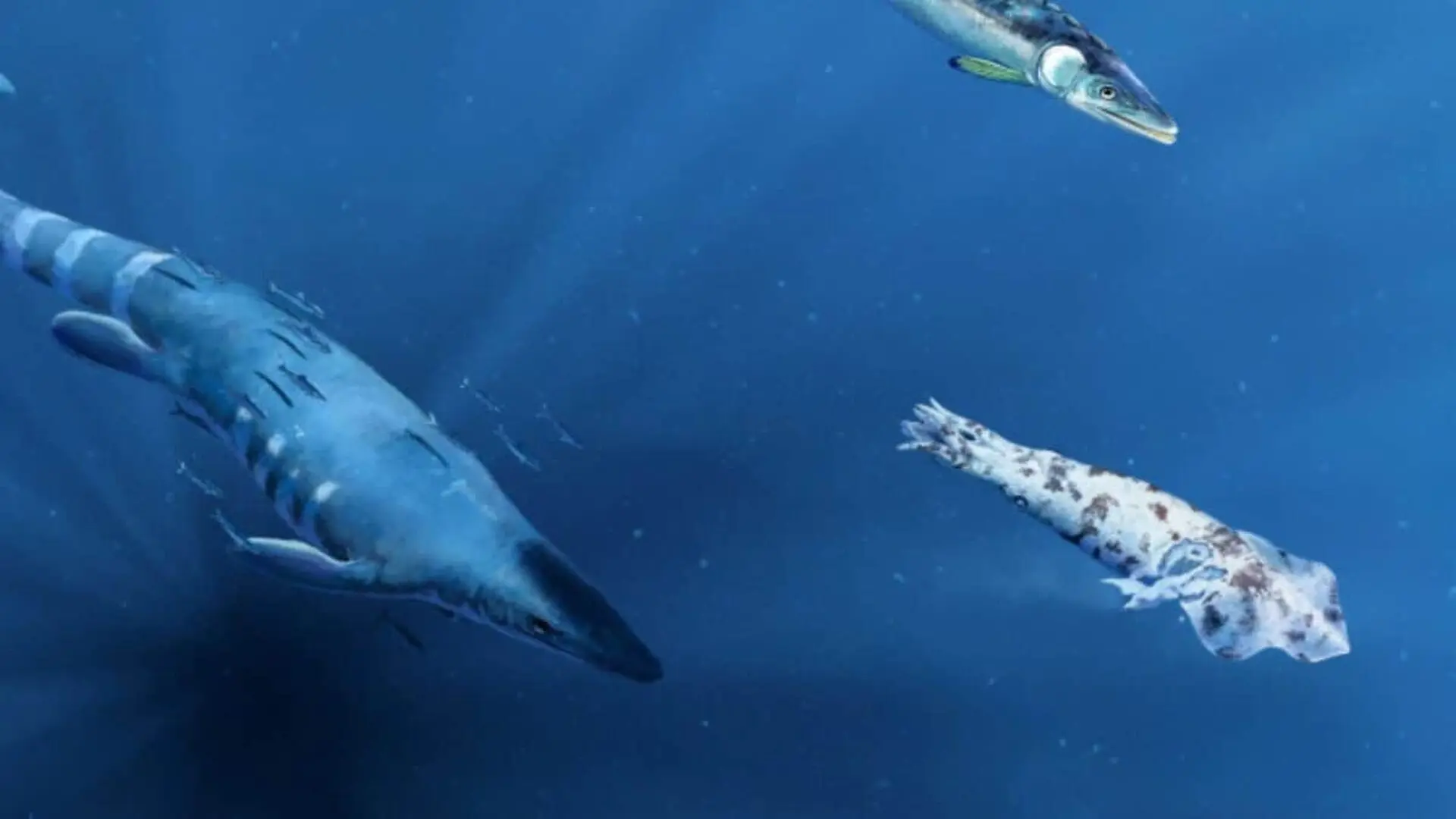
A fossilized remnant unearthed in Canada has unveiled a violent encounter from the deep past, dating back more than 80 million years. Paleontologists suggest that a cephalopod known as Enchoteuthis, a distant relative of modern squid, was targeted by an apex predator shortly before its demise, leaving behind rare, physical evidence of a struggle within the ancient Cretaceous seas.
While the fossil record is typically used to reconstruct the anatomy of extinct species, this particular specimen offers a fleeting look into the biological pressures of the Mesozoic era. The animal, which swam through the Western Interior Seaway—a massive inland ocean that once bifurcated North America—was recovered from the Pierre Shale formation in southern Manitoba.
Ancient Evidence of a Deadly Hunt
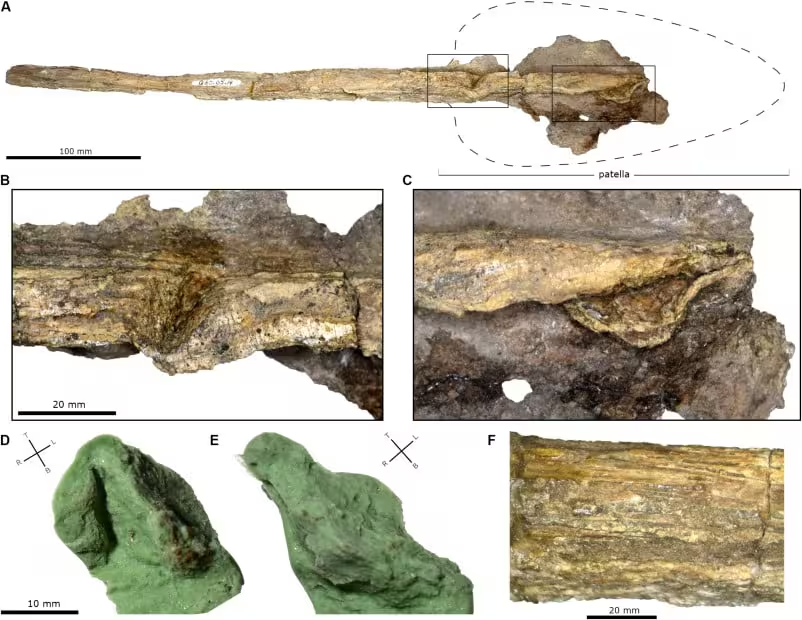
The specimen, cataloged as Q80.05.14 and held at the Canadian Fossil Discovery Centre, preserves a 49-centimeter-long gladius, the hardened internal structure that provided the squid-like creature with structural support. Researchers estimate the animal was likely under a meter in total length, serving as a vital link in the marine food web of the Late Cretaceous.
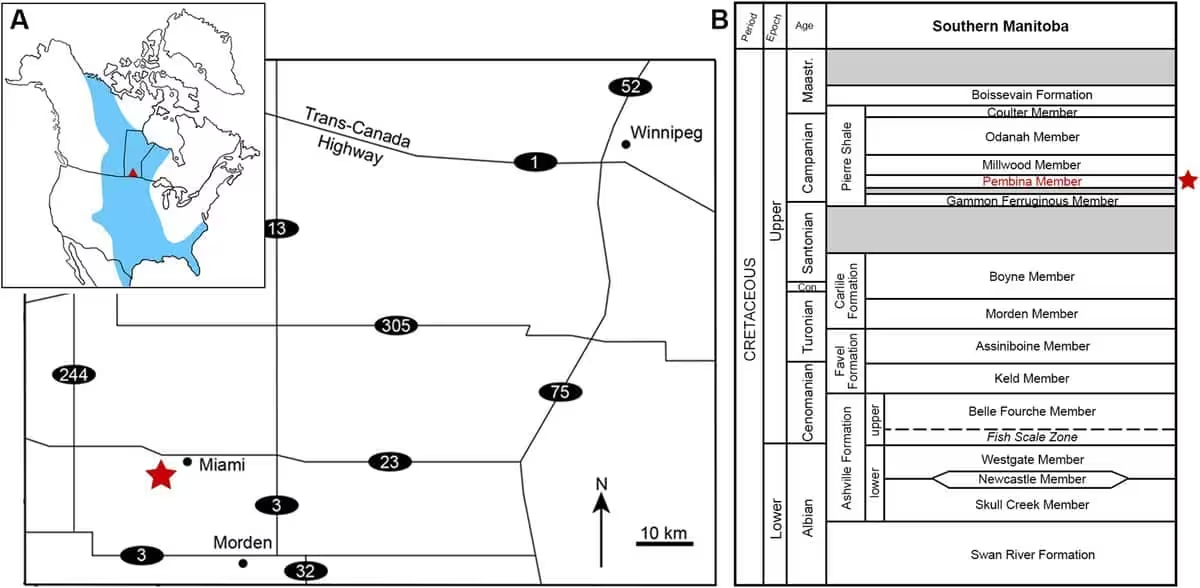
A study published on August 28, 2026, in the journal Cretaceous Research details how a team led by University of Manitoba paleontologist Melina Jobbins utilized 3D imaging and silicone casting to analyze distinct, sub-triangular impressions found on the gladius. The team’s analysis confirms that the primary mark shows no signs of healing, suggesting it occurred at the moment of death or during the final struggle.
Untangling the Identity of the Attacker
While the first mark provides strong evidence of a strike, a second, more ambiguous marking on the rear of the structure remains a subject of debate. It may indicate a subsequent strike, a secondary encounter, or simply the mechanical fracturing of the specimen during the fossilization process. As noted by the researchers, the lack of definitive diagnostic shapes makes identifying the specific perpetrator a complex task.
“In the Mesozoic, cephalopods were one of the most abundant and diverse groups in the marine realm,” Jobbins and her colleagues noted, emphasizing that these animals were frequent targets for the era’s diverse array of predatory fish and marine reptiles. By evaluating the known inhabitants of the Western Interior Seaway, the team identified the mosasaur Latoplatecarpus and the predatory fish Cimolichthys as the most probable candidates for the attack. Larger, more robust predators like Tylosaurus were considered less likely, as their known bite patterns and dental morphologies do not align with the marks discovered on this particular specimen.
For scientists, these rare snapshots of ancient predation are invaluable. By studying fractures, bite marks, and other physical signs of trauma on a skeleton, researchers can move beyond static models of evolution to better understand the active, often brutal, dynamics of ancient ecosystems. As the authors concluded, such indirect evidence serves as a crucial component in mapping the complex food webs that defined life in the Western Interior Seaway.
This article has been fact checked for accuracy, with information verified against reputable sources. Learn more about us and our editorial process.
Last reviewed on .
Article history
- Latest version
Reference(s)
- Jobbins, Melina., et al. “Lethal injury in the pen of a squid-like giant octobrachian Enchoteuthis from the Cretaceous Pierre Shale of Manitoba, Canada.” Cretaceous Research, August 1, 2026, pp. 106480 Elsevier BV, doi: 10.1016/j.cretres.2026.106480. <https://www.sciencedirect.com/science/article/pii/S0195667126001692>.
- <https://melinajobbins.weebly.com/>.
Cite this page:
- Posted by Hassan Raza