Truck Sized Ancient Crocodile That Hunted Giant Mammals in South American Wetlands Revealed
Paleontologists have unearthed a long-lost crocodilian species, shedding new light on the mysterious predators of Earth’s most unusual ancient ecosystems.
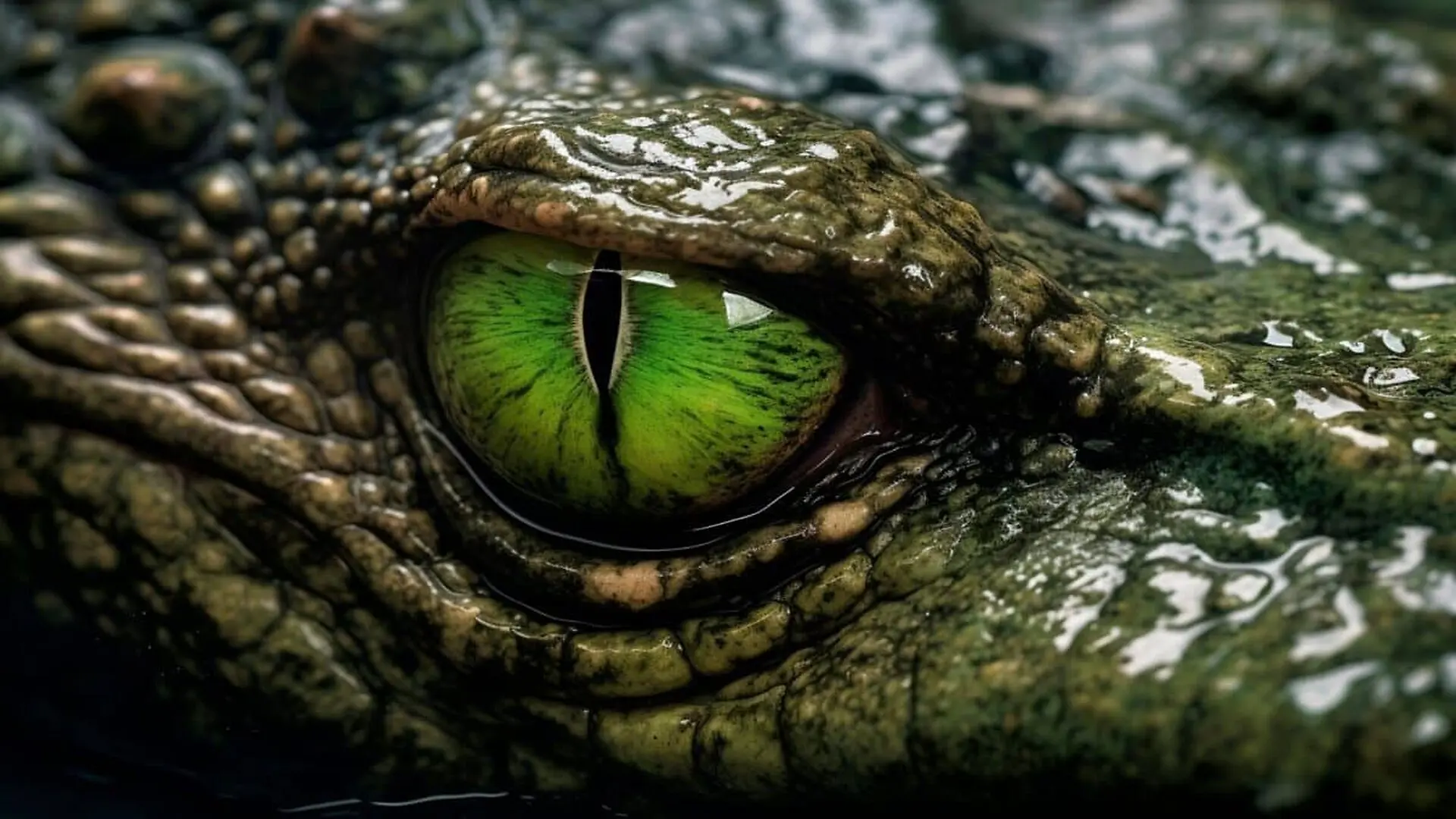
Roughly 11 to 16 million years ago, the South American landscape looked vastly different than it does today. During the Middle Miocene, the continent was defined by expansive lake systems and sprawling wetlands, serving as a sanctuary for a menagerie of colossal creatures. Among the titans of this era, one predator sat at the absolute pinnacle of the food chain: Purussaurus neivensis.
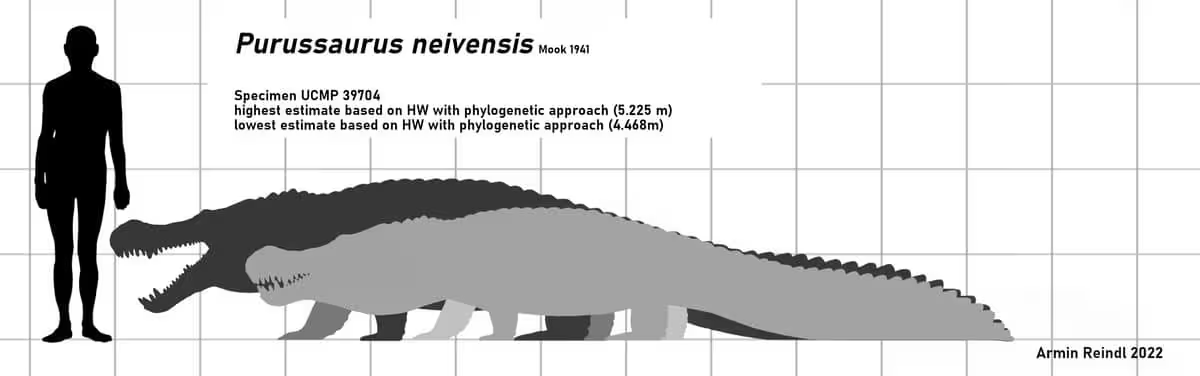
This prehistoric crocodilian, a massive relative of modern caimans, reached lengths of approximately 7 meters and weighed an estimated 1,800 kilograms. With a physical footprint comparable to a small truck, the reptile dominated the water’s edge, where it lurked as an apex predator in an environment crowded with oversized fauna.
Evidence of Prehistoric Apex Predation
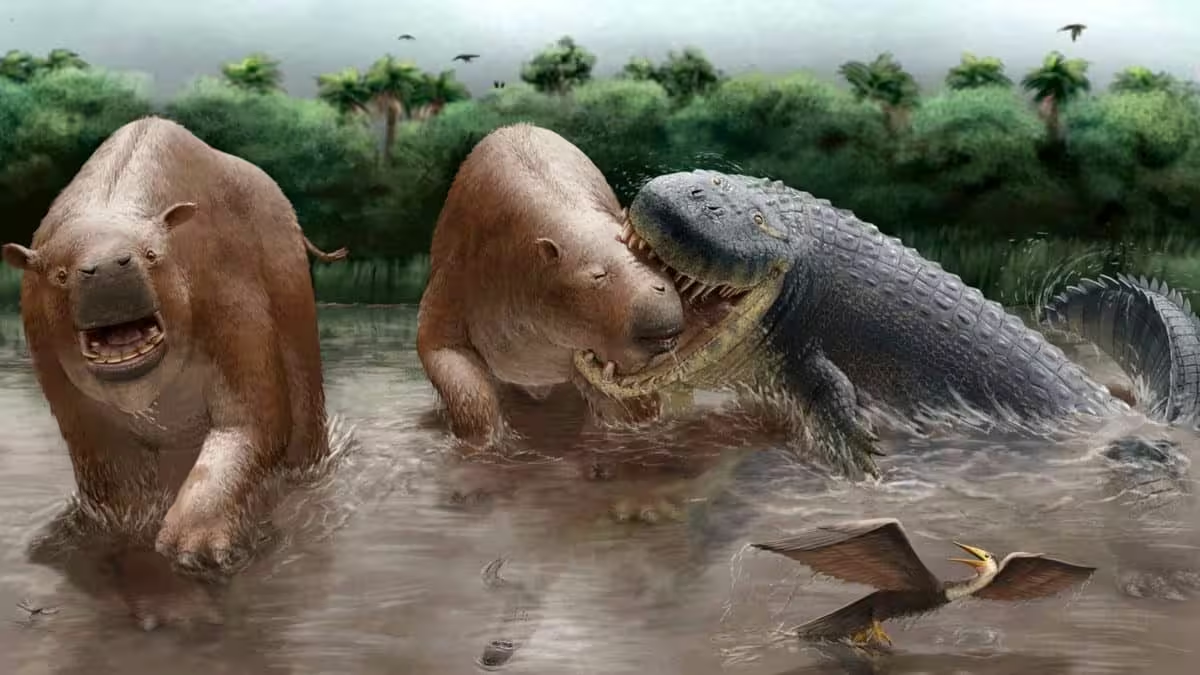
Recent analysis of fossils unearthed in Colombia, detailed in the Journal of Vertebrate Paleontology, offers a grim look at how this giant hunter interacted with its peers. Researchers identified distinct puncture marks on the remains of several large ungulates, including the elephant-like Granastrapotherium snorki and the rhinoceros-sized Pericotoxodon platignathus. These fossilized injuries bear a striking resemblance to the bite patterns inflicted by today’s crocodiles, providing direct evidence that Purussaurus neivensis routinely preyed on massive mammals.
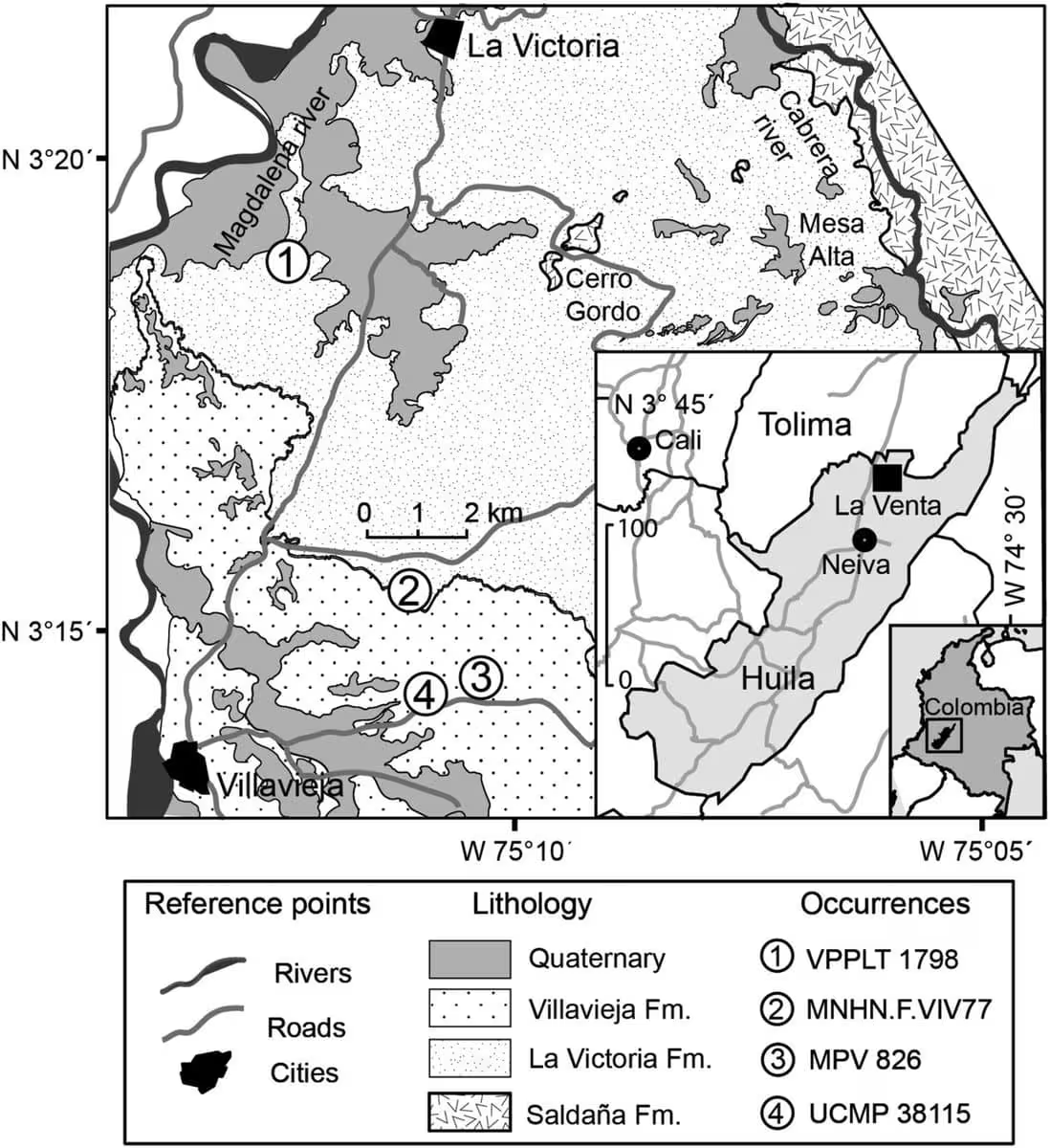
The Middle Miocene wetlands were a hotbed for biological gigantism. Alongside these crocodilians, the region teemed with armored glyptodonts, giant ground sloths, formidable terror birds, and massive anacondas. Because the wetlands forced both herbivores and predators to congregate at water sources, the environment provided a unique evolutionary theater where extreme sizes were not just possible, but arguably advantageous.
Beyond the Food Chain
New research suggests that the reign of Purussaurus neivensis extended beyond simply hunting herbivores. A 2025 study indicates that these massive reptiles also engaged with other high-level predators, including the flightless terror birds that roamed the continent. By consuming other hunters, the crocodilian solidified its status as an undisputed ruler of the Miocene waterways.
The fossilized records from sites like La Venta provide a rare window into this brutal and expansive ecosystem. These findings highlight a period in South American history where the competition for survival reached truly monumental proportions, characterized by creatures that pushed the very limits of vertebrate biology.
This article has been fact checked for accuracy, with information verified against reputable sources. Learn more about us and our editorial process.
Last reviewed on .
Article history
- Latest version
Reference(s)
- Wilson, Oscar E.., et al. “Physical evidence of crocodylian predation on ungulates in the Middle Miocene of Colombia.” Journal of Vertebrate Paleontology, August 16, 2026 Informa UK Limited, doi: 10.1080/02724634.2026.2701154. <https://www.tandfonline.com/doi/full/10.1080/02724634.2026.2701154?et_rid=1077940883&et_cid=6044025>.
Cite this page:
- Posted by Hassan Raza