Ancient Shellfish Fossil Reveals Parental Care 125 Million Years Ago
Remarkable fossil discovery reveals freshwater shellfish protected and nurtured their young 125 million years ago.
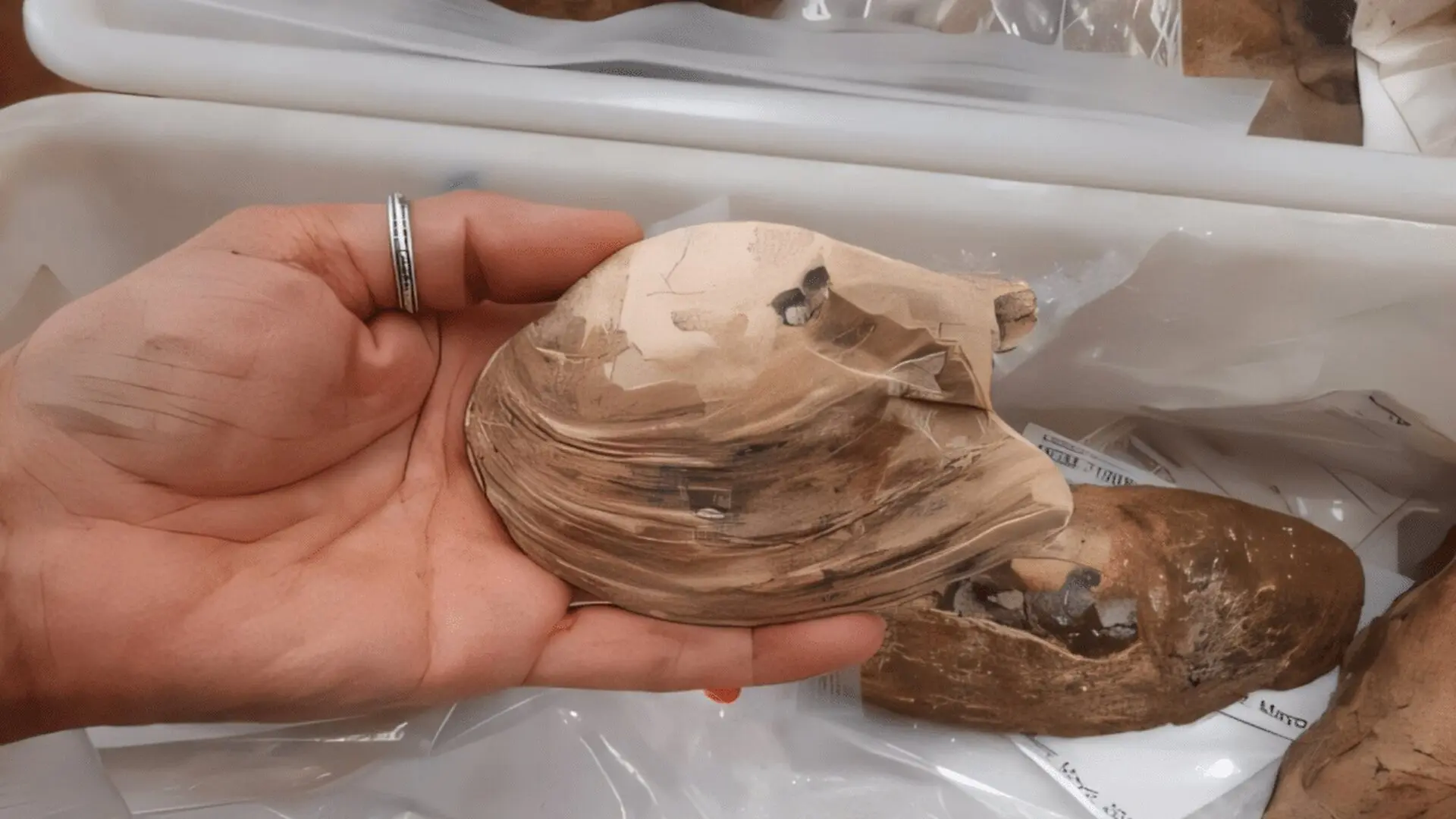
A new fossil find from the Isle of Wight has extended the known timeline of parental care in freshwater bivalves by more than 125 million years. Tiny embryos and early‑stage larvae were recovered intact within the gill tissue of an extinct species, offering concrete proof that these ancient shellfish nurtured their young long before the dinosaurs vanished. The research appears in Scientific Reports.
Early Cretaceous Shellfish Showed Parental Care, Study Finds
The specimens belong to Margaritifera valdensis, a prehistoric relative of today’s freshwater pearl mussels. What sets these fossils apart is the exceptional preservation of internal soft parts—brood chambers, gill filaments, mineral supports and several stages of developing offspring—allowing scientists to reconstruct a complete reproductive sequence that took place in the Early Cretaceous.
Dr. Martin C. Munt, a visiting scholar at the University of Portsmouth and expert on fossil mollusks, highlighted the breakthrough. He remarked, “This is the earliest known fossil evidence that these shellfish cared for and protected their developing young. Until now, this reproductive strategy was known only from living species.”
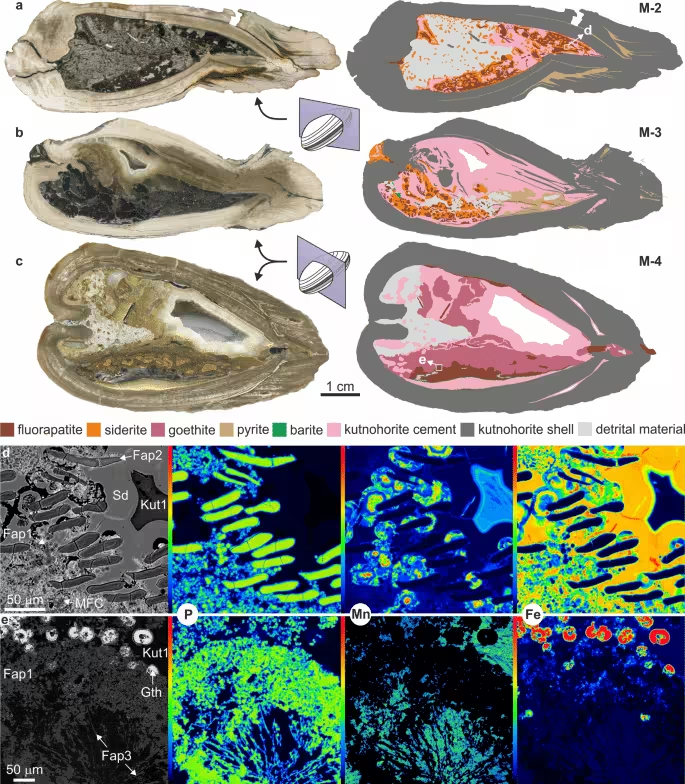
The find pushes back the emergence of sophisticated reproductive tactics to a time when many modern freshwater ecosystems had not yet formed. By capturing a snapshot of ancient parental behavior, the fossils provide a rare window into the life history of extinct organisms beyond their skeletal framework.
Ancient Embryos Reveal Early Reproductive Tactics
Contemporary freshwater mussels are renowned for their unusual life cycle: larvae mature inside dedicated chambers in the mother’s gills before being released, often entering a brief parasitic phase on fish hosts that aids dispersal. The newly documented fossils suggest that key components of this strategy were already in place over 125 million years ago.
According to Dr. Munt, “Not only does this discovery provide a rare glimpse into how ancient freshwater shellfish reproduced, but it also helps explain how these animals successfully adapted to life in rivers and lakes millions of years ago.”
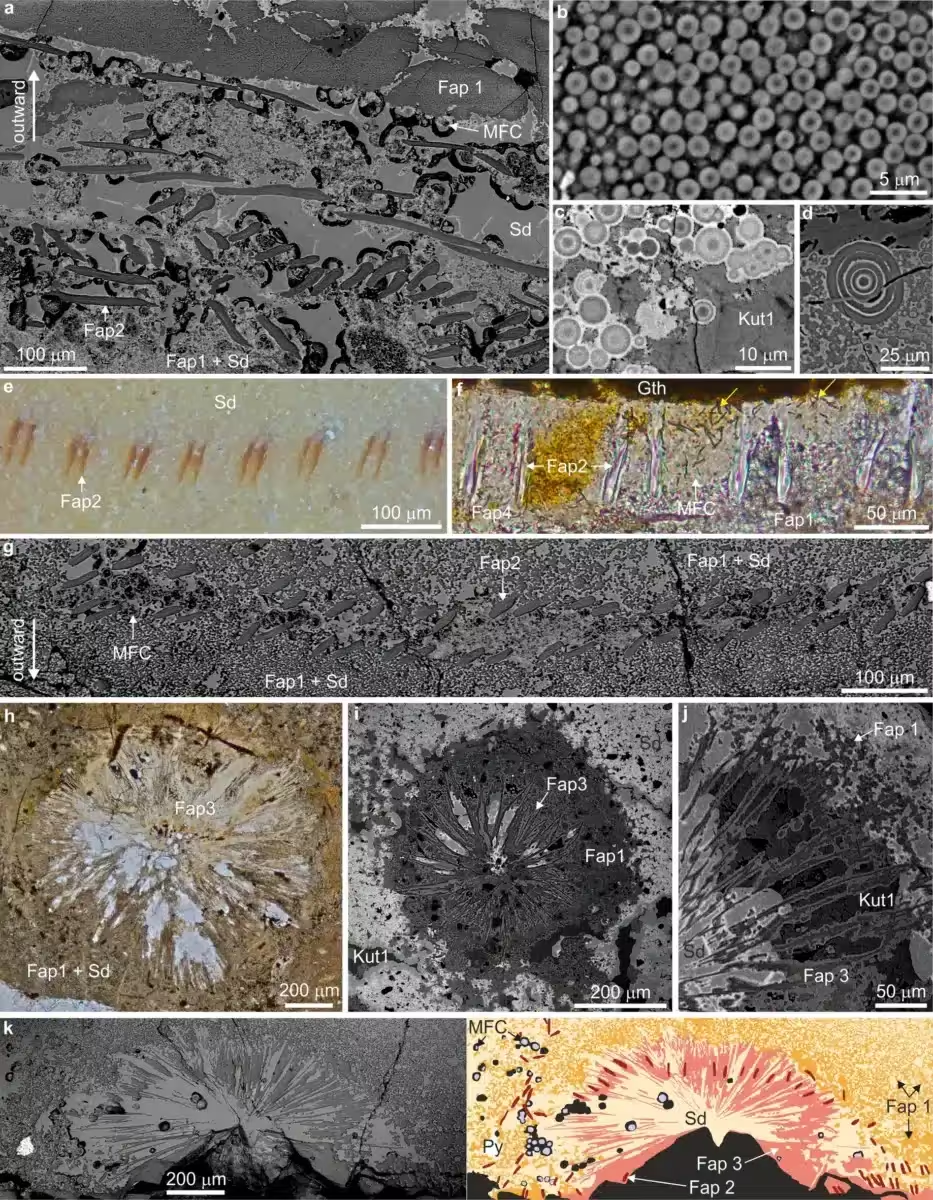
Detailed analysis identified a sequence of developmental stages, from cell‑like embryos to more mature larvae, indicating that the gill cavity functioned as a protective incubation chamber much as it does in living mussels. Dr. Munt added, “For decades, scientists have searched for direct evidence of reproduction in ancient freshwater mussels, making this find a significant breakthrough in understanding their evolutionary history.”
Evidence Extends Complex Reproduction Timeline by Millions of Years
The authors argue that the specimens demonstrate the early emergence of intricate reproductive adaptations, predating prior records. Their paper in Scientific Reports supports the view that freshwater mussels had already refined mechanisms for safeguarding offspring while coping with the variable conditions of riverine habitats.
Dr. Aleksandra Skawina, a Polish specialist in fossil bivalves, emphasized the broader significance: “These new fossils demonstrate that this complex reproductive strategy had already evolved by the Early Cretaceous.” Freshwater ecosystems impose challenges such as fluctuating flow, sediment load and limited dispersal opportunities. Internal incubation likely boosted juvenile survival, helping the lineage endure through extensive environmental shifts.
Unraveling the 19th‑Century ‘Molluskite’ Enigma
The study also sheds light on a long‑standing mystery surrounding “molluskite,” a dark material first described by 19th‑century paleontologist Gideon Mantell. Modern geochemical analysis revealed that the substance consists of fossilized soft tissue and reproductive structures that were exceptionally mineralized.
Rafael P. Lozano, a geochemist at the Geological and Mining Institute of Spain (CSIC), explained, “We found that this material is actually made up of fossilized soft tissues and reproductive structures that have been exceptionally preserved by minerals.” This insight clarifies how delicate biological features survived for more than a hundred million years, unlocking data on development and anatomy that are rarely accessible in the fossil record.
This article has been fact checked for accuracy, with information verified against reputable sources. Learn more about us and our editorial process.
Last reviewed on .
Article history
- Latest version
Reference(s)
- Delvene, Graciela. “Exceptionally preserved embryos reveal maternal care in freshwater bivalves since the Cretaceous - Scientific Reports.”, vol. 16, no. 1, June 22, 2026, pp. 17691 Nature, doi: 10.1038/s41598-026-56499-1. <https://www.nature.com/articles/s41598-026-56499-1>.
Cite this page:
- Posted by Hassan Raza