Archaeologists Discover Why Ancient Egyptians Stacked Mummies In A Hidden Chamber
Archaeologists in Egypt’s Theban Necropolis have discovered a 700-year-old burial chamber, revealing mysterious, ancient bonds between different species.
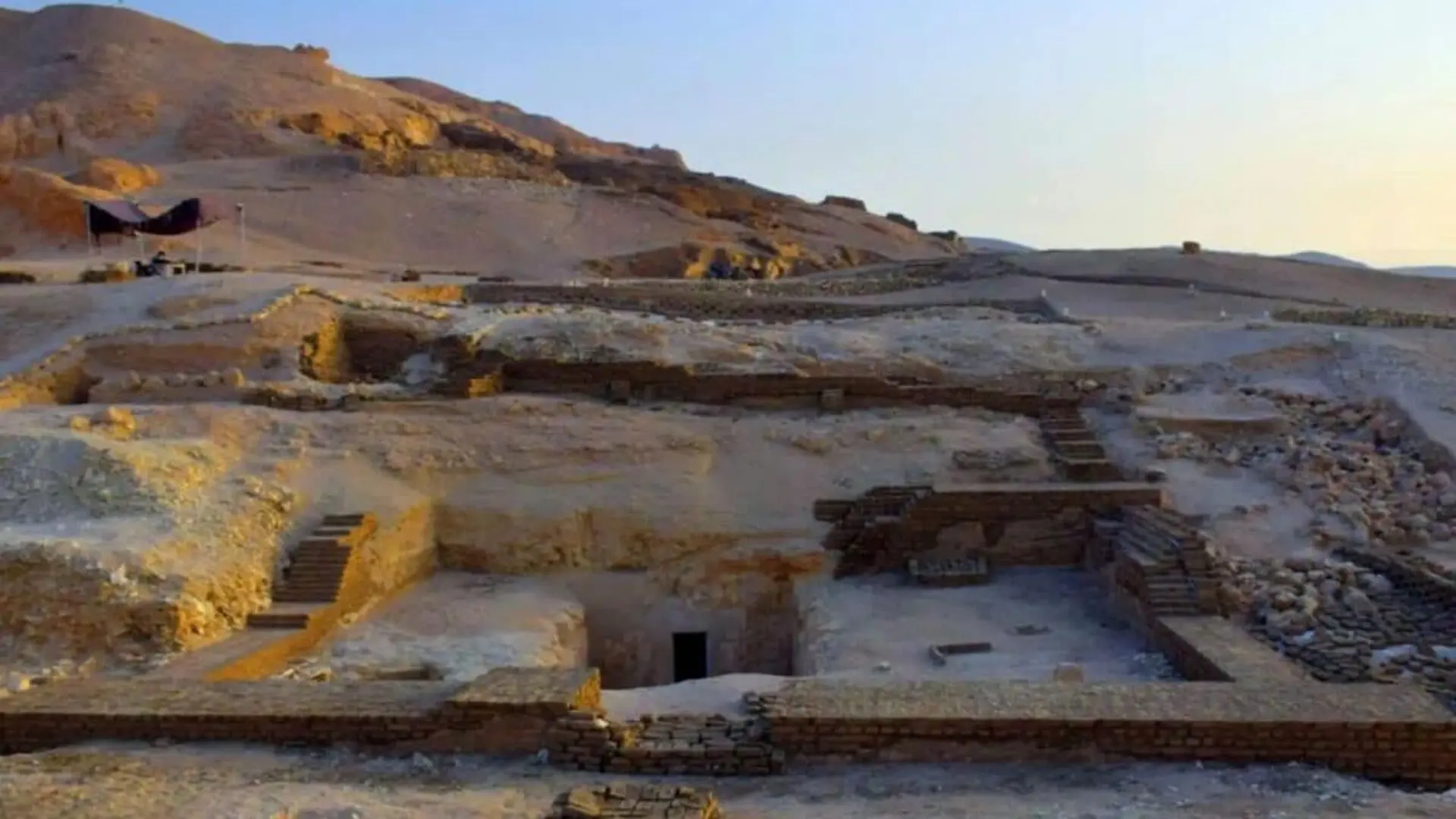
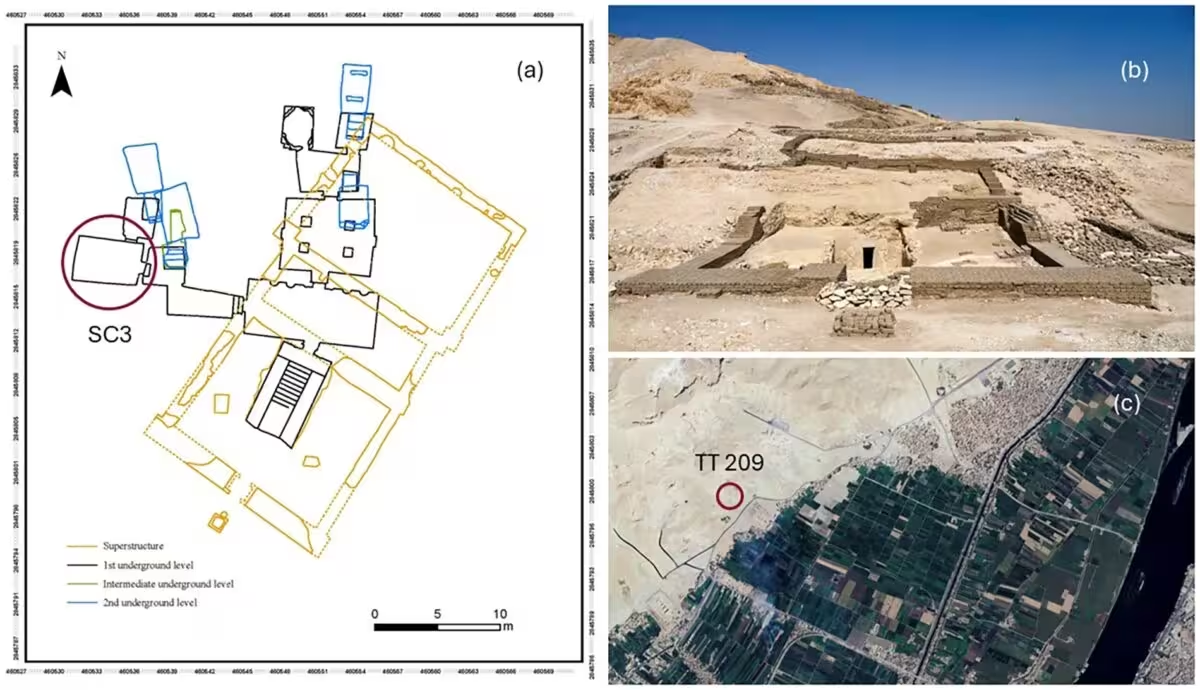
Archaeologists working within the Theban Necropolis have uncovered a remarkable historical record inside a single chamber of Theban Tomb 209 (TT 209). Located across the Nile from Luxor, this site contains the remains of sixteen mummified individuals, four fragmented bodies, and an enigmatic mummified dog resting atop two human mummies. Rather than signs of historical chaos, the meticulous arrangement of these remains reveals a sophisticated evolution of funerary practices spanning nearly 700 years.
The investigation, conducted by a team from the University of La Laguna in Spain and published in the journal Frontiers in Environmental Archaeology, tracks burial habits from the Twenty-fifth Dynasty (754–656 BCE) through the Ptolemaic period (305–30 BCE). By mapping the spatial relationships between the deceased, researchers identified nine distinct phases of interment that challenge the notion that these tombs were abandoned to neglect.
Evolving Rituals in a Constricted Space
During the initial period of use, the chamber served individuals of higher social status. Excavations revealed these early residents were placed in individual coffins and interred with high-value items, such as imported goods housed in Phoenician amphorae, protective amulets, and funerary nets. According to Dr. Miguel Ángel Molinero Polo, a professor of Egyptology at the University of La Laguna, the lavish nature of these early grave goods underscores the wealth and standing of those first laid to rest.
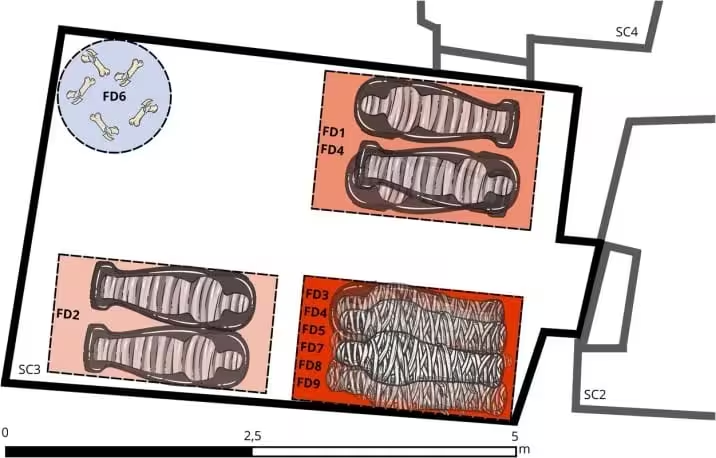
As time progressed—specifically through the Persian period (680–404 BCE)—the tomb’s available space dwindled. This necessitated a shift in burial logistics. Bodies were no longer laid out in spacious, solitary arrangements. Instead, researchers observed a transition to vertical stacking, where corpses were carefully placed atop existing remains. This was not a breakdown of tradition, but rather an adaptive use of space that required deliberate planning by those managing the site.
Interpreting Ancient Funerary Logic
The practice of vertical superposition became standard for two-thirds of the burials following the Twenty-fifth Dynasty. Molinero Polo notes that these later burials, while lacking coffins, were meticulously mummified and often accompanied by upright jars, suggesting that specific, distinct ritual patterns emerged as the chamber became more crowded.
Perhaps the most compelling find resides in the southeastern corner of the chamber. Here, a Ptolemaic-era deposit features a stack of four human mummies topped by a mummified dog. Lead author Dr. Jared Carballo-Pérez suggests the animal’s placement could signify a deeply personal connection or a symbolic role for the creature as a psychopomp—a spiritual guide tasked with escorting the deceased through the afterlife.
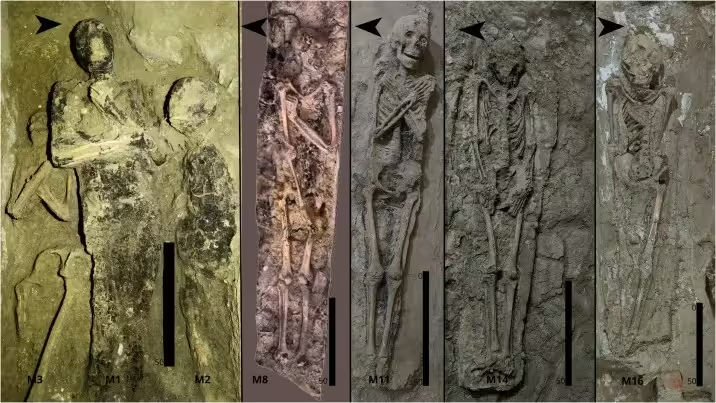
While environmental factors such as flooding and fire damage have obscured some aspects of the tomb’s long history, the work at TT 209 provides a rare, grounded perspective on how ancient Egyptian communities navigated the practical and spiritual challenges of burial over several centuries.
This article has been fact checked for accuracy, with information verified against reputable sources. Learn more about us and our editorial process.
Last reviewed on .
Article history
- Latest version
Reference(s)
- Carballo-Pérez, Jared. “From individualized mummies to collective accumulations: an archaeothanatological analysis of funerary reuse in Theban Tomb 209 (Twenty-Fifth Dynasty–Ptolemaic Egypt).” Frontiers in Environmental Archaeology, vol. 5, August 18, 2026, pp. 1888379 Frontiers, doi: 10.3389/fearc.2026.1888379/full. <https://www.frontiersin.org/journals/environmental-archaeology/articles/10.3389/fearc.2026.1888379/full>.
- <https://www.researchgate.net/profile/Miguel-Angel-Molinero-Polo>.
- <https://www.researchgate.net/profile/Jared-Carballo-Perez>.
Cite this page:
- Posted by Hassan Raza