Agricultural Irrigation Pump Trial Reveals Surprising Mental Health Benefits for Farmers With HIV
A two-year study in rural Kenya links improved household water access to lower depressive symptoms, while raising new questions about gendered health behaviors.
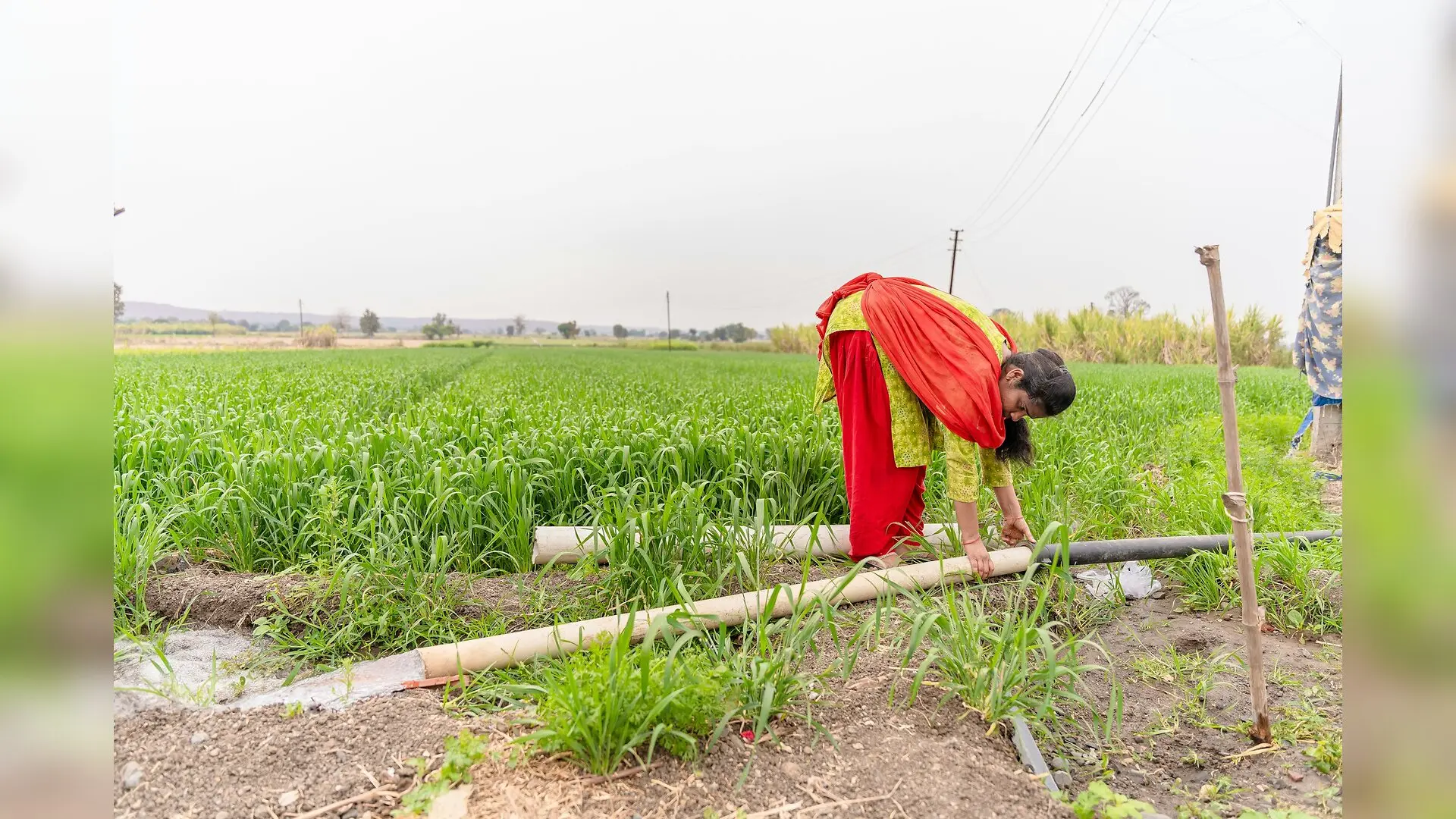
Farmers living with HIV in western Kenya experienced significantly lower water insecurity and fewer depressive symptoms after receiving agricultural loans and irrigation training, according to a secondary analysis published in BMJ Public Health.
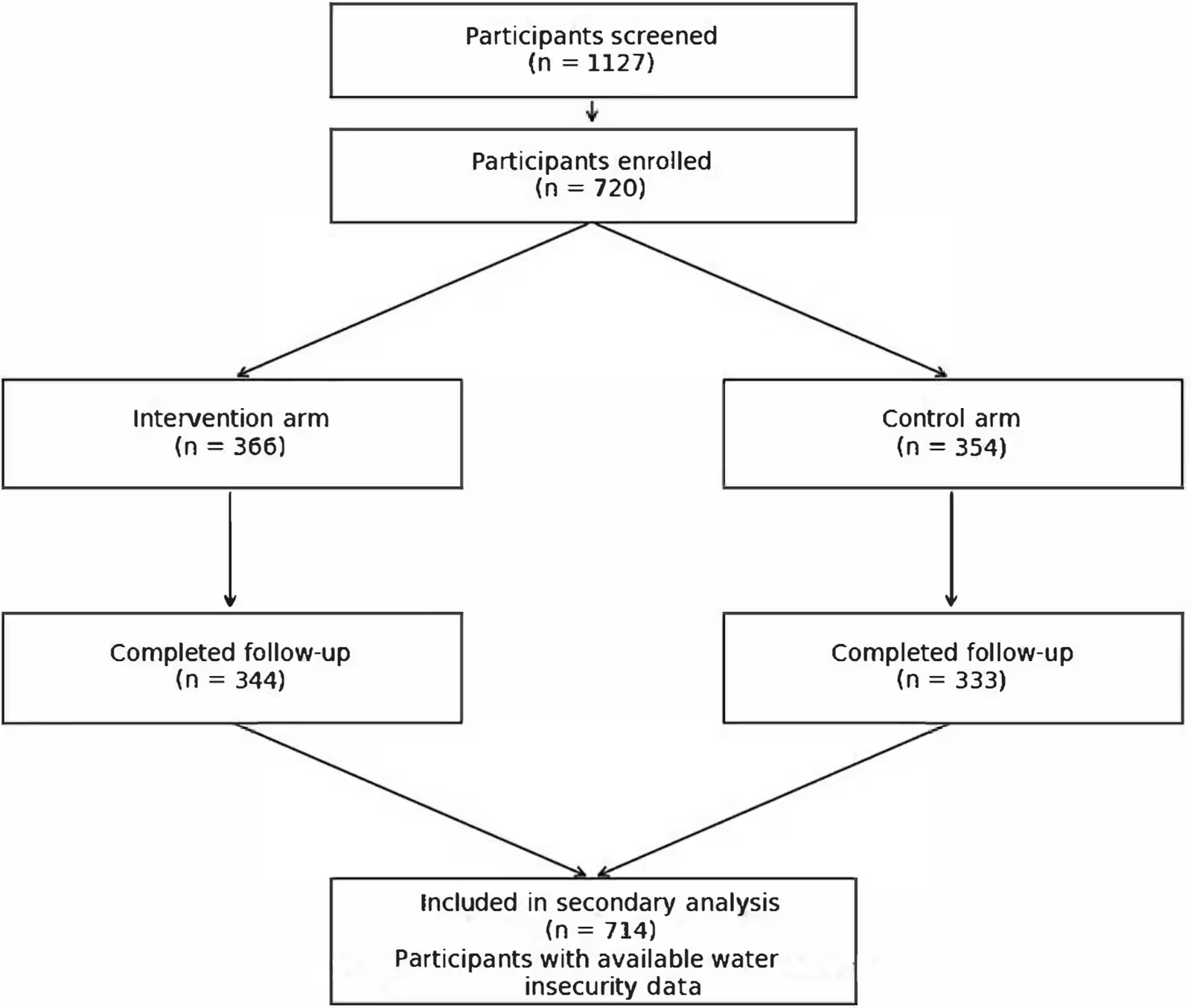
The study, which followed 720 participants across Kisumu, Homa Bay, and Migori counties over a 24-month period, highlights how multifaceted rural development programs can influence physical and mental well-being. Researchers evaluated data from the Shamba Maisha trial, a matched-pair cluster randomized controlled trial, to determine whether providing low-cost agricultural technology altered household water access and subsequent health outcomes.
How Irrigation Technology Changed Daily Water Access
Water insecurity, defined as the inability to reliably access safe and sufficient water for domestic needs, remains a persistent challenge throughout rural Africa. Climate change has increased the unpredictability of rainfall in western Kenya, threatening the livelihoods of smallholder farmers who rely on seasonal precipitation. To combat these pressures, the intervention arm of the study received training in sustainable farming practices alongside a vendor-paid loan for a human-powered water pump, seeds, and fertilizer. The control arm continued receiving standard HIV care without immediate agricultural provisions.
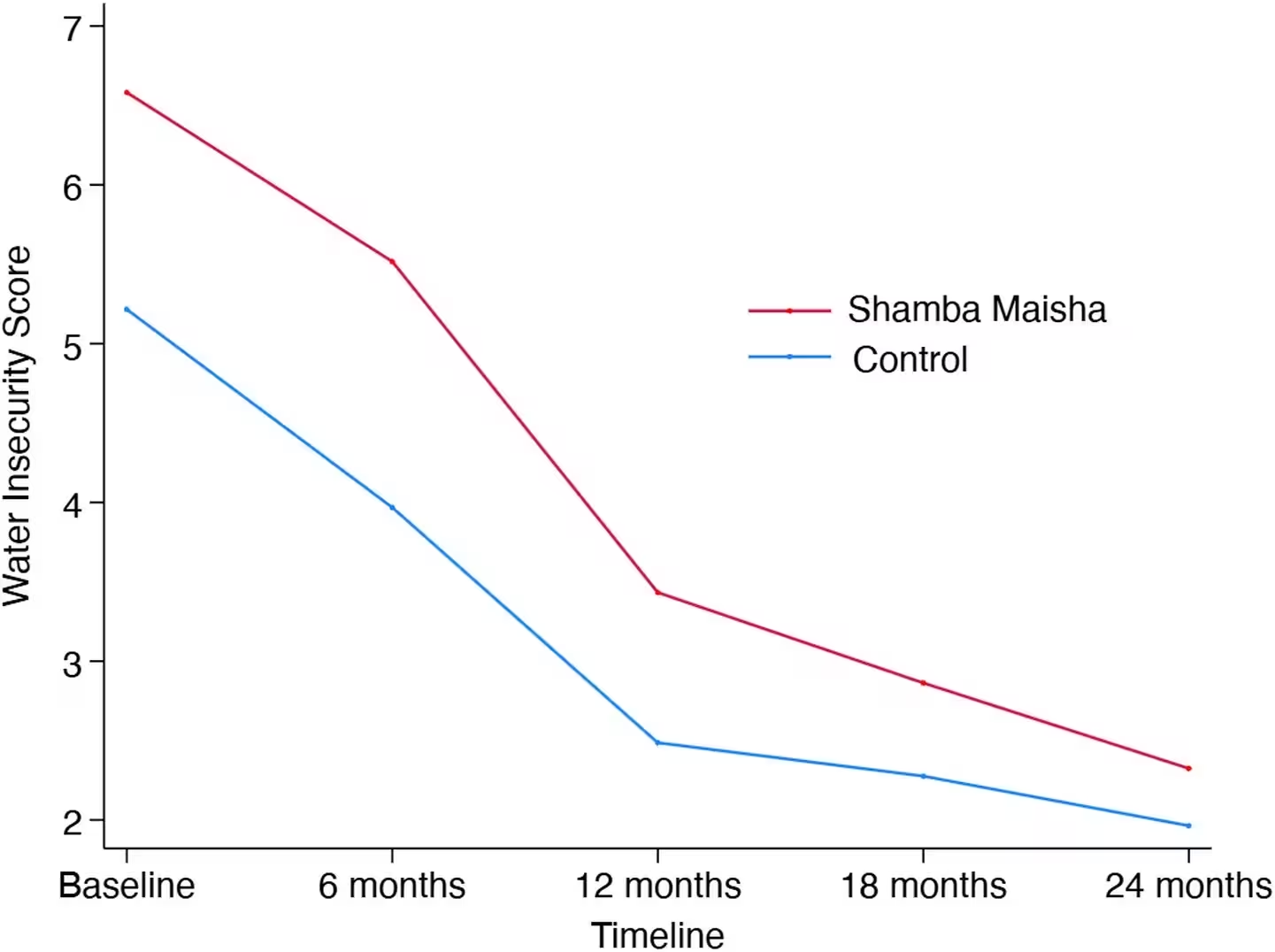
Participants utilized the low-cost treadle pumps primarily for crop irrigation during dry periods. Adoption rates increased steadily from 6.3 percent of participants at six months to 68.8 percent by the end of the 24-month intervention. Statistical modeling revealed that participants in the intervention arm achieved a greater reduction in household water insecurity scores compared to the control group, with a linear trend difference of minus 1.17.
Connecting Resource Reliability to Mental Health Improvements
The research team tracked multiple health metrics, including depressive symptoms, AIDS-defining illnesses, and HIV viral suppression rates. Statistical evaluations indicated that decreases in water insecurity over time correlated with a lower relative risk of depressive symptoms across the entire study population, with a relative risk ratio of 0.93. The authors suggest that alleviating water scarcity reduces chronic psychosocial stress linked to daily struggles such as early morning water queuing, household hygiene management, and disputes with neighbors over scarce resources.
While food security also improved markedly among the intervention group, the broader water insecurity scale captured experiential challenges that extend beyond dietary availability. Enhanced water access may have provided crucial time-saving benefits for women, who predominantly manage domestic water collection, thereby supporting better mental health outcomes.
Unexpected Findings and Study Limitations
Contrary to initial hypotheses, researchers observed no significant association between improved water insecurity and a reduction in AIDS-defining illnesses across the overall population. Furthermore, sex-stratified analyses revealed an unexpected trend among male participants, where decreased water insecurity was associated with a modestly higher likelihood of having a detectable viral load above 200 copies per milliliter.
The study authors urged caution regarding this male-specific finding, noting that it was exploratory and not prespecified in the trial design. They hypothesized that well-defined gender roles in the region might prompt different behavioral responses to resource availability. Because women typically prioritize household chores and domestic water needs before their own, they consistently buffer family members from scarcity. Conversely, men might perceive improved environmental conditions or self-reported wellness as a reason to diminish the urgency of regular clinical engagement, though overall antiretroviral therapy adherence remained high.
The researchers acknowledged several limitations, including baseline imbalances in depressive symptoms and water insecurity scores between the study arms. Because the parent trial was not originally designed to isolate the exact biological or social mechanisms linking water pumps to mental health, the findings serve primarily as hypothesis-generating evidence. Future investigations will need to incorporate standardized water security metrics and repeated adherence measures to clarify how environmental interventions shape long-term clinical care engagement.
The research was published in BMJ public health on January 1, 2026.
This article has been fact checked for accuracy, with information verified against reputable sources. Learn more about us and our editorial process.
Last reviewed on .
Article history
- Latest version
Reference(s)
- Torres-Aguilar, Pablo., et al. “Secondary analysis of a cluster randomised controlled trial of a multisectoral agricultural intervention showing improvements in water insecurity and mental health among people living with HIV in Kenya.” BMJ Public Health, vol. 4, no. 4, November 10, 2026, pp. e004714 BMJ, doi: 10.1136/bmjph-2025-004714. <https://doi.org/10.1136/bmjph-2025-004714>.
Cite this page:
- Posted by William Moore