Microplastics Found in Human Tumors Trigger Cancer-Linked Cellular Stress
Ecology

Microplastics Found in Human Tumors Trigger Cancer-Linked Cellular Stress

A comprehensive review reveals how plastic particles drive oxidative damage, inflammation, and genetic instability in cells
By Omar Mirza
Published:
Email this Article
Microplastics Found in Human Tumors Trigger Cancer-Linked Cellular Stress
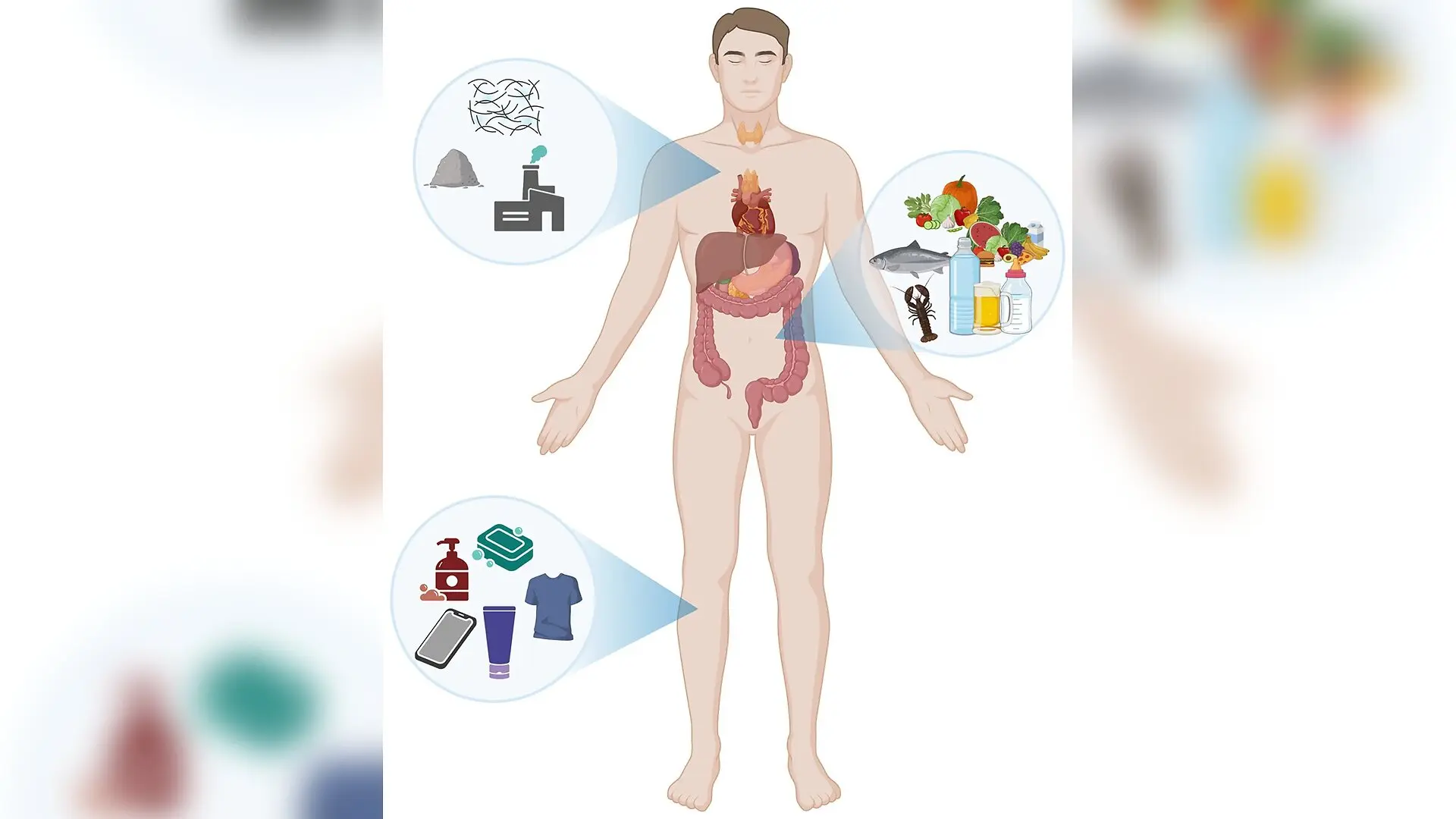
Routes of entry of MNPLs into the human body. MNPLs enter the human organism through inhalation (including fabrics, fibers, dust, industrial emissions, and manufacturing processes), ingestion (via food, water, and beverages), and dermal contact (such as clothing, cosmetics, soap, phone cases, and toothpaste). Among these pathways, ingestion is regarded as the most common route of exposure. MNPLs, microplastics and nanoplastics. The figure was created using BioRender (https://BioRender.com/s7w3ql4). Mary A Vasilopoulou et al. / International journal of molecular medicine

Tiny plastic fragments accumulating in human organs trigger cellular stress and inflammation pathways that are closely linked to cancer development. While direct proof in humans is still out of reach, a comprehensive review published in the International Journal of Molecular Medicine details how microscopic and nanoscopic plastic debris can alter cell biology.

How Plastic Particles Infiltrate the Human Body

Microplastics and nanoplastics are pervasive environmental contaminants resulting from the breakdown of larger commercial goods. People routinely ingest these materials through seafood, fruits, vegetables, and bottled water, with some estimates suggesting weekly consumption comparable to the weight of a credit card. Once inside, particles smaller than 50 nanometers can slip through cellular membranes using passive diffusion, while larger fragments enter via endocytosis or phagocytosis.

These foreign invaders typically find their way into lysosomes, the recycling centers of cells, where they resist breakdown and accumulate over time. When cells divide, the trapped plastics pass down to daughter cells, ensuring a persistent presence that disrupts normal biological homeostasis. This long-term retention sets the stage for chronic cellular irritation.
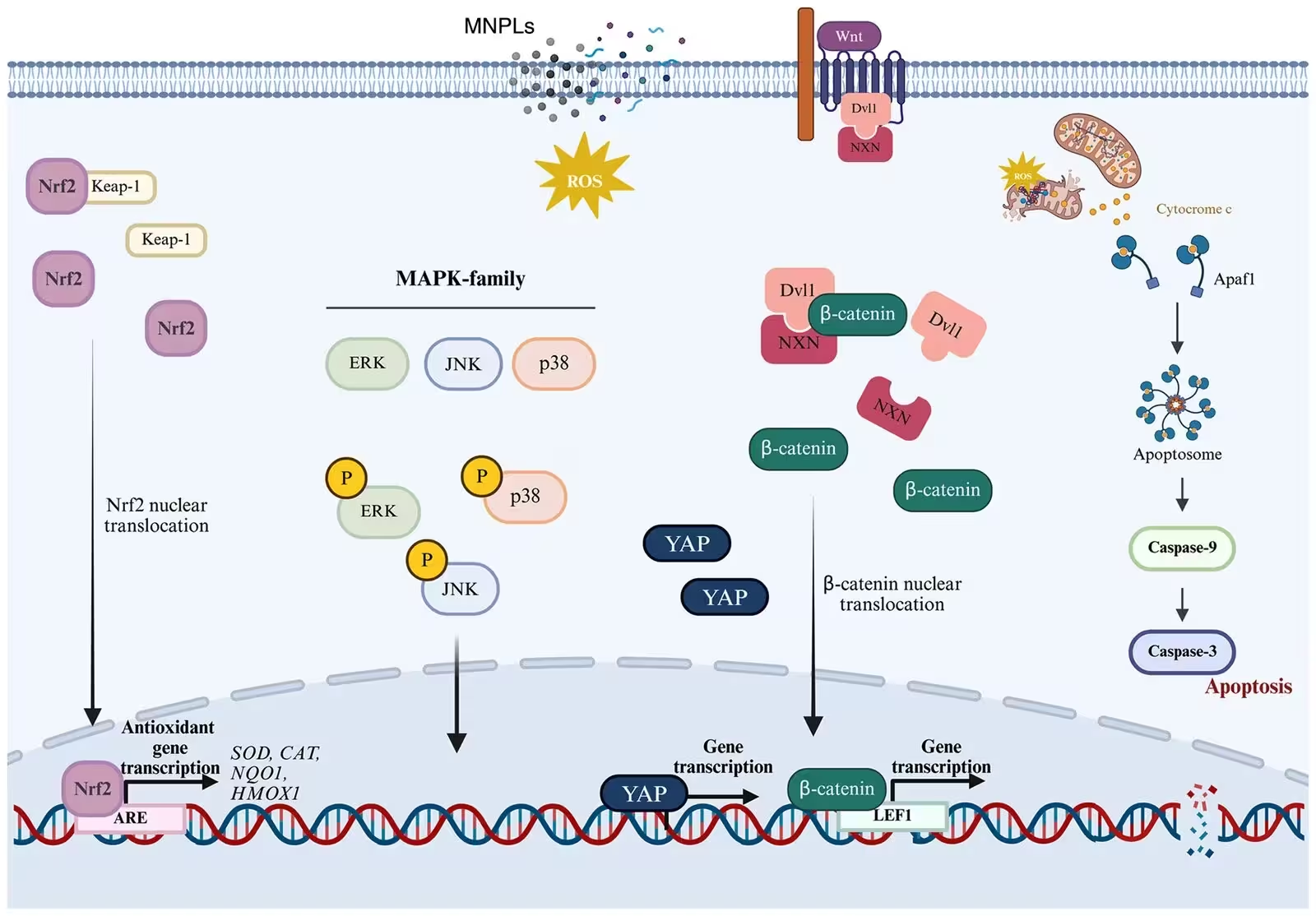
Figure 2: Oxidative stress and signaling dysregulation induced by MNPLs. Exposure to MNPLs results in increased intracellular production of ROS and/or the suppression of antioxidant enzyme activity. Elevated ROS levels cause damage to DNA and mitochondria, thus compromising cell viability. These effects activate Nrf2 following its release from Keap-1, resulting in its subsequent translocation to the nucleus, where it promotes the transcription of antioxidant genes through binding to AREs in their promoter regions. ROS also stimulate MAPK signaling pathways (ERK, JNK and p38), thereby activating transcription factors involved in cell survival and apoptosis. Excessive ROS generated by MNPL exposure facilitates the dissociation of the NXN/Dvl1 complex, a redox-sensitive regulator of Wnt signaling that restrains β-catenin in the cytoplasm. This dissociation leads to β-catenin stabilization and its subsequent translocation into the nucleus, where it binds to LEF1 to activate the Wnt/β-catenin signali
Oxidative stress and signaling dysregulation induced by MNPLs. Exposure to MNPLs results in increased intracellular production of ROS and/or the suppression of antioxidant enzyme activity. Elevated ROS levels cause damage to DNA and mitochondria, thus compromising cell viability. These effects activate Nrf2 following its release from Keap-1, resulting in its subsequent translocation to the nucleus, where it promotes the transcription of antioxidant genes through binding to AREs in their promoter regions. ROS also stimulate MAPK signaling pathways (ERK, JNK and p38), thereby activating transcription factors involved in cell survival and apoptosis. Excessive ROS generated by MNPL exposure facilitates the dissociation of the NXN/Dvl1 complex, a redox-sensitive regulator of Wnt signaling that restrains β-catenin in the cytoplasm. This dissociation leads to β-catenin stabilization and its subsequent translocation into the nucleus, where it binds to LEF1 to activate the Wnt/β-catenin signali Credit: Mary A Vasilopoulou et al. / International journal of molecular medicine

Cellular Disruption and Oxidative Stress Pathways

The review authors, led by researchers from the National Hellenic Research Foundation, evaluated how plastic exposure ramps up the production of reactive oxygen species. These volatile oxygen molecules create oxidative stress, which damages DNA, lipids, and proteins while exhausting natural antioxidant defenses. The resulting genetic instability can activate critical signaling pathways like MAPK, Wnt and beta-catenin, all of which are frequently hijacked by tumors to promote runaway cell division and survival.

Beyond internal chemical stress, plastic particles also provoke the immune system by overstimulating macrophages and neutrophils. This chronic inflammation leads to the release of pro-inflammatory cytokines and activates inflammasomes such as NLRP3, creating a tissue microenvironment that encourages malignant progression. Furthermore, ingested plastics disrupt gut microbiomes, shifting bacterial populations in ways that impair host metabolism and immune regulation.

The Trojan Horse Effect of Chemical Co-Contaminants

Plastic debris rarely travels alone through ecosystems or the human body. Because these polymers act like molecular sponges, they absorb heavy metals, persistent organic pollutants, and pathogenic microorganisms from their surroundings. When these contaminated particles enter an organism, they deliver a dual threat of the polymer matrix alongside toxic chemical passengers.
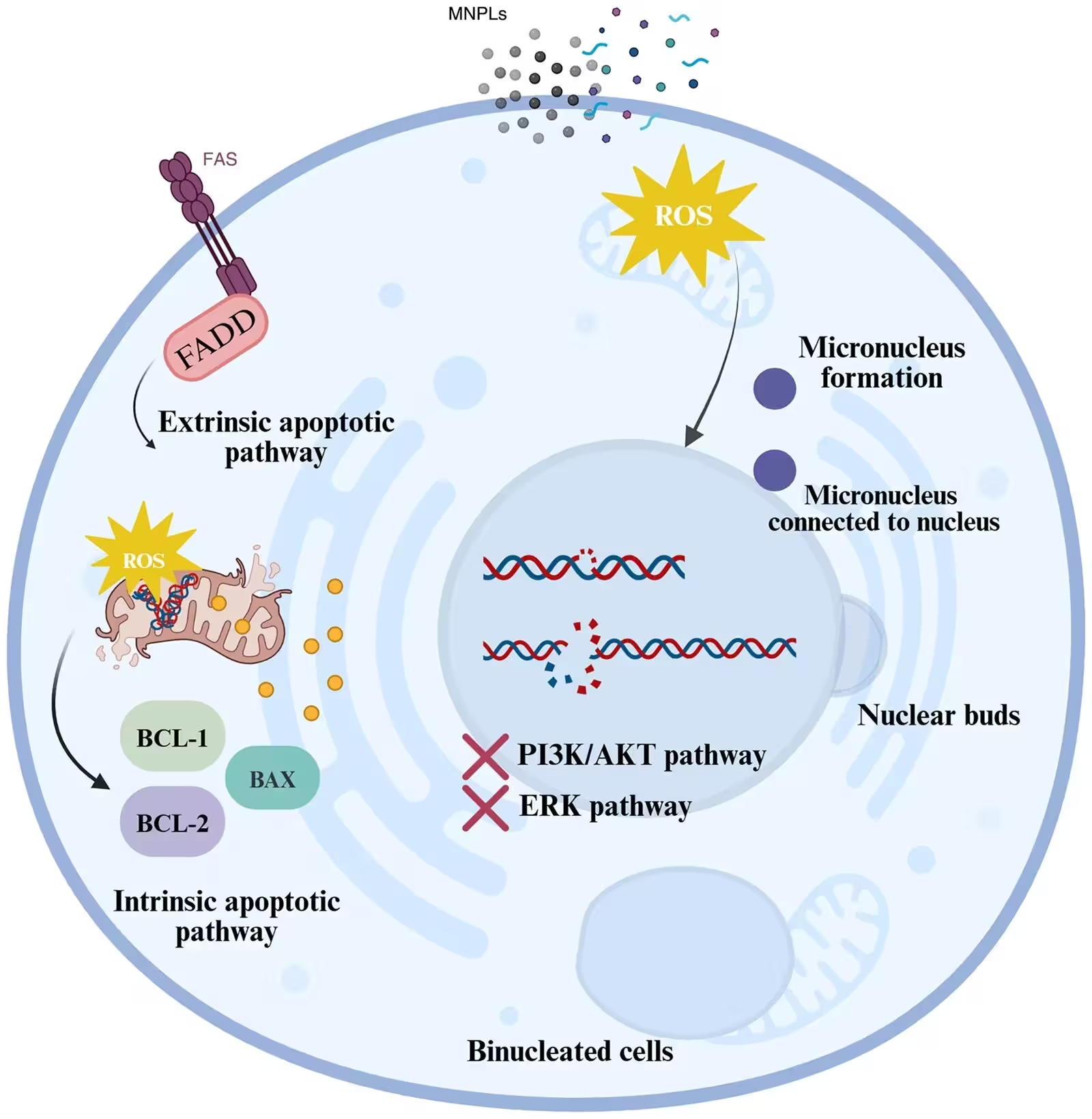
Figure 3: DNA damage and genotoxicity induced by MNPLs. ROS generation resulting from MNPLs leads to oxidative DNA damage, including single- and double-strand breaks, micronuclei formation (represented by a blue sphere), micronuclei connected to the main nucleus, and nuclear buds. This DNA damage triggers the initiation of apoptosis, with the extrinsic pathway activated through FADD, while mitochondrial dysfunction in the intrinsic pathway promotes cytochrome c release, along with the upregulation of BAX and suppression of BCL-1 and BCL-2. Additionally, the PI3K/AKT and ERK signaling pathways are inhibited. MNPLs, microplastics and nanoplastics; ROS, reactive oxygen species; FADD, Fas-associated death domain; BAX, Bcl-2-associated X-protein; BCL-1, B-cell lymphoma 1; BCL-2, B-cell lymphoma 2; PI3K, phosphoinositide 3-kinase; AKT, protein kinase B; ERK, extracellular regulated kinase. The figure was created using BioRender (https://BioRender.com/9pgdyx0).
DNA damage and genotoxicity induced by MNPLs. ROS generation resulting from MNPLs leads to oxidative DNA damage, including single- and double-strand breaks, micronuclei formation (represented by a blue sphere), micronuclei connected to the main nucleus, and nuclear buds. This DNA damage triggers the initiation of apoptosis, with the extrinsic pathway activated through FADD, while mitochondrial dysfunction in the intrinsic pathway promotes cytochrome c release, along with the upregulation of BAX and suppression of BCL-1 and BCL-2. Additionally, the PI3K/AKT and ERK signaling pathways are inhibited. MNPLs, microplastics and nanoplastics; ROS, reactive oxygen species; FADD, Fas-associated death domain; BAX, Bcl-2-associated X-protein; BCL-1, B-cell lymphoma 1; BCL-2, B-cell lymphoma 2; PI3K, phosphoinositide 3-kinase; AKT, protein kinase B; ERK, extracellular regulated kinase. The figure was created using BioRender (https://BioRender.com/9pgdyx0). Credit: Mary A Vasilopoulou et al. / International journal of molecular medicine

Laboratory models demonstrated that this hitchhiking effect can amplify toxic outcomes compared to exposure from either plastics or pollutants alone. Synergistic interactions between microplastics and endocrine-disrupting chemicals like bisphenol A or heavy metals like cadmium worsened oxidative damage and cellular apoptosis in animal studies. The authors emphasize that evaluating these complex mixtures is essential for understanding true environmental risks.

Future Directions and Regulatory Challenges

Connecting environmental pollution to human oncology requires bridging the gap between laboratory cell cultures and real-world exposures. The research team advocates for adopting advanced toxicological frameworks, such as quantitative adverse outcome pathways and life-course exposome monitoring, to better track how plastic burdens translate into tissue-level damage. Preventing regrettable substitutions in industrial manufacturing will also be vital as global plastic consumption continues to rise.

The research was published in International journal of molecular medicine.

Fact Checked

This article has been fact checked for accuracy, with information verified against reputable sources. Learn more about us and our editorial process.

Last reviewed on .

Article history

  • Latest version

Reference(s)

  1. Vasilopoulou, Mary., et al. “Tracing the malignant trajectory of microplastics and nanoplastics: Biological pathways potentially implicated in carcinogenesis (Review).” International Journal of Molecular Medicine, vol. 58, no. 6, November 10, 2026, pp. 1-22. Spandidos Publications, doi: 10.3892/ijmm.2026.6047. <https://doi.org/10.3892/ijmm.2026.6047>.

Cite this page:

Mirza, Omar. “Microplastics Found in Human Tumors Trigger Cancer-Linked Cellular Stress.” BioScience. BioScience ISSN 2521-5760, 16 November 2026. <https://www.bioscience.com.pk/en/subject/ecology/tracing-the-malignant-trajectory-of-microplastics-and-nanoplastics-biological-pathways-potentially-implicated-in-carcinogenesis-review>. Mirza, O. (2026, November 16). “Microplastics Found in Human Tumors Trigger Cancer-Linked Cellular Stress.” BioScience. ISSN 2521-5760. Retrieved November 16, 2026 from https://www.bioscience.com.pk/en/subject/ecology/tracing-the-malignant-trajectory-of-microplastics-and-nanoplastics-biological-pathways-potentially-implicated-in-carcinogenesis-review Mirza, Omar. “Microplastics Found in Human Tumors Trigger Cancer-Linked Cellular Stress.” BioScience. ISSN 2521-5760. https://www.bioscience.com.pk/en/subject/ecology/tracing-the-malignant-trajectory-of-microplastics-and-nanoplastics-biological-pathways-potentially-implicated-in-carcinogenesis-review (accessed November 16, 2026).
End of the article