Why the Rapid Melting of Polar Ice Threatens Global Climate Stability
Satellite data and major expeditions reveal how Arctic amplification and Greenland ice loss are pushing Earth toward critical tipping points.
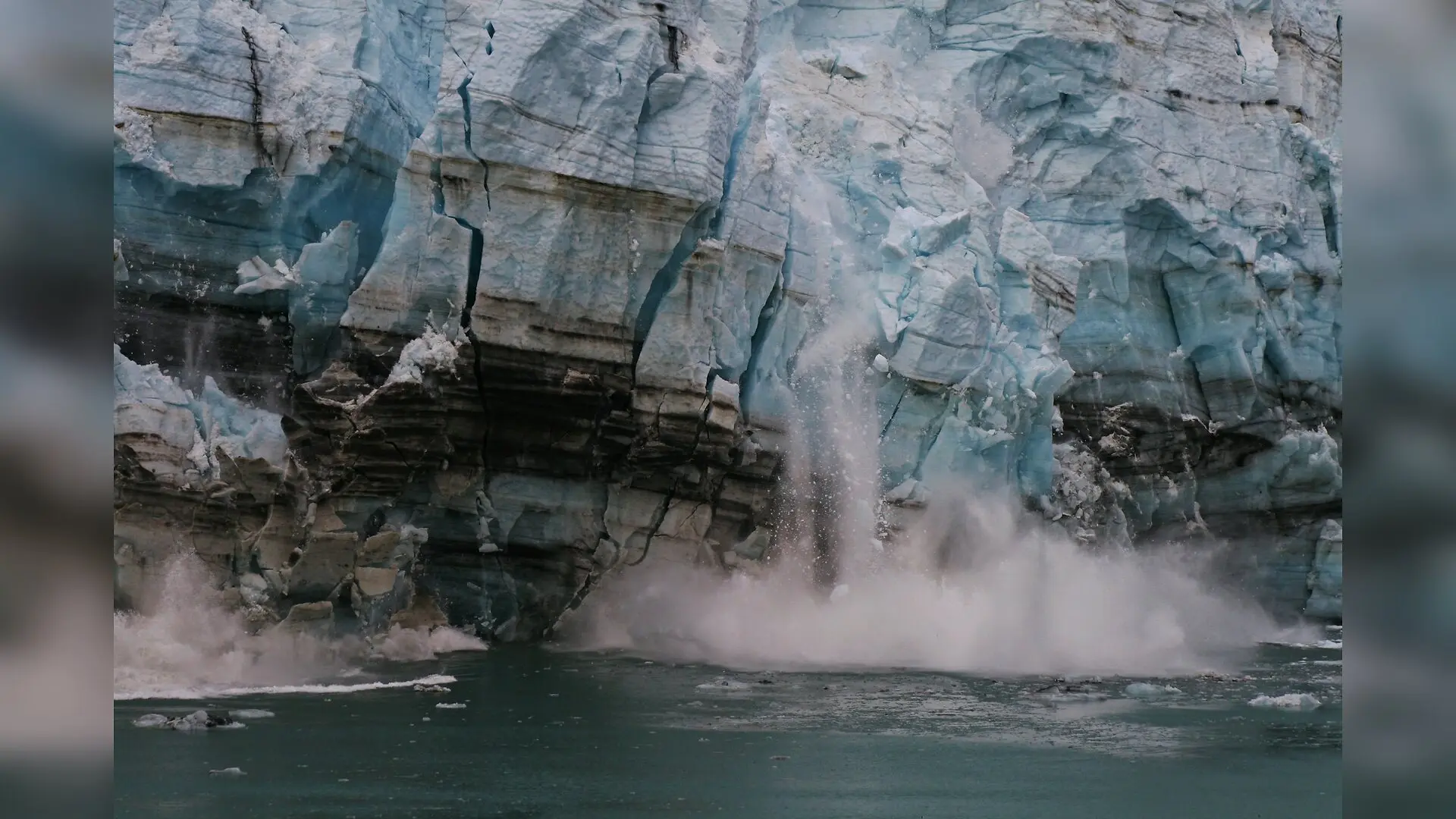
Polar regions are warming at triple the global average rate, driving environmental transformations that reach far beyond icy landscapes and threaten global climate stability. Carlo Barbante explored these cascading vulnerabilities at a major scientific gathering published in the Conference of the National Academy of Lincei and National Research Council - 100 Years of Collaboration for the Progress of Science, detailing how accelerated changes in the Arctic and Antarctica act as the ultimate test for planetary survival. Researchers emphasize that understanding these fragile zones is essential for anticipating shifts in weather patterns, sea levels, and marine ecosystems worldwide.
How Arctic Amplification and Melting Ice Feed Global Warming
The rapid heating of the high north is heavily driven by the ice-albedo feedback loop, where melting white sea ice exposes darker ocean waters that absorb more solar radiation. This process accelerates local warming, which is further intensified by the Atlantification of the Arctic Ocean through incoming warm and salty water currents from the south. At the same time, the polar jet stream is weakening and meandering more slowly because the temperature gap between the pole and lower latitudes has narrowed, bringing prolonged extreme weather to mid-latitude regions.
In Greenland, the massive ice sheet is suffering from a persistent negative mass balance, shedding more ice than it gains through snowfall each year. Observations from the Gravity Recovery and Climate Experiment (GRACE) satellites reveal that between 2002 and 2021, Greenland lost approximately 280 gigatons of ice annually, contributing 0.8 millimeters per year to global sea level rise. As immense volumes of fresh meltwater pour into the Atlantic, they threaten to disrupt major oceanic conveyors like the Atlantic Meridional Overturning Circulation, which regulates climate across Europe and North America.
What Happens to Polar Biodiversity and Marine Food Webs
Rising temperatures and disappearing ice are shrinking the natural habitats of iconic species such as polar bears, seals, and penguins that rely on frozen platforms for hunting and breeding. Marine life is also shifting northward as waters warm, forcing cold-adapted species like Arctic cod into tighter corners while new predators and competitors arrive from sub-Arctic regions. These ecological disruptions ripple upward through the food web, impacting seabirds, marine mammals, and human commercial fisheries that depend on predictable fish stocks.
Furthermore, ocean acidification driven by the absorption of excess carbon dioxide from the atmosphere poses a severe threat to foundational organisms like shellfish and certain plankton species. The breakdown of these calcifying organisms cascades through the entire ecosystem, reducing the overall biological productivity of polar waters. Conservation efforts now face the difficult task of protecting mobile species and managing marine protected areas in environments that are changing faster than traditional management plans can adapt.
Why Climate Tipping Points Threaten Planetary Stability
Scientists monitor several critical tipping points in the polar zones where small environmental shifts can trigger abrupt and irreversible consequences for the entire Earth system. The thawing of permafrost releases vast quantities of stored organic carbon into the atmosphere as carbon dioxide and methane, creating an active feedback loop that accelerates global warming. Similarly, the northward migration of boreal forests and the potential collapse of the West Antarctic Ice Sheet could unleash multi-meter sea level rises that would inundate coastal cities worldwide.
How Ambitious Research Projects Are Unlocking Ancient Climate Secrets
To untangle these complex climate mechanisms, researchers rely on massive international field campaigns such as the Multidisciplinary drifting Observatory for the Study of Arctic Climate, known as MOSAiC. Launched in September 2019, this expedition involved freezing the German research icebreaker RV Polarstern into the Arctic pack ice so that over 300 scientists could gather year-round data on the atmosphere, ocean, and sea ice. Meanwhile, in the remote interior of Antarctica, the BeyondEPICA initiative is drilling deep ice cores at Little Dome C to recover a climate record extending back 1.5 million years, shedding light on ancient glacial cycles and natural atmospheric greenhouse gas variations.
The research was published in Conference of the National Academy of Lincei and National Research Council - 100 Years of Collaboration for the Progress of Science, Rome, 17-18 October 2023.
This article has been fact checked for accuracy, with information verified against reputable sources. Learn more about us and our editorial process.
Last reviewed on .
Article history
- Latest version
Reference(s)
- Barbante, Carlo. “Climate Changes: The Poles Matter.” Springer Proceedings in Physics, November 14, 2026, pp. 91-98. Springer Nature Switzerland, doi: 10.1007/978-3-032-35509-6_8. <https://doi.org/10.1007/978-3-032-35509-6_8>.
Cite this page:
- Posted by Vikram Desai