Decades of River Data Reveal Which Global Estuaries Are Winning the War on Metal Pollution
A new international study tracking ten major river mouths in India, China, and the US shows how population pressure and environmental policies have reshaped coastal sediment quality over the last forty years.
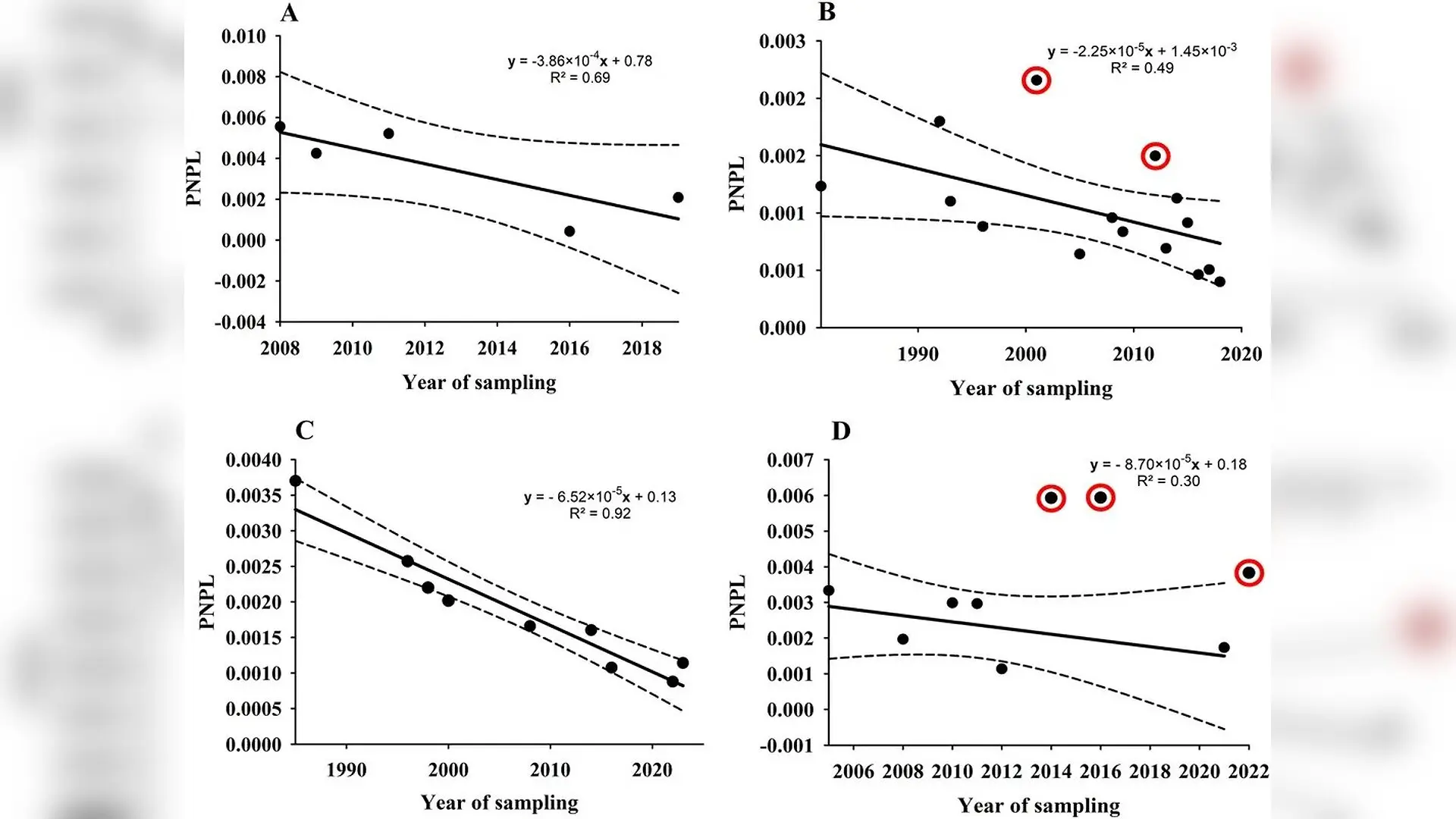
Ten major river mouths across India, China, and the United States reveal starkly different trajectories of heavy metal accumulation in their muddy beds over the past several decades. Researchers evaluated how industrial expansion, municipal wastewater, and regional environmental clean-up efforts have reshaped the health of these vital coastal water bodies. The findings were published in GeoHealth.
How Population Pressure Rewrites Estuarine Pollution Metrics
To understand how human activity alters river sediment over time, a team of scientists led by Soham Chatterjee and Parthasarathi Chakraborty from the Indian Institute of Technology Kharagpur compiled decades of published metal concentration data. They examined ten globally significant estuaries, including the Hooghly, Mahanadi, Cochin, and Ulhas systems in India, the Chesapeake Bay, Hudson River, and Galveston Bay in the United States, and the Yangtze, Pearl, and Yellow rivers in China.
The study utilized the Pollution Load Index, a standard metric based on contamination factors for individual metals compared against Earth’s continental crust background values. However, because raw pollution scores can mask the underlying drivers of environmental degradation, the authors introduced a complementary measure called the Population Normalized Pollution Load. This new index divides the pollution score by the total human population within the surrounding estuarine region, allowing researchers to determine whether rising or falling contamination tracks directly with demographic shifts.
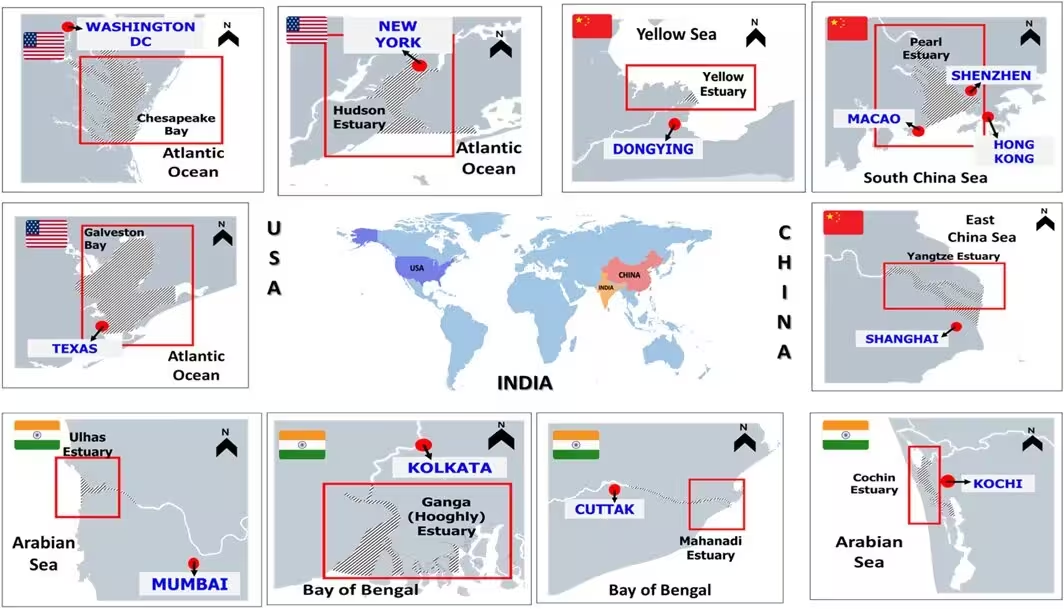
Which Estuaries Showed the Greatest Environmental Recovery?
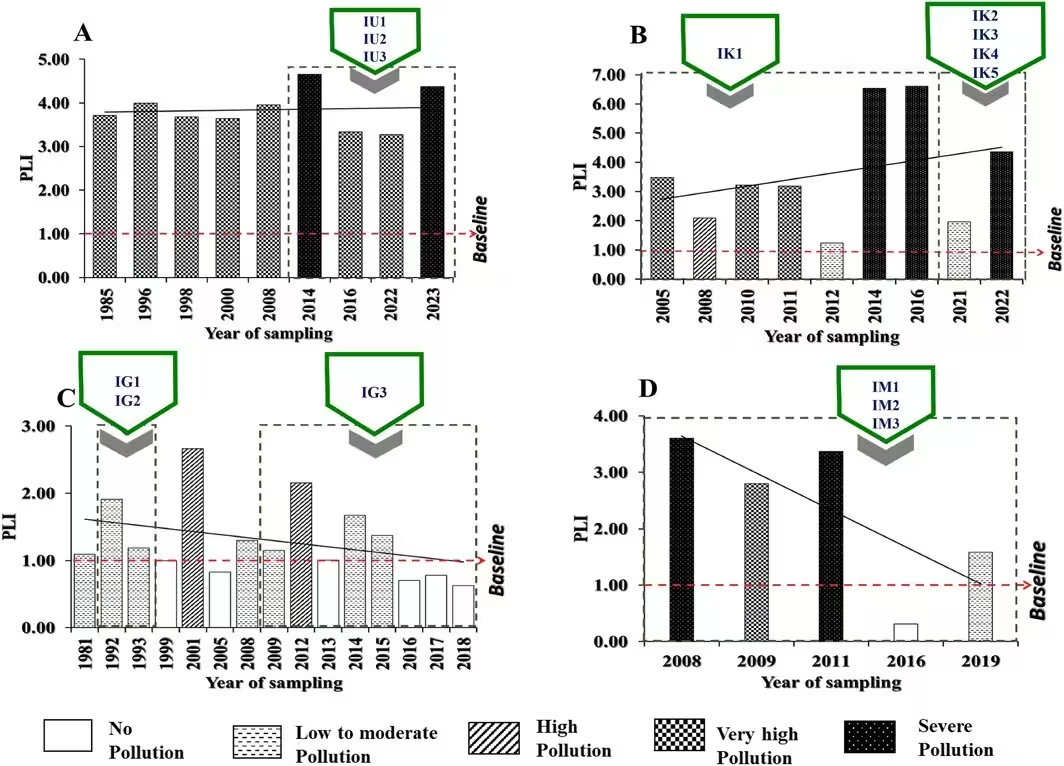
Long-term trends varied dramatically across the globe, reflecting contrasting levels of industrialization and regulatory enforcement. In the United States, the Hudson River Estuary exhibited the largest improvement over the past four decades, with its pollution index dropping by more than 80 percent from historical highs recorded in the late 1970s. Galveston Bay likewise showed substantial progress, driven by decades of regional management initiatives and clean-up programs.
In India, the Mahanadi and Hooghly estuaries demonstrated significant recovery, with pollution scores falling by roughly 70 percent and 38 percent respectively. The authors noted that these improvements coincided with the implementation of major government-led river conservation projects and wastewater treatment mandates. By contrast, the Ulhas Estuary near Mumbai and the Cochin Estuary in southwestern India maintained persistently high contamination burdens, showing little to no long-term recovery despite localized intervention efforts.
What the Chinese River Systems Reveal About Rapid Development
China’s major coastal outlets displayed complex patterns shaped by intense industrial growth. The Yellow River Estuary maintained comparatively low metal enrichment throughout the study period, supported by long-term conservation areas and wetland protections. Meanwhile, the Yangtze and Pearl River estuaries experienced pronounced fluctuations. The Pearl River system emerged as one of the most heavily impacted sites in the global comparison, where rapid urbanization and dense manufacturing hubs continually challenged pollution-control measures.
The study highlights that a declining population-normalized load does not automatically indicate a pristine environment if absolute contamination levels remain elevated. The authors emphasize that sustained regulatory enforcement, source-specific waste management, and continuous monitoring are essential to prevent renewed degradation in fragile coastal ecosystems.
The research was published in GeoHealth on November 1, 2026.
This article has been fact checked for accuracy, with information verified against reputable sources. Learn more about us and our editorial process.
Last reviewed on .
Article history
- Latest version
Reference(s)
- Chatterjee, Soham., et al. “Tracking Temporal Changes in Metal Pollution in Estuarine Sediments: Population Pressure, Pollution Trends, and Policy Responses in India, China, and the USA.” GeoHealth, vol. 10, no. 11, November 11, 2026 American Geophysical Union (AGU), doi: 10.1029/2026GH002170. <https://doi.org/10.1029/2026GH002170>.
Cite this page:
- Posted by Vikram Desai