Rare Cruise Ship Hantavirus Outbreak Triggers Global Health Alert
Genetic tracking of the Andes virus cluster reveals a hidden lineage circulating for years, exposing gaps in travel-associated disease preparedness.
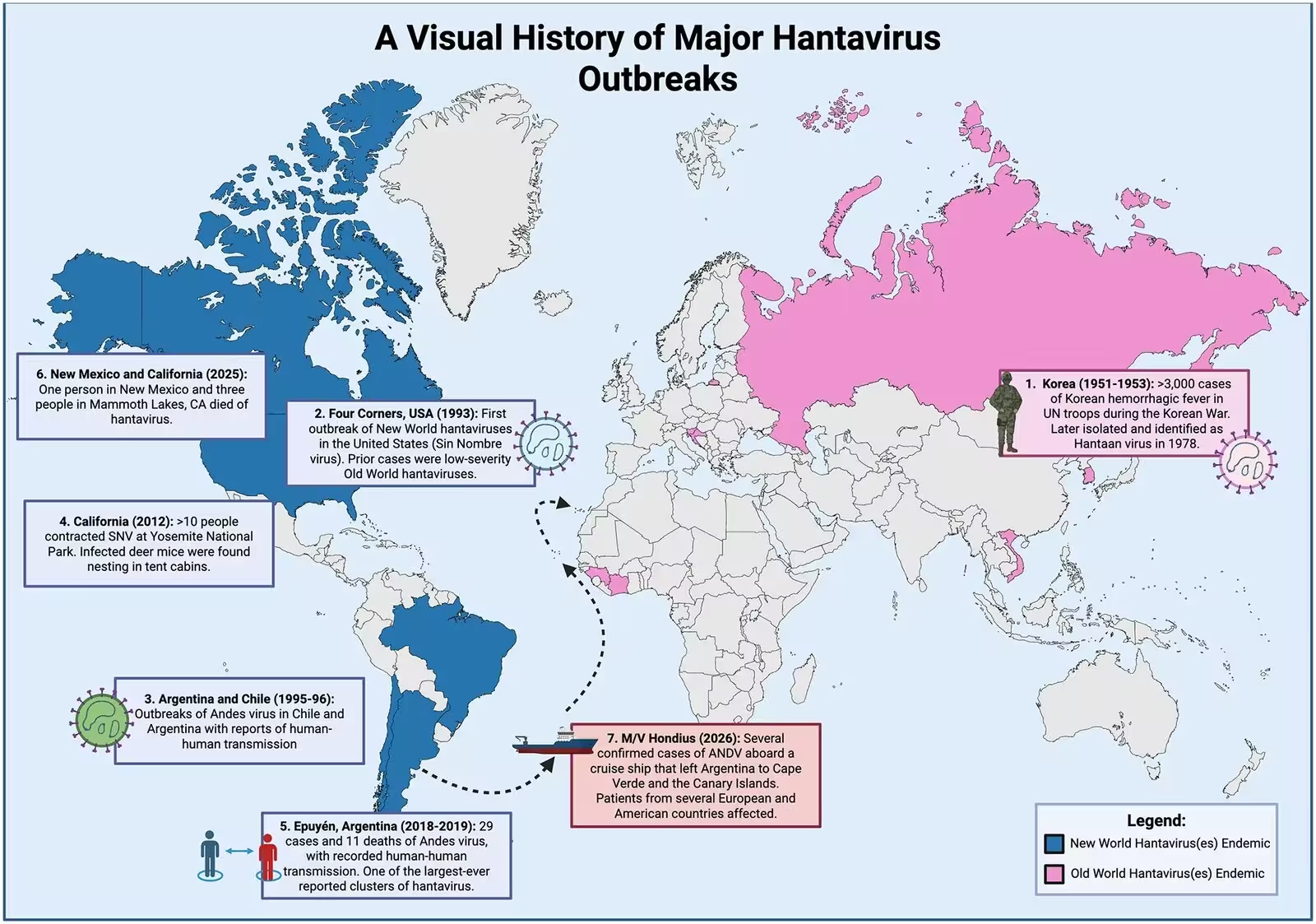
A rare multi-continental hantavirus outbreak originating aboard a cruise ship in May 2026 infected at least 13 passengers from 23 countries and resulted in 3 deaths. The incident involved the Andes virus, a pathogen carried by rodents that stands out as the only hantavirus known to spread directly between humans.
Researchers examined the genomic and public health implications of this event, which was published in PLoS Pathogens. The investigation revealed that the viral strain responsible for the cruise ship infections shares deep ties to variants previously circulating in South America.
How a South American Cruise Triggered Global Scrutiny
The outbreak began when the vessel MV Hondius departed from Argentina and sailed through the South Atlantic carrying 147 passengers and crew. Health authorities were notified after several travelers developed severe respiratory illness. Secondary infections subsequently appeared among close contacts of the index patient, as well as among airline passengers on flights to South Africa and a repatriation flight to Tenerife.
Contact tracing efforts spanned the United Kingdom, South Africa, and the United States through World Health Organization networks. The event underscored the vulnerability of close-quarter travel settings to emerging pathogens. Experts noted that standard respiratory screening panels initially lacked the sensitivity to detect the infection.
What Genetic Analysis Revealed About the Virus
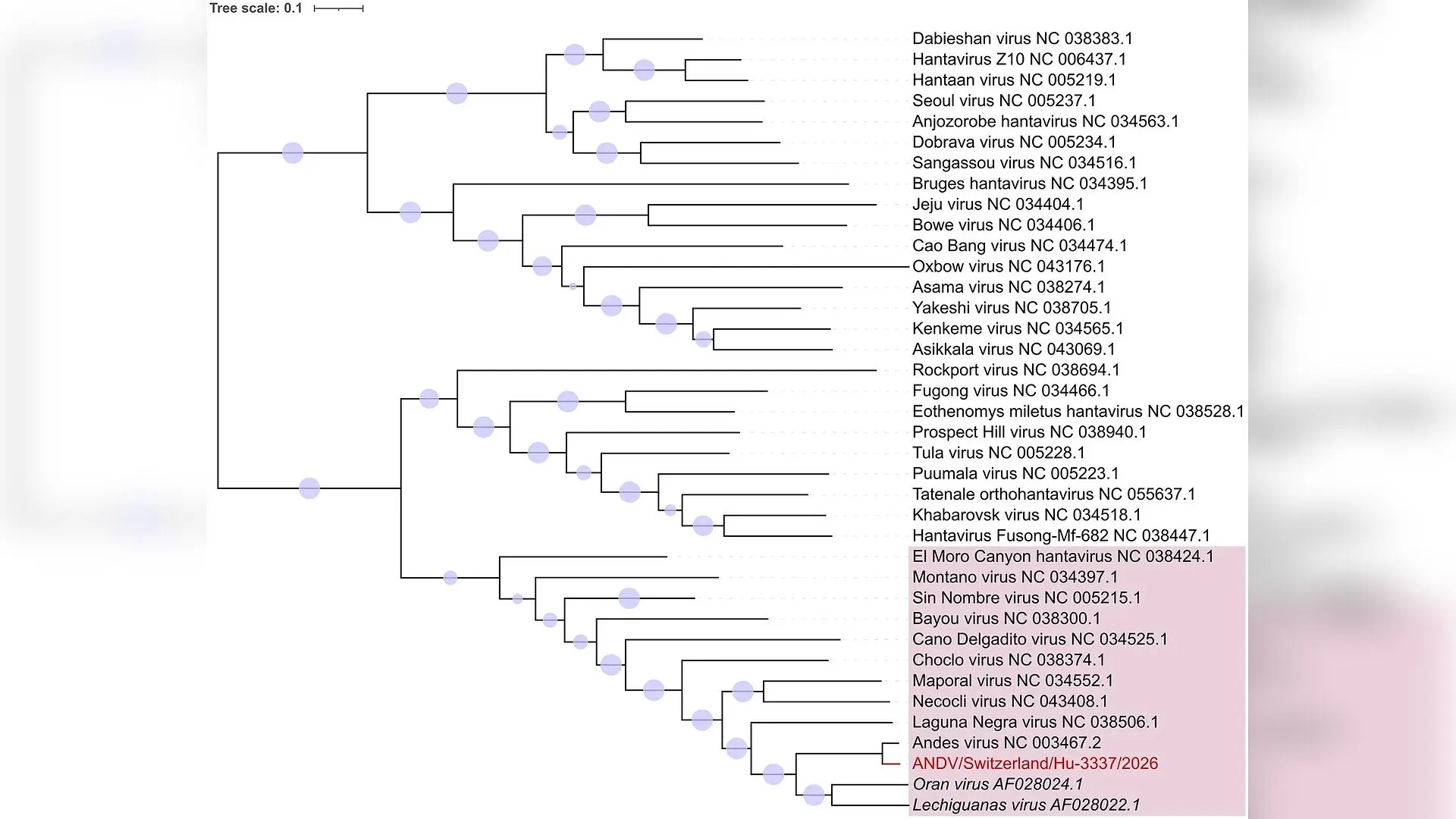
Phylogenetic analysis of the viral M-segment coding region showed that the outbreak strain shares 94.26% sequence identity with the standard reference sequence. Furthermore, it matched closely with human whole blood samples collected in Argentina in 2018. This points to a lineage that may have circulated quietly in reservoir hosts or human populations for nearly eight years while accumulating silent mutations.
The analysis identified 35 nucleotide mutations resulting in only three amino acid substitutions. This pattern indicates strong purifying selection, which preserves critical viral functions necessary for cellular entry and transmission. The findings emphasize that key traits remain stable across strains despite genetic drift.
Current Obstacles in Treatment and Prevention
New World hantaviruses cause hantavirus cardiopulmonary syndrome, a severe condition characterized by fluid buildup in the lungs and high mortality rates ranging between 30% and 60%. There are currently no FDA-approved antiviral drugs or vaccines available for Western populations. Management relies heavily on supportive care, such as early detection and extracorporeal membrane oxygenation, which uses an artificial lung to oxygenate blood during heart and lung failure.
Although most experimental antiviral candidates have only shown promise in laboratory settings or animal models, a patient from the recent cruise outbreak achieved full clinical recovery after receiving a combination of direct-acting antivirals and host-targeted anti-inflammatory treatments over 10 days. Researchers emphasize that expanding biosafety facilities, establishing robust wastewater and rodent surveillance, and accelerating clinical trials for therapeutics will be essential to manage future risks.
The research was published in PLoS pathogens on November 1, 2026.
This article has been fact checked for accuracy, with information verified against reputable sources. Learn more about us and our editorial process.
Last reviewed on .
Article history
- Latest version
Reference(s)
- Chakravarty, Nikhil., et al. “Hantaviruses: Current insights, lessons from the MV Hondius outbreak, and an urgent call to action.” PLOS Pathogens, vol. 22, no. 11, November 13, 2026, pp. e1014756 Public Library of Science (PLoS), doi: 10.1371/journal.ppat.1014756. <https://doi.org/10.1371/journal.ppat.1014756>.
Cite this page:
- Posted by Robert Brown