Owl Pellets Reveal Hidden Wildlife But Skew Ecosystem Counts
A massive regional study shows regurgitated bones capture greater species diversity than traps, but predator hunting habits introduce major biases.
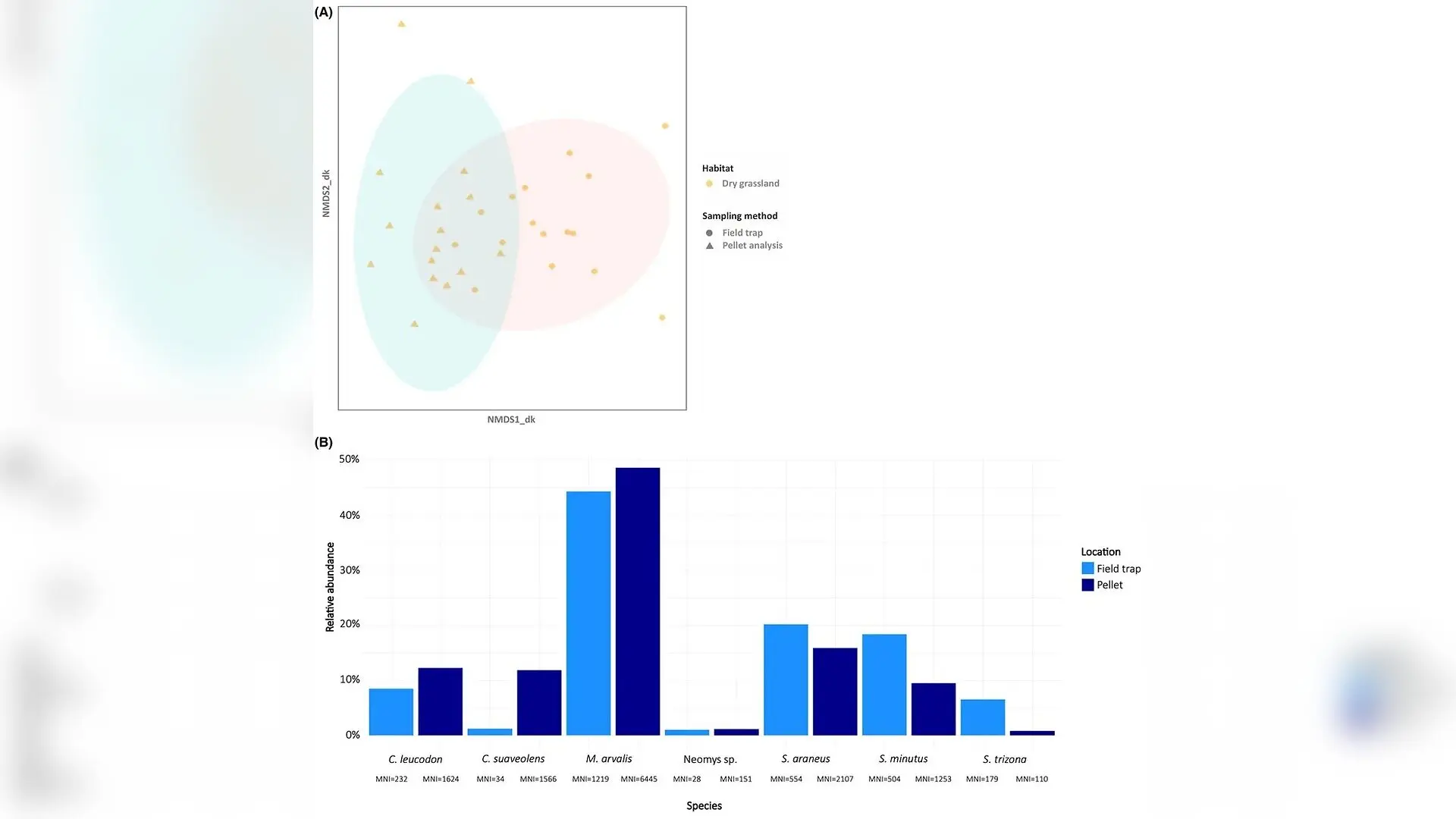
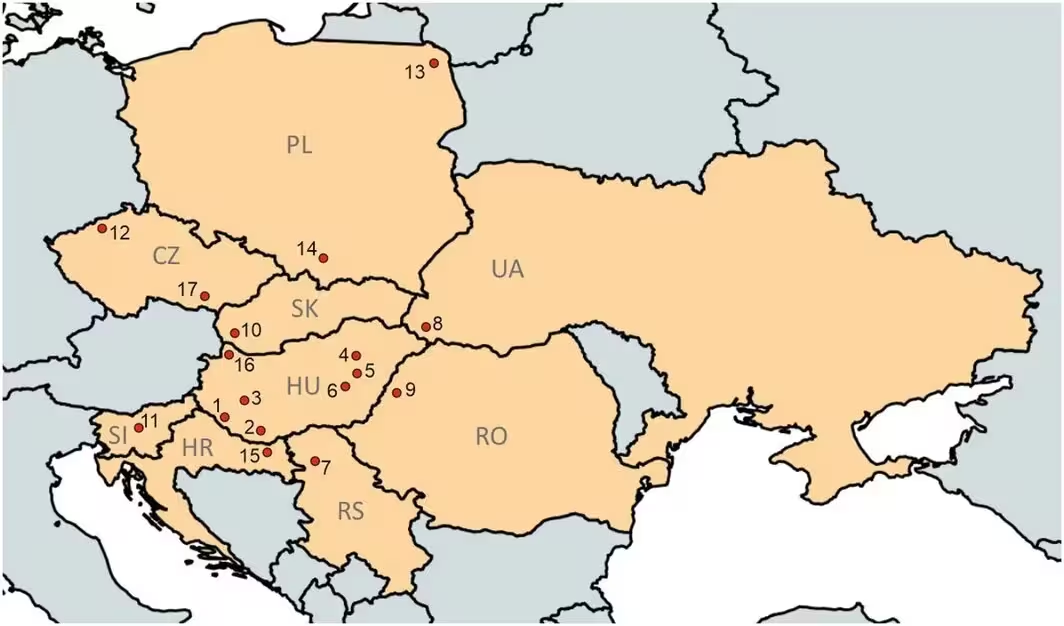
Owl pellets regurgitated by birds of prey reveal a much wider variety of small mammals living in a landscape than traditional live trapping, but their contents can be skewed by the hunting habits of the birds. A comprehensive regional synthesis of 40 paired case studies across seven Central European countries compared data collected simultaneously from traditional traps and raptor diets to uncover how well regurgitated remains represent actual wildlife communities.
The research, published in Ecology and Evolution, evaluated data spanning multiple decades and various habitats, including forests, agricultural lands, and grasslands. Ecologists Dorina Szalai and their colleagues synthesized findings to determine whether analyzing indigestible bones and fur found in pellets can reliably replace labor-intensive trapping programs.
Why Raptor Regurgitation Catches More Species
Traditional field methods like Sherman live traps and pitfall traps require researchers to spend multiple nights setting gear across specific patches of land. These direct approaches often struggle to record rare animals or elusive species that manage to avoid traps. In contrast, birds of prey hunt over much larger home ranges, naturally gathering small mammal remains from a broad geographic area.
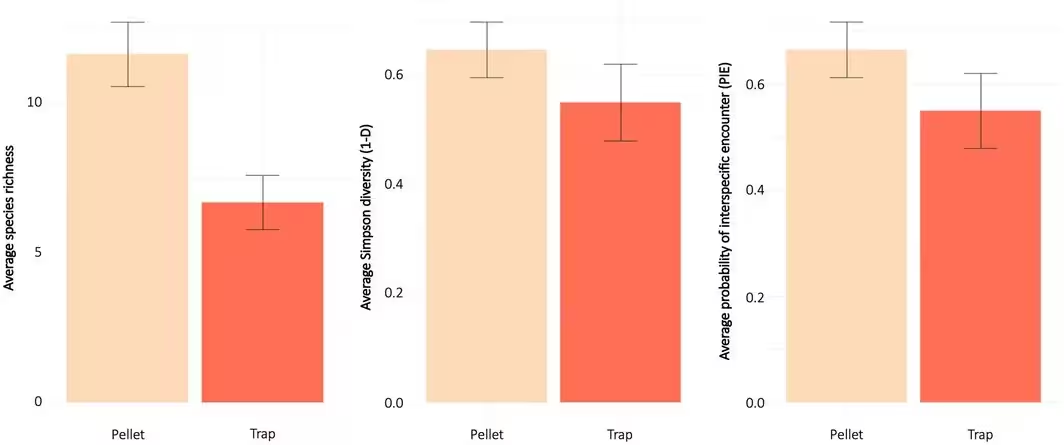
Statistical evaluations using sample coverage models demonstrated that owl pellet datasets achieved nearly 100 percent sample coverage. The pellet samples consistently detected higher species richness and diversity than conventional trapping efforts, which averaged about 95 percent coverage. For conservation scientists tracking regional biodiversity, examining regurgitated remains provides a faster way to catalog local fauna without handling live animals.
The Catch Behind Predator Selectivity
Despite capturing greater overall diversity, pellet analysis comes with distinct biological biases. Birds of prey do not hunt randomly across every available microclimate. For instance, the western barn owl (Tyto alba) heavily favors open agricultural lands and grasslands, causing species like the common vole (Microtus arvalis) to appear abundantly in their diet.
Conversely, forest-dwelling creatures such as the bank vole (Clethrionomys glareolus) were significantly underrepresented in pellet assemblages compared to forest trap surveys. Other small mammals, including shrews, are sometimes avoided by specific owls due to unpalatable tastes or odors. Furthermore, endangered species like the Hungarian birch mouse (Sicista trizona trizona) showed lower abundance in raptor diets, making specialized pitfall trapping essential for their conservation monitoring.
What This Means for Ancient Ecosystems
Understanding these hunting biases carries major consequences for paleoenvironmental research as well as modern conservation. Many fossilized cave deposits used to reconstruct prehistoric climates and ancient ecosystems are actually ancient accumulations of bird of prey pellets. Because historical reconstructions rely heavily on the relative abundance of small fossilized bones, scientists must account for raptor selectivity to avoid misinterpreting past environments.
The authors emphasize that while pellet analysis is an invaluable tool for broad ecological surveys, combining multiple monitoring techniques remains the best approach. Because widespread owl species adapt their hunting strategies to local conditions globally, researchers urge caution before applying these specific Central European findings to entirely different biomes.
The research was published in Ecology and evolution on November 1, 2026.
This article has been fact checked for accuracy, with information verified against reputable sources. Learn more about us and our editorial process.
Last reviewed on .
Article history
- Latest version
Reference(s)
- Szalai, Dorina., et al. “A Comparison of Owl Pellet Analysis and Conventional Trapping: A Review of Central European Cases for the Study of Small Mammal Communities and More Efficient Paleoenvironmental Reconstructions.” Ecology and Evolution, vol. 16, no. 11, November 10, 2026 Wiley, doi: 10.1002/ece3.74401. <https://doi.org/10.1002/ece3.74401>.
Cite this page:
- Posted by Michael Ellison