Tourist Shares Photo Of Mysterious Stone Markings That Turned Out To Be 120 Million Year Old Prints
A mysterious set of massive fossilized tracks has sparked intense online debate. Experts have finally identified the prehistoric creature behind the prints.
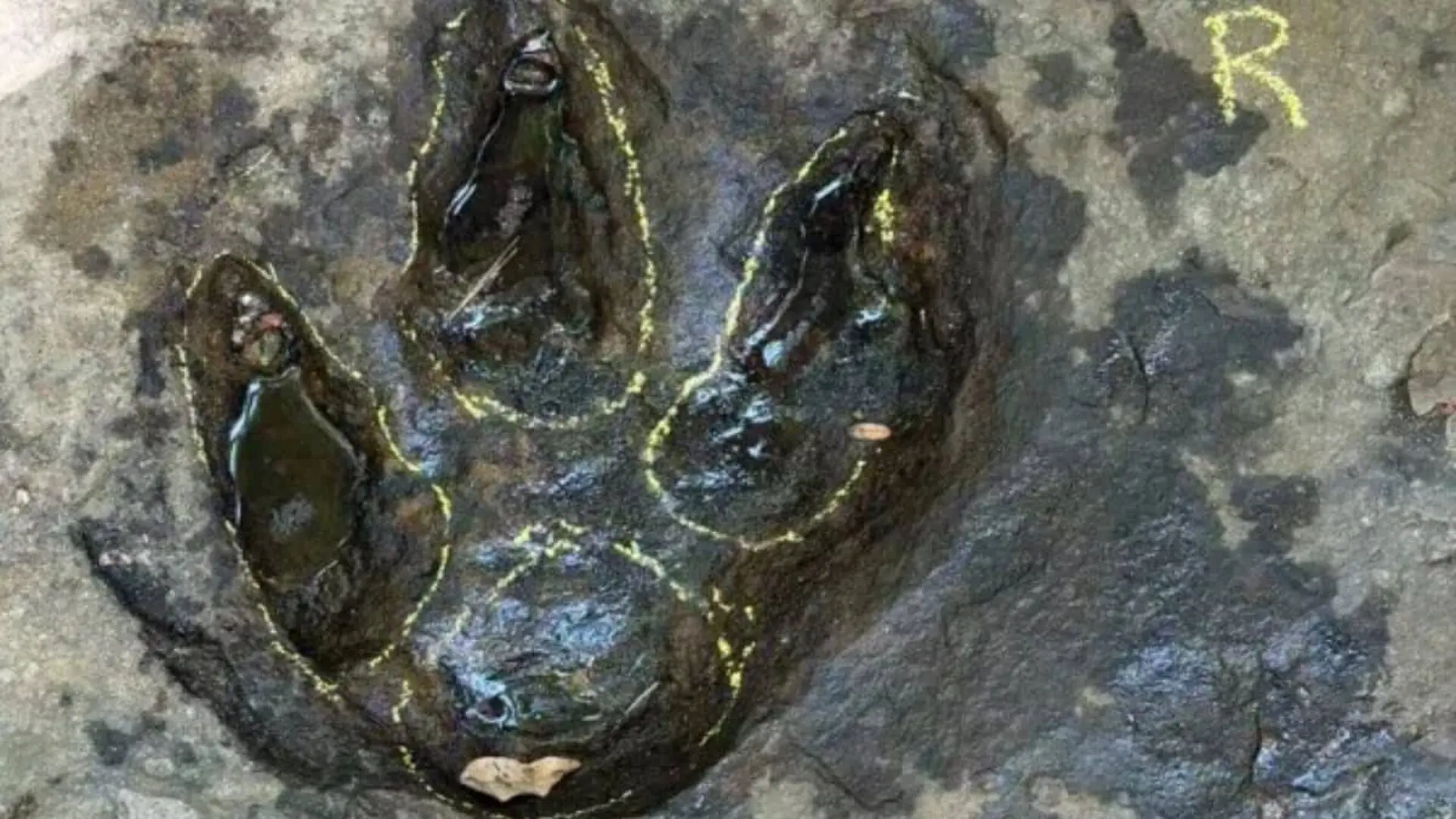
A routine excursion along a forest stream in northeastern Thailand has yielded a significant paleontological discovery: a series of six dinosaur footprints dating back approximately 120 million years. The find, which experts have identified as the tracks of a large carnivorous theropod, was brought to light after a tourist shared images of the anomalies on social media.
The discovery occurred when Pichai Prathetsena, while exploring the Phu Hin Chom That–Phu Phrabat National Park in Udon Thani province, noticed distinctive three-toed impressions embedded in the stone. Recognizing the scale of the markings, he uploaded photographs to a local Facebook group dedicated to identifying natural curiosities. The confirmation from officials followed just three days later on October 20.
Insights from Prehistoric Trails
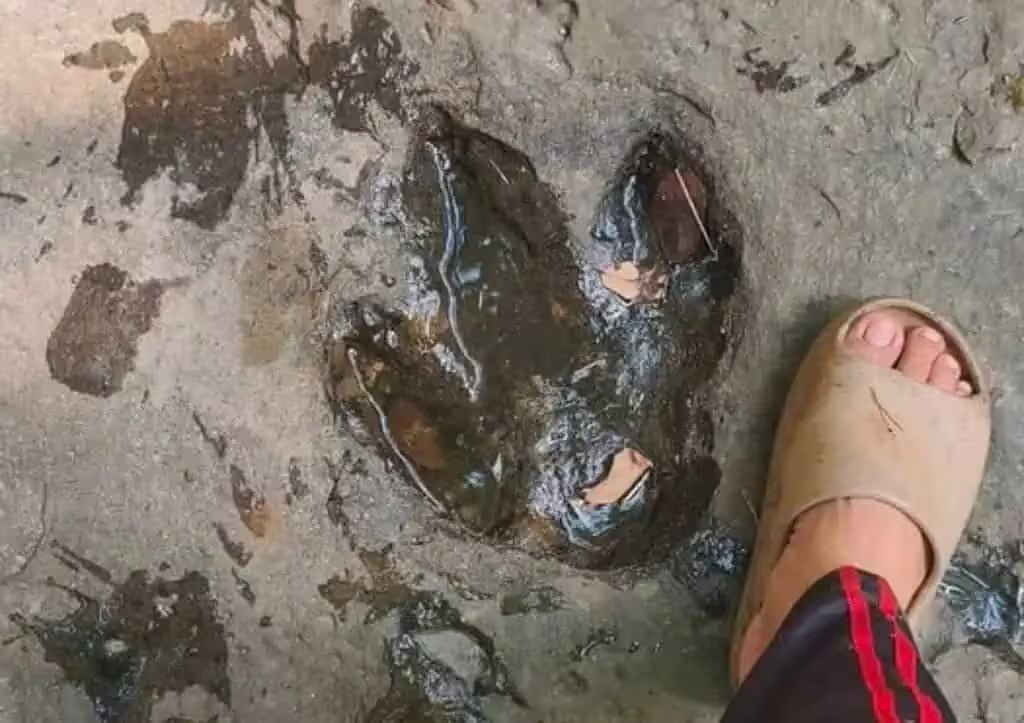
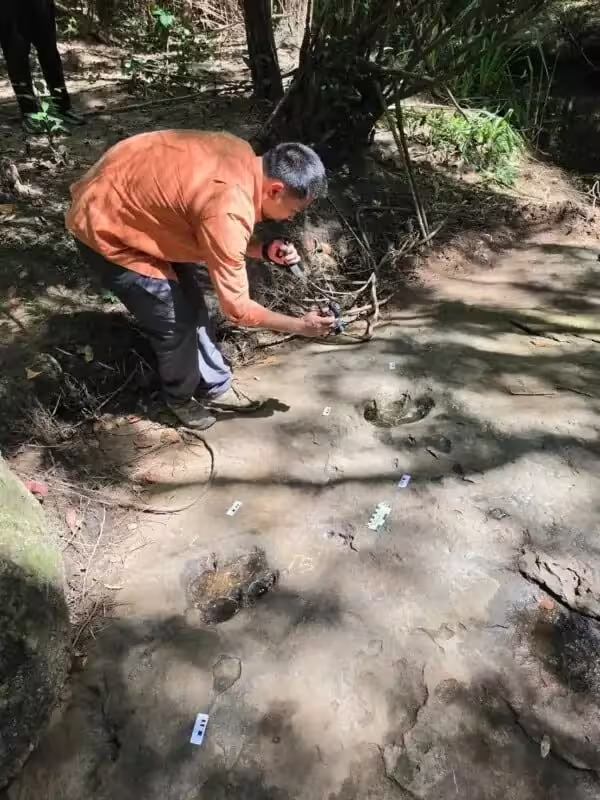
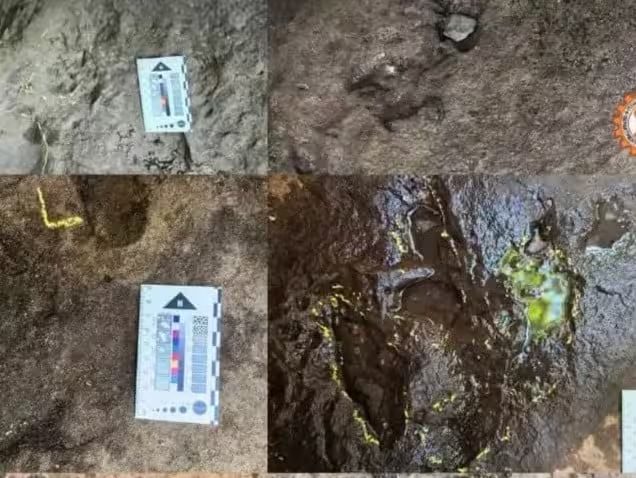
According to Thailand’s Department of Mineral Resources, the six footprints form a clear, continuous trackway. These impressions were preserved in the fine-grained sandstone of the Phu Phan Formation, which belongs to the Early Cretaceous epoch. Each print measures roughly 29 centimeters (11 inches) in length and 26 centimeters (10 inches) in width.
Based on the stride length of 2.2 meters and the spacing between the prints, researchers have reconstructed the dimensions of the animal that left them. The theropod, a member of the same two-legged lineage that includes the Tyrannosaurus rex, likely stood about 1.42 meters (4.7 feet) tall at the hip and reached a total length of approximately 6.3 meters (21 feet). While the specific species remains unidentified, experts suggest it bears a size resemblance to Siamotyrannus isanensis, a carnivorous dinosaur previously documented in the region.
Decoding Ancient Movement
While fossilized bones offer a snapshot of a creature’s anatomy, trackways provide rare evidence of behavior, locomotion, and gait. By analyzing the orientation and depth of these impressions, paleontologists can better understand how these theropods navigated their environment. Geologic analysis suggests the site was once a riparian habitat characterized by soft mud that eventually hardened, preserving the tracks for over a hundred million years.
According to Thailand’s Department of National Parks, this discovery marks the first instance of a carnivorous dinosaur tracksite identified in Udon Thani province, adding to a growing body of evidence regarding Thailand’s prehistoric biodiversity. A 2026 scientific review highlights that the country has a significant record of such tracks, dating back to initial discoveries at the Phu Luang Wildlife Sanctuary in the 1980s.
Conservation and Future Study
To ensure the integrity of the site, authorities have temporarily restricted public access. The area is currently being evaluated by experts who are developing strategies to mitigate potential damage from environmental factors and foot traffic. The long-term objective for officials is to preserve the tracks as an educational asset, potentially opening the site to the public as a paleontological landmark.
This article has been fact checked for accuracy, with information verified against reputable sources. Learn more about us and our editorial process.
Last reviewed on .
Article history
- Latest version
Reference(s)
- “120-Million-Year-Old Dinosaur Tracks Confirmed in Udon Thani.” <https://thailand.prd.go.th/en/content/category/detail/id/2078/iid/553005>.
- <https://www.mdpi.com/2813-6284/4/2/10>.
Cite this page:
- Posted by Linda Wilson