Scientists Finally Measured The Body Temperature Of A T Rex And It Is Surprisingly Human
UCLA researchers have finally determined the body temperature of a T. rex by analyzing tiny samples of fossilized enamel. Here is what they discovered.
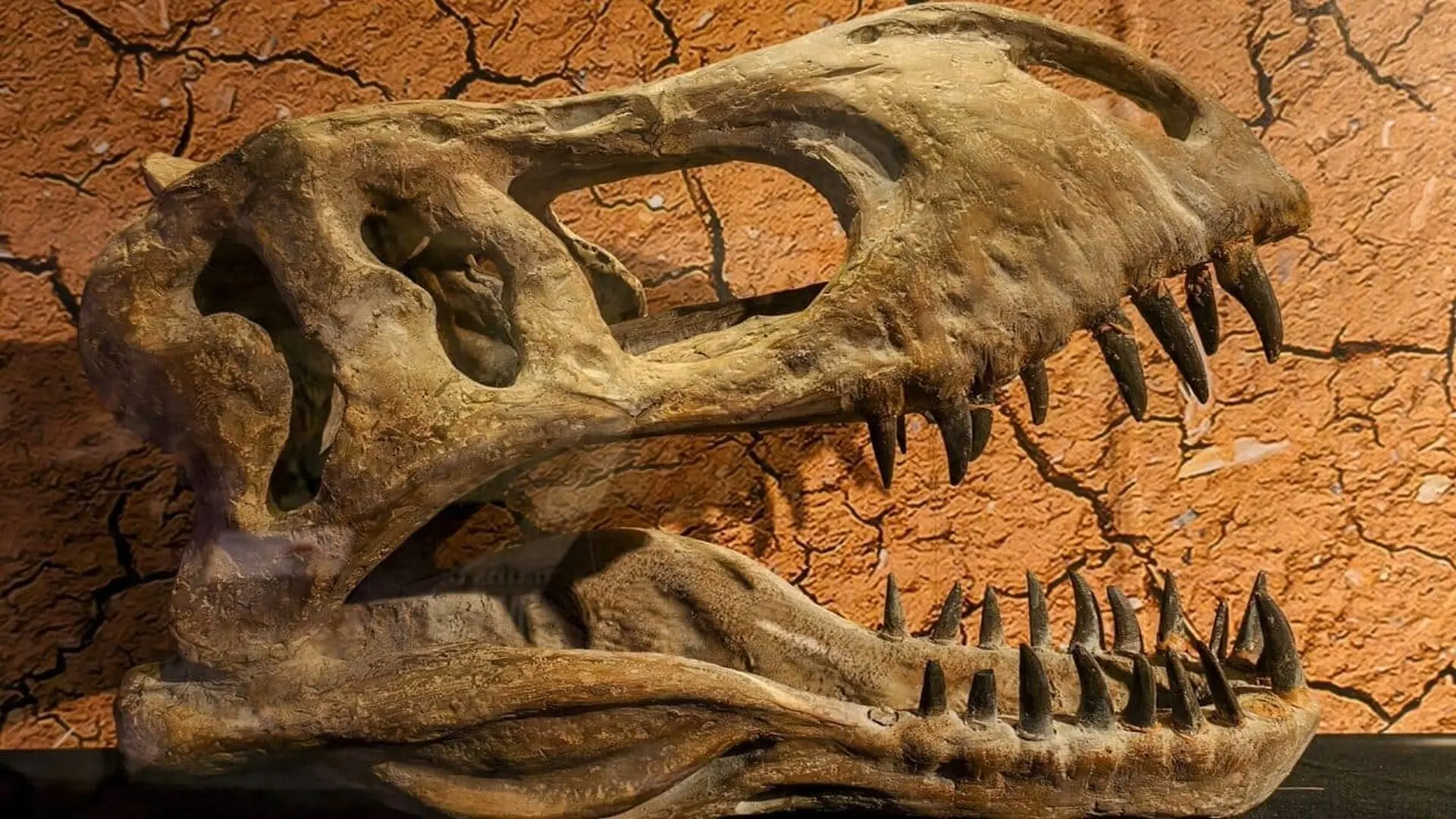
New geochemical analysis of fossilized Tyrannosaurus rex teeth has provided the first definitive temperature reading for the iconic predator, revealing a body heat of approximately 36.3°C (97.3°F). This finding places the internal temperature of the dinosaur remarkably close to that of modern humans, providing significant new data in the long-standing debate over dinosaur metabolism.
For decades, paleontologists have debated whether T. rex was a sluggish, cold-blooded creature reliant on the environment or an active, warm-blooded predator. Evidence including rapid growth rates, high-energy behavior, and the ability to thrive in cooler climates has long suggested that these animals generated their own internal heat. While the consensus has shifted toward endothermy, this new study published in Science Advances finally provides a precise thermal figure to ground those theories.
Decoding the Molecular Thermometer
The research relies on a geochemical technique that analyzes tooth enamel rather than traditional fossil bone. Enamel contains carbonate molecules marked by specific carbon and oxygen isotopes. The ratio of heavy isotopes, such as carbon-13 and oxygen-18, is temperature-dependent; at cooler temperatures, these isotopes are more likely to bond together in a process known as “clumping.” By measuring these clumps, researchers can calculate the exact temperature at which the mineralized tissue formed.
The methodology builds on earlier breakthroughs, including a 2006 study that identified how these isotopic pairings shift in response to heat, and a 2010 demonstration by Robert Eagle and his team that the principle could be applied to bioapatite in teeth and bone. Previous studies using this approach have measured sauropods like Brachiosaurus and Camarasaurus, as well as the prehistoric megalodon shark.

Refinements to the technique were essential for this study, as museums are understandably hesitant to sacrifice large quantities of rare specimens. The research team eventually perfected a method requiring only 5 milligrams of material—a 90% reduction in sample size—allowing the Natural History Museum of Los Angeles County to contribute three precious T. rex teeth for analysis.
Thermal Insights from the Hell Creek Formation
The samples included two teeth from “Thomas,” a sub-adult T. rex discovered in Montana’s Hell Creek Formation, and a third isolated tooth. After reducing the enamel to a powder and subjecting it to mass spectrometry, all three samples returned a consistent temperature of 36.3°C.
To provide context, the team measured five crocodilian teeth from the same geological strata, which averaged 30.9°C. Fossilized bivalves from the same environment, used as a control for ambient environmental temperature, averaged 25.9°C. “No one’s been able to make a temperature measurement like this before,” said co-author and geobiologist Robert Eagle. "We found T. rex was 36°C (97°F), about the same as humans."

Metabolic Demands and Evolutionary Advantages
While the study provides a vital new data point, researchers caution that this single metric does not fully define the animal’s entire metabolic profile. Because T. rex was massive, it would have retained body heat through a process known as inertial homeothermy—the physical reality that large bodies cool significantly slower than small ones. Consequently, the team characterizes the 36°C measurement as strong evidence for endothermy rather than a direct quantification of metabolic rate.
Nevertheless, maintaining such a high internal temperature implies a substantial need for fuel. An animal of this scale, operating at 36°C, would have required a consistent caloric intake to sustain its growth and movement, supporting the image of a highly active predator. Furthermore, this internal thermal regulation would have granted the species a distinct geographic advantage, allowing it to remain active in cooler climates where ectothermic competitors might struggle. Climate models suggest that T. rex could have comfortably inhabited much of Late Cretaceous North America, including higher latitudes where winters were significantly colder.

This article has been fact checked for accuracy, with information verified against reputable sources. Learn more about us and our editorial process.
Last reviewed on .
Article history
- Latest version
Reference(s)
- “Robert Eagle — UCLA IoES.”, September 22, 2016 UCLA IoES <https://www.ioes.ucla.edu/person/robert-eagle/>.
Cite this page:
- Posted by Hassan Raza