Exquisite 518 Million Year Old Fossil Rewrites the Origins of Starfish and Their Relatives
A newly discovered 518-million-year-old fossil, Yujingia glutenotunica, challenges long-held theories on the early evolution of echinoderms and their kin.
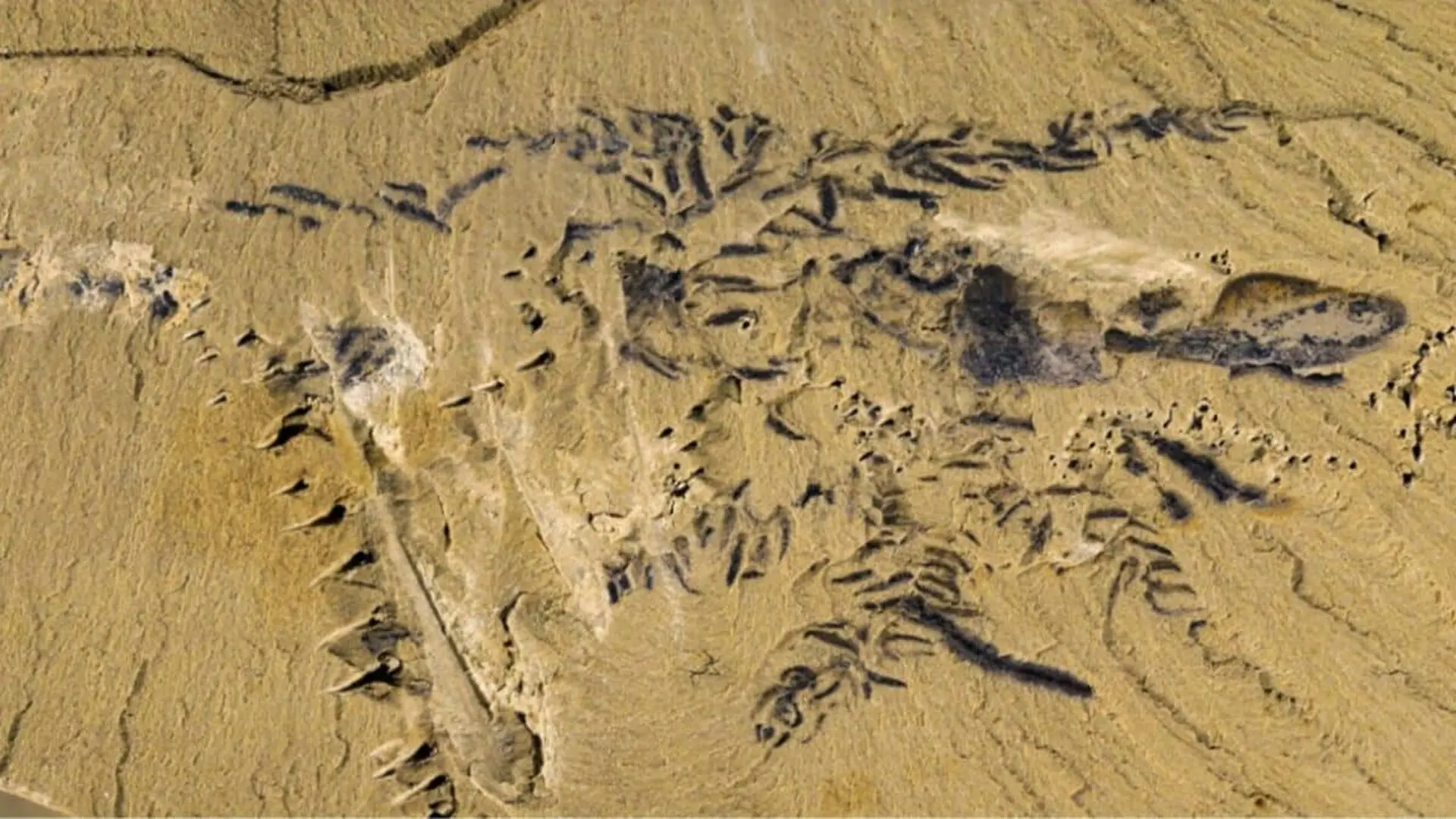
The discovery of exceptionally preserved fossils in China’s early Cambrian Chengjiang biota is forcing evolutionary biologists to rethink the origins of one of the animal kingdom’s most diverse lineages. The specimen, known as Yujingia glutenotunica, provides a rare look at the anatomy of an ancient ambulacrarian, a group that today includes highly distinct organisms such as starfish, sea urchins, and acorn worms.
For years, the vast physical differences between these living groups have obscured what their common ancestor might have looked like. Researchers have traditionally modeled this ancestor as a simple, worm-like creature that filtered particles through its pharynx, devoid of specialized tentacles. However, the discovery of Yujingia, detailed in a recent study published in Current Biology, suggests that the reality was far more complex.
A Specialized Filter-Feeder from the Cambrian Seas
Measuring between 8 and 22 millimeters in length, Yujingia possessed a bottle-shaped body and a distinctive crown of appendages. These feather-like arms, equipped with grooves and branching filaments, indicate the animal was a sophisticated suspension feeder, capturing organic particles directly from the water column.
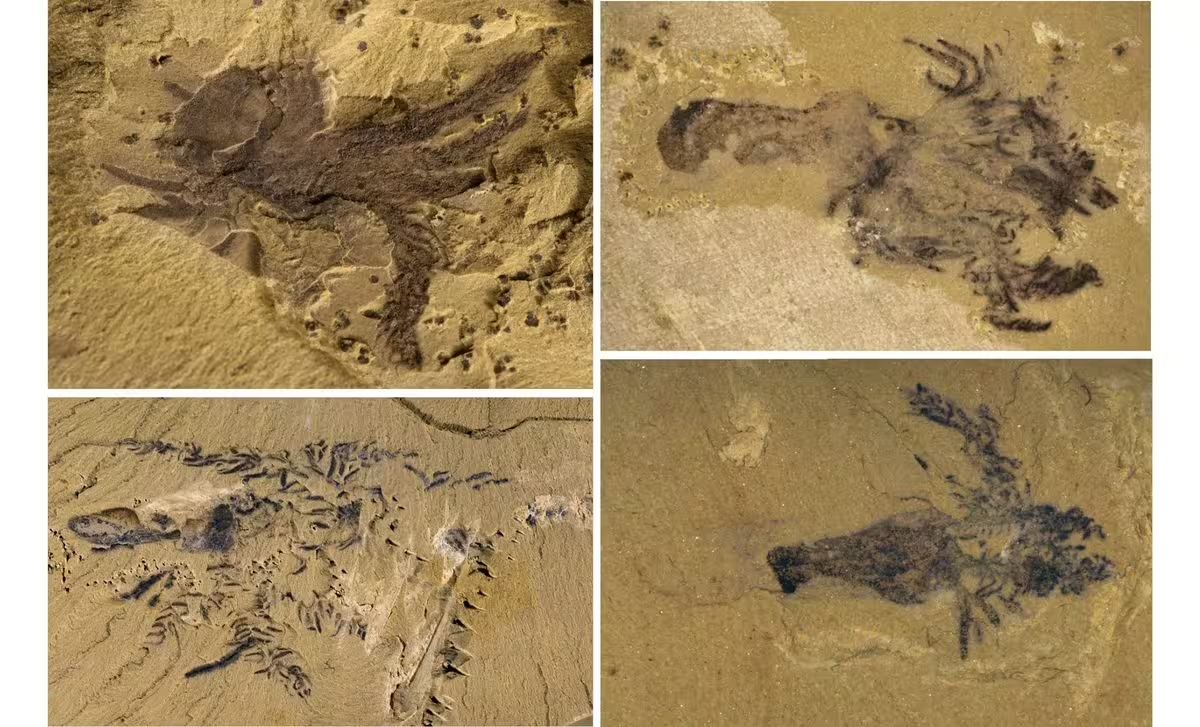
Lead author Kaiyue He of Northwest University noted that the animal’s unique, gelatinous form earned it its name; the genus refers to the yujingping, a traditional Chinese ritual vase, while the species name glutenotunica highlights its soft, skin-like outer layer. Beyond its feeding crown, the creature utilized a second set of appendages to anchor itself to the seafloor. While it likely retained some ability to shift position, its anatomy suggests a predominantly semi-sessile lifestyle.
Redefining Evolutionary Lineages
To place Yujingia within the broader tree of life, the research team conducted a Bayesian phylogenetic analysis of 505 morphological traits across 100 different taxa. The results indicate that the creature serves as a vital transitional form, existing just outside the last common ancestor of living ambulacrarians. This positioning suggests that advanced feeding structures, such as tentacles, were present much earlier in the evolutionary timeline than previously believed.
Giovanni Mussini, a co-author from the University of Cambridge, explained that this finding shifts the consensus toward the idea that the ancestral ambulacrarian may have resembled the lineage of starfish and sea urchins more closely than it resembled worm-like creatures. This also sheds light on why these groups diverged so sharply over time: while chordates—the lineage that includes humans—evolved to favor mobility to secure food, the starfish lineage remained tethered to the seafloor, refining its ability to harvest nutrients from the surrounding environment.
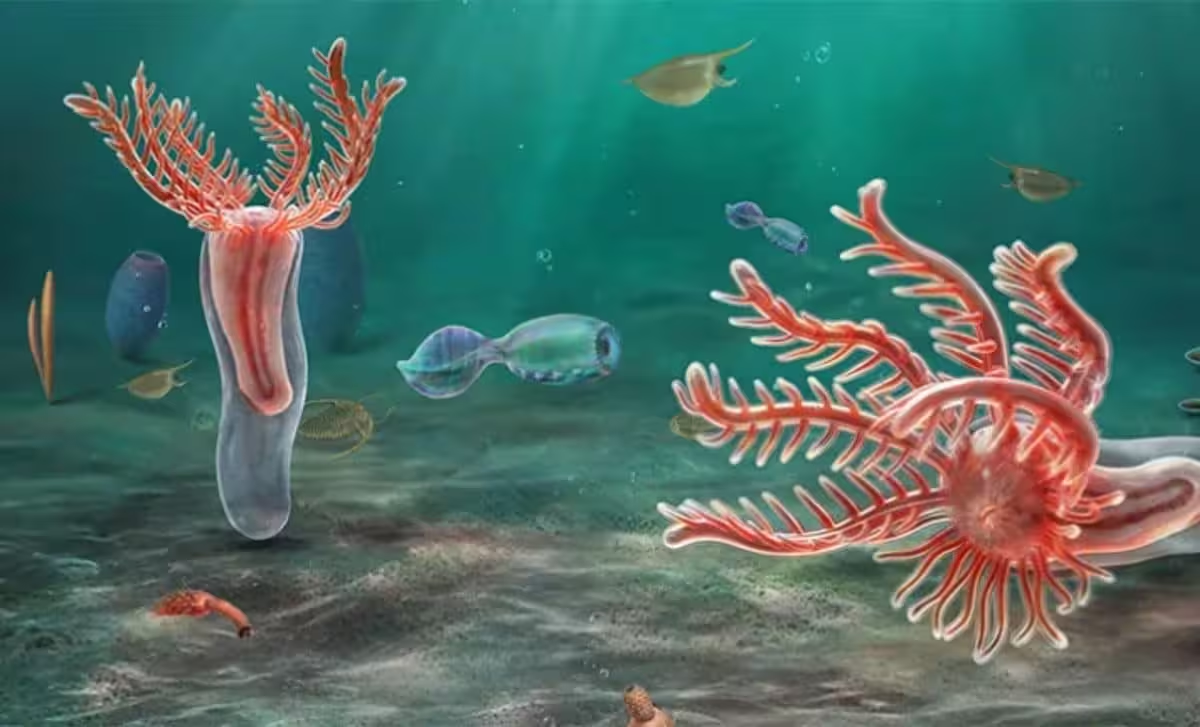
According to co-author Degan Shu, also of Northwest University, these fossils provide concrete evidence for a missing link in early animal evolution. By filling in the gaps between primitive, tentacle-bearing seafloor inhabitants and modern echinoderms and hemichordates, Yujingia offers a clearer picture of the complex ecological pressures that shaped the major body plans observed in the natural world today.
This article has been fact checked for accuracy, with information verified against reputable sources. Learn more about us and our editorial process.
Last reviewed on .
Article history
- Latest version
Cite this page:
- Posted by Hassan Raza