Strange New Mosasaur Discovered in Egypt Had Unique Specialized Hearing and Hunting Skills
Paleontologists have discovered a new species of extinct marine reptile, Halisaurus auriculatus, unearthed from Cretaceous fossils in Egypt’s Western Desert.
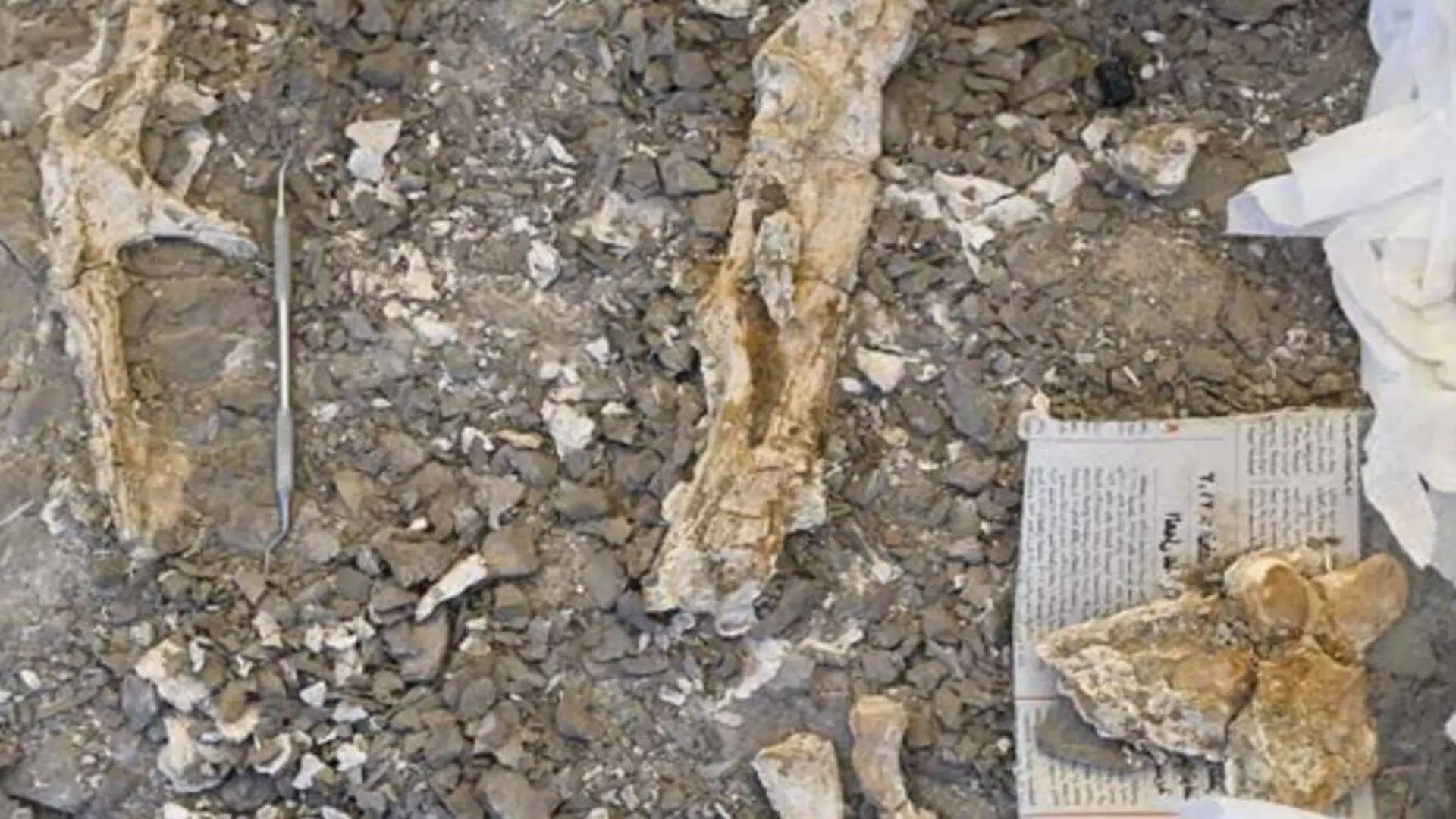
New Mosasaur Species Unearthed in Egypt’s Western Desert
Paleontologists have identified a previously unknown species of mosasaur that prowled the ancient Tethys Sea roughly 70 million years ago. The discovery, detailed in the journal Acta Palaeontologica Polonica, sheds fresh light on the Halisaurinae subfamily—a group of marine reptiles characterized by their modest size and unique evolutionary trajectory during the closing stages of the Cretaceous period.
The fossilized remains, which include well-preserved sections of the skull, jaw, vertebrae, and limbs, were recovered from the Dakhla Shale near Teneida in Egypt’s Western Desert. Recovered by a team from the New Valley Vertebrate Paleontology Center at New Valley University, the specimen provides a rare, three-dimensional look at the anatomy of these elusive predators.
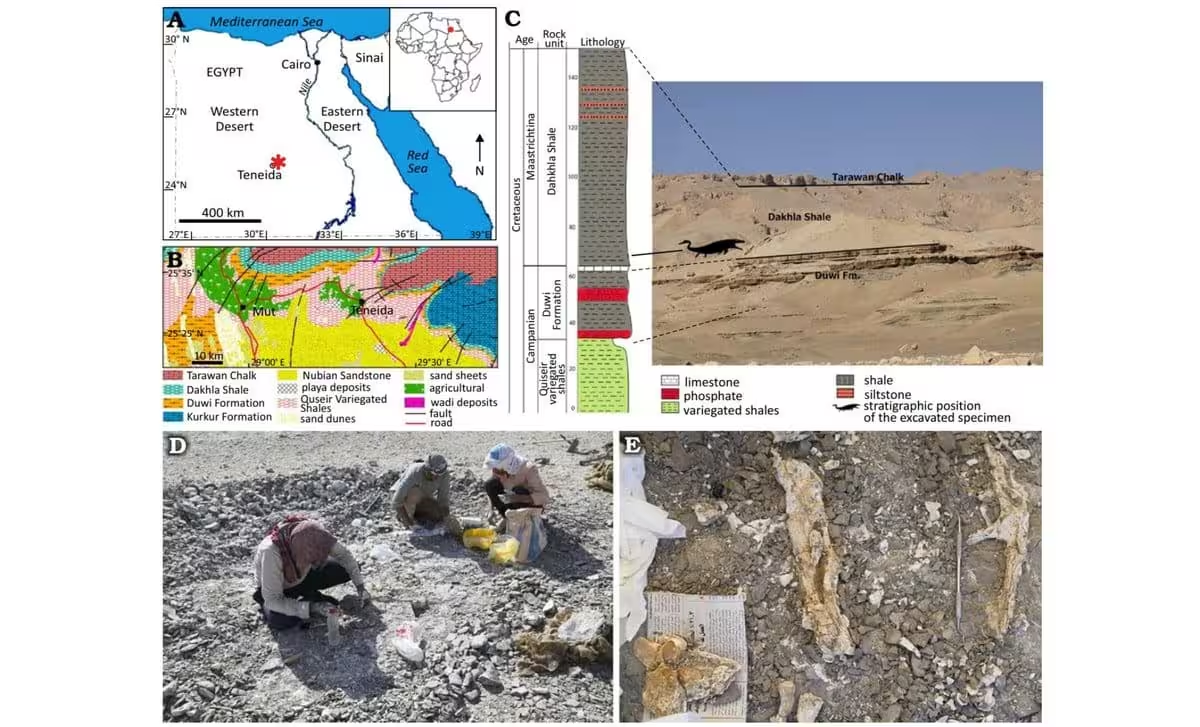
Anatomical Innovations for Aquatic Hunting
Named Halisaurus auriculatus, the species distinguishes itself from its relatives through highly specialized cranial features. Lead researcher Ahmed Ali Shaker and his colleagues noted that the creature possessed an exceptionally long, slender jaw equipped with more than 20 tooth positions on each side. While this design likely allowed for swift strikes, the structure suggests a lighter bite force compared to more robust mosasaurs, indicating that H. auriculatus was a precision hunter optimized for capturing smaller, agile prey like fish and squid.
Beyond its feeding mechanics, the mosasaur displayed a distinct modification in its quadrate bone—a critical component of the skull that links to the jaw and ear. Researchers identified an unusually large tympanic meatus, a structural opening that would have significantly enhanced the animal’s underwater hearing. This adaptation suggests the reptile was particularly well-equipped to navigate and hunt in low-light, deep-water environments where traditional sight would have been insufficient.
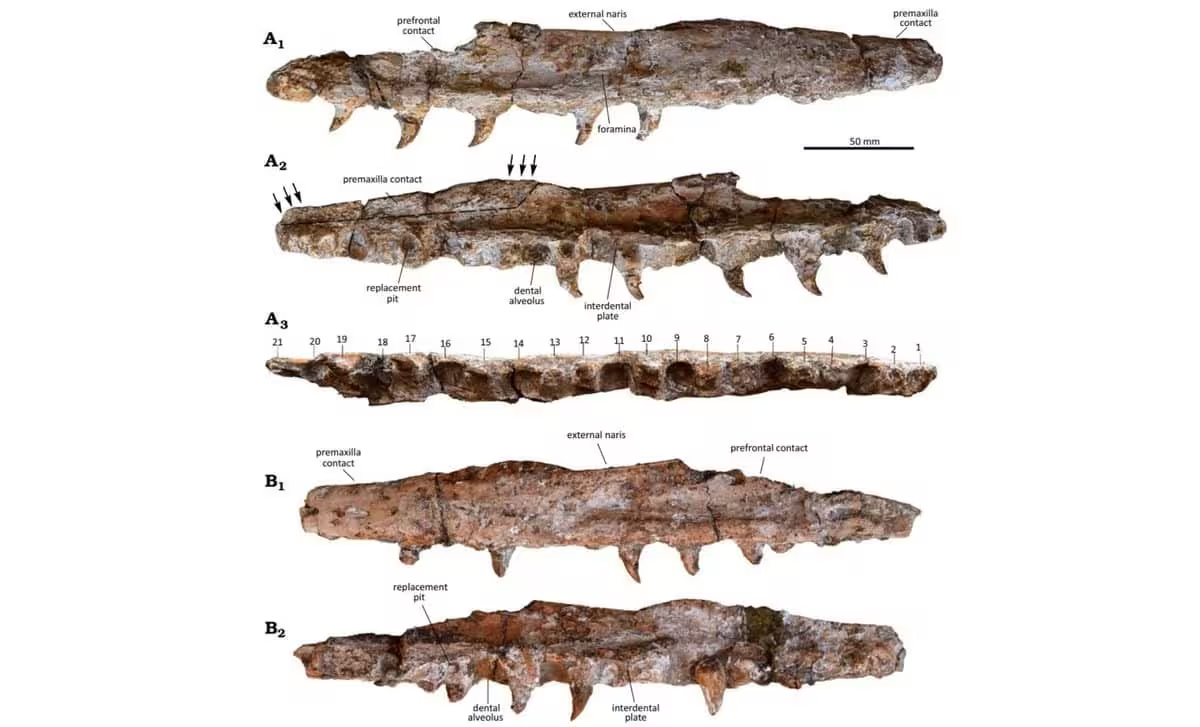
Evidence of Ecological Niche Partitioning
The discovery marks the third Halisaurus species found in Egypt, following H. arambourgi and H. hebae. Finding these species within the same geological strata suggests that these marine reptiles successfully engaged in niche partitioning, a strategy where closely related animals coexist by utilizing different food sources or habitats to minimize competition.
The presence of various fossils—including turtle fragments, plesiosaur vertebrae, and bony fish—within the same Dakhla Shale formation confirms that this region was once a thriving, complex marine ecosystem. As researchers continue to analyze these findings, H. auriculatus stands as a compelling example of how even the smaller predators of the Cretaceous were evolving sophisticated sensory and physical tools to survive in a rapidly changing world before the mass extinction event that ended their reign.
This article has been fact checked for accuracy, with information verified against reputable sources. Learn more about us and our editorial process.
Last reviewed on .
Article history
- Latest version
Reference(s)
- “A new species of halisaurine mosasaurid from the Upper Cretaceous of Egypt - Acta Palaeontologica Polonica.” <https://www.app.pan.pl/article/item/app013102025.html>.
Cite this page:
- Posted by Hassan Raza