Four Year Old Girl Discovers Rare 220 Million Year Old Dinosaur Footprint on Welsh Beach
A four-year-old girl has discovered a perfectly preserved 220-million-year-old dinosaur footprint on a Welsh beach, stunning paleontologists worldwide.
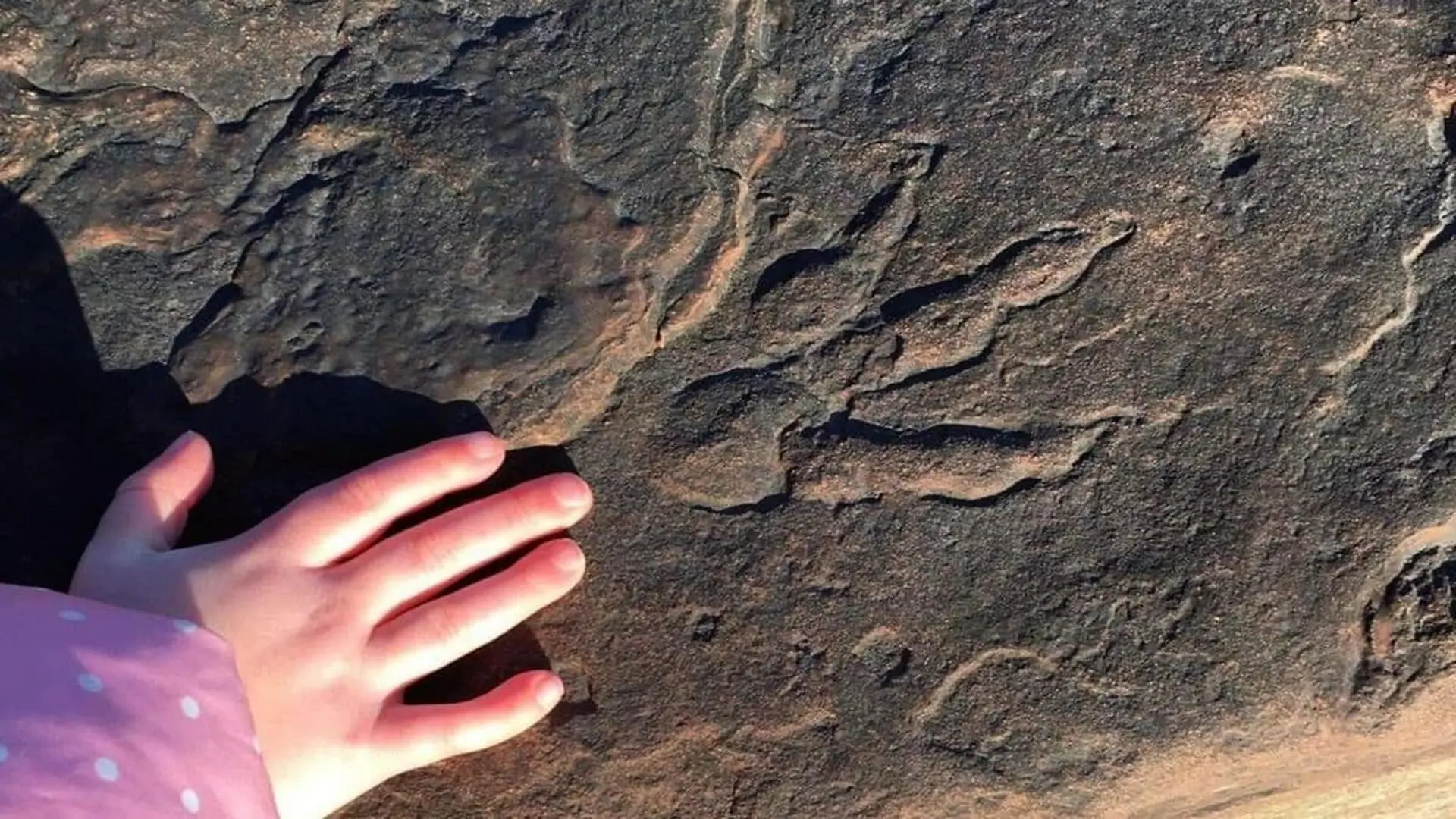
A four-year-old girl has made a remarkable contribution to paleontology after spotting a perfectly preserved dinosaur footprint during a casual stroll along a beach in Wales. Lily Wilder discovered the ancient fossil at Bendricks Bay, located near Barry in the Vale of Glamorgan, while exploring the coastline with her father, Richard.
The specimen, which dates back approximately 220 million years to the Triassic period, has since been extracted and transported to the National Museum Cardiff for further study and long-term curation. Experts believe the print offers a rare and detailed look into the biology of early dinosaurs during a formative era of their evolution.
An Unexpected Fossil Discovery
What began as a routine family walk quickly turned into a significant scientific event when Lily noticed the imprint and alerted her father. Her mother, Sally, noted that the family initially questioned whether the find could be authentic, prompting them to reach out to professionals for verification. Once researchers reviewed photographs of the track, they moved rapidly to secure the site.
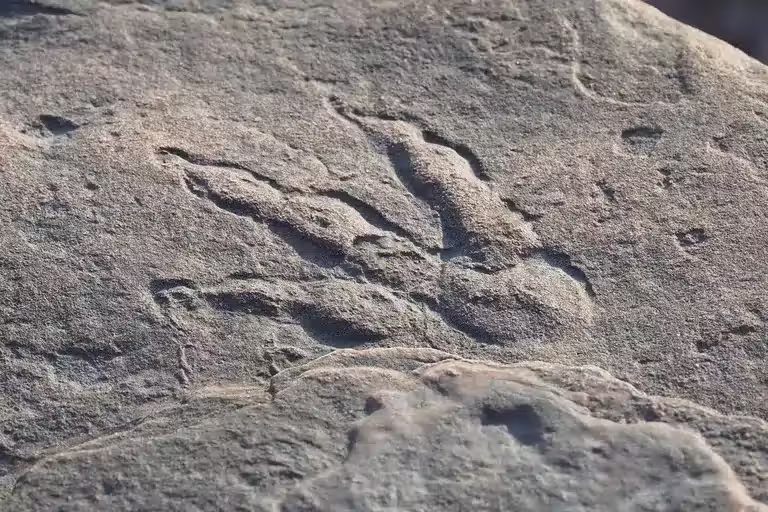
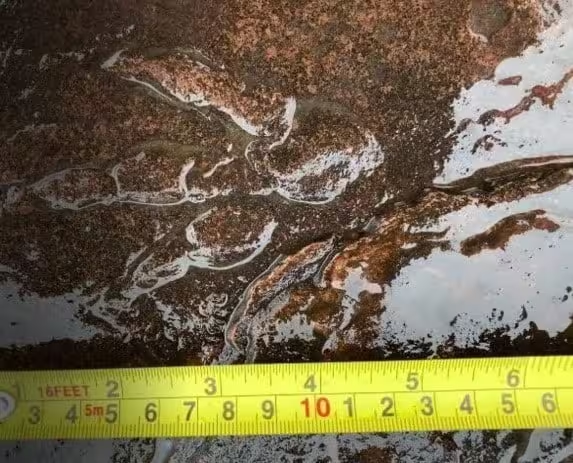
The fossilized track measures only 10 centimeters in length. Paleontologists suggest the animal that left it was a small, slender bipedal creature, likely standing about 75 centimeters tall. While the exact species remains a mystery, the animal is thought to have been an active hunter of smaller prey and insects. The discovery adds to the reputation of Bendricks Bay as one of the most critical locations in the United Kingdom for studying the dawn of the dinosaur age.
Why This Print Is Unique
According to Cindy Howells, the paleontology curator at the National Museum Wales, this is the finest specimen ever recovered from this stretch of coastline. While Bendricks Bay has yielded various footprints in the past, many of those were left by crocodilian-like reptiles rather than true dinosaurs.
The exceptional clarity of this specific print reveals distinct pad and claw impressions, providing researchers with invaluable data regarding the anatomical structure of early dinosaur feet. While some similar tracks in the United States have been associated with the genus Coelophysis, experts are proceeding with caution regarding a definitive classification for the Welsh specimen.
Regulatory Approval for Fossil Recovery
The extraction process required formal authorization from Natural Resources Wales due to the protected status of the geological site. The South Wales group of the Geologists’ Association has long maintained that the area is Britain’s premier location for finding Triassic-era tracks, though they note that these subtle markers are easily overlooked by the untrained eye.
“Its spectacular preservation may help scientists establish more about the actual structure of their feet as the preservation is clear enough to show individual pads and even claw impressions,” the museum stated.
This article has been fact checked for accuracy, with information verified against reputable sources. Learn more about us and our editorial process.
Last reviewed on .
Article history
- Latest version
Reference(s)
- “New dinosaur footprint discovered on south Wales beach | Museum Wales.” Museum Wales <https://museum.wales/news/1209/New-dinosaur-footprint-discovered-on-south-Wales-beach/>.
- “Staff Profile: Cindy Howells | Museum Wales.” Museum Wales <https://museum.wales/staff/172/Cindy-Howells/>.
- “Cyfoeth Naturiol Cymru - Dewis Iaith / Natural Resources Wales - Language Select.” <https://naturalresources.wales/?lang=en>.
- <https://geologistsassociation.org.uk/>.
Cite this page:
- Posted by Hassan Raza