Rare 4.1 Billion Year Old Meteorite Unlocks Secrets of Mars’ Ancient Watery Past
A 4.1-billion-year-old Martian meteorite provides rare insights into the Red Planet’s ancient crust, revealing clues about its early water and magma history.
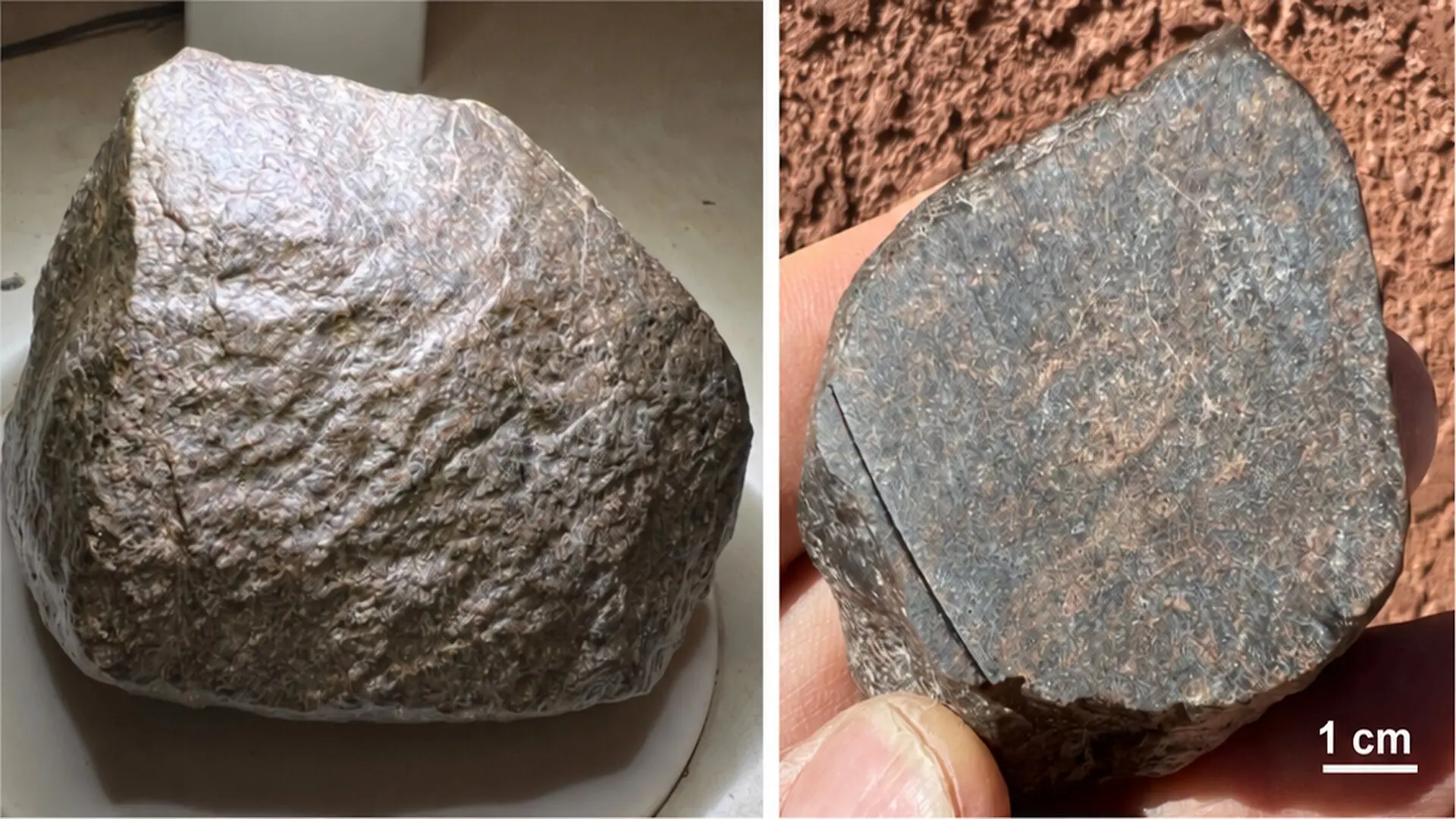
A fragment of Mars that crashed into the Sahara Desert in 2022 is providing planetary scientists with an unprecedented glimpse into the Red Planet’s infancy. Dated to approximately 4.1 billion years ago, the meteorite, designated Teghaza 001, contains a preserved record of ancient volcanic processes and early interactions with water that have remained largely hidden from human study.
The study, published in Science and led by researchers from NASA’s Jet Propulsion Laboratory, offers a starkly different narrative than many of the younger Martian rocks currently available to researchers. By analyzing the chemistry of this ancient igneous stone, scientists are piecing together the volatile conditions that shaped the planet’s earliest crust.
Unearthing a Relic of the Early Solar System
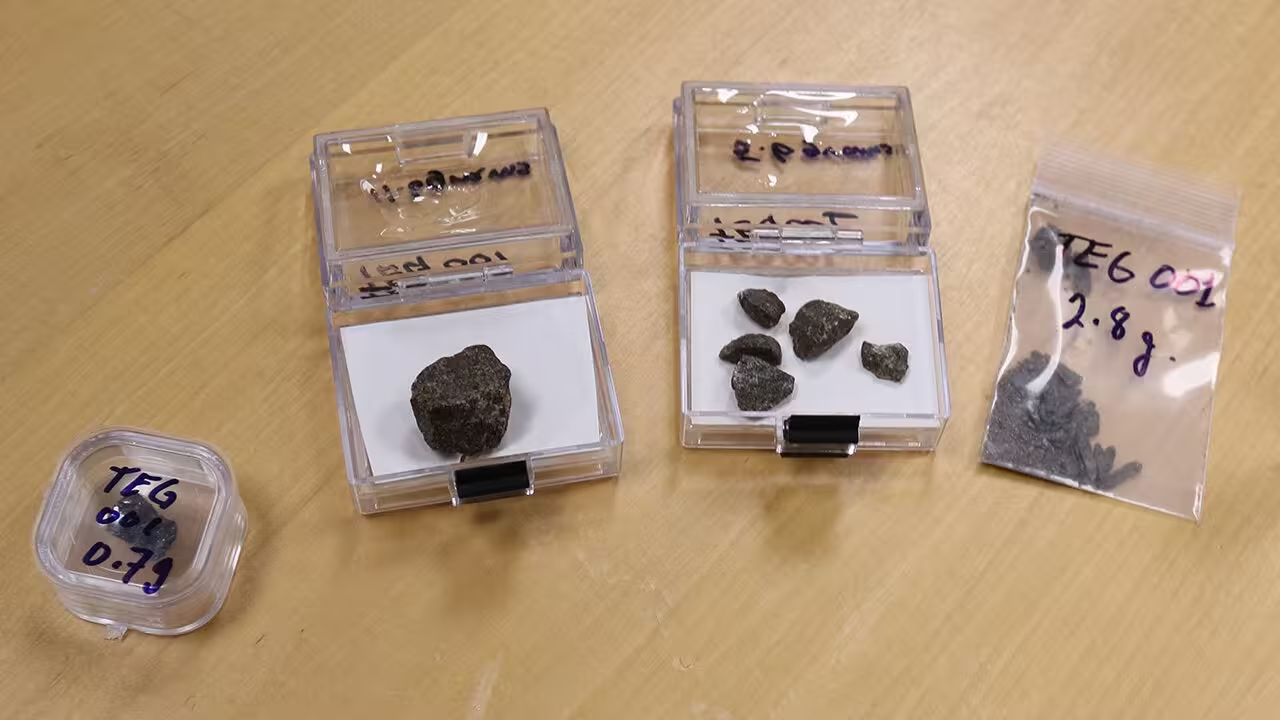
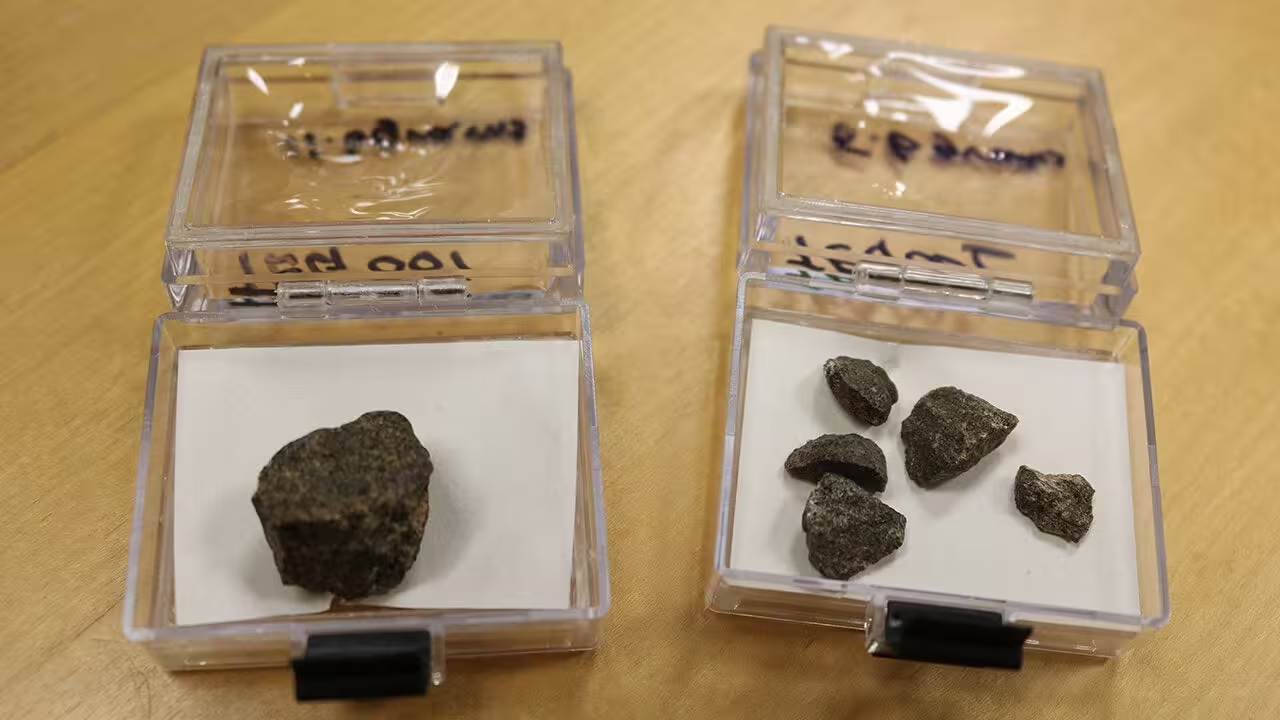
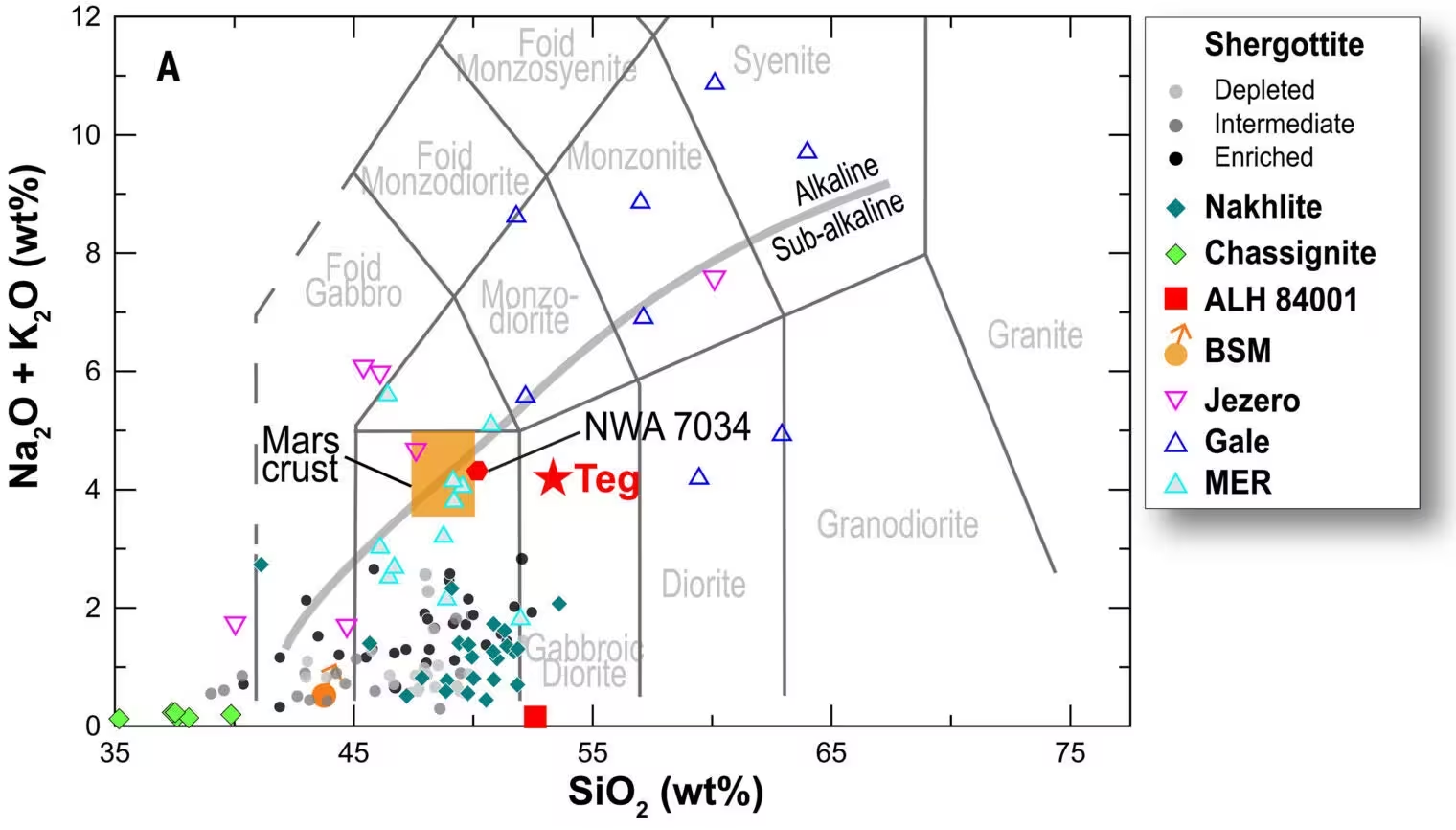
Found in Mali, the Teghaza 001 collection consists of eight stones totaling nearly 800 grams. While meteorites from Mars are not unheard of, this specimen stands out for its structural integrity. Unlike the chaotic, jumbled composition of the famous “Black Beauty” meteorite, Teghaza 001 is a coherent leuco-gabbro, an igneous rock characterized by large crystals of plagioclase feldspar. This texture suggests the rock cooled slowly deep beneath the Martian surface rather than erupting violently as surface lava.
Carl Agee, curator at the University of New Mexico’s Institute of Meteoritics, noted that the rock’s unique mineralogy provided a clean slate for analysis, free from the complex, fragmented history of other ancient samples. By dating zircon crystals found within the rock, the team confirmed an age of 4.114 billion years, placing it among the oldest Martian samples ever identified.
Evidence of Ancient Aqueous Activity
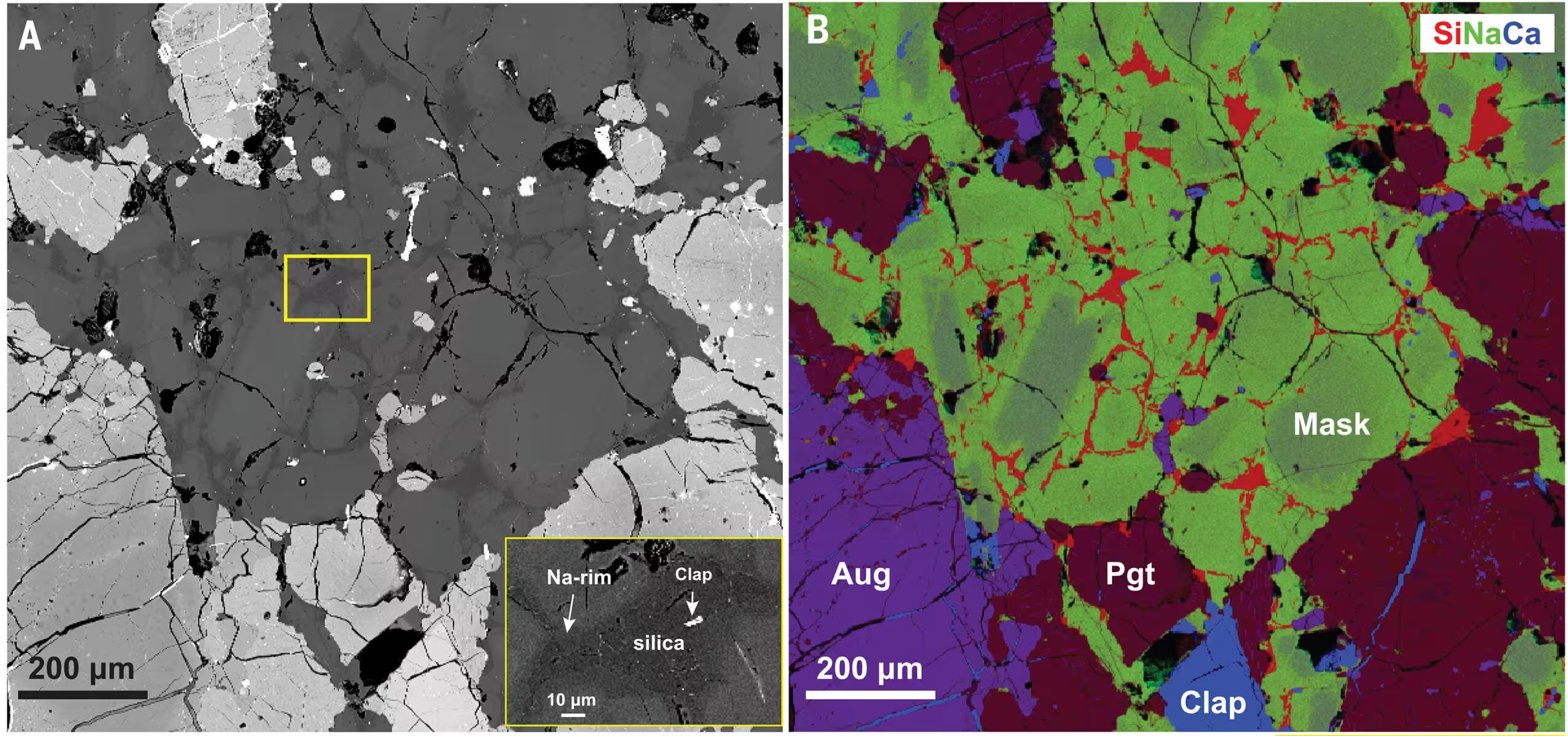
Perhaps the most significant aspect of Teghaza 001 is its chemical signature, which strongly indicates that water was actively altering the Martian crust billions of years ago. Mineral analysis reveals that the rock’s pyroxene and plagioclase grains exhibit clear signs of hydrothermal modification. Furthermore, oxygen isotope measurements—which detect heavy oxygen signatures—suggest the presence of fluids that interacted with the magma as it formed or shortly thereafter.
Researchers caution that these findings do not confirm the presence of life or a global ocean during this era. Instead, they demonstrate that the early Martian environment was chemically complex, featuring fluid-rock interactions that are a hallmark of geologically active planets.
Mapping the Martian Mantle
Beyond the surface, Teghaza 001 provides a rare probe into the planet’s deep interior. By examining trace elements that have remained stable for eons, the researchers modeled how the original magma was created. Their findings point to a mantle source rich in garnet, located at least 160 kilometers below the Martian surface. This suggests that the early Martian interior was not uniform, but rather comprised distinct, chemically diverse reservoirs that produced different types of volcanic activity.
The research team utilized orbital data to search for the meteorite’s potential origin, finding that the ancient southern highlands—particularly the regions surrounding the Hellas impact basin—contain mineral signatures consistent with the rock’s composition. While the exact “launch site” remains elusive, the discovery provides a valuable target for future rover missions.
Refining Future Exploration
Teghaza 001 serves as a bridge between remote sensing and direct sampling. While missions like NASA’s Perseverance rover analyze rocks in their natural geological context, meteorites like this one allow for high-precision laboratory techniques, such as isotope dating, that cannot currently be replicated on Mars. By confirming that ancient hydrothermal systems existed, scientists can better prioritize which regions of the planet might hold the best clues to its habitable history.
“We’ve never found one like this before,” said Agee, highlighting the sample’s importance to planetary science. As researchers continue to study the rock, they hope to unlock more secrets regarding the specific temperature, timing, and nature of the fluids that once shaped the Red Planet.
Additional Scientific Context
- A Noachian hydrosphere component in the 4.1-Ga Martian meteorite Teghaza 001 – Science Advances, 2026.
- Zircon trace element evidence for early hydrothermal activity on Mars – Science Advances, 2024.
- Early crustal processes revealed by the ejection site of the oldest martian meteorite – Nature Communications, 2022.
- What Martian Meteorites Reveal About the Interior and Surface of Mars – Journal of Geophysical Research: Planets, 2020.
- Unique Meteorite from Early Amazonian Mars: Water-Rich Basaltic Breccia Northwest Africa 7034 – Science, 2013.
This article has been fact checked for accuracy, with information verified against reputable sources. Learn more about us and our editorial process.
Last reviewed on .
Article history
- Latest version
Reference(s)
- Liu, Yang., et al. “A Martian meteorite that formed ≳4.1 billion years ago samples Mars’ early crust and mantle.” Science, October 29, 2026 American Association for the Advancement of Science (AAAS), doi: 10.1126/science.adz5646. <https://www.science.org/doi/10.1126/science.adz5646>.
- “NASA Jet Propulsion Laboratory (JPL) | NASA Jet Propulsion Laboratory (JPL).” <https://www.jpl.nasa.gov/>.
- “New Mexico's Flagship University | The University of New Mexico.” <https://www.unm.edu/>.
- “Checking your browser - reCAPTCHA.” <https://pmc.ncbi.nlm.nih.gov/articles/PMC13251866/>.
- “Zircon trace element evidence for early hydrothermal activity on Mars - PubMed.”, vol. 10, no. 47, January 1, 2024 PubMed, doi: 10.1126/sciadv.adq3694. <https://pubmed.ncbi.nlm.nih.gov/39576864/>.
- Lagain, A.. “Early crustal processes revealed by the ejection site of the oldest martian meteorite - Nature Communications.”, vol. 13, no. 1, July 12, 2022, pp. 3782 Nature, doi: 10.1038/s41467-022-31444-8. <https://www.nature.com/articles/s41467-022-31444-8>.
- Udry, A.., et al. “What Martian Meteorites Reveal About the Interior and Surface of Mars.” Journal of Geophysical Research: Planets, vol. 125, no. 12, December 18, 2020 American Geophysical Union (AGU), doi: 10.1029/2020JE006523. <https://agupubs.onlinelibrary.wiley.com/doi/10.1029/2020JE006523>.
- Agee, Carl B.., et al. “Unique Meteorite from Early Amazonian Mars: Water-Rich Basaltic Breccia Northwest Africa 7034.” Science, vol. 339, no. 6121, February 15, 2013, pp. 780-785. American Association for the Advancement of Science (AAAS), doi: 10.1126/science.1228858. <https://www.science.org/doi/10.1126/science.1228858>.
Cite this page:
- Posted by Aisha Ahmed