JWST Uncovers Most Oxygen‑Poor Galaxy Yet, A Possible Ancestor Of Milky Way Dwarfs
James Webb Telescope spots a galaxy that may hold the universe’s oldest chemical signatures, bringing astronomers closer to the primordial cosmos.
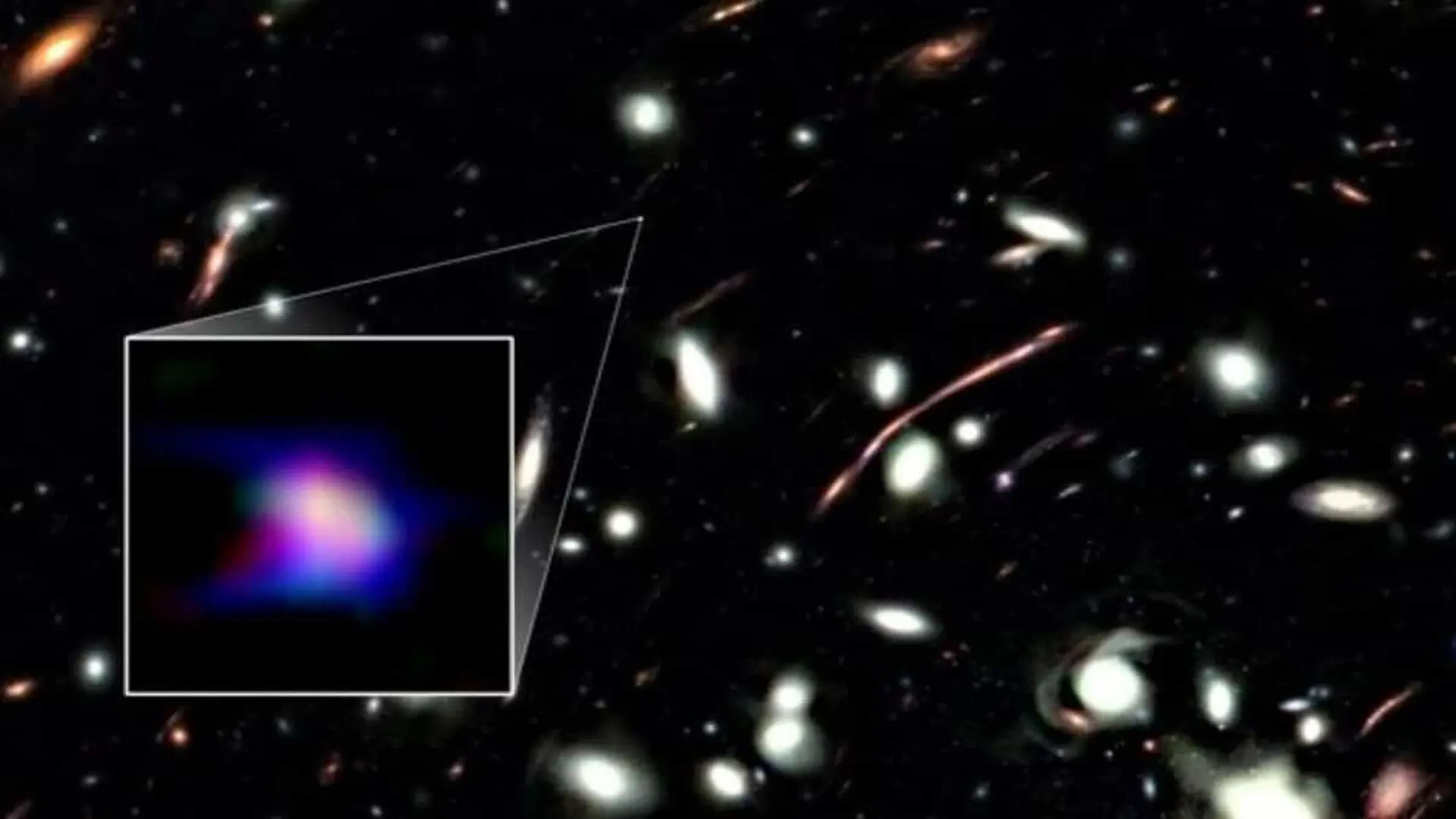
Using the James Webb Space Telescope together with the natural magnification provided by gravitational lensing, astronomers have captured an unprecedented view of a galaxy that existed 13 billion years ago. The object, designated LAP1‑B, exhibits the lowest oxygen content ever recorded for a galaxy of its type.
The findings, released in Nature, stem from an international collaboration headed by Kimihiko Nakajima of Kanazawa University, with Masami Ouchi from the National Astronomical Observatory of Japan and the University of Tokyo playing key roles. The team focused on an ultra‑faint system that formed shortly after the first generations of stars began enriching the cosmos with heavy elements, and they argue that its properties echo those of the ultra‑faint dwarf galaxies that still orbit the Milky Way.
Record‑Breaking Oxygen Deficiency in a Primitive Galaxy
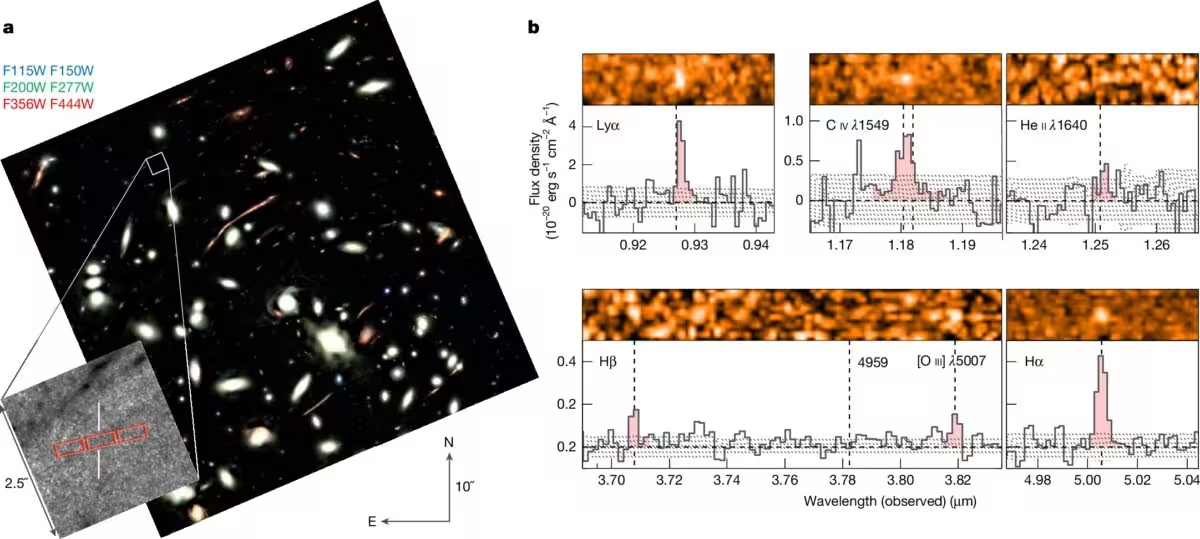
In the moments following the Big Bang the universe was composed almost entirely of hydrogen and helium. Heavier atoms such as carbon and oxygen were forged later inside the cores of the first stars and dispersed by supernova explosions. Spectroscopic analysis of LAP1‑B shows an oxygen abundance that is merely 1⁄240 of the solar value, establishing a new low‑watermark for galaxies observed at such an early epoch.
“I was instantly thrilled by the extreme lack of oxygen,” said Kimihiko Nakajima. “Finding a galaxy in such a primitive state is astonishing. It’s a chemical signature that clearly indicates a primordial galaxy caught in the moments shortly after its formation.”
How Gravitational Lensing Amplified the Faint Signal
The breakthrough depended on a massive galaxy cluster acting as a natural telescope, bending and magnifying the distant light of LAP1‑B by roughly a factor of one hundred. This boost allowed JWST to collect enough photons for a detailed chemical study after more than 30 hours of exposure—data that would otherwise have been inaccessible for such a dim object.
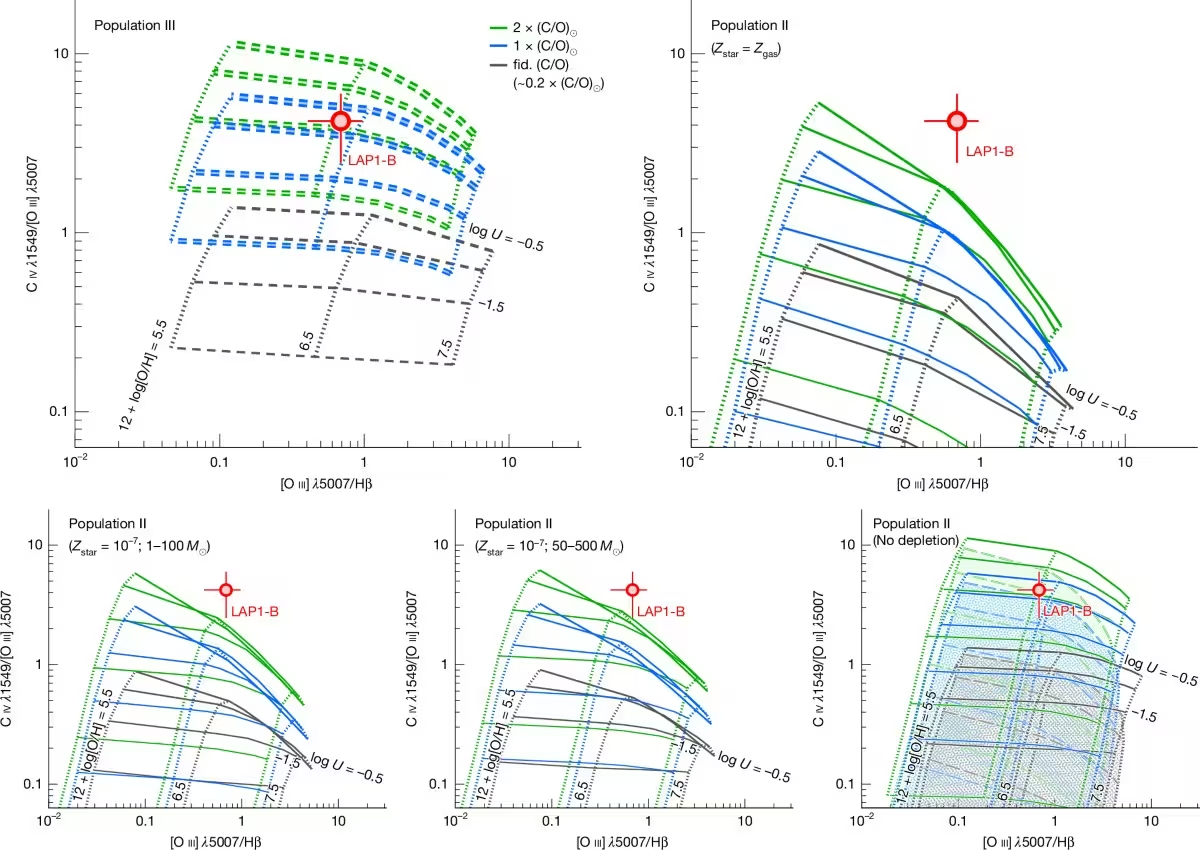
By marrying JWST’s sensitivity with the magnifying power of gravitational lensing, the team was able to probe one of the smallest and faintest galaxies known from the reionization era.
Linking Early Galaxies to the Milky Way’s Ultra‑Faint Dwarfs
Mass estimates place LAP1‑B below 3 300 solar masses, implying that the bulk of its structure consists of an invisible dark‑matter halo. This low stellar mass and its unusual elemental makeup closely resemble the ultra‑faint dwarf galaxies that orbit our own Milky Way, which are populated by stars older than 12 billion years.
“UFDs are not only the faintest galaxies; they are composed of ancient stars over 12 billion years old and are often described as ‘fossils of the universe,’” he said.
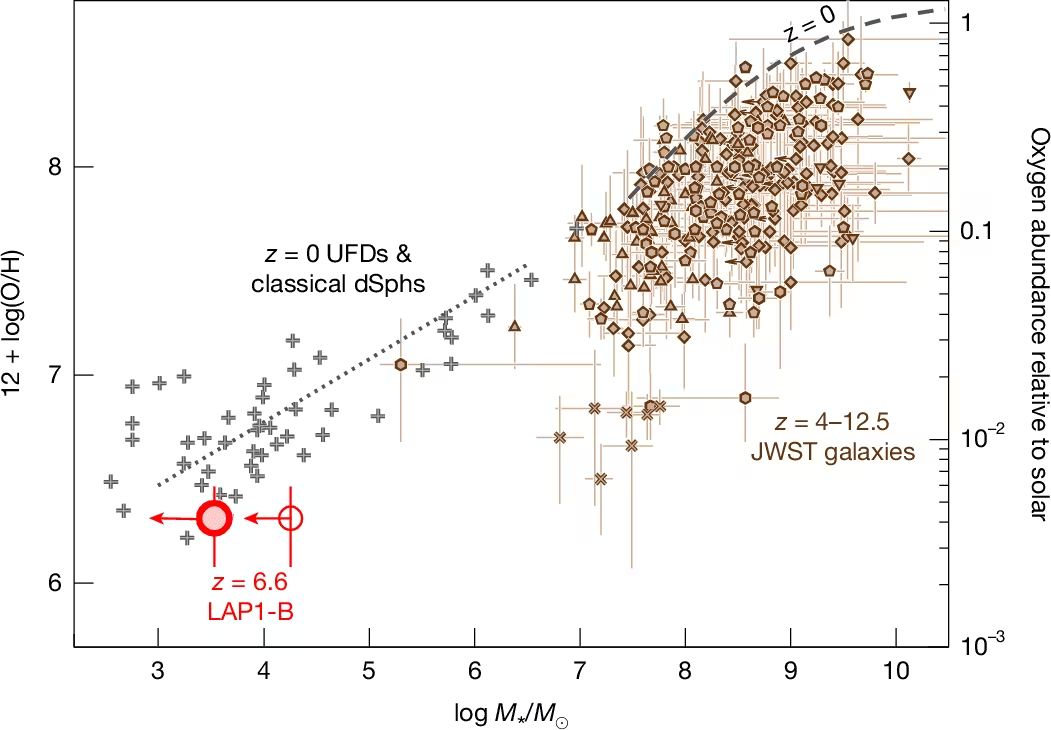
“It is a profound surprise to find that LAP1‑B looks exactly like the ‘ancestor’ we had only imagined in theories. This helps us solve the mystery of why these cosmic fossils have survived in their current form to the present day.”
The discovery of LAP1‑B provides a tangible bridge between the first luminous structures in the universe and the faint dwarf companions of the Milky Way, offering a new window onto the chemical evolution of galaxies across cosmic time.
This article has been fact checked for accuracy, with information verified against reputable sources. Learn more about us and our editorial process.
Last reviewed on .
Article history
- Latest version
Cite this page:
- Posted by Aisha Ahmed