July Sky: Saturn-Moon Pair, Milky Way Core, Venus, Meteor Showers & Returning Comet
July’s sky is packed with planets, meteor showers, the Milky Way and a bright summer full moon—perfect for stargazers.
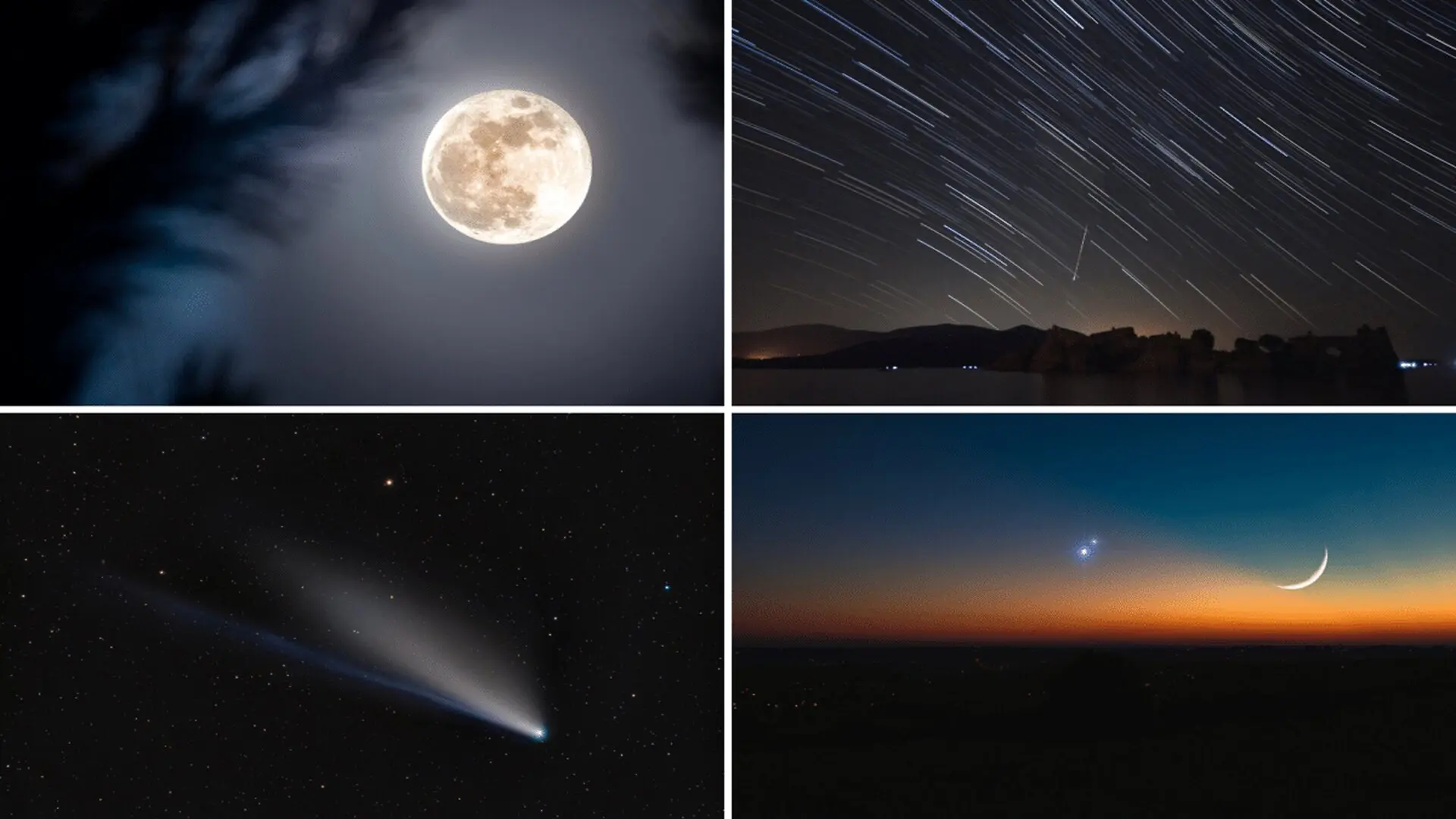
July promises an abundant lineup of celestial sights, from planetary groupings and meteor streams to a dark‑sky view of the Milky Way. National Geographic lists eight key events that require little more than clear weather and timing, while a few benefit from binoculars or a modest telescope. Whether you’re a casual observer or a seasoned night‑watcher, the month offers a rich variety of skies to explore.
Early‑Morning Planetary Pairings Light Up the First Week
Around midnight on July 7‑8, the eastern horizon will showcase Saturn skirting the waning third‑quarter Moon. The duo stays visible until sunrise, creating a striking naked‑eye tableau. As dawn approaches, Mars and the bright Pleiades cluster join the scene, adding more sparkle to the pre‑dawn canvas.
A few days later, on July 11, a thin crescent Moon forms a tight triangle with the reddish glow of Mars and the bluish stars of the Pleiades. The alignment appears roughly two hours before sunrise over the eastern horizon. While the configuration is evident to the unaided eye, binoculars reveal dozens of additional stars within the Pleiades and accentuate lunar surface details along the terminator.
New Moon on the 14th Brings Dark Skies for Milky Way Viewing
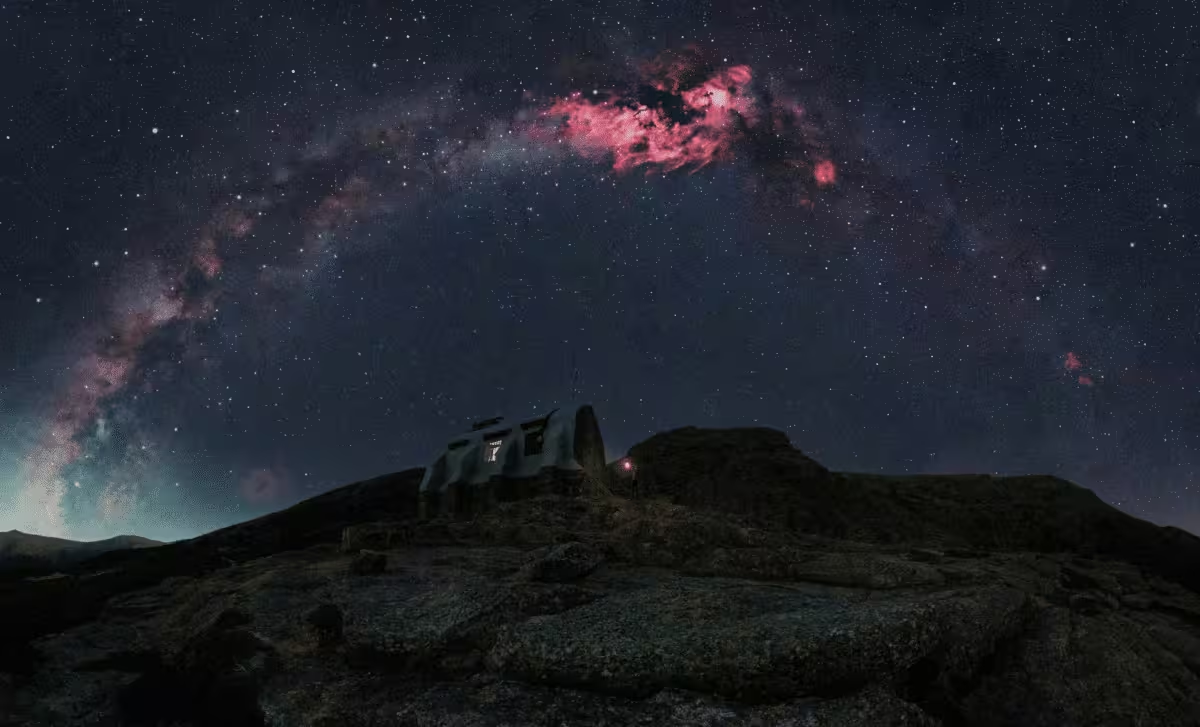
The fresh crescent of July 14 removes moonlight from the night, allowing dark sites to expose a wealth of faint stars, nebulae, and globular clusters. This window is regarded as the optimal time in July to admire the luminous core of the Milky Way, home to an estimated 100 billion stars.
According to National Geographic, observers who escape city glare and let their eyes adapt for about thirty minutes can trace the galactic center stretching across the southern sky without assistance. National parks and certified dark‑sky reserves become prime venues, while seasoned stargazers may hunt deep‑sky gems such as the Ring Nebula and the Great Hercules Cluster. The familiar Sagittarius Teapot asterism serves as a handy guide toward the brightest segment of our galaxy.
Venus Near a Crescent Moon and the Full Buck Moon Highlight Late July
After sunset on July 17, the brilliant Venus will sit close to a delicate crescent Moon low on the western horizon. Although Venus sets a few hours later, its intense brightness makes the conjunction one of the easiest evening spectacles of the month, and a rewarding subject for twilight photography.
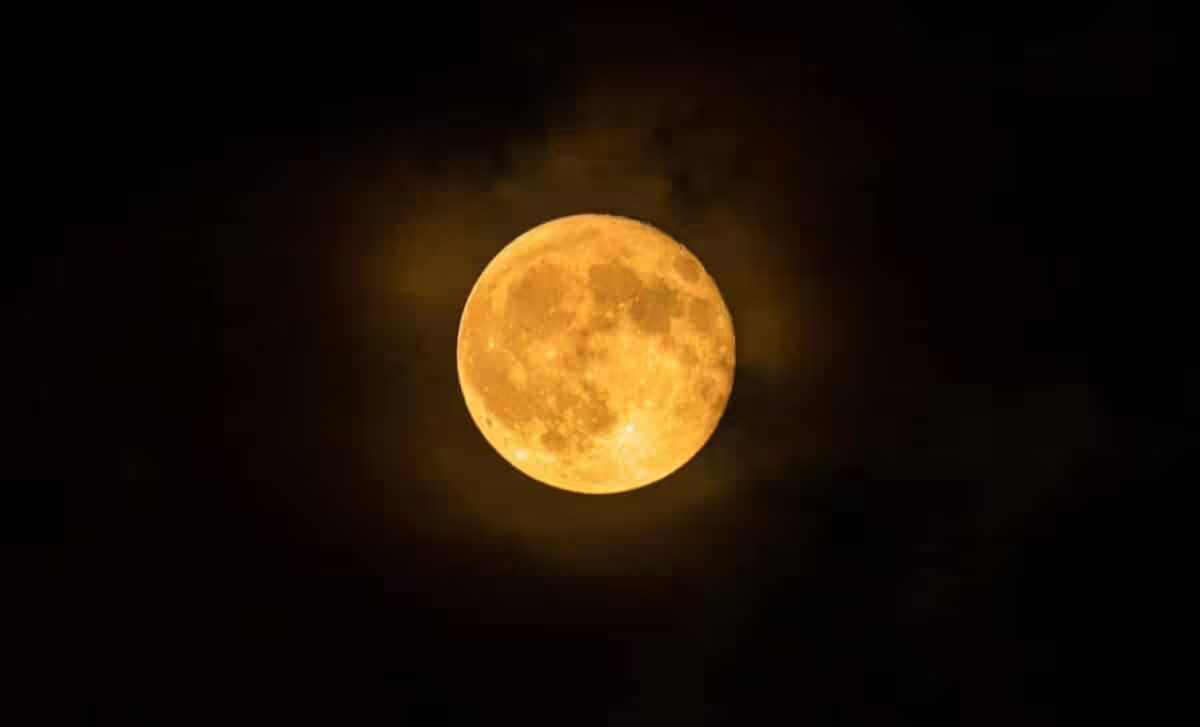
Later in the month, the so‑called Buck Moon reaches full illumination on July 29. Named for the period when male deer grow new antlers, this full Moon appears especially large near the horizon, a visual effect amplified by the classic Moon illusion. The most dramatic sightings are expected on the evenings of July 28‑29, when the lunar disc seems oversized against the surrounding sky.
Meteor Showers Peak at Month’s End
The Southern Delta Aquariids, active from July 12 through August 23, reach their maximum on July 30‑31, potentially delivering about 20 meteors per hour under pristine dark conditions. This shower favors Southern Hemisphere viewers, though observers at lower northern latitudes may still catch several fireballs.
Simultaneously, the Alpha Capricornids offer a smaller output of roughly five meteors per hour, but they are noted for bright fireballs that can stand out even when the Moon is present. This year’s peak coincides with a bright waning‑gibbous Moon, which will suppress the visibility of fainter meteors.
Comet 10P Gradually Brightens Throughout July
July also sees the slow rise of Comet 10P, a five‑year periodic visitor that becomes increasingly observable as the month progresses. Early in July a small telescope is usually needed to spot the comet near the constellation Capricornus, but by month’s end binoculars can reveal it in darker skies.
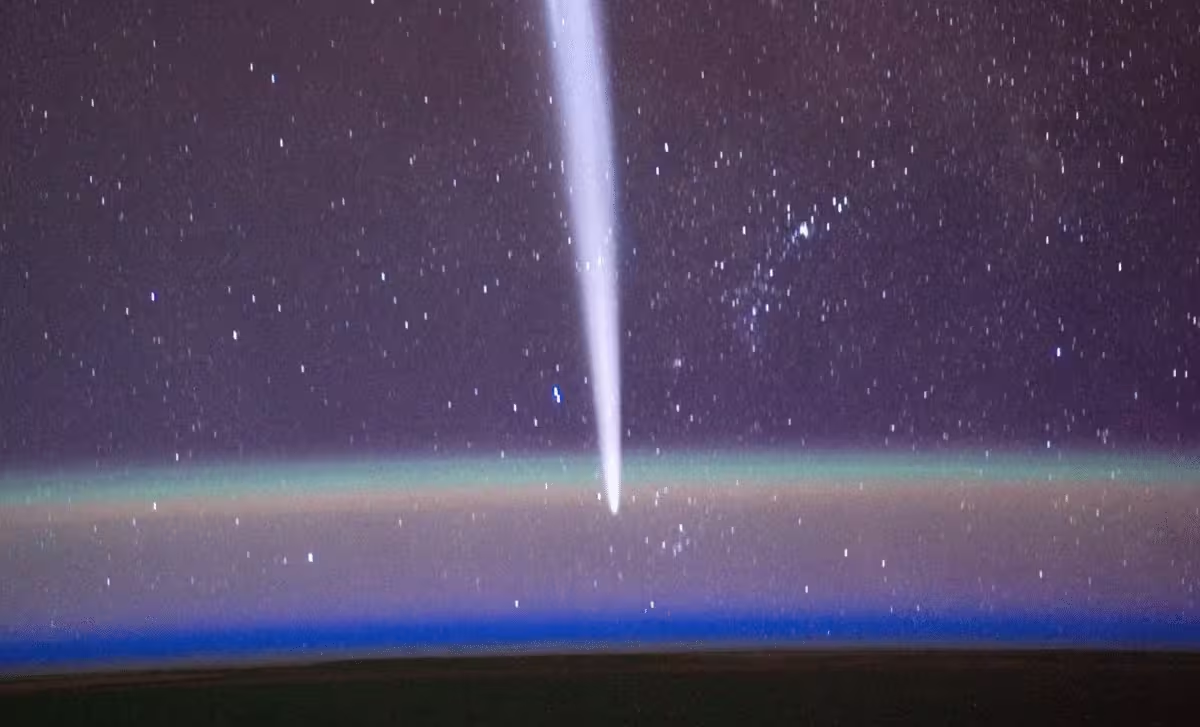
Although its peak brightness is projected for early August, July offers an ideal window to track the comet’s steady return alongside the month’s many planetary alignments, moon phases, Milky Way displays, and meteor shower peaks, making almost every week worth a step outside after dark or before dawn.
This article has been fact checked for accuracy, with information verified against reputable sources. Learn more about us and our editorial process.
Last reviewed on .
Article history
- Latest version
Reference(s)
- Vermillion, Stephanie. “8 night sky events to see in July, from twin meteor showers to the Milky Way's glittering core.”, June 25, 2026 National Geographic <https://www.nationalgeographic.com/science/article/july-night-sky-events-2026>.
Cite this page:
- Posted by Aisha Ahmed