Antarctic Isolation Study Shows Too Much Contact Fuels Conflict: A Warning for Mars Crews
A 10‑month Antarctic study uncovers a surprising obstacle that may also confront astronauts on long‑duration space missions.
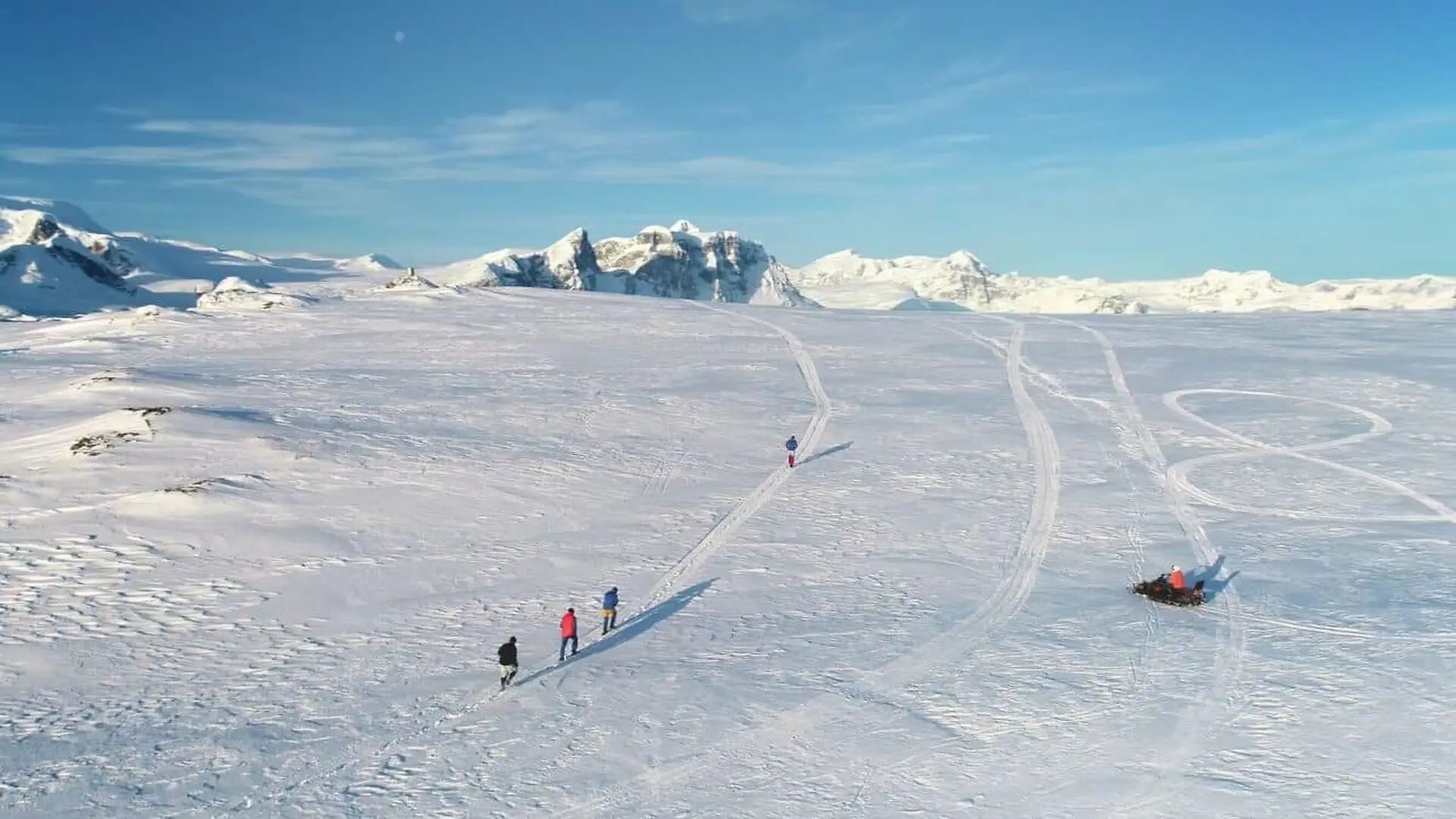
A ten‑month isolation study at Antarctica’s Concordia Station has highlighted how confined living conditions can erode trust and increase interpersonal friction, a warning that could shape the design of future deep‑space habitats.
Antarctic Isolation Study Sheds Light on Deep‑Space Crew Dynamics
Nestled far inland on the Antarctic plateau, Concordia endures winter temperatures that plunge to roughly -80 °C (-112 °F). When the polar night arrives, the station becomes virtually cut off from the rest of the world, providing a rare analog for the isolation astronauts will face on long‑duration missions to the Moon or Mars.
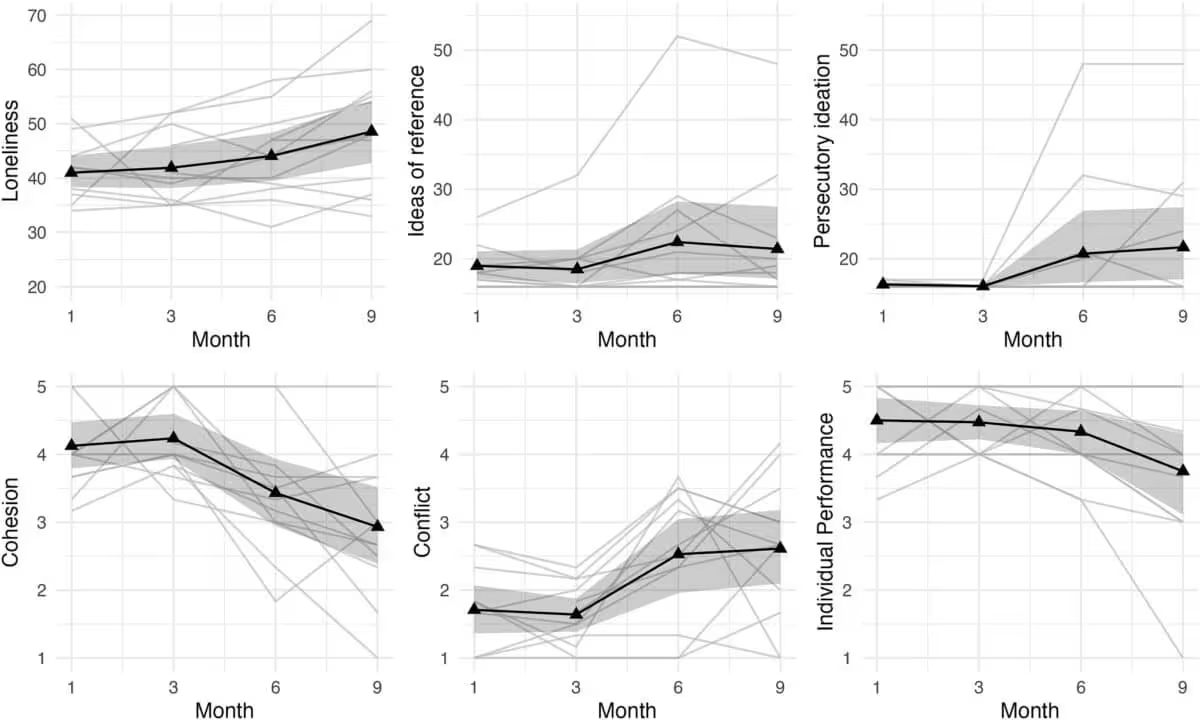
The project was coordinated by Jan Schmutz of the University of Zurich and Andrea Cantisani of the University of Bern. As detailed in PNAS, the researchers monitored twelve volunteers for ten months, combining four rounds of surveys on loneliness, trust, conflict, cohesion and perceived performance with continuous data from wearable proximity sensors that logged who stood near whom and for how long.
Increased Interaction Heightened Tensions, Not Cohesion
Analysis revealed that participants who reported more frequent face‑to‑face contact also indicated higher levels of disagreement, greater mistrust, and lower self‑rated performance. “In small teams under extreme conditions, more contact does not automatically translate into social support, and can actually raise tensions,” Schmutz explained.
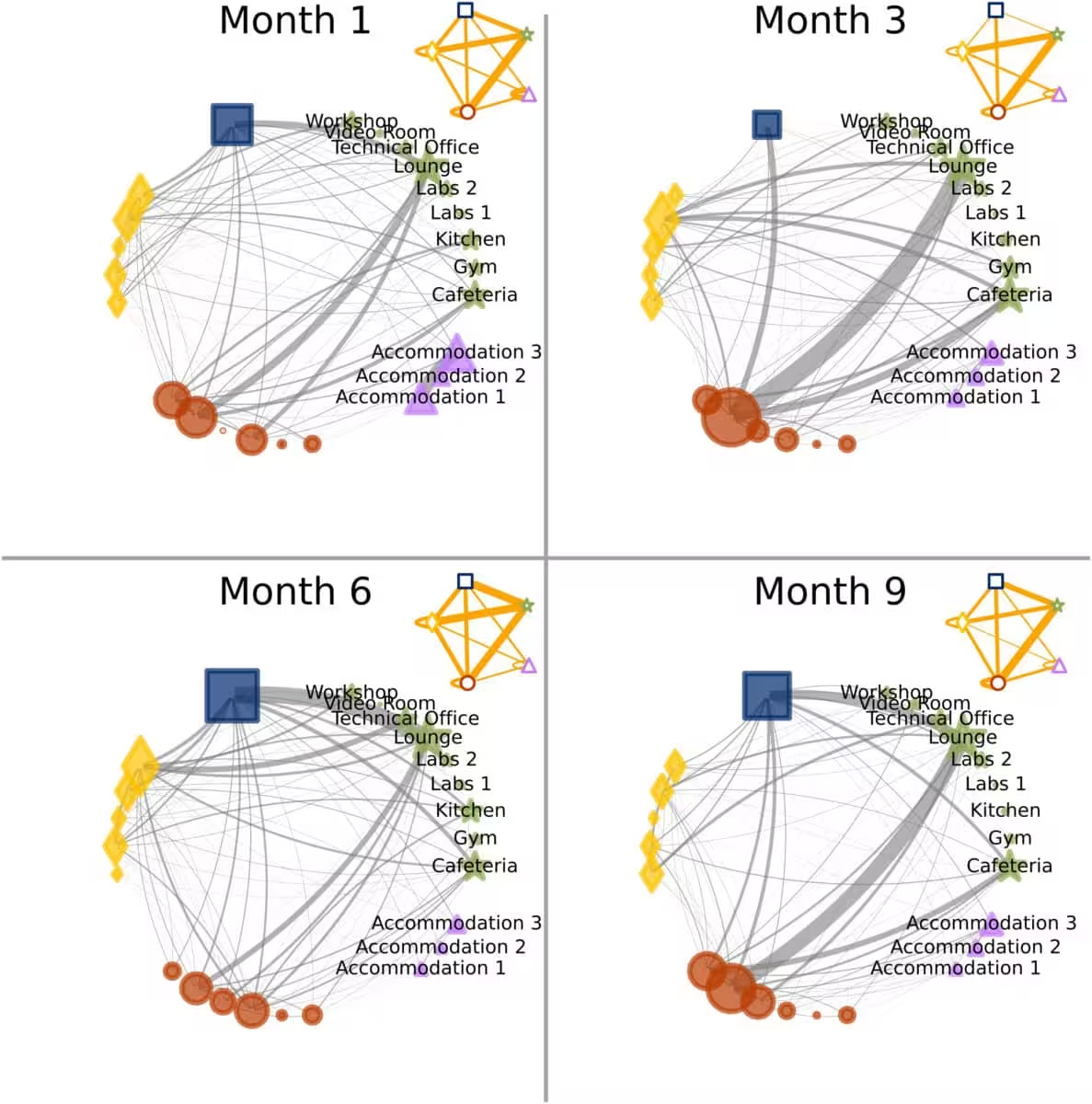
The researchers stress that the observed link is correlational rather than causal. Individuals who feel isolated may seek out more interaction without achieving relief, illustrating that simply increasing contact does not guarantee better morale.
Micro‑Groups Formed Within the Isolated Crew
Proximity‑sensor data also captured a gradual shift toward smaller social clusters, often organized around shared language or nationality. In a high‑stress, unfamiliar setting, gravitating toward familiar voices is a natural coping strategy, yet in a crew of only twelve people such sub‑grouping can reshape overall group dynamics.
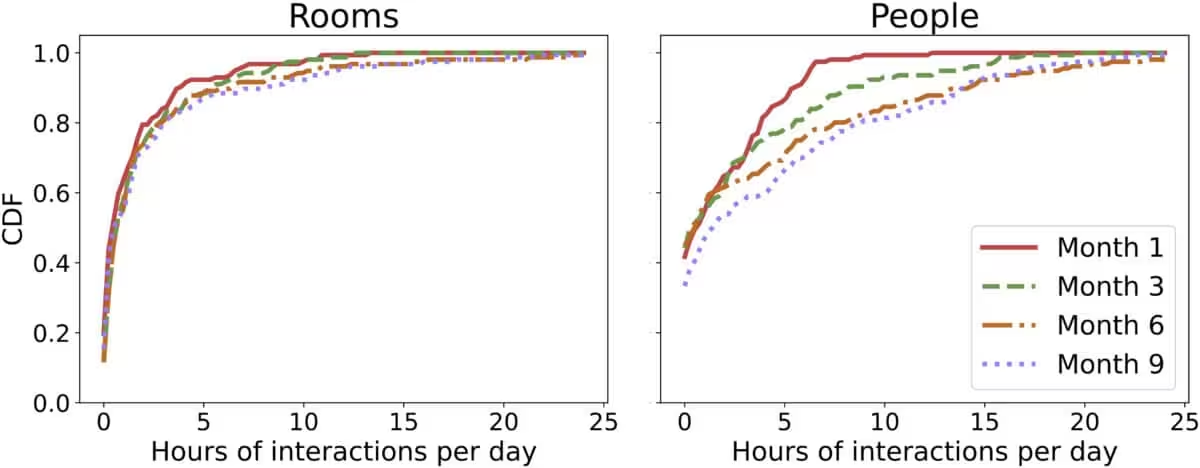
For planners of lunar and Martian outposts, the study underscores the importance of incorporating genuine privacy and early‑warning mechanisms into habitat design. Wearable sensors could serve as a low‑intrusive tool to flag emerging social friction, allowing mission control to provide targeted support before conflicts degrade performance.
As agencies move toward multi‑year expeditions that will confine the same small group of astronauts for extended periods, balancing togetherness with personal space may prove as vital to mission success as any engineering milestone.
This article has been fact checked for accuracy, with information verified against reputable sources. Learn more about us and our editorial process.
Last reviewed on .
Article history
- Latest version
Reference(s)
- “Jschmut.” <https://www.psychology.uzh.ch/en/areas/sob/atfor/team/jschmut.html>.
- <https://www.researchgate.net/profile/Andrea-Cantisani>.
- Cantisani, Andrea., et al. “Social interactions in isolated, confined, and extreme environments: A study of Antarctic winter teams using wearable sensors.” Proceedings of the National Academy of Sciences, vol. 123, no. 22, May 26, 2026 National Academy of Sciences, doi: 10.1073/pnas.2533420123. <http://dx.doi.org/10.1073/pnas.2533420123>.
Cite this page:
- Posted by Karan Das