Ancient Water Signs Revealed in Spirit Rover Data After 20 Years
Reanalysis of NASA rover data uncovers subtle new evidence on Mars, revealing secrets missed in the original measurements.
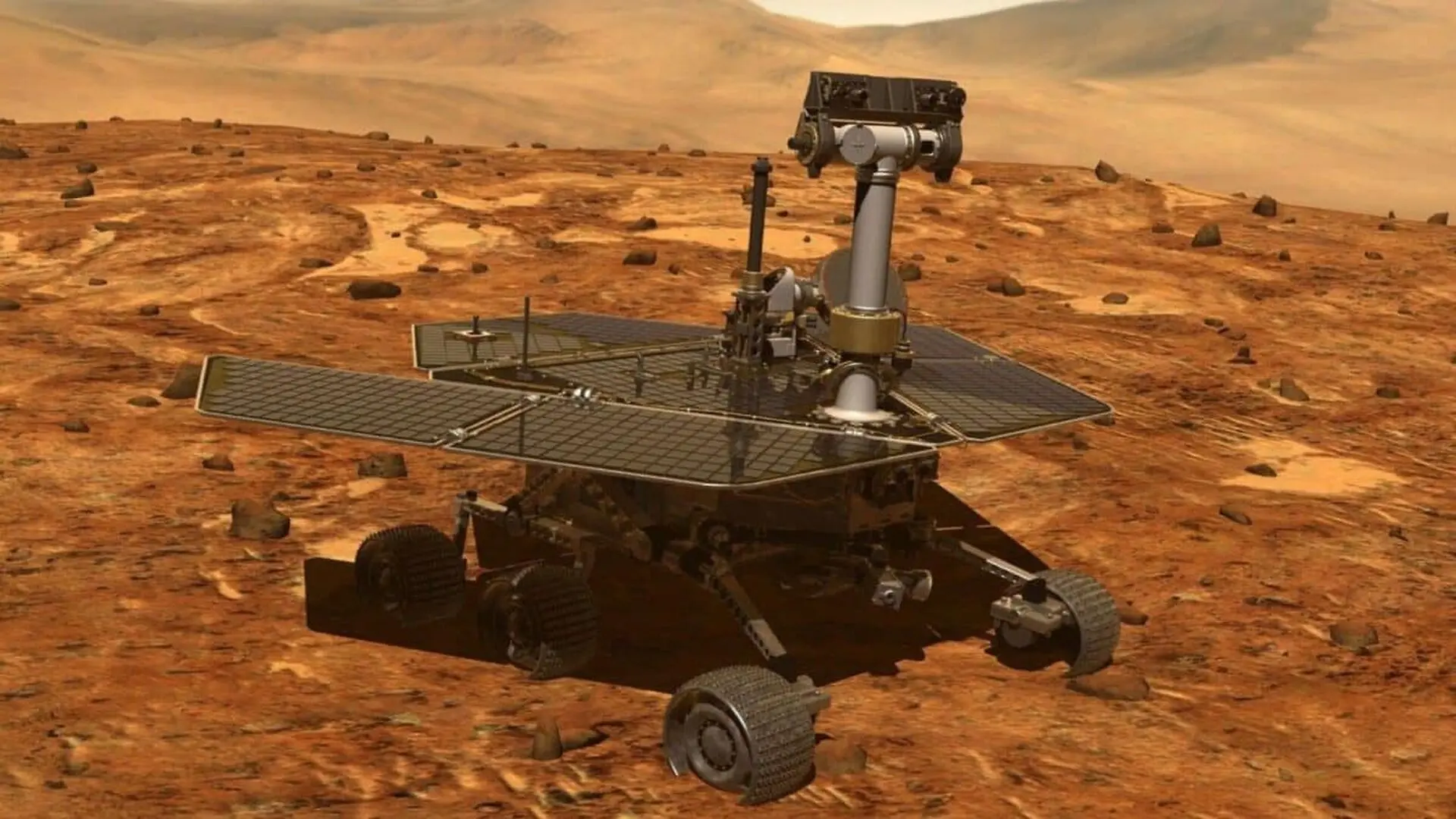
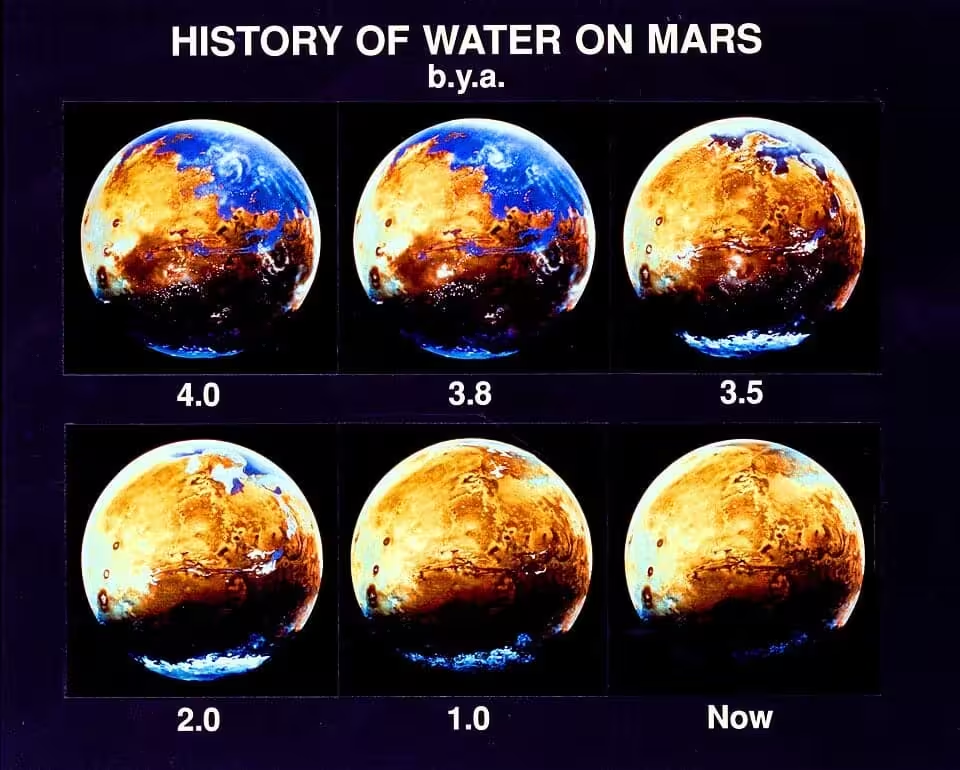
NASA’s Spirit rover has not revealed a fresh water source on the Red Planet. Instead, a fresh look at two‑decade‑old data shows that mineral signatures tied to water were already embedded in the rover’s measurements, implying that ancient Martian water activity may have spanned a far broader region than earlier estimates.
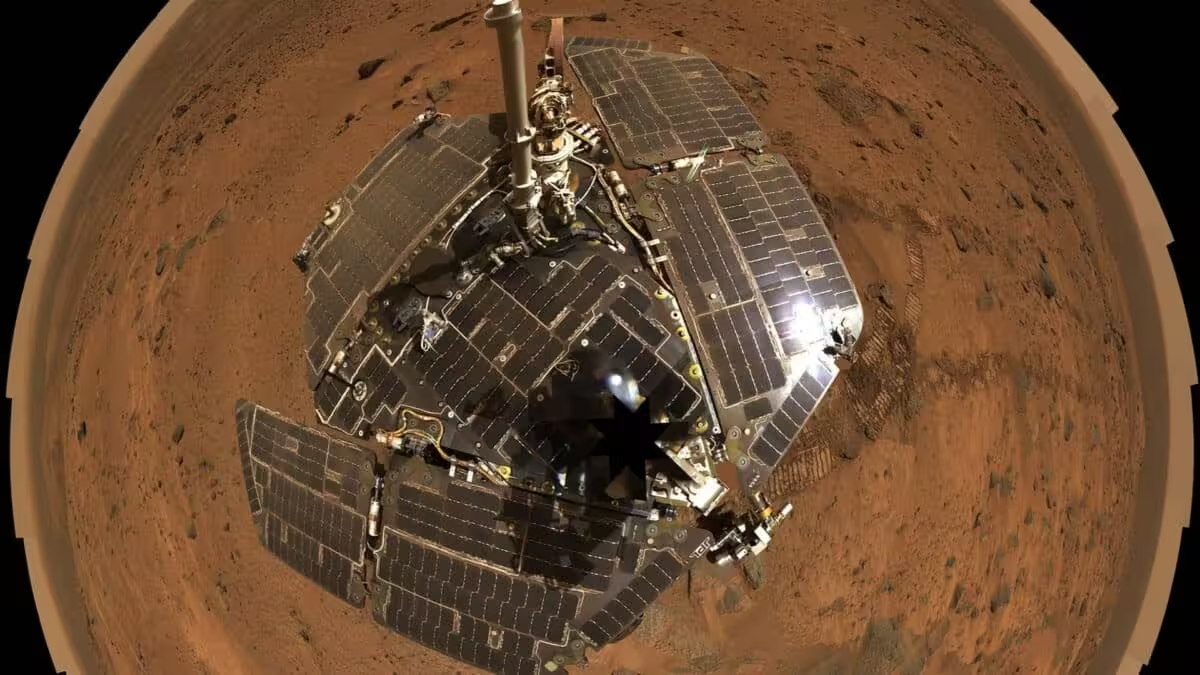
The insight comes from Gusev Crater, where Spirit spent several years probing soil, rocks, and airborne dust with its Mössbauer Spectrometer. While the instrument catalogued the elemental makeup of individual samples, many readings lacked the resolution needed to spot trace minerals.
By aggregating those individual results, researchers uncovered larger‑scale patterns. Paolo de Souza of Edith Cowan University in Australia identified telltale traces of hematite and altered magnetite, both minerals commonly linked to water‑rock interactions.
The breakthrough does not rely on a new spacecraft or instrument; it stems from a different analytical perspective on existing rover data, demonstrating that subtle signals can unlock a much richer record of Mars’ history when examined collectively.
Widespread Water‑Related Minerals Detected in Gusev Soil
The study, led by Edith Cowan University (ECU) scholar Professor Paulo de Souza, analyzed material from 32 untouched soil sites within Gusev Crater, producing the most comprehensive iron‑mineral profile of Martian regolith to date.
Among the findings, crystalline hematite emerged in ordinary Martian dust—a surprise, as earlier analyses had not recorded significant quantities of this mineral at those locations.
Hematite, an iron oxide, typically forms when rocks are exposed to liquid water. Though volcanic processes can also produce it, the majority of Martian hematite deposits have been interpreted as evidence of ancient aqueous activity.
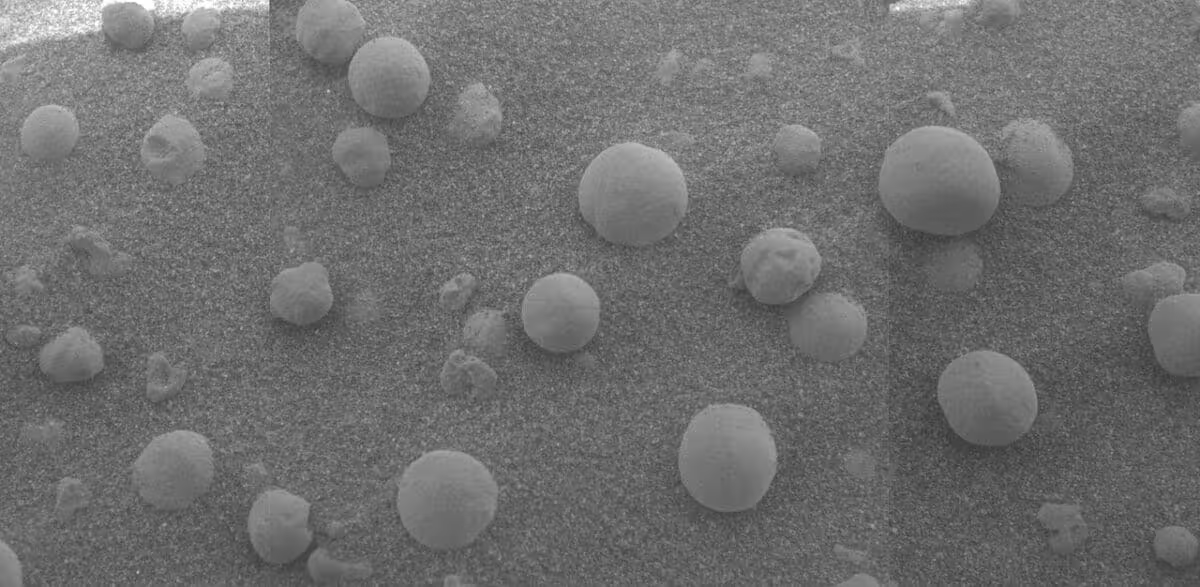
De Souza explained that finding crystalline hematite in common soil points to water‑driven processes influencing large swaths of the planet. The mineral also connects to the hematite‑rich “blueberries” first observed by NASA’s Opportunity rover at Meridiani Planum, where past water‑rock interactions were documented.
The research also highlighted altered magnetite, another iron‑bearing phase that can originate in volcanic or sedimentary settings, adding further support for historic water involvement.
Reinterpreting Legacy Rover Data Reveals Hidden Signals
The pivotal advance arose from merging datasets rather than treating each measurement in isolation. During Spirit’s operational period, many individual spectra lacked the granularity to flag minerals present in minute amounts.
“Many measurements were not detailed enough on their own to identify minerals present in very small quantities. By bringing the data together and analysing it in a new way, we were able to reveal information that had been hidden for years.”
The study accounted for variables such as temperature fluctuations, regional soil differences, physical and chemical weathering, and the prolonged influence of Martian dust storms. The results underscore how archival rover data can still yield fresh scientific insights long after a mission ends; the information was present, but only discernible when individual readings were synthesized.
The mineral signatures were traced in dust layers examined by Spirit. Researchers propose that these layers accumulated over millions of years via wind‑driven erosion, temperature‑induced changes, and storm‑mediated dust transport.
Applying the Method to Other Mars Datasets
Future work will extend the approach to another extensive Martian archive. De Souza plans to re‑evaluate measurements gathered by NASA’s Opportunity rover at Meridiani Planum, scrutinizing hundreds of observations to see whether combined analyses can expose additional water‑related mineral patterns.
He also emphasized that the findings highlight the need for upcoming Mars missions to carry more sophisticated spectrometers capable of sustained mineralogical surveys, and that reinterpretations of legacy data can reshape scientific understanding.
“This work shows that important discoveries are not always made by collecting new data,” he added. “Sometimes they come from looking at existing data with fresh eyes and better analytical techniques.”
This article has been fact checked for accuracy, with information verified against reputable sources. Learn more about us and our editorial process.
Last reviewed on .
Article history
- Latest version
Reference(s)
- <https://www.ecu.edu.au/newsroom/articles/news/new-ecu-discovery-adds-to-evidence-mars-once-had-water>.
- <https://www.ecu.edu.au/about-ecu/executive-team/professor-paulo-de-souza>.
- Cermak, Alicia. “Opportunity - NASA Science.”, December 5, 2017 NASA <https://science.nasa.gov/mission/mer-opportunity/>.
- de Souza, Paulo. “A consolidated Mössbauer spectrum for undisturbed soils from Gusev Crater, Mars.” Interactions, vol. 247, no. 1, June 26, 2026 Springer Science and Business Media LLC, doi: 10.1007/s10751-026-02625-4. <https://link.springer.com/article/10.1007/s10751-026-02625-4>.
- Cermak, Alicia. “Spirit - NASA Science.”, December 5, 2017 NASA <https://science.nasa.gov/mission/mer-spirit/>.
Cite this page:
- Posted by Karan Das