SpaceX’s Most Powerful Rocket Yet Soars Into Orbit On First Test Flight
Starship V3’s maiden flight debuts SpaceX’s cutting-edge rocket advancing Moon and Mars missions
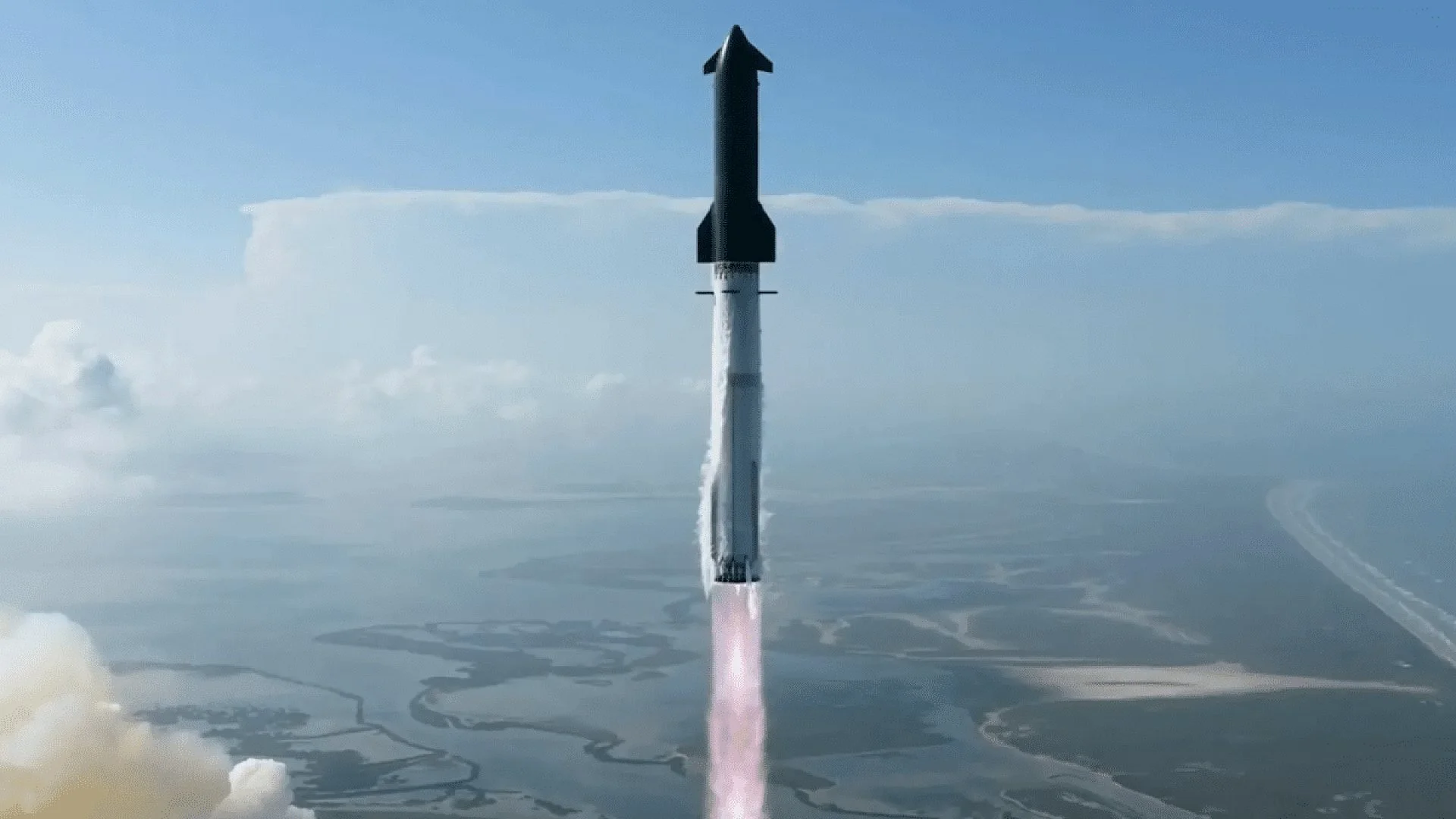
On 22 May 2026, SpaceX ignited the engines of its latest Starship V3 at the Starbase complex in South Texas, sending a 408‑foot launch system aloft for its twelfth sub‑orbital trial. The mission carried a mix of inert test masses and operational Starlink units, showcasing the capabilities of what Space.com called a spectacular display of next‑generation aerospace technology.
Redesigned Architecture and Test Goals
Starship V3 features a full redesign compared with the earlier V2 version, incorporating structural enhancements intended to ready the vehicle for future lunar and Martian expeditions. A key innovation is the upgraded interstage that permits the upper‑stage engines to fire while still attached to the booster—a hot‑staging approach. The flight carried 22 payloads, ranging from experimental satellites to camera‑equipped Starlink craft meant to photograph the rocket’s heat shield once in orbit.
“Congratulations SpaceX team on an epic first Starship V3 launch & landing!,” SpaceX CEO Elon Musk wrote on X after the launch. “You scored a goal for humanity.”
This launch was the first Starship flight since October 2025, and despite a few hiccups it demonstrated that the vehicle can reach space and validate core aspects of the V3 configuration under realistic flight conditions.
— Elon Musk (@elonmusk) May 23, 2026
Launch Anomalies and Booster Outcome
The ascent was not entirely smooth. One of the 33 Raptor engines on the Super Heavy booster shut down shortly after liftoff, and the booster failed to complete its planned boost‑back maneuver, ultimately splashing down in the Gulf of Mexico. “The booster didn’t complete its full boost back,” Huot said just after liftoff. “Its mission ended a little bit early, but landed in the clear area that we had set in advance.”
The Starship upper stage also lost one of its six main engines during the climb, yet it stayed on its intended sub‑orbital trajectory using the remaining five. SpaceX’s live commentary noted that, while the flight did not achieve a fully nominal orbital insertion, the data gathered will be vital for upcoming crewed, lunar and Martian missions.
Payload Release and In‑Space Experiments
Over a ten‑minute window the vehicle deployed its cargo, including two operational Starlink satellites fitted with cameras to monitor the condition of the heat shield after re‑entry. The other twenty items, nicknamed “Dodger Dogs,” were inert masses that provided visual cues for engineers tracking the deployment sequence.
The original plan called for an in‑space engine relight to test orbit‑adjustment capabilities, but the loss of an engine during ascent forced the team to skip that maneuver. Dan Huot confirmed that the mission still achieved its primary objectives of safe satellite deployment and structural verification during re‑entry.
Re‑Entry, Ocean Impact and Data Harvest
Approximately fifty minutes after launch, Starship V3 began its descent, with Ship 39 performing a series of high‑stress maneuvers designed to emulate the orientation needed for future landing‑tower operations. The vehicle’s final landing burn ignited two engines after the earlier failure, culminating in a controlled splash‑down and explosion, as reported by Space.com.
Spectators at the SpaceX site cheered the display, noting that the test provided a wealth of information for refining booster recovery, stage separation and engine performance despite the loss of the booster.
Voir cette publication sur InstagramConnection to NASA’s Moon Strategy
Starship plays a pivotal role in NASA’s Artemis program, which aims to build a lasting human foothold on the lunar surface. Artemis 3, slated for 2027, will see the Orion capsule rendezvous with commercial landers such as Starship and Blue Moon. NASA representatives, including Jared Isaacman, observed the launch and highlighted its importance for forthcoming lunar sorties.
“We’re looking forward to seeing this thing fly, because hopefully at some point in the not too distant future we’re gonna, we’re gonna join up in an earth orbit,” Isaacman said during live commentary. “Congrats SpaceX team and Elon Musk on a hell of a V3 Starship launch. One step closer to the Moon … one step closer to Mars.”
Upcoming missions will demand capabilities like in‑space refueling, multiple dockings and full orbital insertion before crew can board Starship, but Flight 12 lays a solid groundwork for the vehicle’s operational maturity.
This article has been fact checked for accuracy, with information verified against reputable sources. Learn more about us and our editorial process.
Last reviewed on .
Article history
- Latest version
Reference(s)
- Dinner, Josh. “SpaceX just launched Starship V3 — its most powerful megarocket yet — into space for the 1st time in spectacular Flight 12 test (video).”, May 23, 2026 Space <https://www.space.com/space-exploration/launches-spacecraft/spacex-starship-v3-megarocket-first-test-flight>.
Cite this page:
- Posted by Karan Das