Lunar Outpost Charts Ambitious Path For Moon Infrastructure With New Pegasus Rover
Revolutionize Moon missions with Lunar Outpost’s Pegasus rover merging robotics and astronauts to construct humanity’s next lunar base
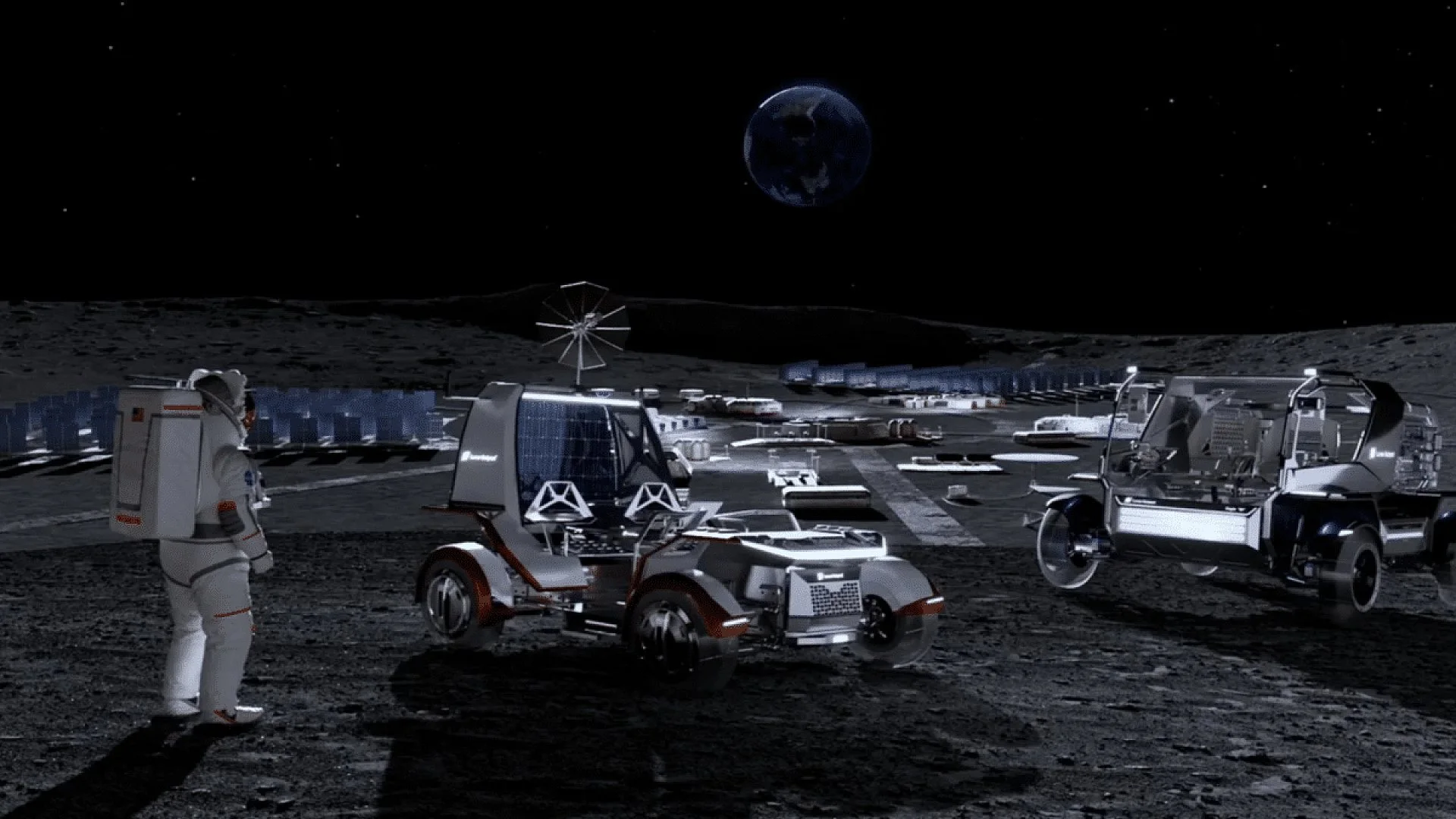
Colorado‑based Lunar Outpost is stepping up its lunar program with the introduction of the Pegasus rover, a development that Space.com says represents a key move toward a lasting human presence on the Moon.
Next‑Generation Moon Rover Unveiled
Building on a track record that includes the Eagle rover and a compact mini‑rover already launched on a commercial lunar lander, Lunar Outpost has secured roughly $30 million in fresh investment to create Pegasus. The new vehicle draws inspiration from NASA’s Apollo‑era moon buggies, favoring a lightweight, maneuverable design over the SUV‑like profile of Eagle. The company targets a 2027 delivery, with a lunar launch slated for 2028 to line up with NASA’s Artemis 4 schedule.
“We’re a lunar infrastructure company, and the infrastructure of the moon base won’t be built by astronauts alone,” Vice President of Strategy Michael Moreno told Space.com. “It’ll be an autonomous robotic workforce, and that’s our expertise.”
Beyond rovers, the firm plans a full suite of lunar support systems, ranging from energy storage to habitats and dedicated landing pads.
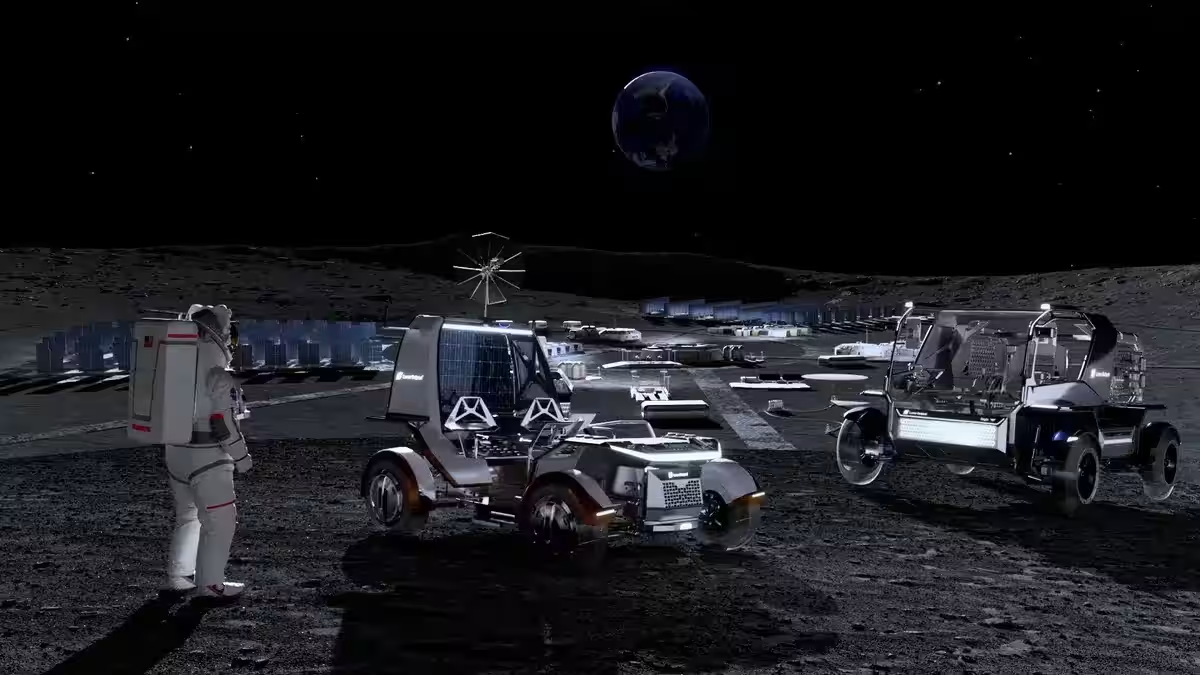
Image credit: Lunar Outpost
Robotic Fleet Aims to Build Lunar Infrastructure
Moreno says the company’s robots are intended to construct and upkeep essential lunar assets without direct human control. “We have rovers that will do autonomous infrastructure construction, lunar surface improvement, help build launch and landing pads, energy storage, and habitats,” he explained. “So, all of the things that humans will need for a permanent human presence, Lunar Outpost was built to help to build, maintain and operate.”
The strategy includes the Mobile Autonomous Prospecting Platform (MAPP) mini‑rovers, which will scout regolith, support scientific research, and ready the terrain for longer‑term installations, thereby easing the workload for future crews.
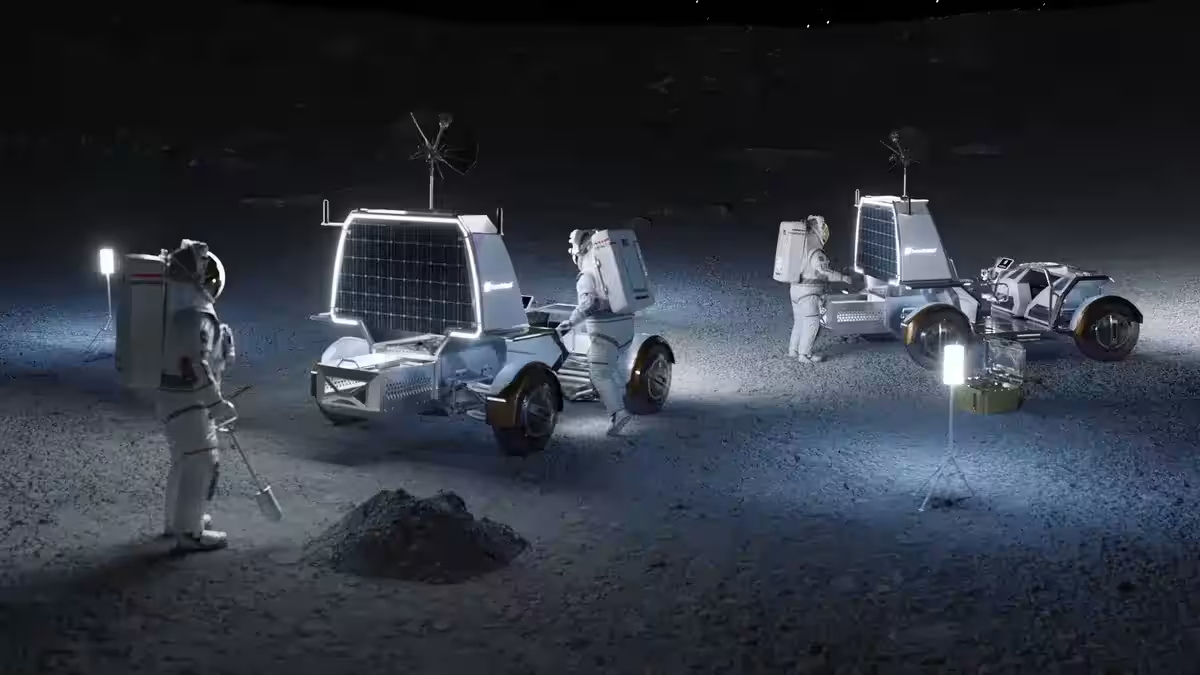
Image credit: Lunar Outpost
First Human‑Robot Collaboration Planned for Artemis 4
Lunar Outpost is set to partner with NASA on Artemis 4, where a MAPP rover will travel with an astronaut, marking the inaugural instance of a robotic system working side‑by‑side with a crew on the lunar surface. “We’re pairing a MAPP rover with an Artemis astronaut on Artemis 4,” Moreno noted. “That’ll be the first time in history that that has happened, an astronaut working alongside a rover.”
This joint effort is expected to accelerate regolith analysis, infrastructure preparation, and broader scientific objectives, laying groundwork for sustained lunar settlements and deeper‑space missions.
Charting a Path to a Multi‑Planetary Future
Moreno frames the Moon as a stepping stone for humanity’s long‑term goals. “We’ve been wanting to go back to the moon for 50 years now, and I believe it’s a human imperative,” he said. “Beyond that, it’s the launching point for deep‑space exploration. It’s how we start making humans a multi‑planetary species.”
By merging autonomous robotics, commercial drive, and NASA collaboration, Lunar Outpost aims to lay the foundation for a permanent lunar foothold that could eventually support missions to Mars and beyond, reshaping how humans and machines cooperate in space exploration.
This article has been fact checked for accuracy, with information verified against reputable sources. Learn more about us and our editorial process.
Last reviewed on .
Article history
- Latest version
Reference(s)
- Tingley, Brett. “Lunar Outpost has big plans for the moon. The new Pegasus lunar rover is just the start.”, May 21, 2026 Space <https://www.space.com/space-exploration/launches-spacecraft/lunar-outpost-has-big-plans-for-the-moon-the-new-pegasus-rover-is-just-the-start>.
Cite this page:
- Posted by Karan Das