NASA Detected a Strange Signal From the Sun That Wouldn’t Fade, Then It Broadcast for 19 Days in Deep Space
Unprecedented solar signal exposes mysterious, long-lasting structure defying expectations
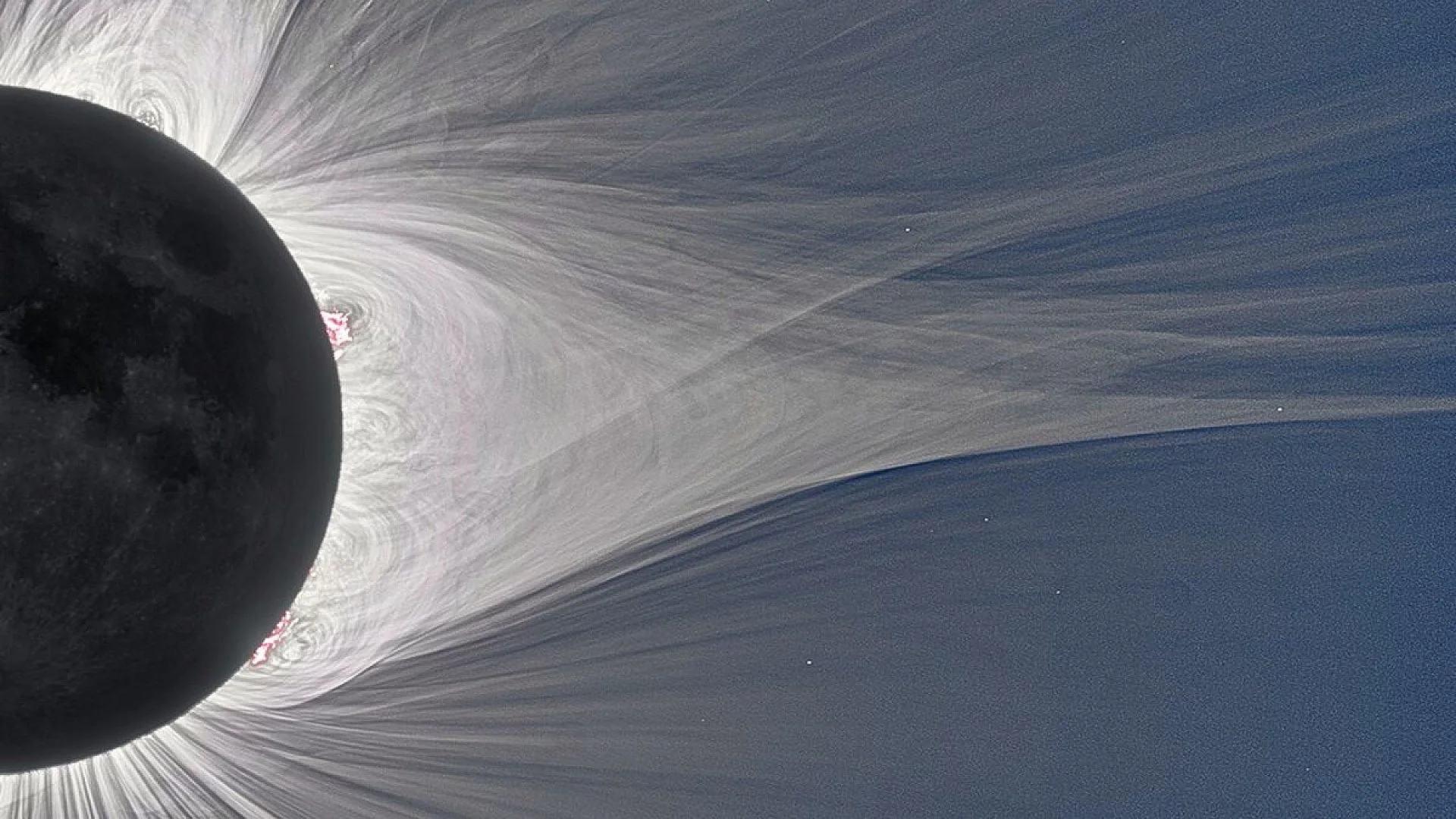
In August 2025 NASA’s radio instruments caught a solar burst that defied expectations. While most solar radio emissions fade within a few days, this event persisted for 19 days—more than three times the previous longest record of five days.
The emission belongs to the class of long‑lasting, high‑frequency Type IV radio bursts, generated when energetic electrons become trapped by the Sun’s magnetic fields. Although the radio waves themselves pose no danger, the magnetic environment that sustains them can also launch solar eruptions capable of harming satellites and deep‑space probes. Understanding why this particular burst endured became a top priority for space‑weather researchers.
The discovery was published in The Astrophysical Journal Letters, where the authors detail a novel analysis that combined observations from several spacecraft and introduced a new technique for pinpointing the source of low‑frequency solar radio waves.
Multi‑Spacecraft Network Captured the Event Across the Heliosphere
No single spacecraft can monitor a solar source that rotates out of view as the Sun turns. To overcome this limitation, the research team stitched together data from four missions: NASA’s STEREO (Solar Terrestrial Relations Observatory), Parker Solar Probe, and Wind, together with the ESA‑NASA Solar Orbiter.
Solar Orbiter first recorded the burst on 21 August 2025, when the active region responsible for the emission lay on the far side of the Sun relative to Earth. Twelve days later the signal rotated into the line of sight of Wind and Parker Solar Probe, and a day after that STEREO‑A observed the final phase of the emission, which continued until 9 September.
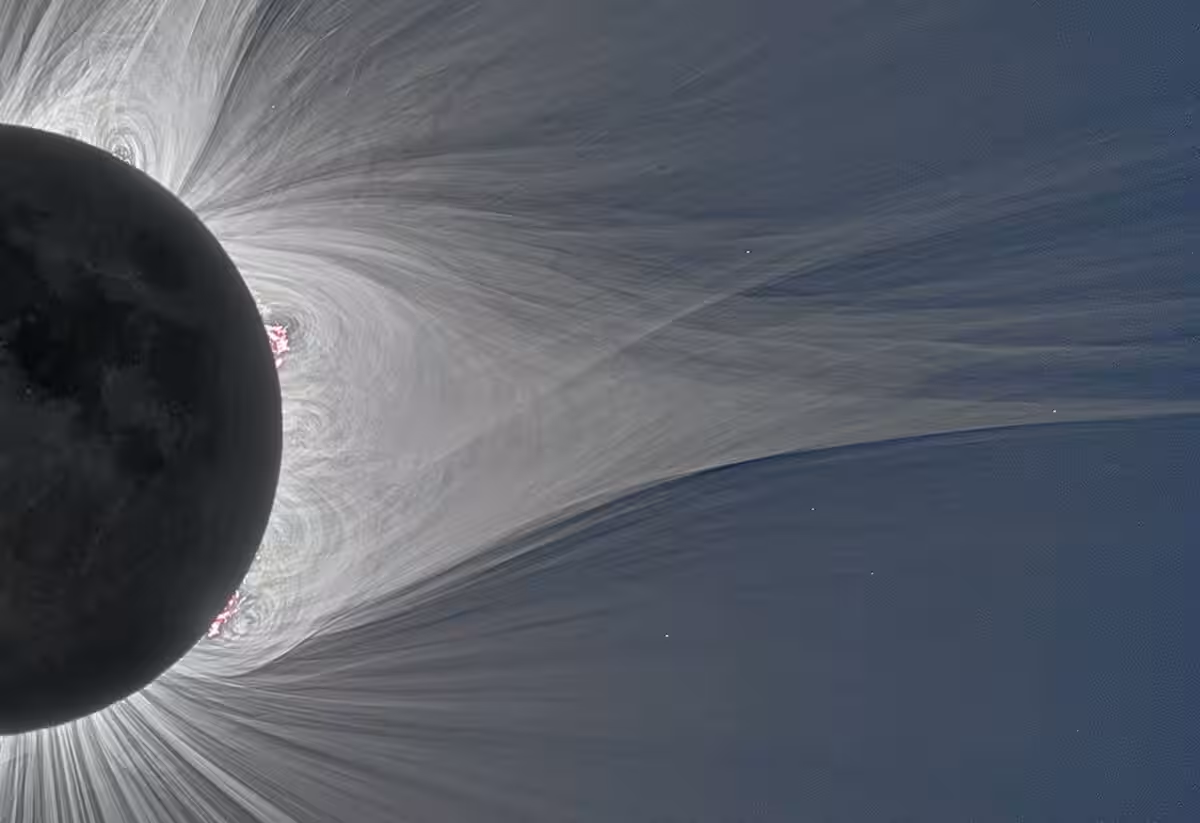
The staggered handover of the signal matched the Sun’s rotation rate, confirming that a single, long‑lived magnetic structure was being observed as it turned through the fields of view of the different spacecraft. The authors described this structure as a “corotating electron reservoir”—a magnetic trap that becomes visible only when the geometry lines up.
A Massive Helmet Streamer Identified as the Emission Site
Locating a low‑frequency source deep inside the corona is challenging because the plasma refracts and scatters radio waves. To cut through this distortion, the team introduced the wavevector‑corrected ray sphere (WCRS) method, which adjusts the observed direction of the signal to compensate for the displacement caused by the solar wind.
Applying the correction redirected the burst to a helmet streamer—a towering magnetic loop that arches far above the Sun’s surface. The analysis placed the source between six and ten solar radii from the photosphere and estimated its lateral extent at roughly 2.5–3.0 solar radii, making it an unusually large cavity in coronal terms.
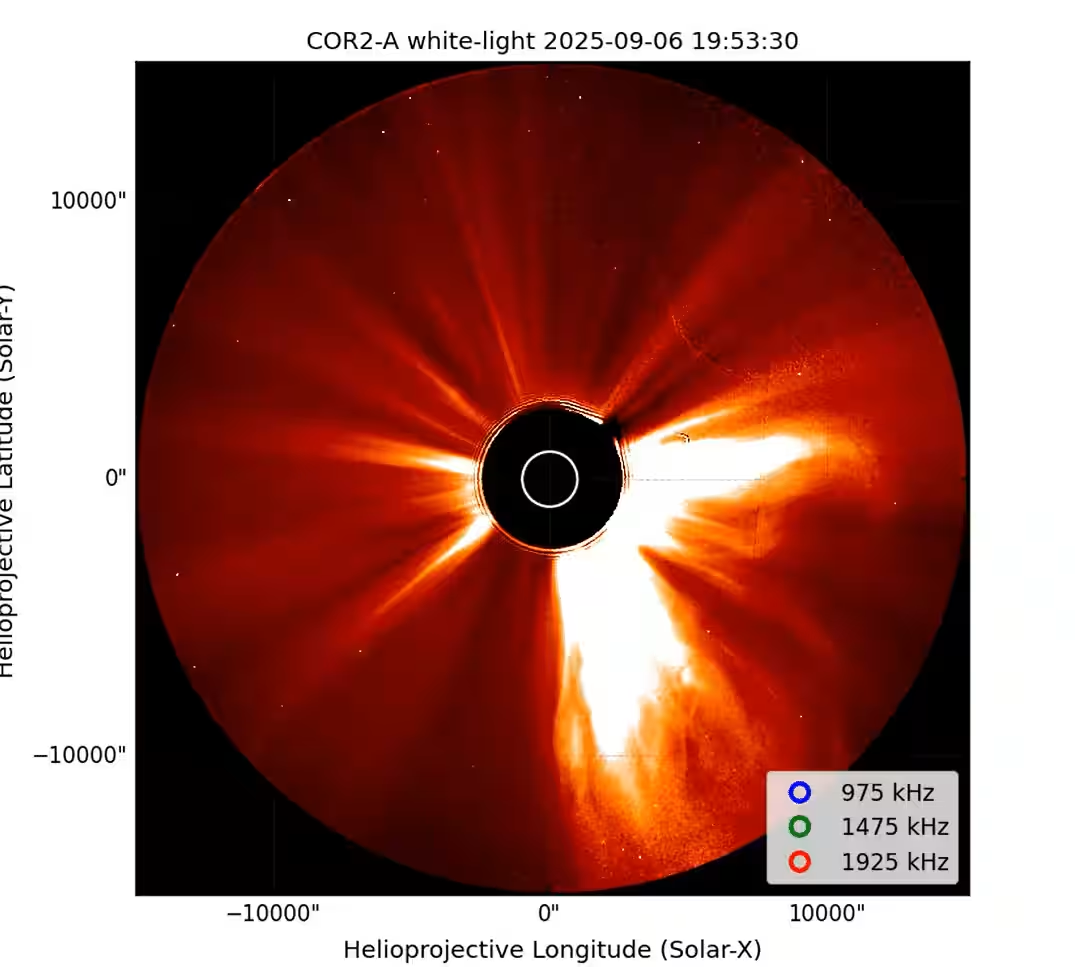
The longevity of the burst could not be sustained by a single injection of energetic electrons. The authors identified three coronal mass ejections (CMEs) that erupted from the same region and likely refreshed the trapped particle population. The first CME coincided with the initial detection on 21 August, the second on 30 August produced a surge of Type III radio storm activity, and the third launched on 4 September just before the burst reached its peak intensity.
Each eruption either supplied fresh electrons to the magnetic trap or altered the surrounding field enough to keep the radio emission active. After the third CME, the Wind spacecraft recorded an unusually tenuous solar wind near Earth, with proton densities dropping to about 0.1 particles cm⁻³, a condition that can reduce scattering and make the burst easier to detect.
Quasi‑Periodic Pulsations Reveal Oscillating Magnetic Cavity
During its brightest phase the signal displayed regular intensity variations with periods of roughly 45–60 minutes, as seen by STEREO‑A. These quasiperiodic pulsations were interpreted as standing oscillations of the magnetic structure itself.
By employing magnetoseismology—converting wave periods into spatial dimensions—the researchers derived a lower‑bound size for the cavity that matched the estimate obtained from the rotation‑based method. The convergence of these independent techniques reinforced confidence that a single, large magnetic cavity was responsible for the emission.
Because density fluctuations in the solar wind scatter low‑frequency radio waves, the apparent size of the source can be dramatically inflated. STEREO observations indicated an angular width of about 20 degrees, corresponding to a broadening factor near 60. In other words, the spacecraft saw a magnified, smeared image of a compact source.
This effect has practical consequences for space‑weather forecasting. If long‑duration Type IV bursts routinely appear larger than they truly are, forecasters could overestimate the spatial scale of the source region unless they apply a correction like the WCRS technique.
Open Questions and Future Directions
The study highlights several unresolved issues. The precise mechanism that confined electrons for 19 days remains unclear, and distinguishing between continuous low‑corona injection and repeated replenishment by CMEs will require more advanced modeling and measurements beyond the capabilities of current missions.
The authors also note that their height estimates assume the emission is plasma radiation at the fundamental frequency. If the burst instead originates from electron cyclotron emission, the absolute altitude would shift, though the overall structural interpretation would still hold.
A similar long‑lasting Type IV event recorded in May 2002 exhibited comparable polarization and pulsation characteristics, and both events were followed by unusually low‑density solar wind near Earth. This suggests that rarefied CME wakes may help long‑lived radio reservoirs stand out when observed from a single viewpoint.
By combining the wavevector‑corrected ray sphere method with coordinated multi‑spacecraft observations, the researchers have provided a framework that could enable forecasters to detect and characterize future long‑duration solar radio bursts before they fade away.
This article has been fact checked for accuracy, with information verified against reputable sources. Learn more about us and our editorial process.
Last reviewed on .
Article history
- Latest version
Reference(s)
- Krupar, Vratislav., et al. “Unprecedented 19 Day Type IV Radio Burst as a Corotating Electron Reservoir.” The Astrophysical Journal Letters, vol. 1003, no. 1, May 14, 2026, pp. L5 American Astronomical Society, doi: 10.3847/2041-8213/ae5537. <https://iopscience.iop.org/article/10.3847/2041-8213/ae5537>.
Cite this page:
- Posted by Karan Das