NASA Looks To Private Industry For A Bold Plan To Save The Hubble Space Telescope
NASA is exploring a commercial mission to boost the Hubble Space Telescope’s orbit, aiming to extend the legendary observatory’s scientific lifespan.
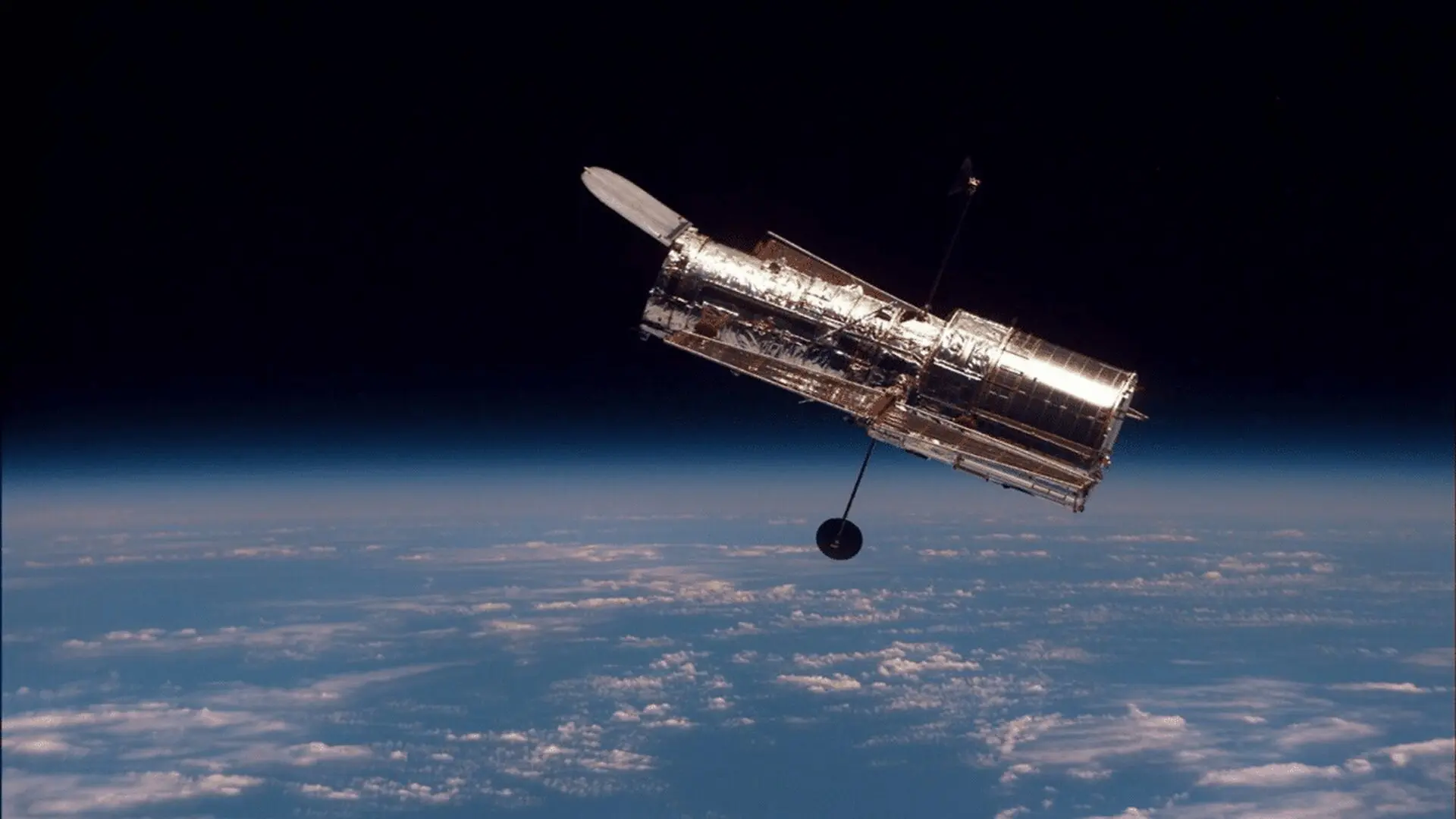
NASA is looking toward the private sector to breathe new life into the Hubble Space Telescope, seeking commercial partnerships to boost the legendary observatory’s orbit before atmospheric drag drags it toward a final, fiery descent. After more than 35 years in orbit, the telescope may find a lifeline in emerging satellite-servicing technologies that were once the stuff of science fiction.
Commercial Innovation as a Life-Support System
For over three decades, the Hubble Space Telescope has served as humanity’s primary eye on the cosmos, unraveling the mysteries of distant galaxies and planetary systems. However, even the most resilient hardware cannot defy the basic physics of its environment. As the telescope gradually loses altitude, NASA is turning to the commercial space industry to determine if modern servicing vehicles can provide the altitude adjustment needed to keep the mission viable for years to come.
The space agency recently issued a formal request for information to gauge whether private firms possess the technical maturity to rendezvous with and boost the aging observatory. NASA Administrator Jared Isaacman argues that the investment is a matter of both scientific responsibility and fiscal prudence.
“Hubble still has important science ahead of it, and we should be looking at every reasonable opportunity to keep it delivering for as long as possible,” said NASA Administrator Jared Isaacman. “If there are innovative and cost-effective ways to extend the life of an asset already on orbit, we owe it to the American taxpayer and the scientific community to explore them. Extending Hubble’s life would mean more discoveries, more science, and more opportunities to expand our understanding of the universe.”
NASA issued a Request for Information to learn more about industry capabilities for in-space servicing to support the agency’s Hubble Space Telescope: https://t.co/qqNozR5Xq6 https://t.co/1IyK0wl1Z0
— Hubble (@NASAHubble) October 30, 2026
The Looming Threat of Orbital Decay
Since its deployment via Space Shuttle Discovery in April 1990, Hubble has relied on human ingenuity for its survival. Five distinct shuttle-based missions kept the instrument on the cutting edge, but the retirement of the shuttle fleet in 2011 left the telescope without an easy path for maintenance. Today, the observatory faces the constant, subtle friction of Earth’s upper atmosphere.
This atmospheric drag is intensified by the solar cycle; as the Sun’s activity peaks, the Earth’s upper atmosphere expands, increasing the density that Hubble must plow through. While the telescope is not currently in immediate danger of falling out of the sky, its inevitable reentry is a countdown that NASA is hoping to pause. Boosting the telescope’s altitude would not fix failing internal components, but it would buy the scientific community critical time to continue its work while planning for future flagship missions.
The Shift Toward Private Maintenance
The rise of companies specializing in in-space robotic manipulation has provided NASA with a potential alternative to government-run missions. Modern satellite-servicing spacecraft are designed to dock with, stabilize, and reposition aging assets, offering a potential solution for an observatory that was never originally intended to be handled by anything other than human astronauts.
Nicky Fox, the associate administrator of NASA’s Science Mission Directorate, emphasized that the rapid maturation of the private space sector makes this an opportune time to revisit Hubble’s future.
“Hubble is a national icon that has fundamentally changed how humanity views our universe for more than 35 years,” Fox stated. “Commercial industry has rapidly evolved in recent years to offer new capabilities for in-space satellite capture and servicing. Given the time we have until Hubble’s anticipated re-entry, we are eager to explore the breadth of possibilities to boost Hubble to a higher orbit while we develop the flagship mission to follow.”
Synergy with the James Webb Space Telescope
Retaining Hubble remains a priority for the agency because of its unique position in the fleet of active observatories. By capturing data in the visible and ultraviolet spectra, Hubble provides essential context for the infrared-heavy observations of the James Webb Space Telescope. Together, these instruments offer a multi-wavelength view of the universe that neither could achieve alone.
Beyond the immediate scientific gain, a successful commercial boost mission would serve as a milestone for the future of space infrastructure. If private companies can reliably extend the lifespan of an asset as complex as Hubble, it could signal a shift in space operations where assets are serviced rather than replaced, significantly reducing the cost and waste associated with long-term space exploration.
This article has been fact checked for accuracy, with information verified against reputable sources. Learn more about us and our editorial process.
Last reviewed on .
Article history
- Latest version
Cite this page:
- Posted by Karan Das