Black Hole Census Reveals Three Distinct Subpopulations in Gravitational Waves
Fresh insights from the latest gravitational wave catalog uncover unexpected population substructures among merging black holes, offering new clues about their cosmic origins.
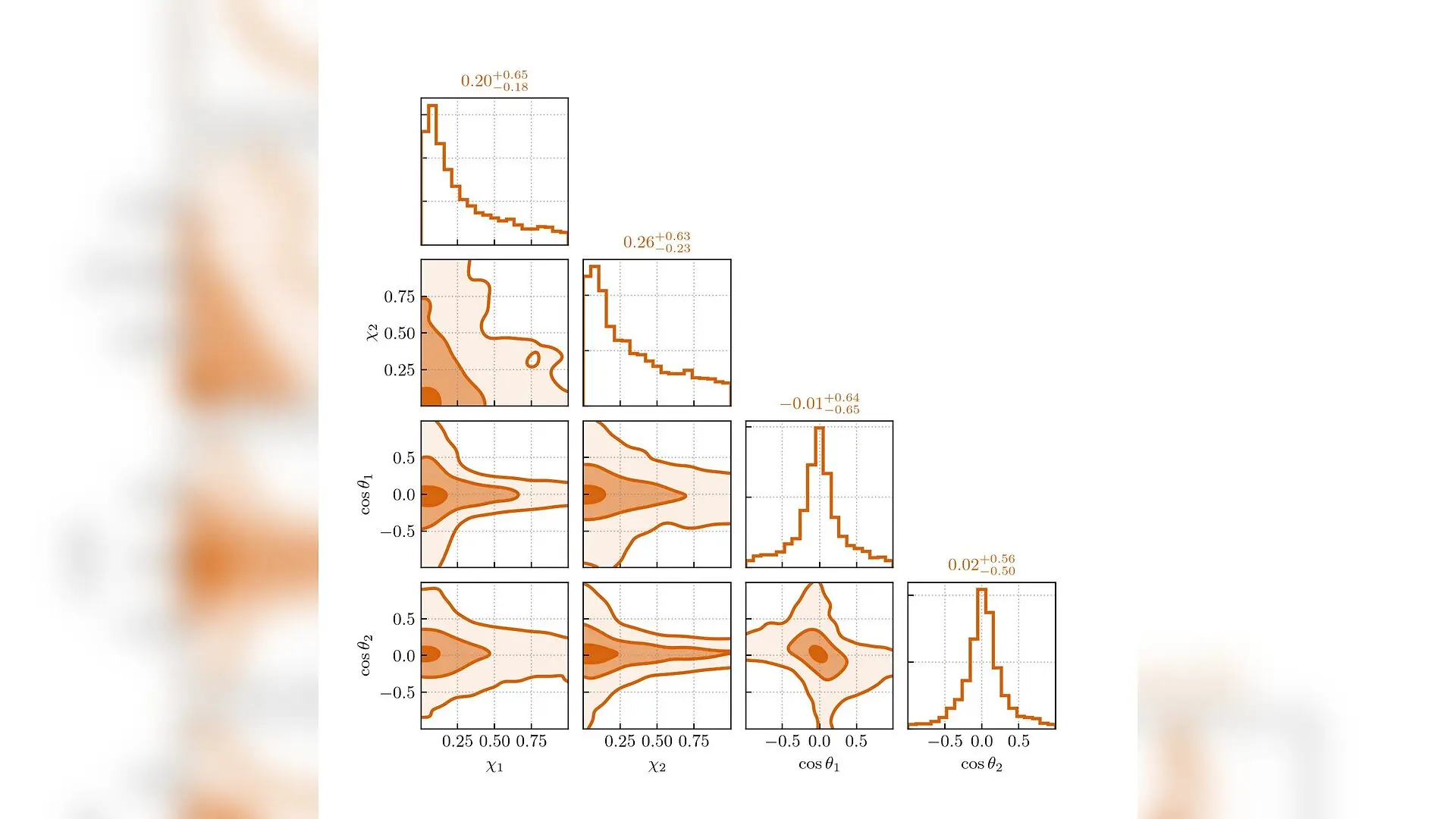
A comprehensive new demographic study of merging binary black holes has revealed that these mysterious cosmic objects are not a uniform family, but rather fall into at least three distinct subpopulations. By examining data from the latest gravitational wave catalog, researchers have uncovered fine details about how black hole masses, spin magnitudes, and spin tilt angles interlock, providing a clearer window into the lives and deaths of massive stars.
The research team utilized advanced statistical models, available as a preprint published on the arXiv preprint server, to analyze 259 binary black hole events from the fifth LIGO-Virgo-KAGRA catalog, known as GWTC-5. Previous efforts to categorize black hole populations often relied on simplifying assumptions or faced technical limitations when handling narrowly concentrated features in data. To overcome this, the authors employed truncated Gaussian mixture models to stabilize likelihood estimates, allowing them to probe sharp features in component-spin space with unprecedented precision.
Parsing the Cosmic Population
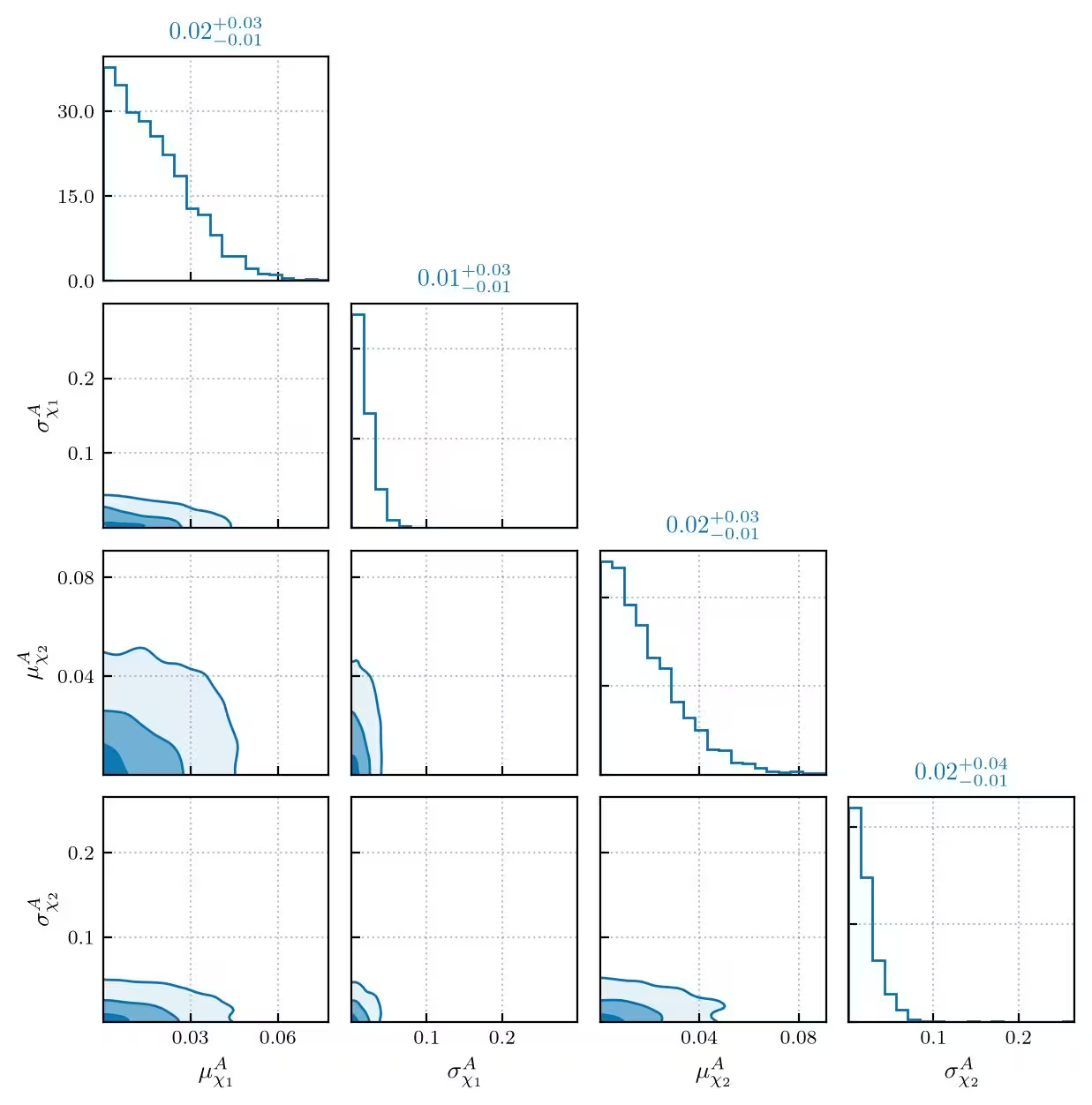
The analysis demonstrates that the observed binary black holes cleanly segregate into three unique groups based on their spin properties. The first and most dominant group is the low-spin population. Concentrated heavily around primary masses of 35 solar masses, these black holes favor nearly equal mass ratios and exhibit spins that are practically zero. The statistical evidence strongly favors vanishing spins for this group, suggesting that most typical gravitational wave detections belong to this quiet category.
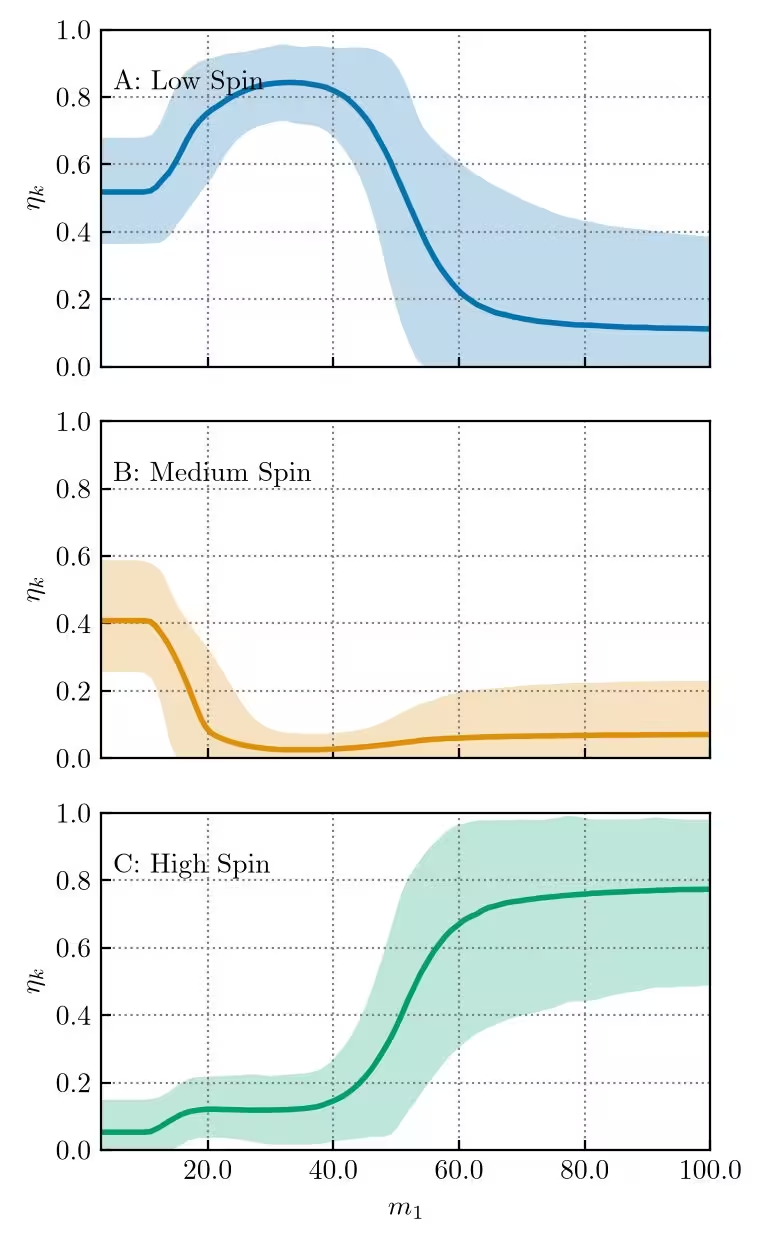
The second group comprises a medium-spin population that shares the lower mass spectrum, notably contributing significantly around 10 solar masses. Unlike their non-spinning counterparts, these black holes display moderate dimensionless spin magnitudes of approximately 0.2. Furthermore, their spin vectors show a clear preference for aligning with the orbital angular momentum of the binary system.
The third group is a high-spin population that heavily dominates at higher masses above 60 solar masses, while also maintaining a small presence at lower masses around 20 solar masses. This group features rapidly spinning primary black holes with high dimensionless spins, paired with a broad and diverse distribution of secondary spins and wider tilt angle distributions.
Implications for Stellar Formation
The identification of these specific subpopulations carries profound implications for understanding how binary black holes assemble. Black holes with negligible spin fit comfortably into models of isolated binary evolution where efficient angular momentum transport strips a star’s core of its rotation before collapse, or alternatively, where black holes form independently in dense stellar clusters and pair up later.
Meanwhile, the high-spin population bears the characteristic hallmarks of hierarchical mergers, where existing black holes merge to form a new remnant that subsequently captures another partner. However, the presence of wide secondary spin distributions and complex tilt angles within the high-spin group indicates that alternative astrophysical channels, such as accretion-driven spin-up in active galactic nuclei disks or complex stellar interactions, may also be at play.
As gravitational wave observatories continue to improve and future observing runs add hundreds of new detections to public catalogs, astronomers anticipate resolving even finer substructures. These expanding datasets will ultimately help researchers untangle the complex web of evolutionary pathways that shape the dark side of the Universe.
The study was posted to the arXiv preprint server on October 23, 2026.
This article has been fact checked for accuracy, with information verified against reputable sources. Learn more about us and our editorial process.
Last reviewed on .
Article history
- Latest version
Reference(s)
- Hussain, Asad. “Three subpopulations of binary black holes in mass, spin magnitudes and tilts following GWTC-5.” arXiv.org <http://arxiv.org/abs/2610.32935v1>.
Cite this page:
- Posted by John Williams