Japan’s Ambitious MMX Mission Has Launched to Bring a Piece of a Martian Moon Back to Earth
Japan’s MMX mission is officially underway, embarking on a historic journey to Mars to collect and return the first-ever soil samples from its moon Phobos.
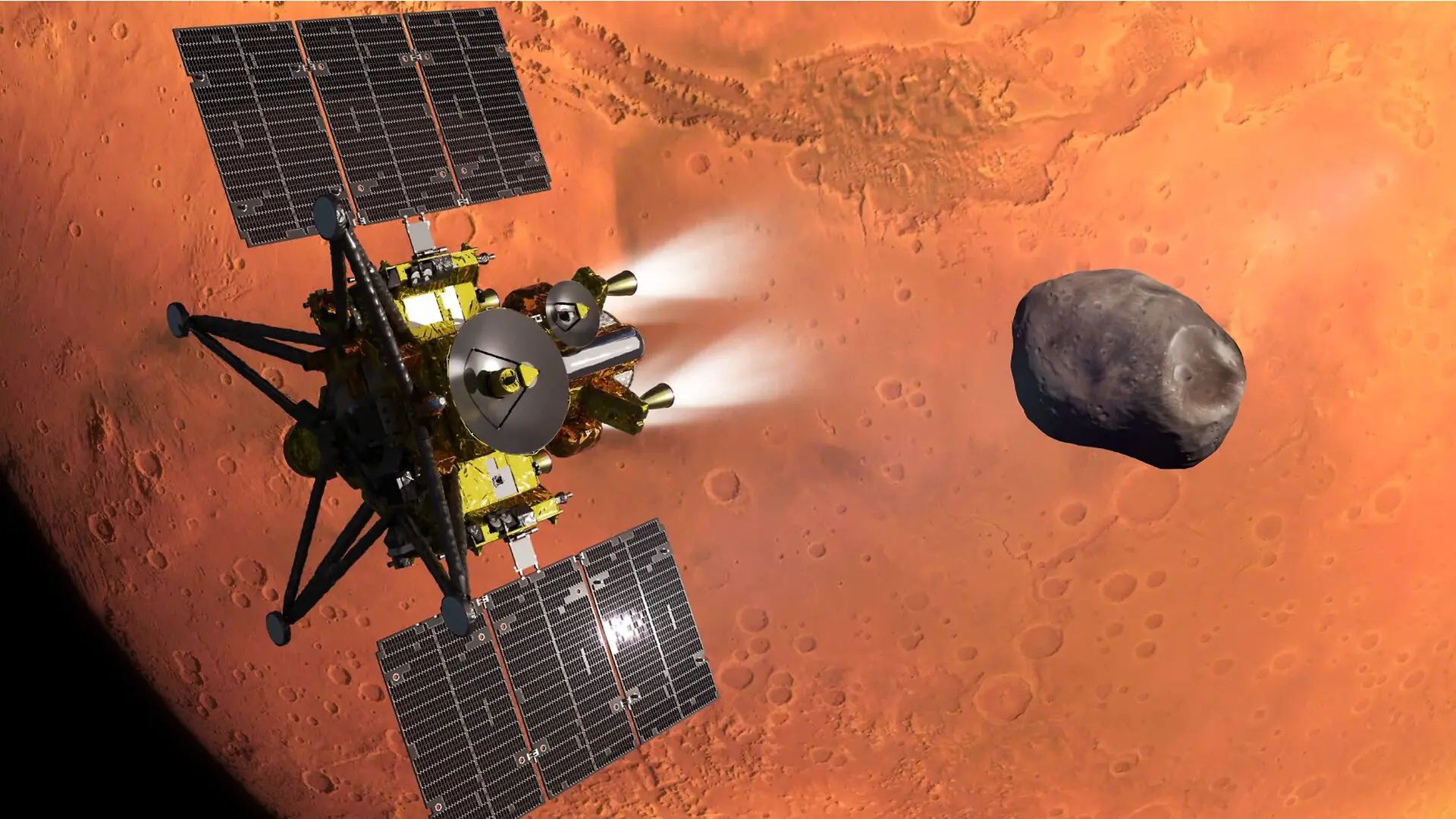
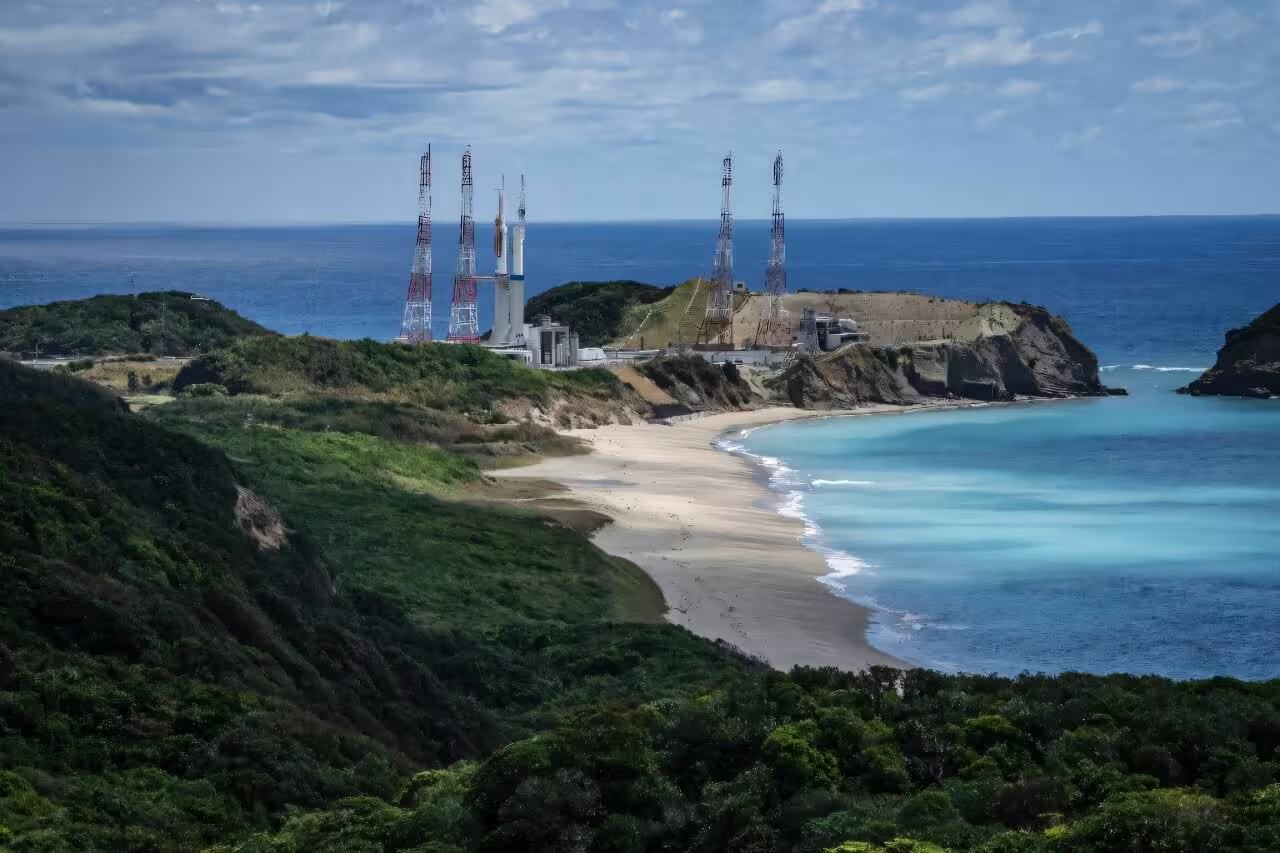
The Martian Moons eXploration (MMX) spacecraft has officially begun its long-distance trek toward the Red Planet. Launched aboard an H3 rocket from Japan’s Tanegashima Space Center, the mission represents a sophisticated international collaboration aimed at unlocking the origins of Mars’ two small, mysterious moons.
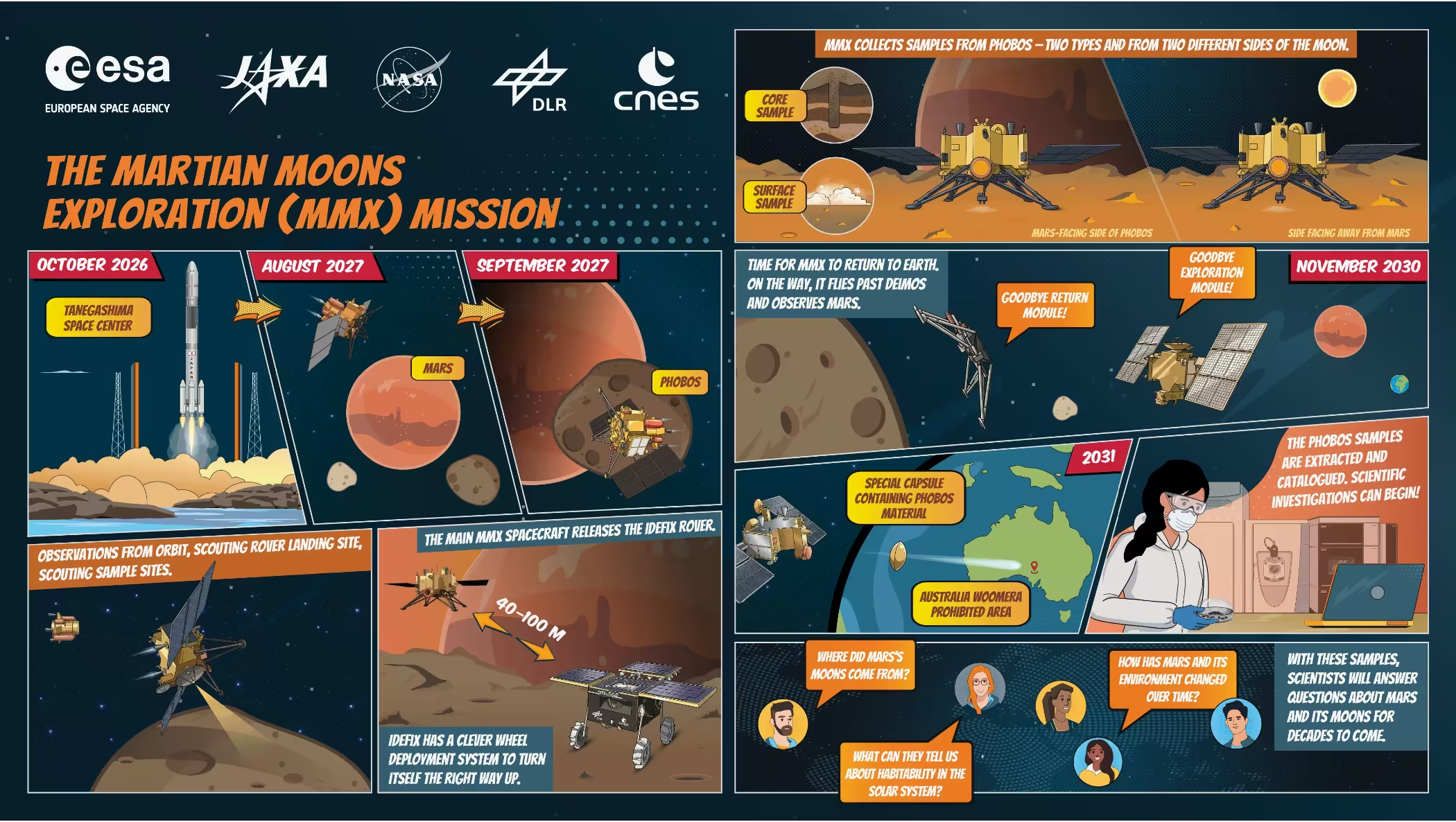
The primary objective for the Japan Aerospace Exploration Agency (JAXA) is to secure at least 10 grams of regolith from Phobos and return it to Earth by 2031. This ambitious endeavor involves a complex dance of orbital surveying, surface operations, and robotic sample collection, supported by significant contributions from NASA, the European Space Agency, France’s CNES, and the German Aerospace Center (DLR).
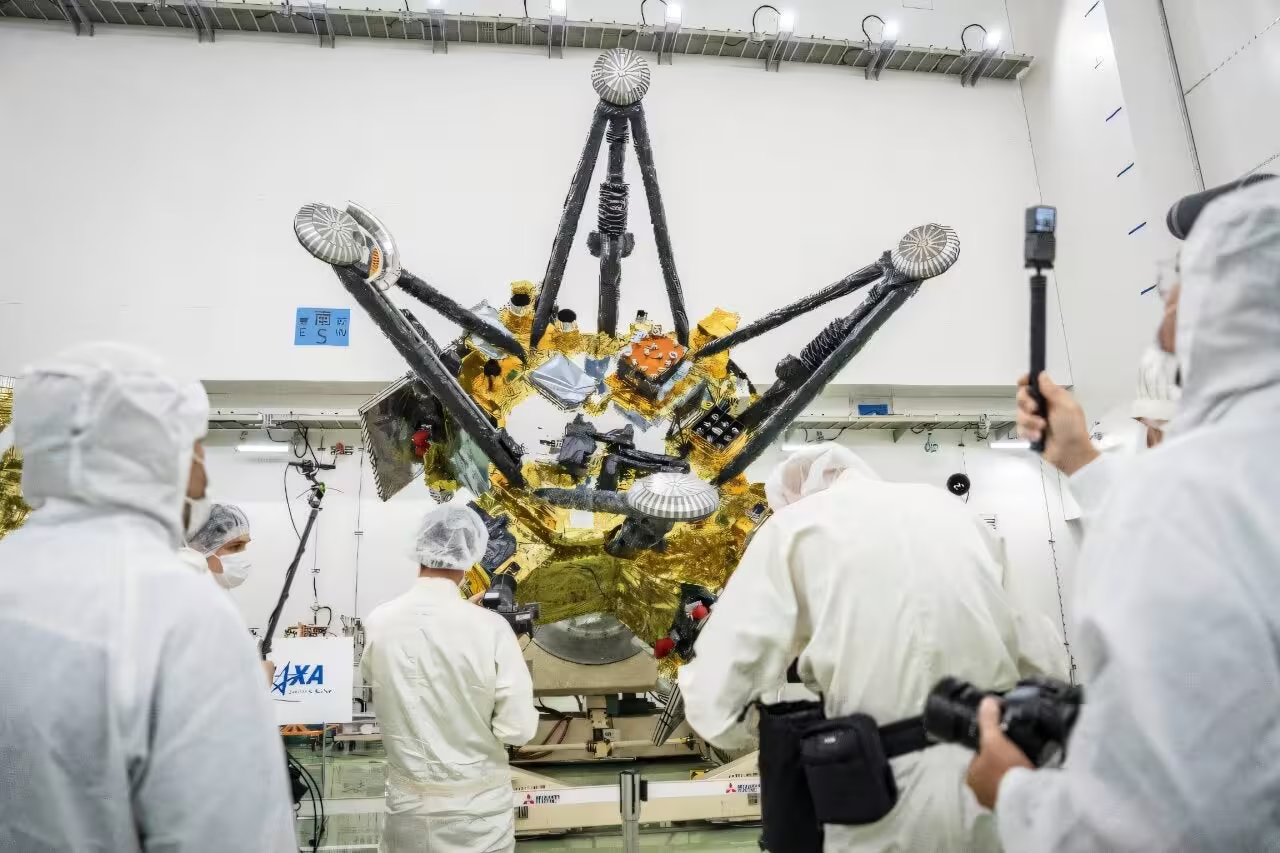
Deciphering the Mystery of Martian Moons
For decades, astronomers have debated whether Phobos and Deimos are captured asteroids or the result of a massive impact event that scattered debris into Martian orbit. The chemical signature of the moon’s surface will provide the definitive answer, offering a window into the conditions of the early solar system.
“Having the answer will help illuminate that early era when Earth and the other inner planets may have been acquiring much of their water and organic compounds,” explains Tom Statler, NASA’s MMX program executive and program scientist. Beyond the moons themselves, the mission may also return particles that were originally kicked off from the surface of Mars, providing an indirect way to sample the planet without a traditional rover landing on its surface.
Advanced Surveillance and Low-Gravity Navigation
Upon arrival in August 2027, MMX will spend roughly three years mapping the Phobos terrain. The spacecraft will utilize a unique quasi-satellite orbit—a synchronized flight path that allows it to remain in close proximity to the moon for extensive periods. This phase is critical for characterizing the surface using the Johns Hopkins Applied Physics Laboratory-developed MEGANE instrument, which will map the elemental composition of the moon via gamma-ray and neutron detection.
A major technical hurdle involves the incredibly weak gravity of Phobos. To test how a vehicle might handle this environment, the mission will deploy Idefix, a 25-kilogram rover developed by CNES and DLR. Designed for a 100-day mission, Idefix will perform a controlled drop onto the surface to assess mechanical and thermal properties, providing essential data for the main craft’s eventual landing.
Precision Sampling and Return
JAXA’s sampling strategy relies on two distinct methods to ensure a successful collection of at least 10 grams of material. A coring tool will penetrate the subsurface to reach protected materials, while a pneumatic sampler—developed by Honeybee Robotics—will use high-pressure nitrogen gas to gather loose surface grains. By documenting the geological context of these sites in real-time, scientists hope to ensure the laboratory results remain tied to the moon’s actual environment.
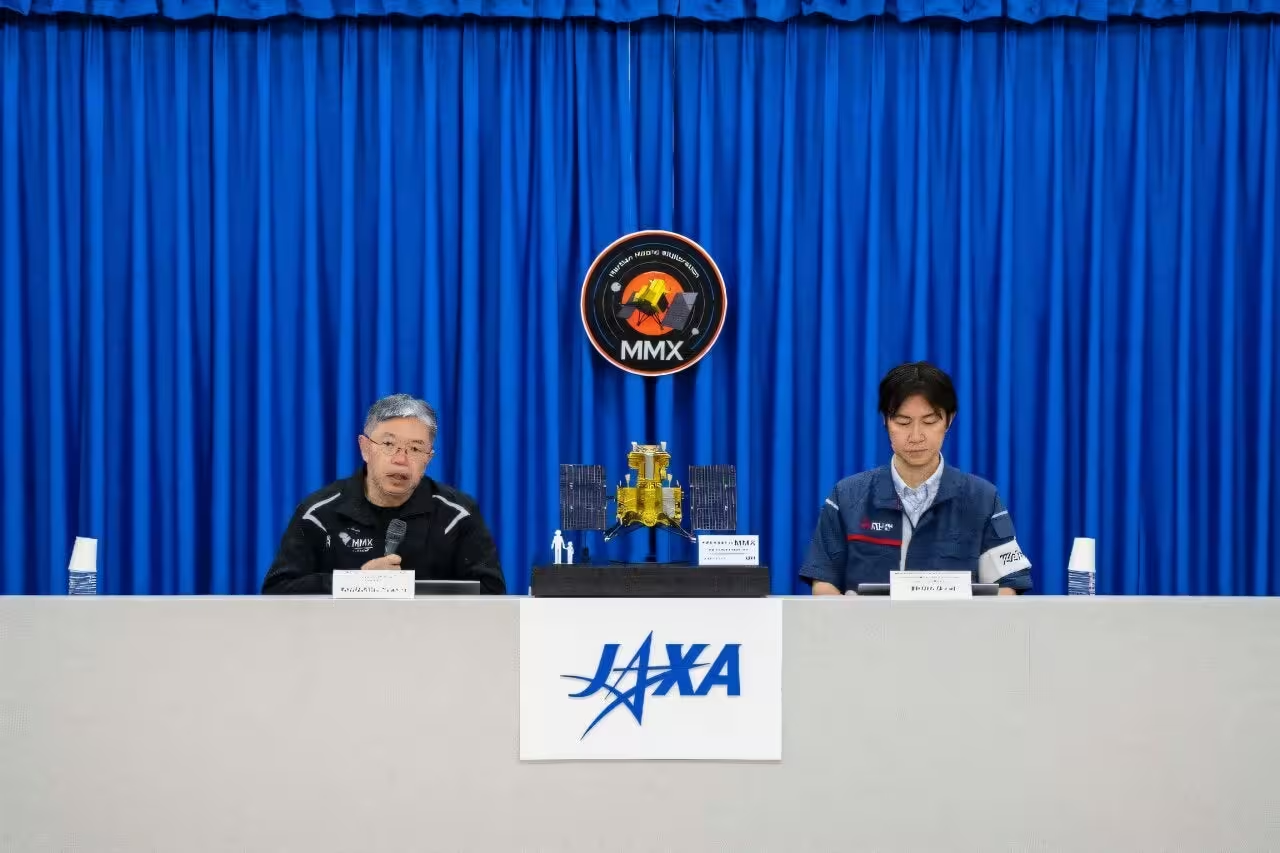
Once the spacecraft departs the Mars system in 2030, its return capsule is slated to touch down in Australia. From there, the samples will undergo rigorous analysis, with 15% of the material set aside for curation and research at NASA’s Johnson Space Center. This multi-year journey pushes the boundaries of deep-space navigation, setting the stage for future exploration of small, low-gravity bodies throughout the solar system.
Further Reading on the MMX Mission
- MMX mission successfully launches – Idefix® rover on its way to Martian moon Phobos (German Aerospace Center)
- NASA to Help Unlock Mysteries of Mars’ Moons in Upcoming Mission (NASA)
- Analytical protocols for Phobos regolith samples returned by the Martian Moons eXploration (MMX) mission (Earth, Planets and Space)
- Dynamical evidence for Phobos and Deimos as remnants of a disrupted common progenitor (Nature Astronomy)
- Transport of impact ejecta from Mars to its moons as a means to reveal Martian history (Scientific Reports)
This article has been fact checked for accuracy, with information verified against reputable sources. Learn more about us and our editorial process.
Last reviewed on .
Article history
- Latest version
Reference(s)
- “JAXA | Tanegashima Space Center.” JAXA | Japan Aerospace Exploration Agency <https://global.jaxa.jp/about/centers/tnsc/>.
- Massengill, Dacia. “NASA.”, December 7, 2022 NASA <https://www.nasa.gov/>.
- “European Space Agency.” <https://www.esa.int/>.
- “CNES - Centre national d'études spatiales.” <https://cnes.fr/en>.
- “The German Aerospace Center (DLR).” <https://www.dlr.de/en>.
- “Welcome to The Johns Hopkins University Applied Physics Laboratory.” Johns Hopkins University Applied Physics Laboratory <https://www.jhuapl.edu/>.
- <https://www.blueorigin.com/exploration-systems>.
- “MMX mission successfully launched – Idefix® rover on its way to Martian moon Phobos.” <https://www.dlr.de/en/latest/news/2026/mmx-mission-successfully-launches-idefix-rover-on-its-way-to-martian-moon-phobos>.
- Talbert, Patricia. “NASA to Help Unlock Mysteries of Mars’ Moons in Upcoming Mission - NASA Science.”, October 15, 2026 NASA <https://science.nasa.gov/directorates/smd/planetary-science-division/nasa-to-help-unlock-mysteries-of-mars-moons-in-upcoming-mission/>.
- Fujiya, Wataru., et al. “Analytical protocols for Phobos regolith samples returned by the Martian Moons eXploration (MMX) mission.” Earth, Planets and Space, vol. 73, no. 1, June 1, 2021 Springer Science and Business Media LLC, doi: 10.1186/s40623-021-01438-9. <https://link.springer.com/article/10.1186/s40623-021-01438-9>.
- Bagheri, Amirhossein. “Dynamical evidence for Phobos and Deimos as remnants of a disrupted common progenitor - Nature Astronomy.”, vol. 5, no. 6, pp. 539-543. Nature, doi: 10.1038/s41550-021-01306-2. <https://www.nature.com/articles/s41550-021-01306-2>.
- Hyodo, Ryuki. “Transport of impact ejecta from Mars to its moons as a means to reveal Martian history - Scientific Reports.”, vol. 9, no. 1, December 27, 2019, pp. 19833 Nature, doi: 10.1038/s41598-019-56139-x. <https://www.nature.com/articles/s41598-019-56139-x>.
Cite this page:
- Posted by Aisha Ahmed