Astronomers Detect Rare Second Generation Planet Born From The Remains Of A Dead Star
Astronomers have detected signs of a planet potentially formed from the debris of a dead star, offering a rare glimpse into a celestial rebirth.
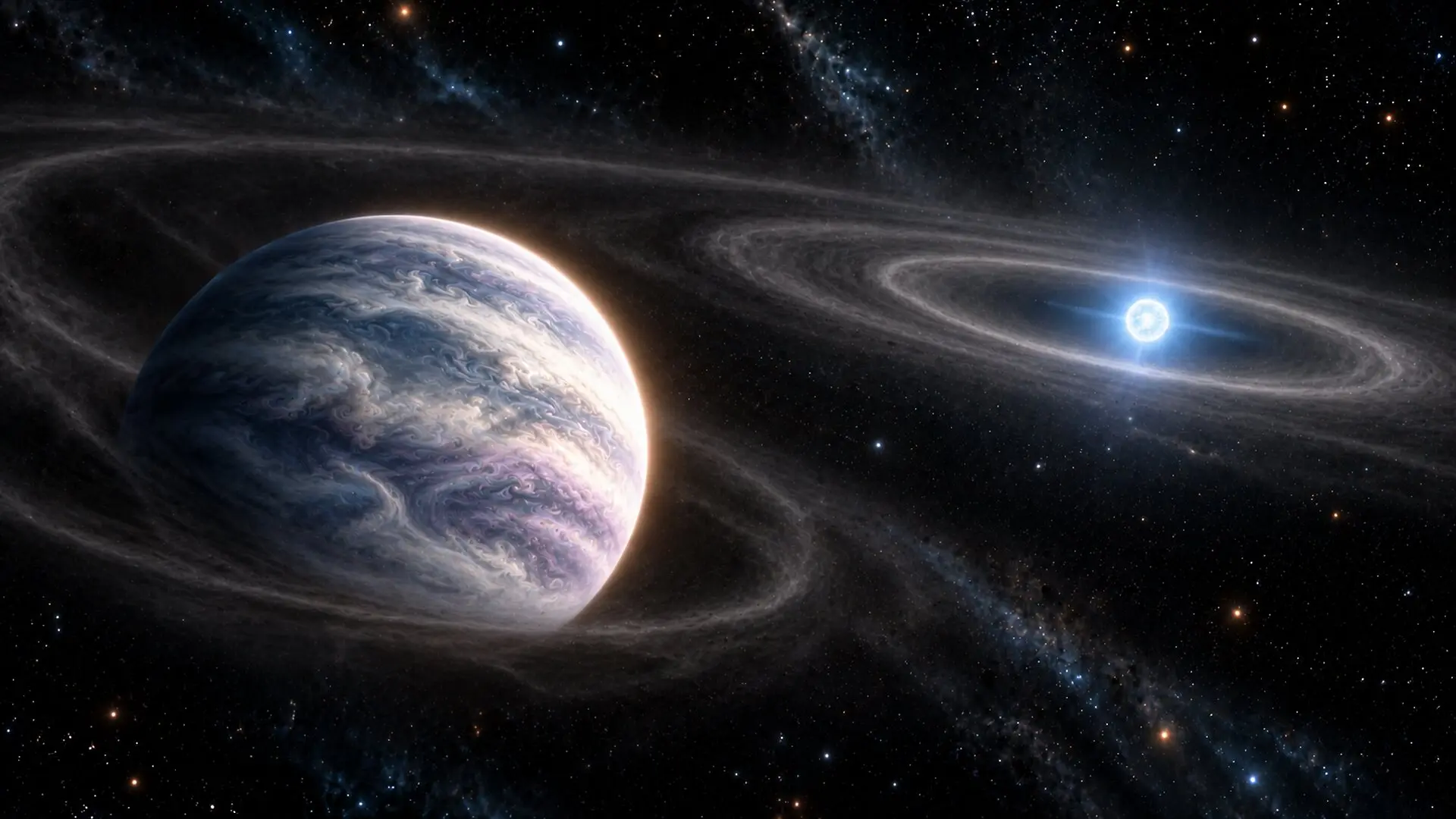
Astronomers have identified a potential “phoenix” world orbiting a white dwarf, a discovery that suggests planets might be capable of forming from the remains of a star’s violent death. The system, designated HS 0209+0832, displays a unique chemical profile in its atmosphere that appears to be fueled by material shed during the star’s final stages, marking a significant departure from the rocky debris typically found surrounding stellar remnants.
The findings, spearheaded by researchers at the University of Warwick and detailed in Nature Astronomy, suggest the existence of a second-generation planet. While most exoplanets form alongside their host stars, this hypothetical world would have emerged from the gas and dust ejected as the star exhausted its nuclear fuel, a process rarely captured by current observational techniques.
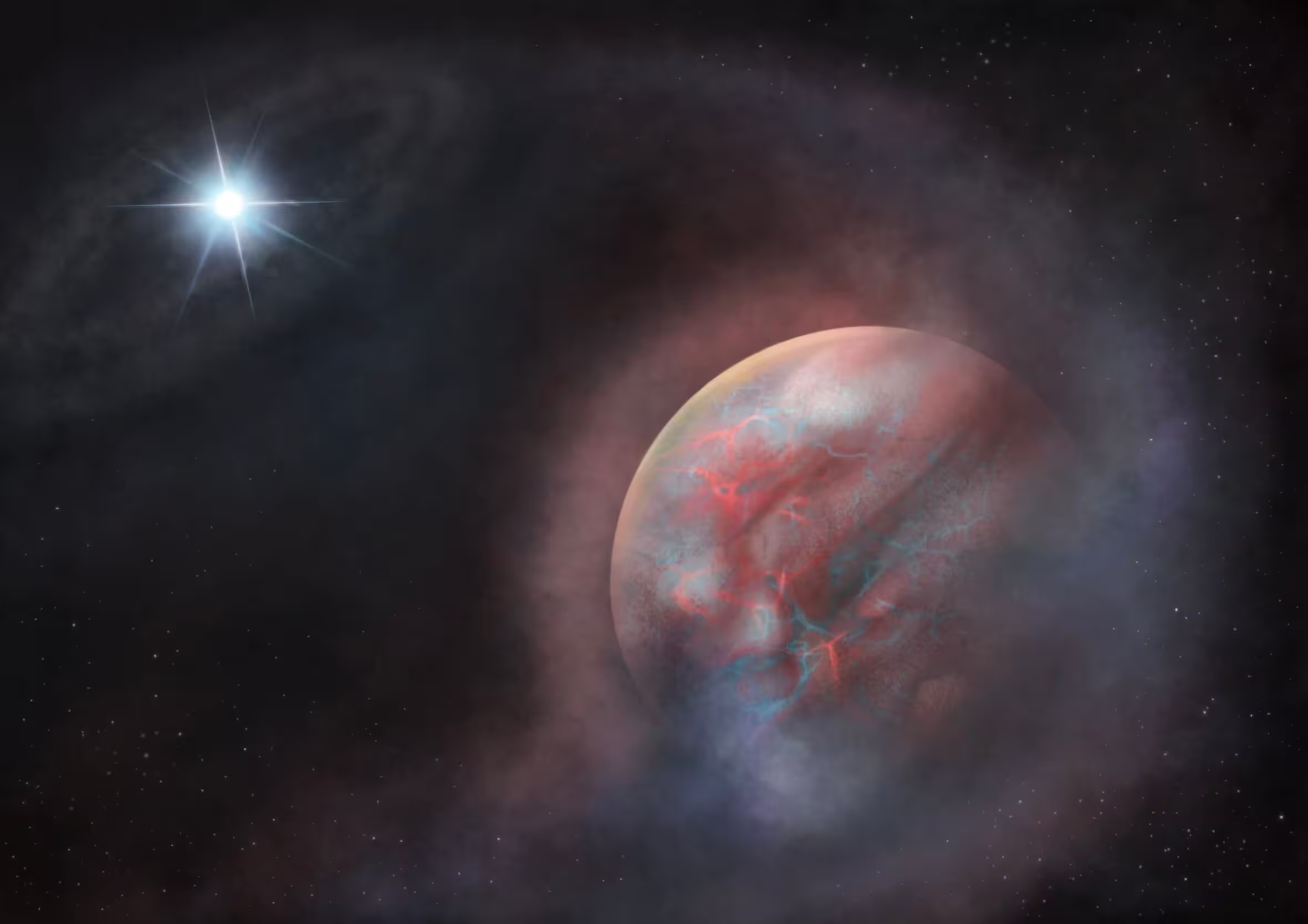
Anomalous Elements Hint at Stellar Recycling
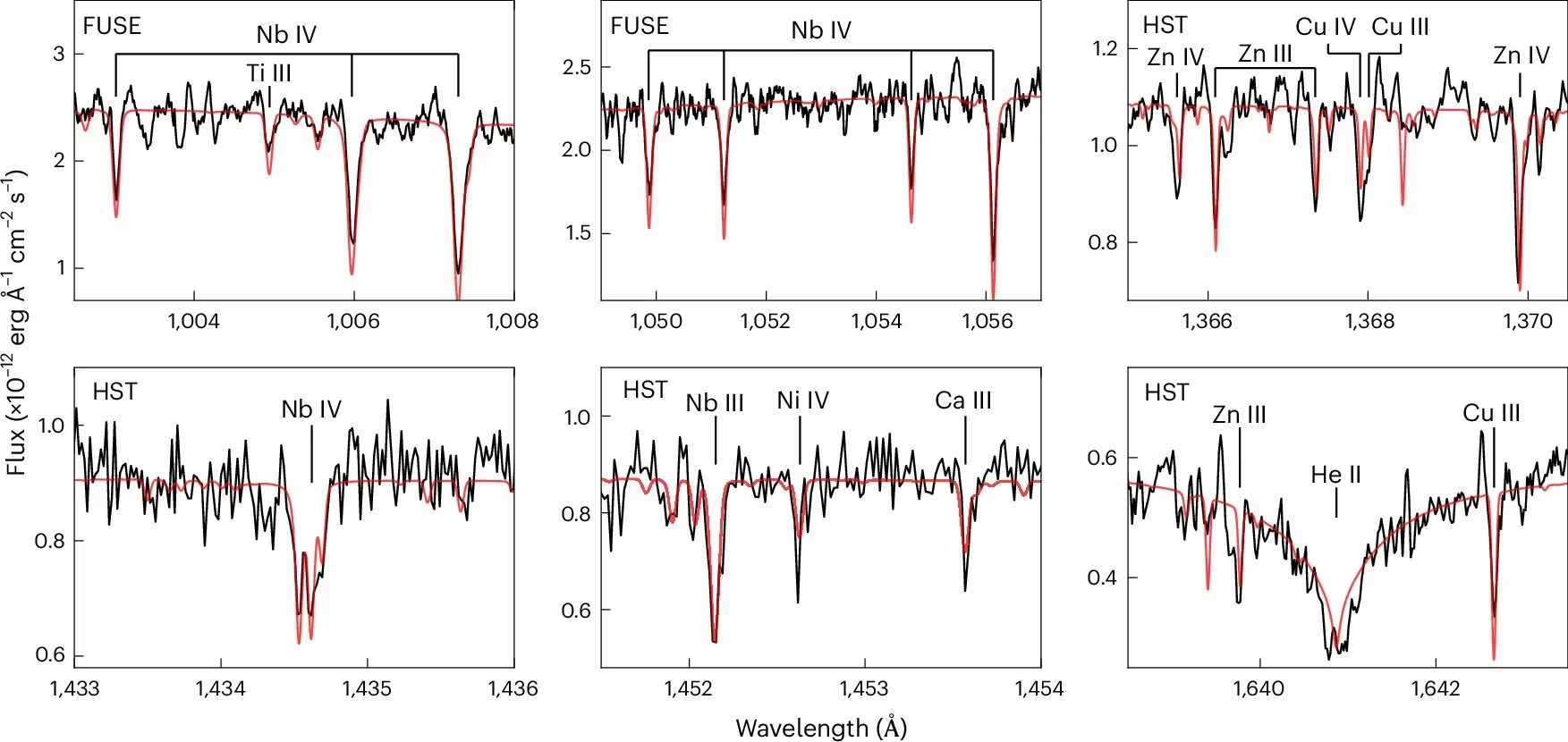
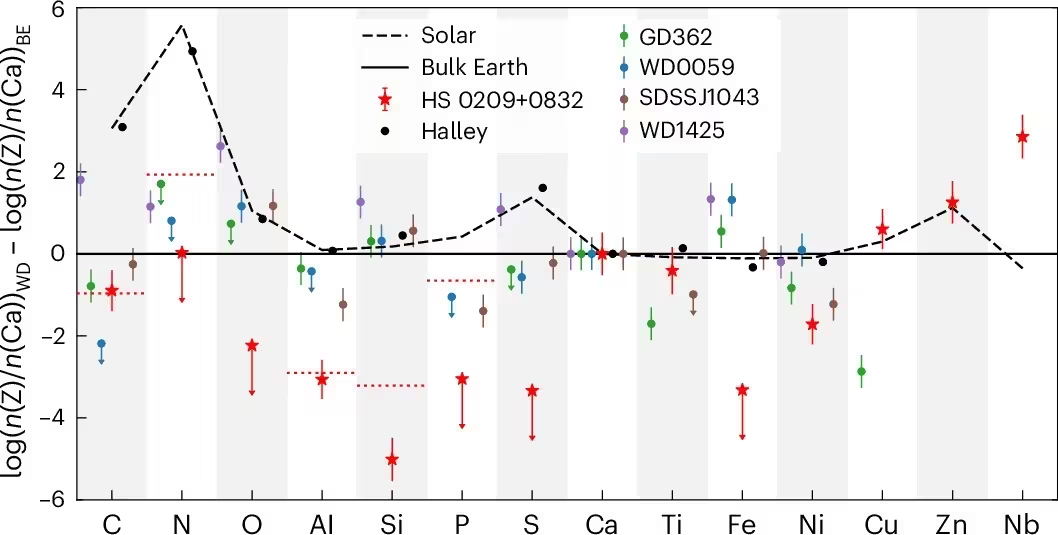
White dwarfs often exhibit “pollution” in their atmospheres as they consume nearby rocky debris. However, HS 0209+0832 stands out due to its unusual abundance of copper, zinc, and niobium. The concentration of niobium, in particular, is more than 1,000 times higher than what is observed in our own solar system relative to calcium.
By analyzing archival data from the Hubble Space Telescope, the Far Ultraviolet Spectroscopic Explorer, and the Very Large Telescope, the team determined that these heavy elements are likely products of the s-process—a form of neutron capture that occurs inside aging stars. The presence of these specific heavy metals, combined with high levels of nickel and carbon, strongly points toward material processed within the star before it collapsed into a white dwarf.
“Second-generation planets are worlds that form out of the material a star casts off as it dies,” explained lead author Jamie Williams, a doctoral researcher at Warwick. “They’re incredibly rare, and finding one around a white dwarf was completely unexpected.”
The Case for a Reborn World
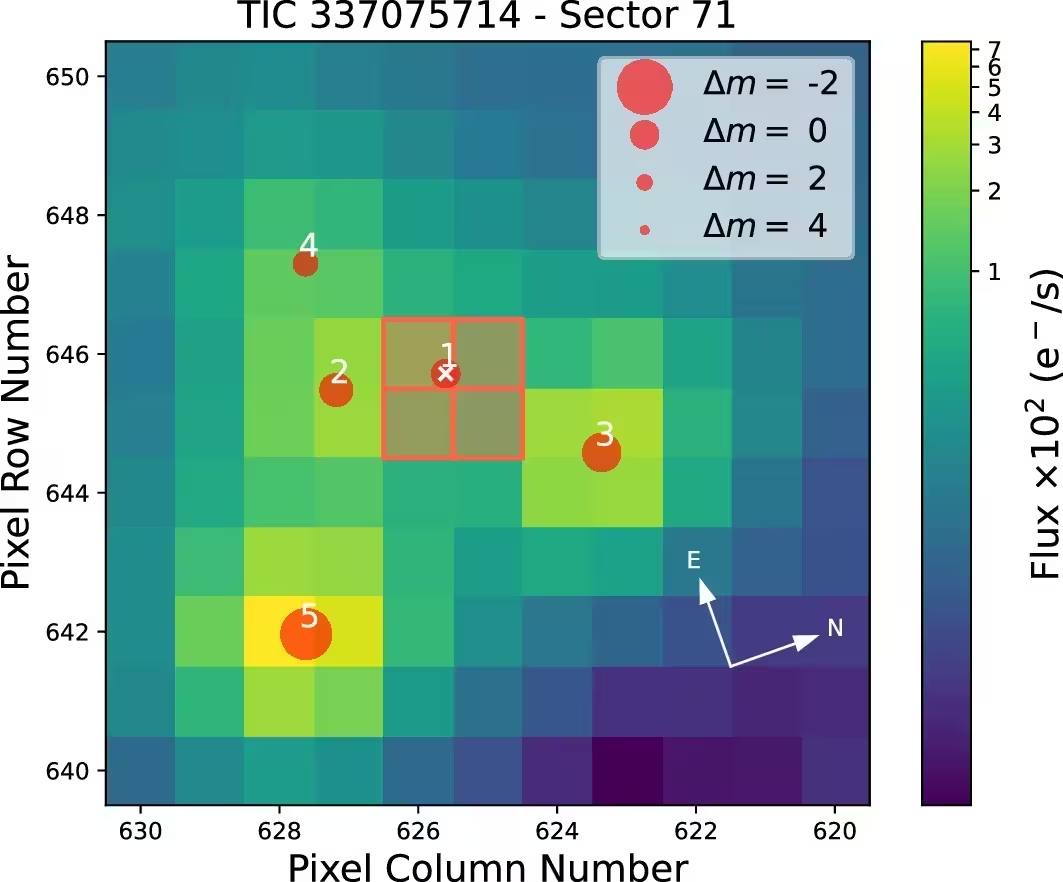
The team’s evidence is further bolstered by data from NASA’s Transiting Exoplanet Survey Satellite (TESS). Observations revealed a subtle, periodic brightness oscillation every 4.399 days. This cycle, which has an amplitude of approximately 0.12 percent, aligns with a giant planet that is tidally locked to its host star. If this model holds, the planet likely sits just 0.04 astronomical units from the white dwarf, with the star’s intense radiation causing the planet to lose mass, which then rains down onto the stellar surface.
Creating such a planet requires a specific sequence of events. Standard stellar evolution typically ejects mass into space, but the presence of a companion star during the giant phase could have trapped this material in a disk, providing the necessary raw ingredients to forge a new world. The researchers acknowledge, however, that they have yet to confirm the presence of this theorized companion, and other possibilities—such as a surviving planet core that merely acquired a new atmosphere—cannot yet be ruled out.
Unanswered Questions and Future Exploration
Despite the compelling evidence, the theory is not without challenges. For example, the absence of expected strontium, which usually accompanies niobium in stellar ejecta, remains a mystery. Future research will need to develop more refined models of second-generation planetary atmospheres to explain these chemical discrepancies.
The team views their work as a vital foundation for future surveys. By specifically looking for s-process elements and carbon in the atmospheres of white dwarfs, astronomers may be able to identify other systems where the remnants of a star’s death have coalesced into a new, unexpected generation of planets. While the existence of this specific “phoenix” world remains a candidate rather than a confirmed fact, it challenges our understanding of planetary life cycles and suggests that in the cosmos, death and rebirth may be inextricably linked.
This article has been fact checked for accuracy, with information verified against reputable sources. Learn more about us and our editorial process.
Last reviewed on .
Article history
- Latest version
Reference(s)
- “University of Warwick - Study at a top 10 UK University.” <https://warwick.ac.uk/>.
- Williams, Jamie. “Discovery of a second-generation planet candidate accreting onto a white dwarf - Nature Astronomy.”, October 5, 2026, pp. 1-9. Nature, doi: 10.1038/s41550-026-02983-7. <https://www.nature.com/articles/s41550-026-02983-7>.
Cite this page:
- Posted by Aisha Ahmed