New Cavity-Free Antenna Design Uses Tamm Plasmon Polaritons to Boost Signal Gain
By shifting from traditional volume-based resonance to a two-dimensional interface, engineers have created a more compact and efficient solution for next-generation wireless systems.
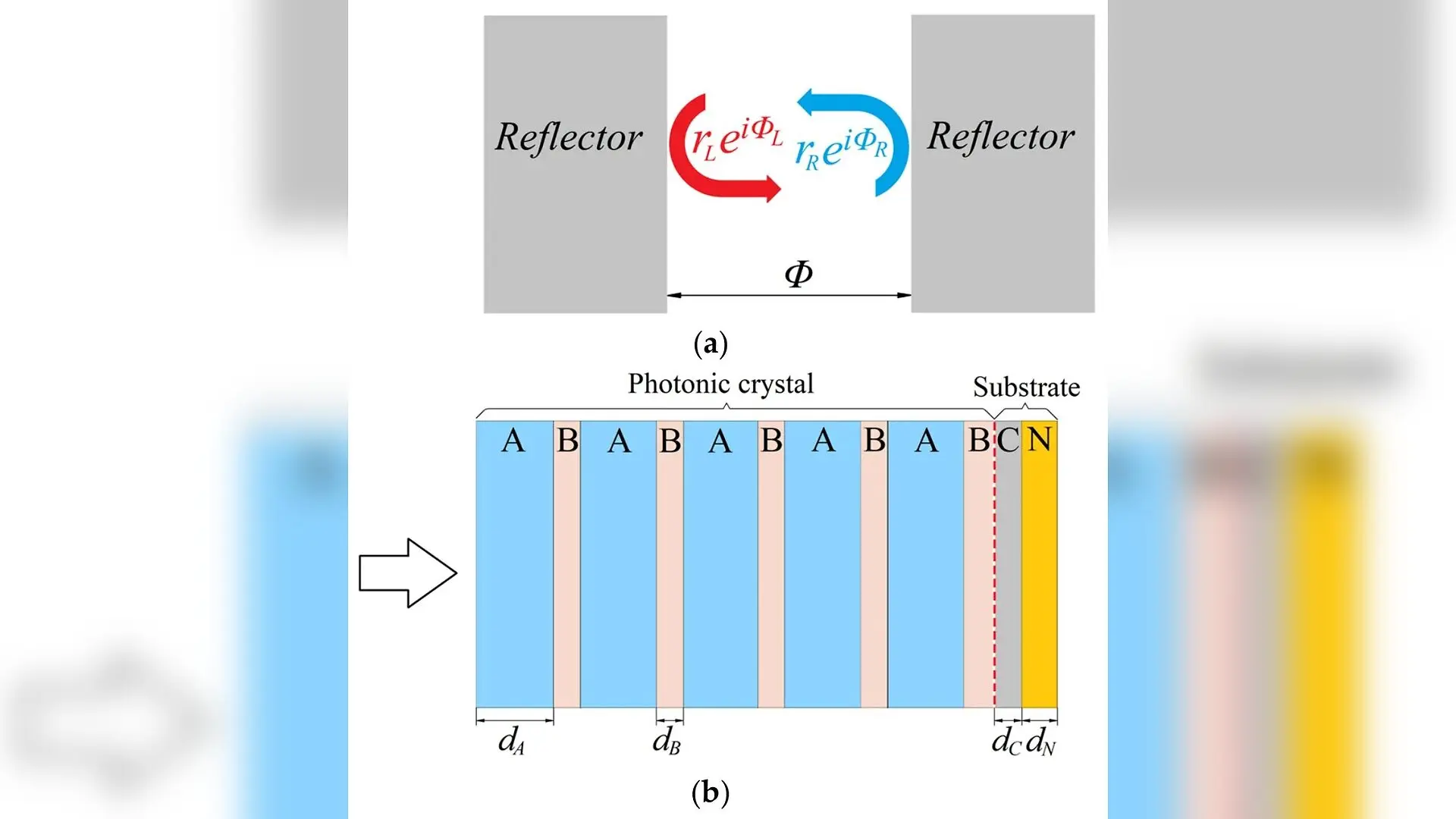
Modern wireless communication and radar systems are pushing the boundaries of what is possible, creating an urgent demand for antennas that can deliver high gain and directivity without the burden of massive physical footprints. Traditional methods, such as large parabolic reflectors or complex antenna arrays, often struggle with high profiles and significant energy losses in their feeding networks. To address these challenges, a team of researchers has developed a compact, high-performance antenna that utilizes the unique properties of Tamm plasmon polaritons (TPPs), as published in the journal Micromachines.
Rethinking Antenna Resonance
The research team, led by scientists at Shandong University, sought to move away from the traditional Fabry-Pérot resonant cavities that have long dominated high-gain antenna design. These conventional structures typically rely on voluminous, half-wavelength dielectric or air cavities to achieve the necessary resonance for high directivity. By contrast, the new design uses a 1D photonic crystal structure combined with a highly reflective substrate to excite TPPs directly at a two-dimensional interface.
TPPs are localized boundary states that occur at the interface between two distinct, highly reflective media. Unlike surface plasmon polaritons, which often require complex momentum-matching structures, TPPs can be excited at arbitrary incident angles. By embedding a simple microstrip patch exactly at this phase-matched boundary, the team was able to tap into the intense electric field localization of the TPPs to drive the antenna’s radiation.
A Compact, Cavity-Free Architecture
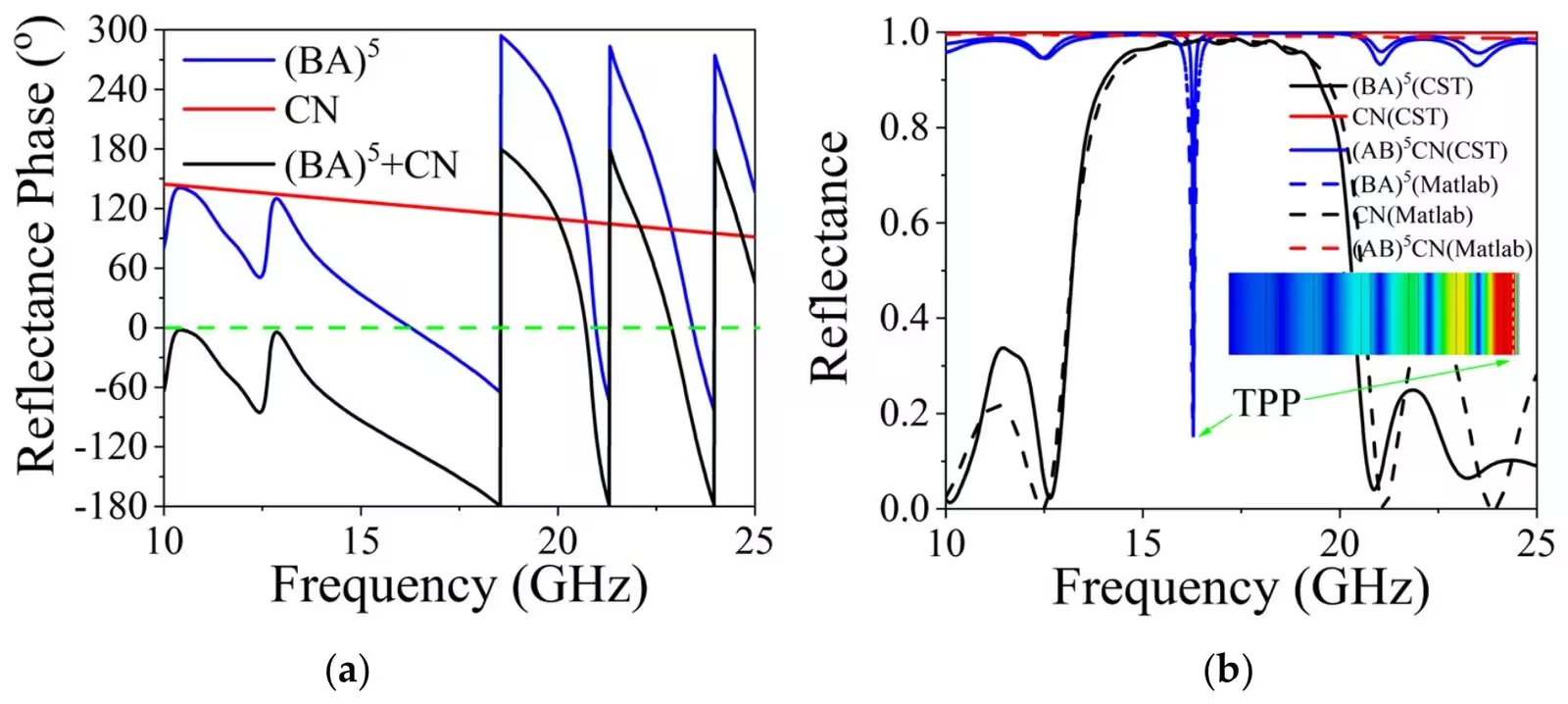
The resulting antenna architecture is notable for its simplicity. It eliminates the need for bulky, volume-based spatial resonances, effectively creating a cavity-free device. The total height of the prototype is approximately 38.4 mm, which is primarily dictated by the five-period Bragg mirror required to achieve the necessary reflection phase, rather than a resonant cavity volume. This allows the antenna to maintain a low profile while delivering high-gain performance.
Full-wave electromagnetic simulations, validated by the transfer matrix method (TMM), showed that the antenna maintains excellent impedance matching across its operating frequency. The researchers fabricated a prototype using standard printed circuit board (PCB) technology, utilizing Rogers RO4003C substrates to balance performance with commercial availability.
Performance and Future Implications
Experimental testing in a microwave anechoic chamber confirmed the theoretical model’s accuracy. The prototype achieved a measured peak gain of 16.4 dBi at 16.43 GHz, with a 3-dB beamwidth of 13.5 degrees in the x-o-z plane. These results represent a significant improvement over bare radiating patches, demonstrating a gain enhancement of over 14 dB.
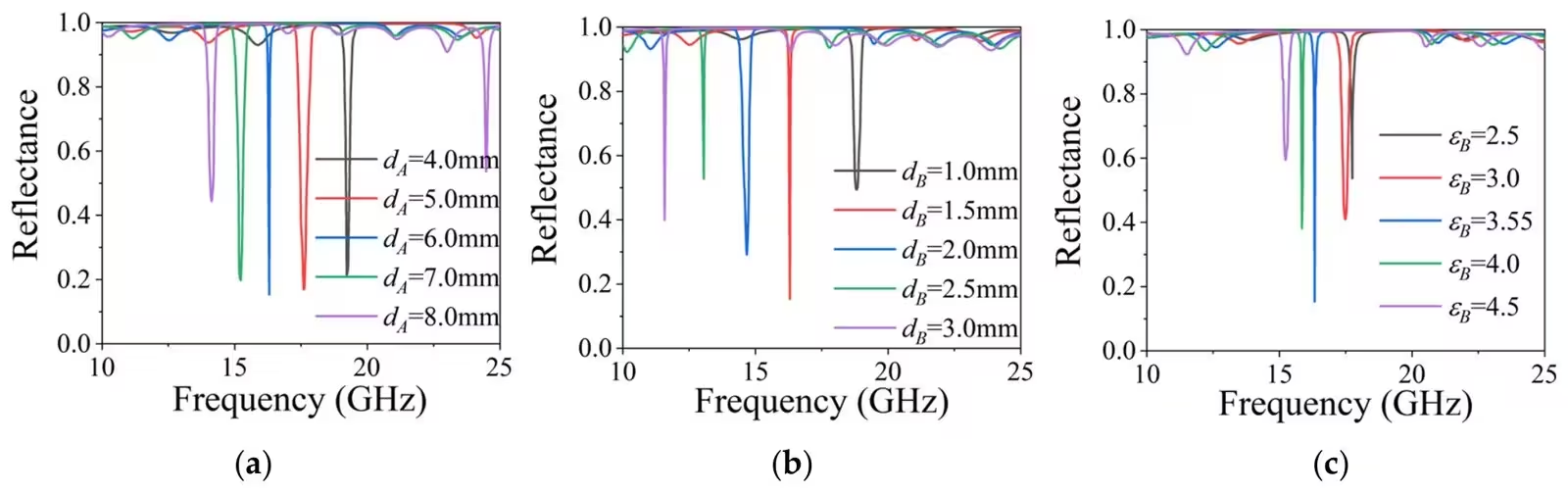
While the current design is highly effective, the researchers noted that the high-Q nature of the TPP mode results in a relatively narrow operating bandwidth of approximately 3.7 percent. This makes the current iteration best suited for specific frequency-tuned applications rather than wideband systems. However, the team has already identified paths for future improvement. By grading the photonic crystal periods to trigger multi-mode TPP coupling, or by integrating a multi-resonant metasurface patch, they believe it is possible to broaden the impedance bandwidth to 10 percent or more.
This TPP-driven paradigm offers a versatile new tool for antenna engineers. Because the excitation method is applicable to various planar antenna configurations, it could prove essential for developing the next generation of small-sized, high-gain antennas required for radio astronomy and millimeter-wave communication systems, where space and weight constraints are often the most significant hurdles to innovation.
The research was published in Micromachines on July 29, 2026.
This article has been fact checked for accuracy, with information verified against reputable sources. Learn more about us and our editorial process.
Last reviewed on .
Article history
- Latest version
Reference(s)
- Liu, Mingyang., et al. “High-Gain Photonic Crystal Antenna Based on Tamm Plasmon Polaritons.” Micromachines, vol. 17, no. 8, July 29, 2026, pp. 914 MDPI AG, doi: 10.3390/mi17080914. <https://doi.org/10.3390/mi17080914>.
- <https://pubmed.ncbi.nlm.nih.gov/42653555/>.
Cite this page:
- Posted by Aisha Ahmed