Earth And Mars Formed In Surprisingly Different Ways According To New Chemical Analysis
New evidence reveals that Earth and Mars followed distinct evolutionary paths, challenging long-held theories about their shared planetary origins.
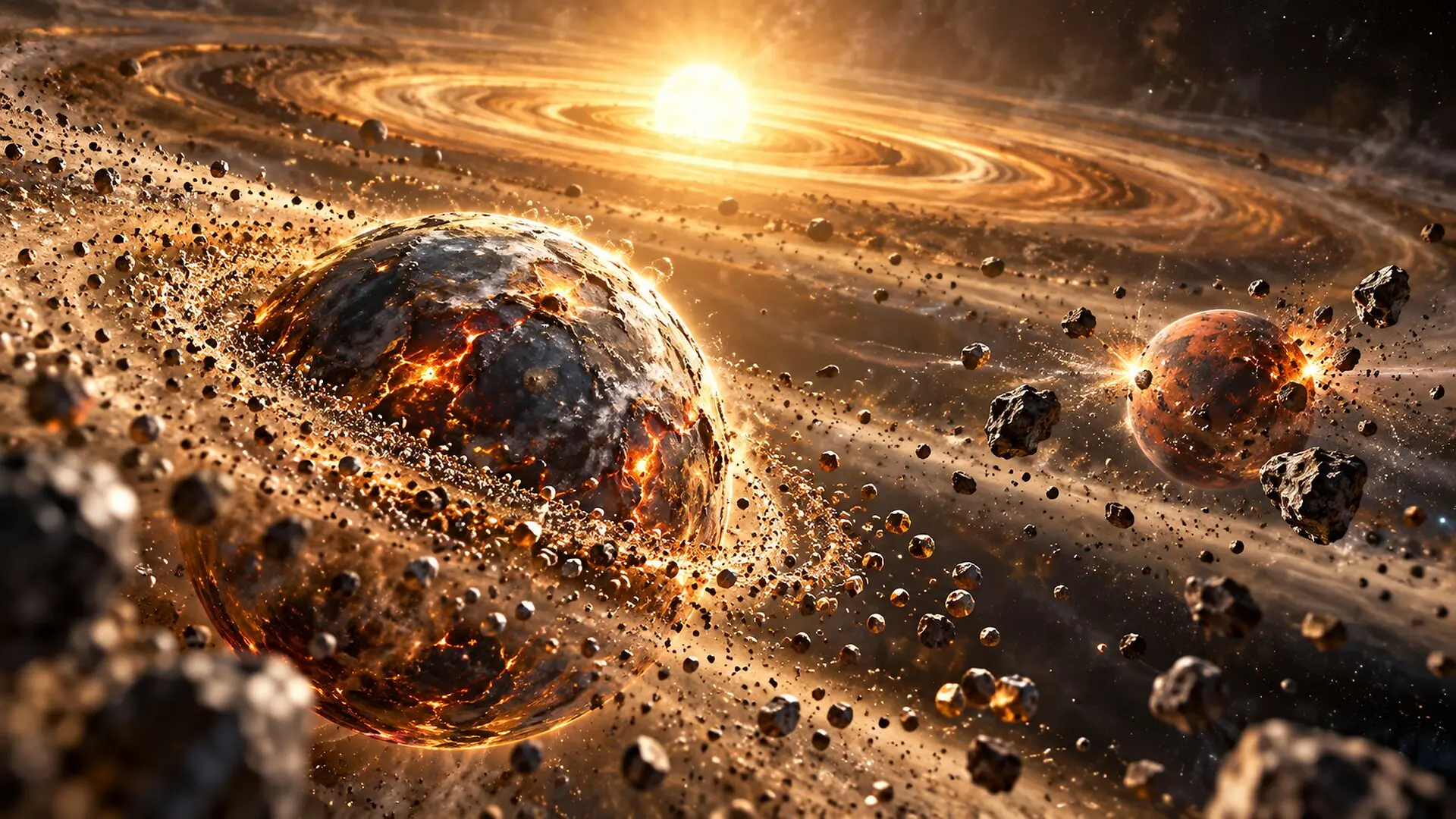
Despite their shared origins within the same primordial disk of gas and dust, Earth and Mars followed strikingly different paths to planetary maturity. New chemical modeling suggests that while these two rocky worlds reside in close proximity, they were forged through distinct combinations of pebble accretion, planetesimal collisions, and high-energy impacts.
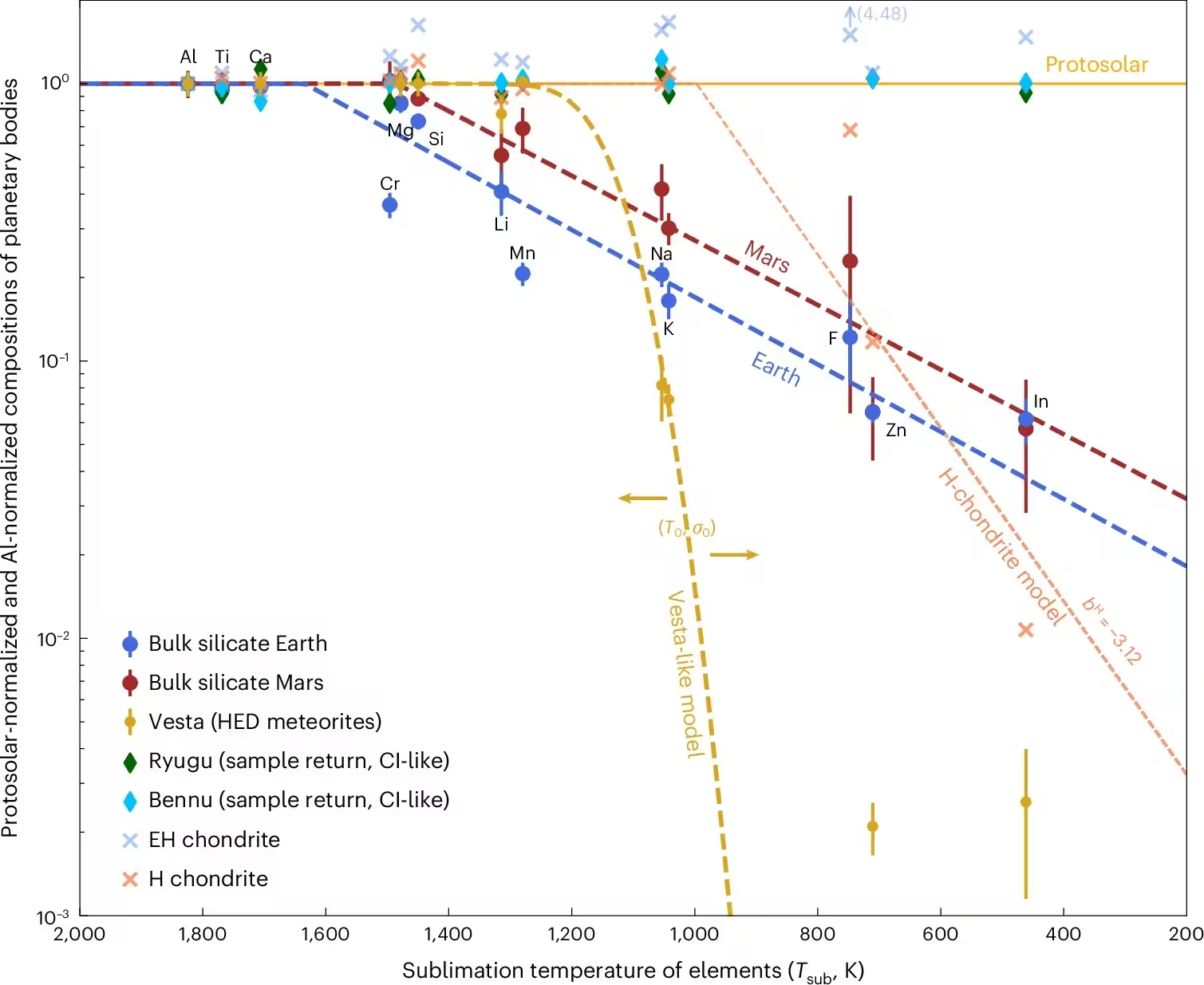
A study led by researchers at the University of Copenhagen, published in Nature Astronomy, challenges the assumption that neighboring planets share uniform growth histories. By analyzing the depletion of moderately volatile lithophile elements—such as zinc, potassium, and sodium—the team reconstructed the ancient accumulation patterns that defined the early solar system.
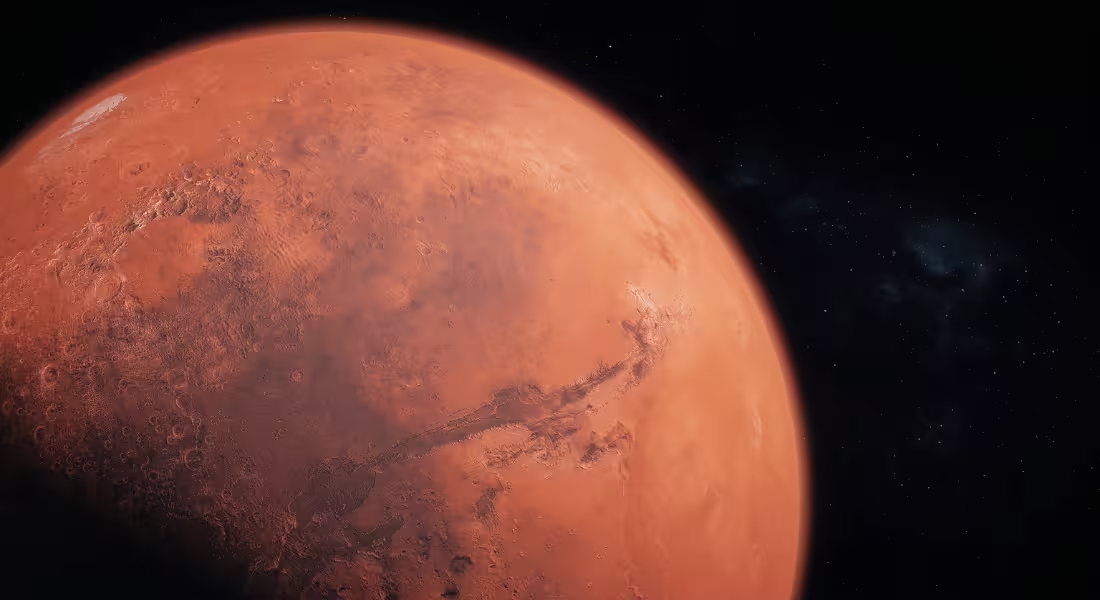
“The most surprising result was that Earth and Mars appear to have formed in different ways,” explained Professor Anders Johansen. “You might have expected that two planets formed side by side in the same solar system would share a more similar formation history.”
Decoding Planetary Chemistry
Because the assembly of these planets occurred 4.5 billion years ago, scientists rely on the chemical signatures trapped within the planetary mantles. Moderately volatile elements serve as a critical record; they evaporate more readily than refractory materials, meaning their final concentrations provide a direct proxy for how a planet’s building blocks were heated and accumulated.
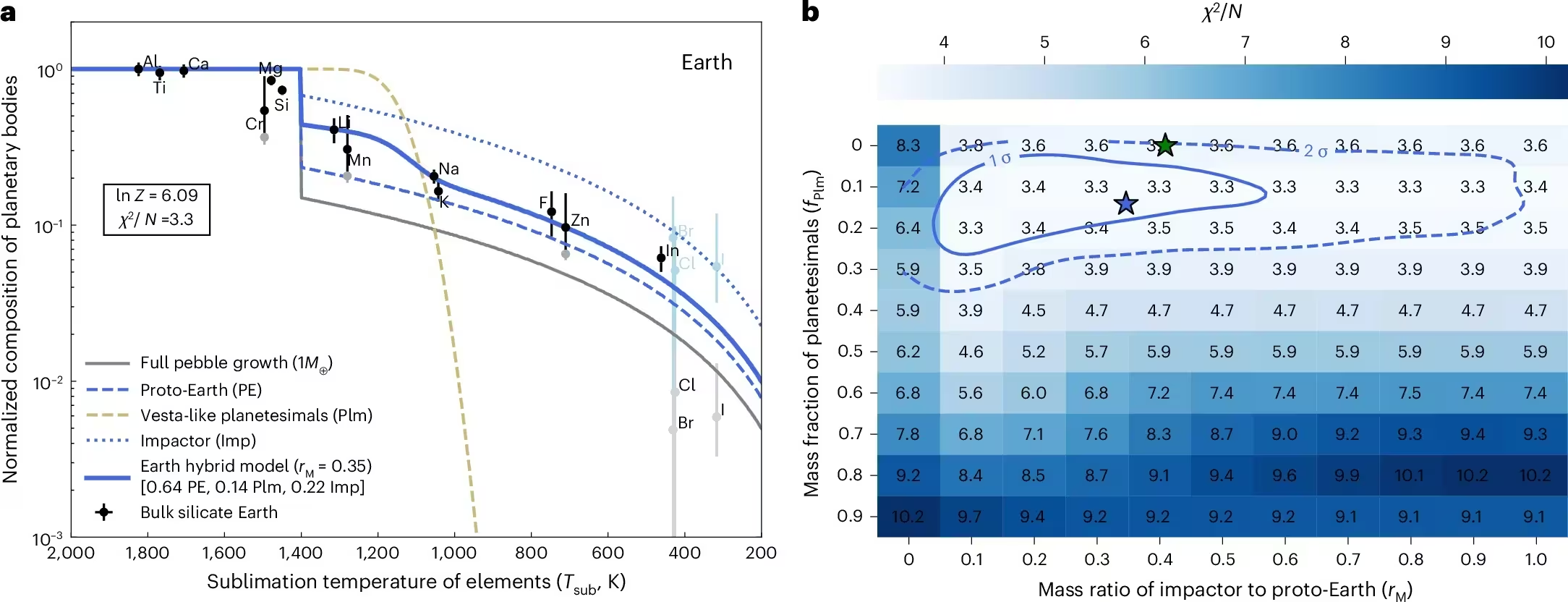
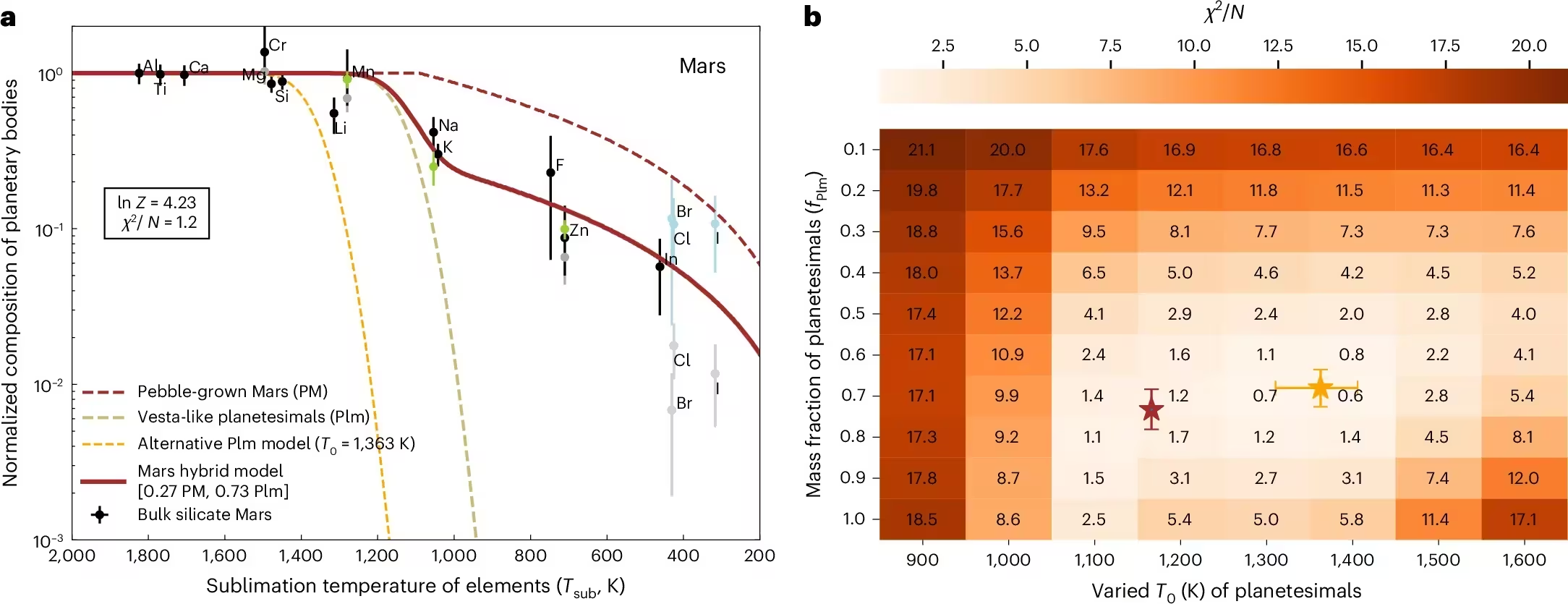
Using Bayesian inference and statistical modeling, the team simulated various pathways of growth. Their findings indicate that Earth’s mass is primarily the result of two large protoplanets that grew through the continuous capture of millimeter- to centimeter-sized pebbles. In contrast, Mars appears to have been assembled primarily from larger, volatile-depleted planetesimals, suggesting it was essentially a “stranded” planetary embryo that matured rapidly while Earth continued to accrue mass.
The Physics of Pebble Accretion
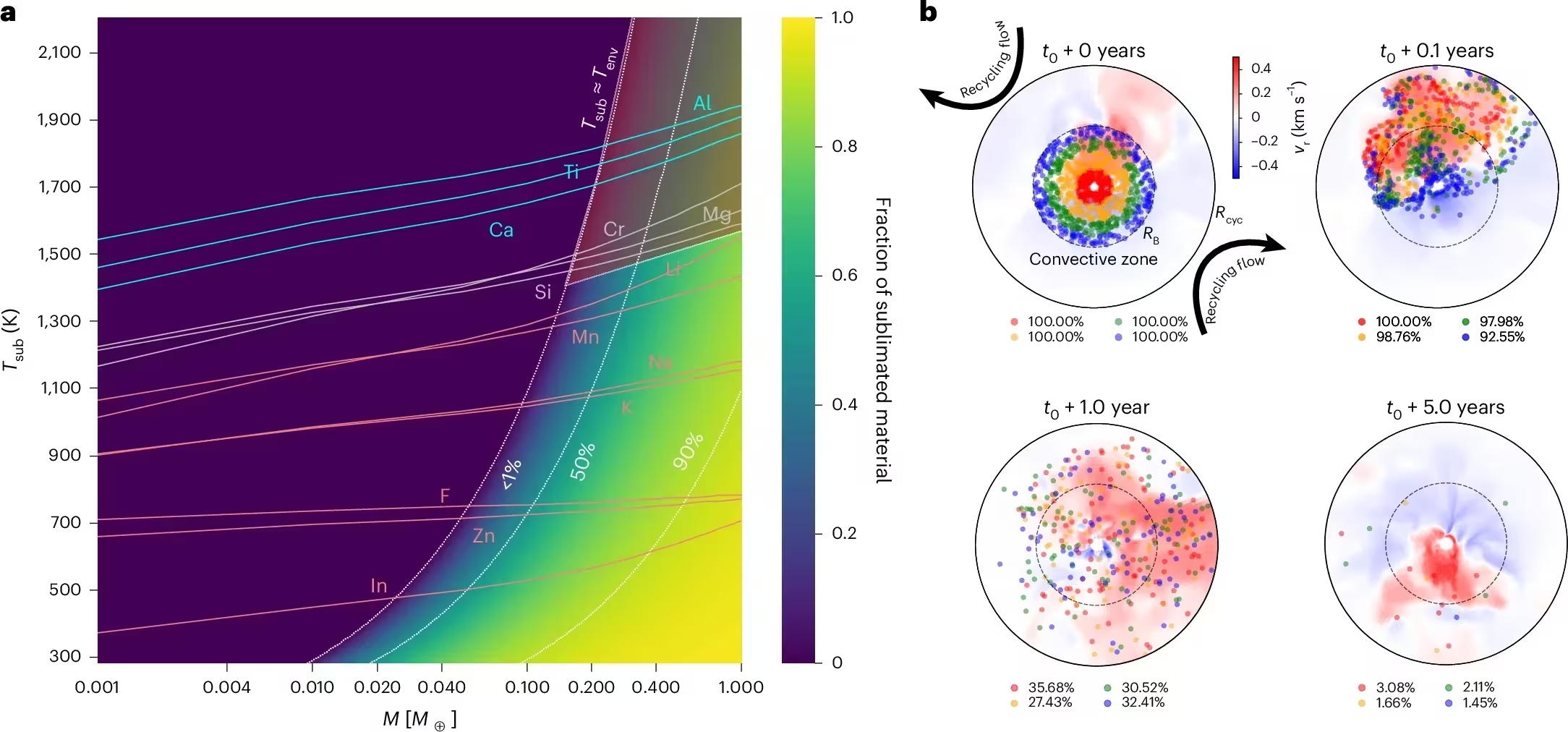
The study also elucidates a mechanism for how “pebble accretion” drives volatile loss. As a protoplanet grows, it captures a hydrogen and helium envelope from the surrounding disk. Incoming pebbles passing through this hot atmosphere experience significant heating. Once temperatures hit a specific threshold, volatile materials sublimate into gas, which is then stripped away by convective currents before it can reach the planet’s surface.
Simulations showed that this process is highly efficient; within five years, nearly all volatile material released by incoming pebbles is removed from the envelope. Only the more resilient, refractory materials effectively make it to the growing planet, leaving behind the specific chemical fingerprint observed in the Earth’s mantle today.
Divergent Paths to Maturity
For Earth, the data suggests that approximately 75% of its total mass was contributed by two major pebble-accretion events—the proto-Earth and a significant impactor, likely the one involved in the Moon-forming collision. While planetesimals still contributed to Earth’s growth, they remained a secondary factor.
Mars tells a different story. The models consistently show that roughly 73% of the Martian mass originated from volatile-depleted planetesimals, similar to the material found in Vesta. Researchers suggest that Mars may have been located in a region of the disk where pebble capture was less efficient, forcing the planet to rely on larger, more violent collisions to reach its final size.
Implications for Exoplanet Habitability
This study provides a new framework for evaluating the potential habitability of rocky worlds beyond our own. Because the ratio of volatile elements dictates a planet’s ability to maintain water and a protective atmosphere, understanding how these elements are retained during formation is essential for identifying Earth-like exoplanets.
The research suggests that even within the same solar system, proximity does not guarantee a similar chemical profile. By using the volatile depletion patterns as a diagnostic tool, astronomers may eventually be able to infer the formation histories of distant worlds, offering a deeper look into the conditions that allow life to take hold on rocky planets throughout the galaxy.
Further Reading
- Experimental simulation of water formation on Earth from dry pebble rain (Nature Geoscience)
- The shaping of terrestrial planets by late accretions (Nature)
- Did the terrestrial planets of the solar system form by pebble accretion? (Earth and Planetary Science Letters)
- Building Earth with pebbles made of chondritic components (Geochimica et Cosmochimica Acta)
- Origin of moderately volatile elements in Earth inferred from mass-dependent Ge isotope variations among chondrites (Earth and Planetary Science Letters)
This article has been fact checked for accuracy, with information verified against reputable sources. Learn more about us and our editorial process.
Last reviewed on .
Article history
- Latest version
Reference(s)
- “University of Copenhagen.” <https://www.ku.dk/en>.
- Wang, Haiyang. “Volatile depletion in rocky planets as a chemical fingerprint of hybrid accretion - Nature Astronomy.”, September 25, 2026, pp. 1-12. Nature, doi: 10.1038/s41550-026-02984-6. <https://www.nature.com/articles/s41550-026-02984-6>.
- Garai, Susmita., et al. “Experimental simulation of water formation on Earth from dry pebble rain.” Nature Geoscience, September 24, 2026 Springer Science and Business Media LLC, doi: 10.1038/s41561-026-02118-7. <https://doi.org/10.1038/s41561-026-02118-7>.
- Marchi, Simone., et al. “The shaping of terrestrial planets by late accretions.” Nature, vol. 641, no. 8065, May 28, 2025, pp. 1111-1120. Springer Science and Business Media LLC, doi: 10.1038/s41586-025-08970-8. <https://doi.org/10.1038/s41586-025-08970-8>.
- Morbidelli, A.., et al. “Did the terrestrial planets of the solar system form by pebble accretion?.” Earth and Planetary Science Letters, vol. 650, January 1, 2025, pp. 119120 Elsevier BV, doi: 10.1016/j.epsl.2024.119120. <https://doi.org/10.1016/j.epsl.2024.119120>.
- Garai, Susmita., et al. “Building Earth with pebbles made of chondritic components.” Geochimica et Cosmochimica Acta, vol. 390, February 1, 2025, pp. 86-104. Elsevier BV, doi: 10.1016/j.gca.2024.11.021. <https://doi.org/10.1016/j.gca.2024.11.021>.
- Wölfer, Elias., et al. “Origin of moderately volatile elements in Earth inferred from mass-dependent Ge isotope variations among chondrites.” Earth and Planetary Science Letters, vol. 663, August 1, 2025, pp. 119435 Elsevier BV, doi: 10.1016/j.epsl.2025.119435. <https://doi.org/10.1016/j.epsl.2025.119435>.
Cite this page:
- Posted by Aisha Ahmed