Mysterious Cosmic Explosion Defies Physics With A Ten Minute X-Ray Glow
The Einstein Probe has detected an unusual neutron star merger, revealing an X-ray glow that lasted for nearly 10 minutes, defying previous expectations.
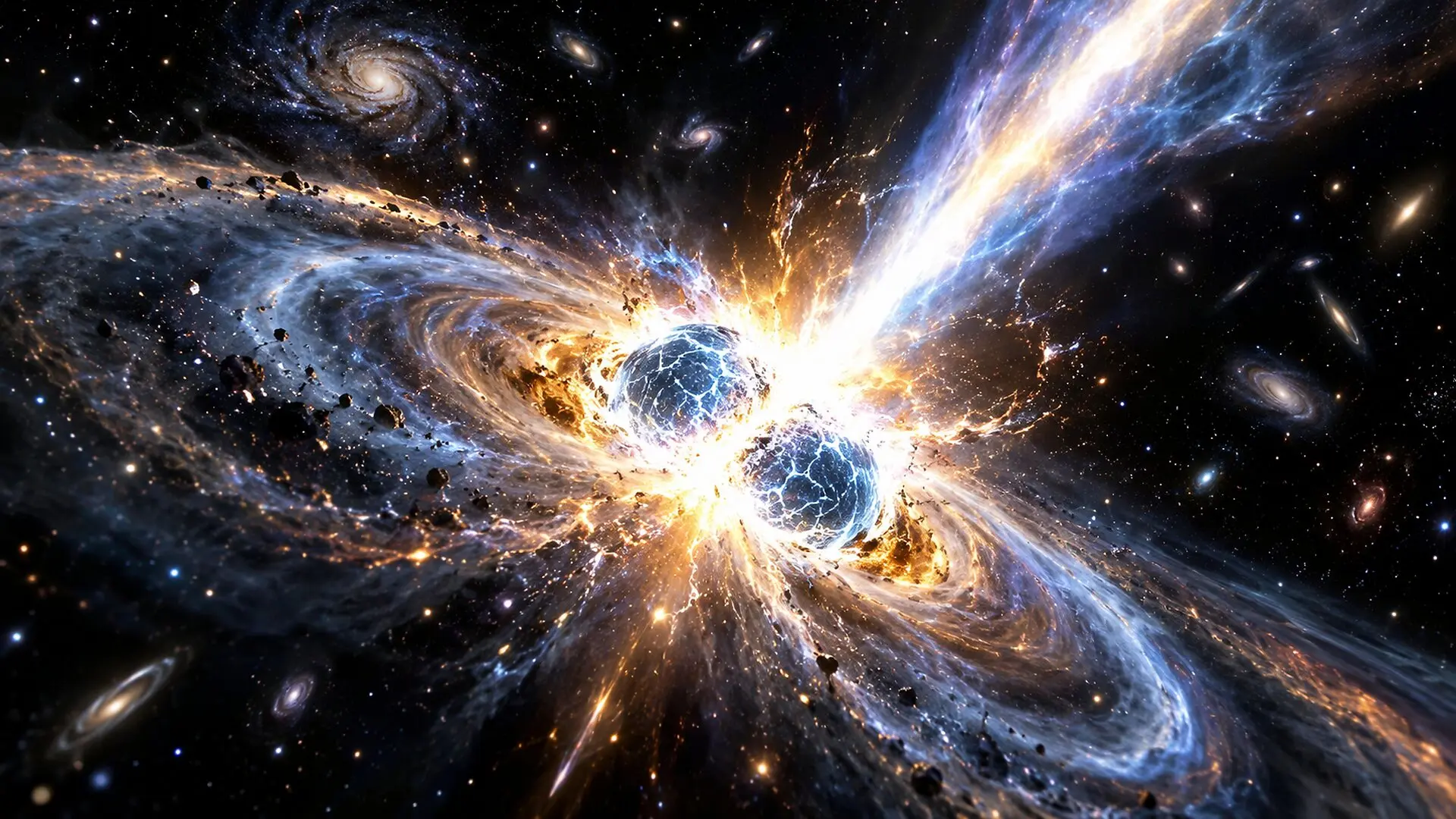
A recent observation of a cosmic explosion has provided researchers with a rare glimpse into the immediate aftermath of a neutron star merger, challenging established models of how these cataclysmic events fade. While the event began with a standard, fleeting burst of gamma rays, it continued to emit soft X-rays for nearly ten minutes, suggesting that the “central engine” powering the merger remained active far longer than previously theorized.
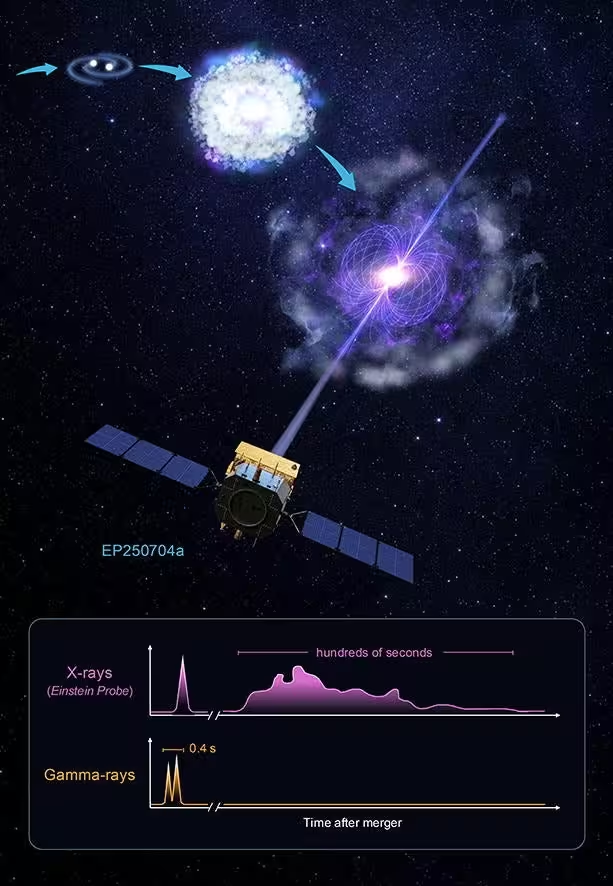
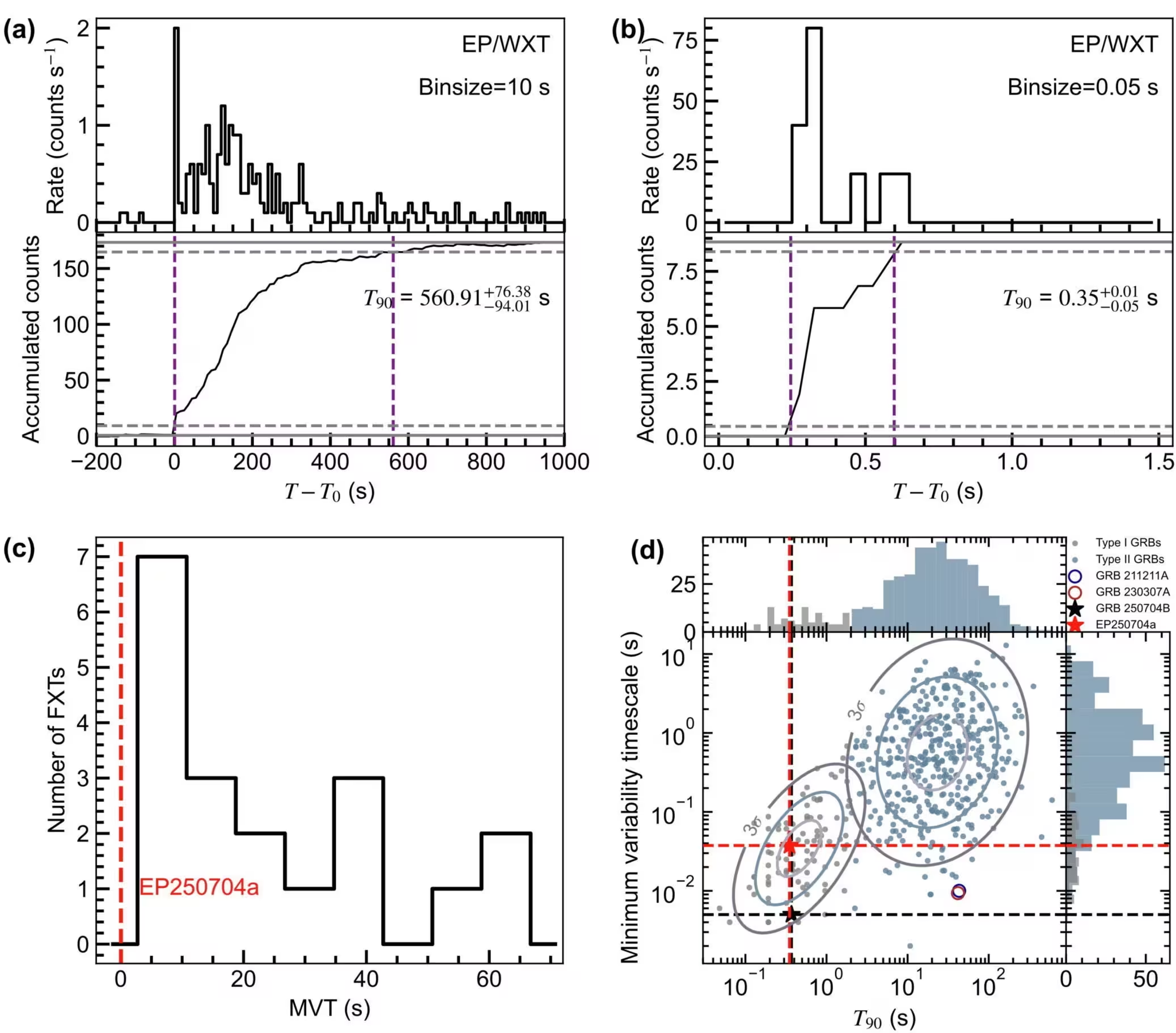
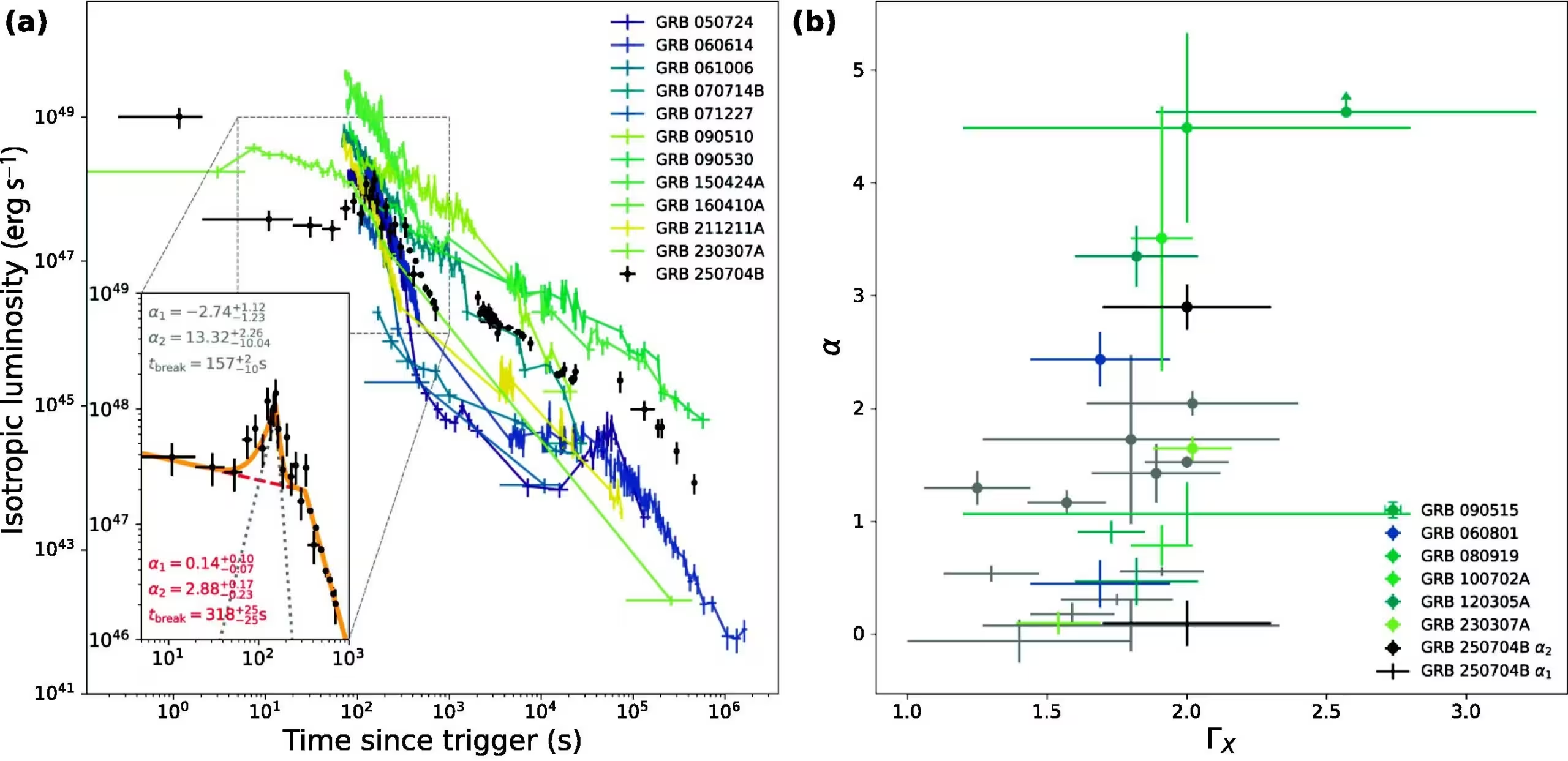
The event, identified as GRB 250704B, was detected on July 4, 2025. According to a study published in Science Bulletin, the initial gamma-ray signal lasted only 0.37 seconds. However, the Einstein Probe satellite, which monitors the sky for soft X-ray transients, tracked a sustained glow lasting approximately 562 seconds. This prolonged emission phase occurred without a corresponding gamma-ray signature, implying that traditional high-energy monitoring tools might be missing a significant portion of the activity inherent to compact-object collisions.
Unveiling a Persistent Engine
Neutron stars, which pack more mass than our Sun into a volume roughly the size of a city, generate immense gravitational waves when they spiral into one another. Historically, the swift cessation of gamma-ray bursts led astrophysicists to assume that these mergers result in an immediate shutdown of the central engine. The observations from the Einstein Probe, analyzed by an international team including researchers from the University of Rome Tor Vergata, offer a different perspective.
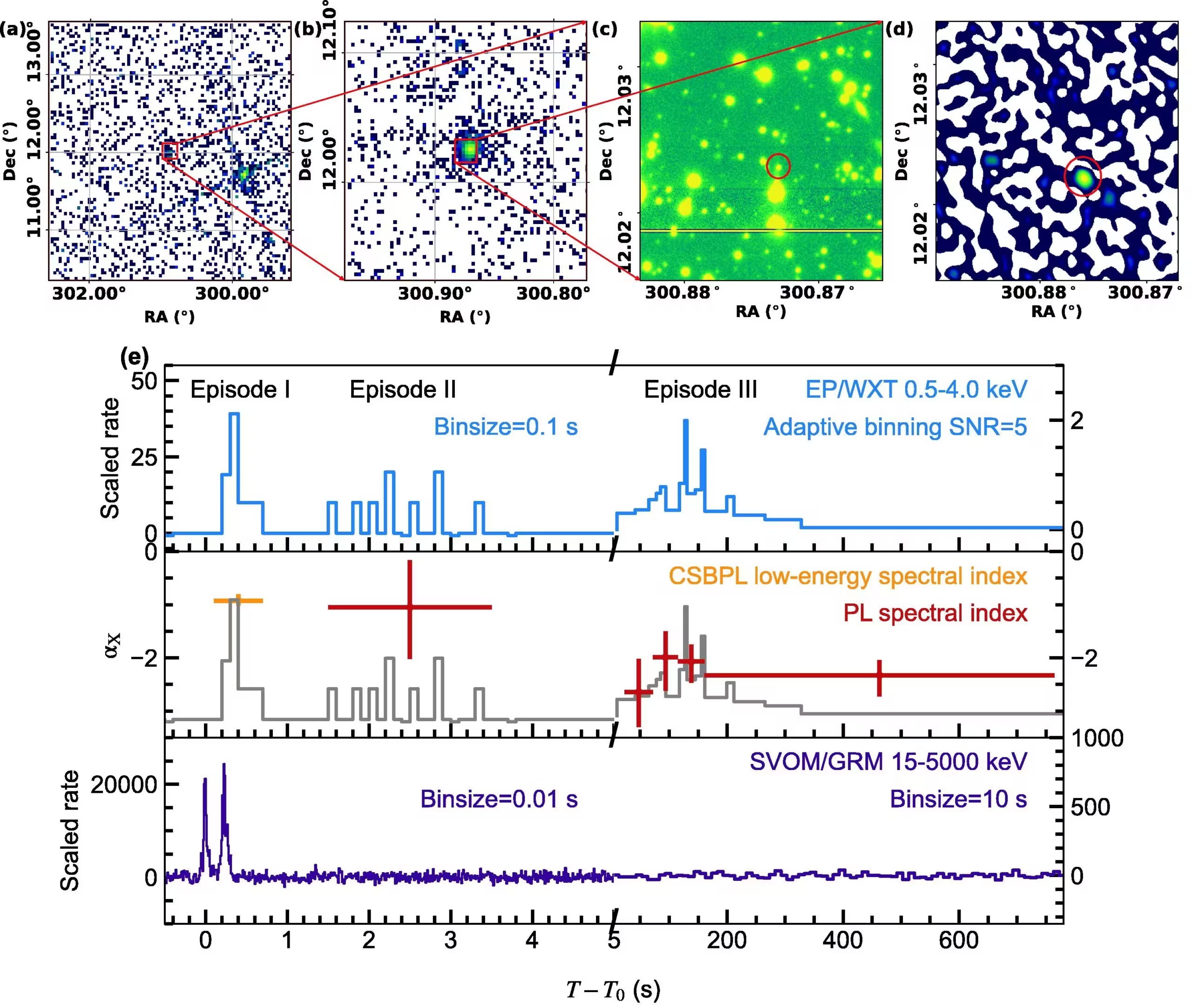
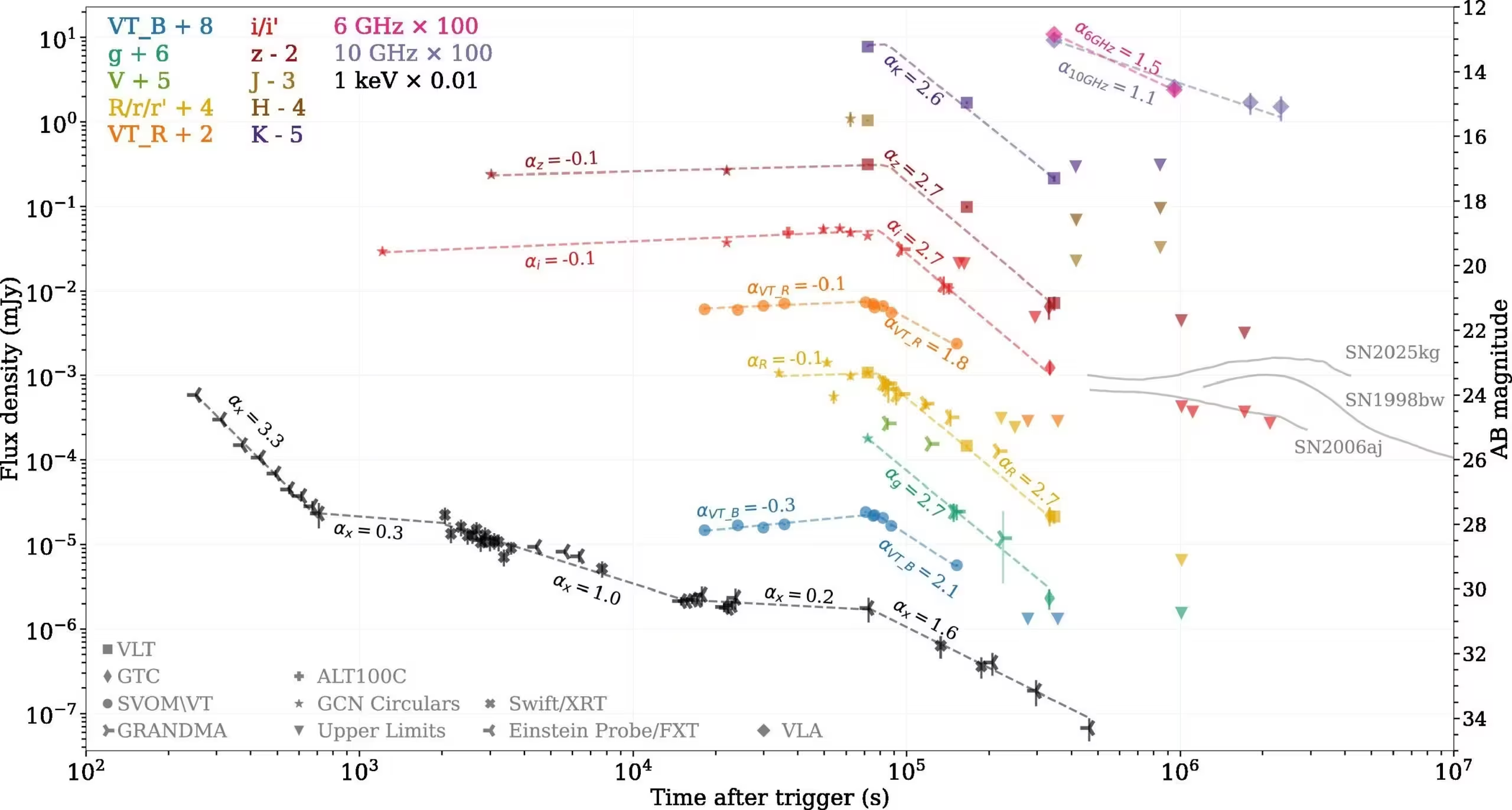
The X-ray light curve of EP250704a, the counterpart to the burst, exhibited three distinct stages: an initial spike, a short tail, and a prolonged, fluctuating bump. Graduate student Niccolò Passaleva noted that this represents the longest-lasting prompt X-ray flash ever recorded from such a merger. The rapid variability and spectral changes observed during this extended period suggest that the energy was not merely a passive afterglow, but the result of an active, internal source.
The Case for a Magnetar Remnant
The research team proposes that the remnant of this collision is likely a magnetar—a highly magnetized neutron star spinning at incredible speeds. Such an object possesses a vast reservoir of rotational energy; as it gradually slows, it emits powerful magnetized winds that could explain the long-duration X-ray glow. This hypothesis is bolstered by the lack of a detectable supernova, which helps rule out the collapse of a massive star, a scenario that typically produces longer, more energetic bursts.
To pinpoint the nature of the event, astronomers utilized the European Southern Observatory’s Very Large Telescope to capture the explosion’s spectrum. By analyzing absorption features, the team calculated a redshift of 0.661, placing the event roughly 6 billion light-years away. At this distance, current gravitational wave detectors are unable to register a signal, and the radioactive kilonova debris would be too faint to observe, leaving the X-ray data as the primary window into the physics of the merger.
Redefining Merger Detection
The discovery suggests that the scientific community may have an incomplete understanding of merger populations due to a reliance on gamma-ray classification. The Einstein Probe’s ability to capture these “missing” signatures could be transformative for future studies. If upcoming observatories can link gravitational wave signals with these lingering X-ray flashes, researchers will be able to determine with greater frequency which collisions result in an immediate collapse to a black hole and which leave behind a short-lived magnetar.
As the field of multi-messenger astronomy matures, the ability to observe these events through both gravitational ripples and sustained electromagnetic emissions will provide a more comprehensive picture of the violent life cycles of neutron stars.
Relevant Scientific Context
- Evidence for a brief appearance of gamma-ray periodicity after a compact star merger: A 2025 study in Nature Astronomy detailing periodic signals in GRB 230307A that point toward millisecond magnetar rotation.
- Discovery of high-frequency quasi-periodic oscillation in short-duration gamma-ray bursts: Research in Monthly Notices of the Royal Astronomical Society identifying oscillations in short bursts as potential indicators of hypermassive engines.
- A large-scale magnetic field produced by a solar-like dynamo in binary neutron star mergers: Numerical models illustrating how mergers generate organized magnetic fields.
- Late-time accretion in neutron star mergers: Implications for short gamma-ray bursts and kilonovae: An examination of how post-merger accretion influences long-term X-ray output.
- A magnetar-powered X-ray transient as the aftermath of a binary neutron-star merger: Foundational research in Nature linking fast X-ray transients to magnetar remnants.
This article has been fact checked for accuracy, with information verified against reputable sources. Learn more about us and our editorial process.
Last reviewed on .
Article history
- Latest version
Reference(s)
- Li, An., et al. “Minutes-long soft X-ray prompt emission from a compact object merger.” Science Bulletin, vol. 71, no. 18, September 1, 2026, pp. 4657-4664. Elsevier BV, doi: 10.1016/j.scib.2026.08.021. <https://www.sciencedirect.com/science/article/pii/S209592732600887X>.
- “Homepage Università degli Studi di Roma Tor Vergata.” <https://web.uniroma2.it/en>.
- “Very Large Telescope.” <https://www.eso.org/public/teles-instr/paranal-observatory/vlt/>.
- Chen, Run-Chao., et al. “Evidence for a brief appearance of gamma-ray periodicity after a compact star merger.” Nature Astronomy, vol. 9, no. 11, September 19, 2025, pp. 1701-1713. Springer Science and Business Media LLC, doi: 10.1038/s41550-025-02649-w. <https://doi.org/10.1038/s41550-025-02649-w>.
- Yang, Xing., et al. “Discovery of high-frequency quasi-periodic oscillation in short-duration gamma-ray bursts.” Monthly Notices of the Royal Astronomical Society, vol. 537, no. 3, January 28, 2025, pp. 2313-2322. Oxford University Press (OUP), doi: 10.1093/mnras/staf162. <https://doi.org/10.1093/mnras/staf162>.
- Kiuchi, Kenta., et al. “A large-scale magnetic field produced by a solar-like dynamo in binary neutron star mergers.” Nature Astronomy, vol. 8, no. 3, February 15, 2024, pp. 298-307. Springer Science and Business Media LLC, doi: 10.1038/s41550-024-02194-y. <https://doi.org/10.1038/s41550-024-02194-y>.
- Lu, Wenbin., et al. “Late-time accretion in neutron star mergers: Implications for short gamma-ray bursts and kilonovae.” Monthly Notices of the Royal Astronomical Society, vol. 522, no. 4, May 4, 2023, pp. 5848-5861. Oxford University Press (OUP), doi: 10.1093/mnras/stad1336. <https://doi.org/10.1093/mnras/stad1336>.
- Xue, Y. Q.., et al. “A magnetar-powered X-ray transient as the aftermath of a binary neutron-star merger.” Nature, vol. 568, no. 7751, April 10, 2019, pp. 198-201. Springer Science and Business Media LLC, doi: 10.1038/s41586-019-1079-5. <https://doi.org/10.1038/s41586-019-1079-5>.
Cite this page:
- Posted by Aisha Ahmed