Astronomers Discover Bizarre Water World Orbiting So Close It Is Being Ripped Apart
Astronomers have discovered a mysterious new world orbiting a distant star, revealing a unique planetary system that defies everything we know about space.
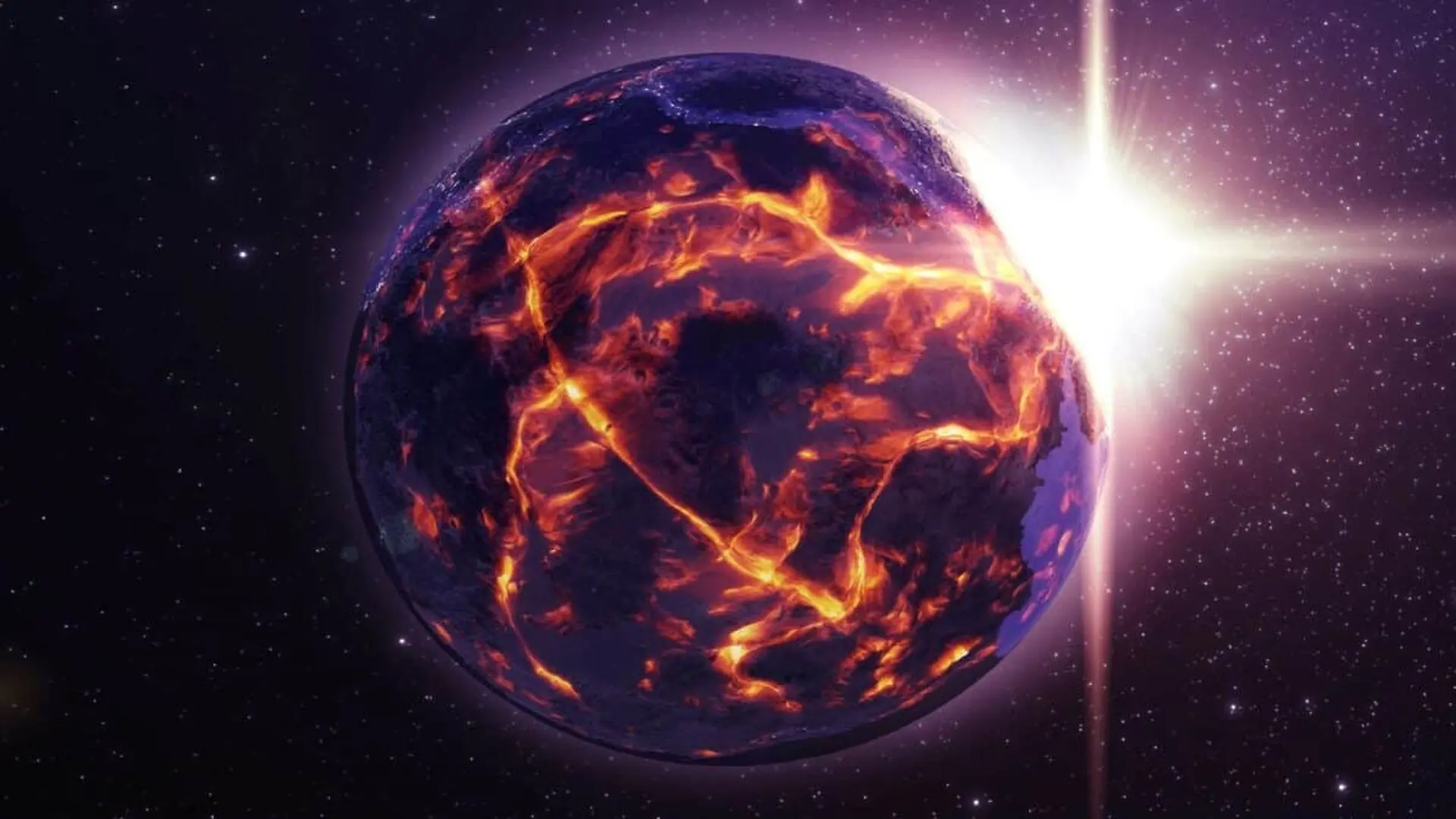
Astronomers have identified HD 176071 b, a remarkable water-rich exoplanet locked in a perilous, tight orbit around its host star. Located approximately 335 light-years from our solar system, this world is characterized by its significant water content, which is estimated to account for nearly half of its total mass. With a physical size roughly 2.5 times that of Earth and a mass about 8.5 times greater, it stands as a prime example of a rare “hot water world.”
The planet completes a full rotation around its host star in a mere 14 hours, maintaining a distance of less than 1.5 million miles. This extreme proximity, equivalent to just 1.6% of the distance between Earth and the Sun, subjects the planet to intense gravitational tidal forces. Scientists indicate that these forces are actively destabilizing the planet’s orbit, effectively setting it on a collision course with its parent star.
Defying the Neptunian Desert
HD 176071 b resides within the so-called “Neptunian Desert,” a zone near stars where planets of this size are seldom found. Conventional models suggest that the powerful radiation from nearby stars should strip away the atmospheres of such planets, leaving behind only dense cores. However, research published in Astronomy & Astrophysics on August 25 suggests that this world is an outlier. Despite its hostile environment, the planet exhibits a dynamic atmosphere populated by shifting, reflective cloud formations that migrate toward its cooler regions.
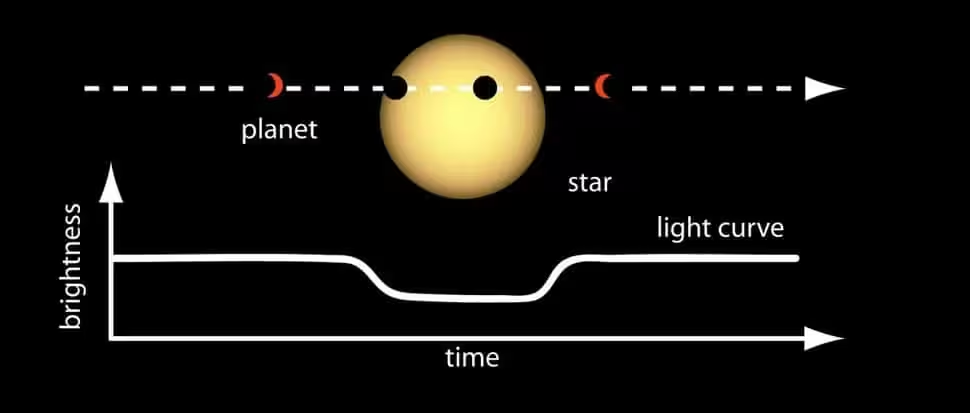
The identification of this world required a sophisticated approach because the planet does not transit—or pass in front of—its star from our perspective on Earth. Because the transit method, which relies on measuring dips in starlight, was not viable, researchers turned to analyzing the light reflected by the planet itself as it orbited.
Advanced Detection Techniques
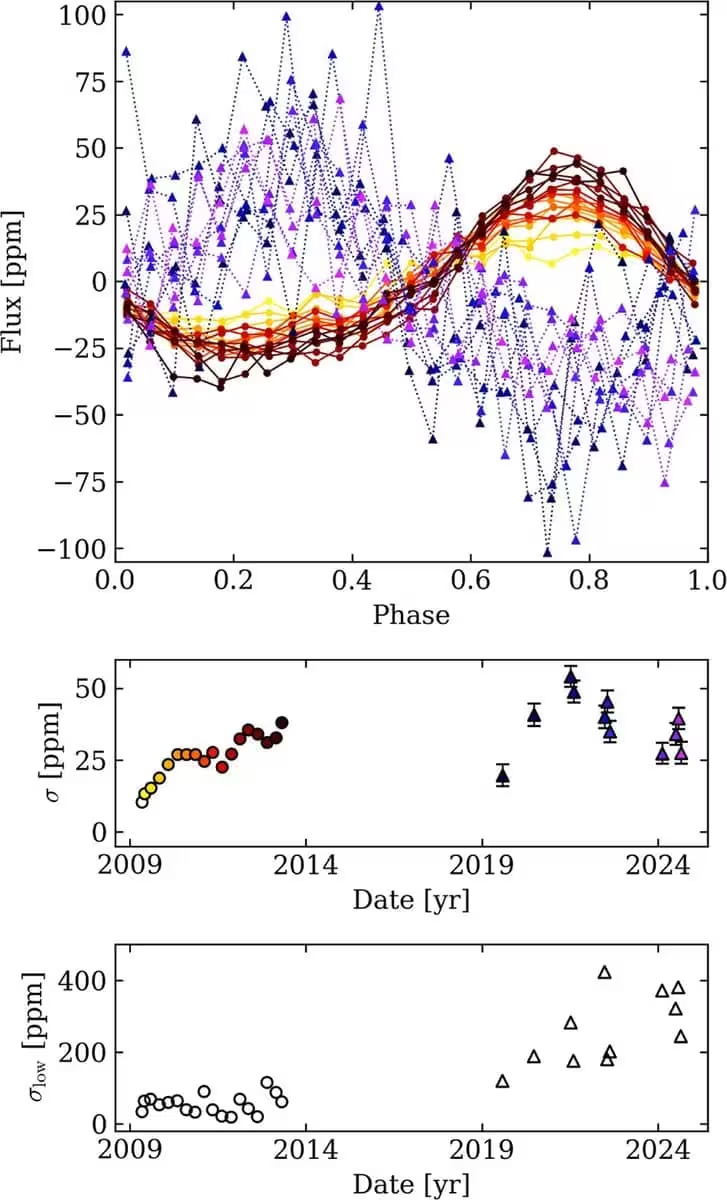
Because the planet is tidally locked, one hemisphere is permanently exposed to the star while the other remains in total darkness. As it orbits, different parts of the planet come into view, causing measurable fluctuations in the amount of reflected light. By synthesizing historical data from the Kepler Space Telescope with fresh measurements from NASA’s TESS mission taken six years later, researchers detected an unexpected phase shift in this light modulation.
High-precision observations conducted with the HARPS-N instrument at the Galileo National Telescope confirmed the findings. Sylvain N. Breton of the Italian National Institute of Astrophysics (INAF) noted that the variation in light indicates that the planet’s atmosphere is not static. Instead, it serves as an active system where cloud decks continuously form and evolve along the terminator line, the boundary between the scorching day side and the freezing night side.
“Comparing historical data from the Kepler space telescope with new TESS observations six years later, we noticed an unexpected phase shift in the modulation of the reflected light,” said Sylvain N. Breton.
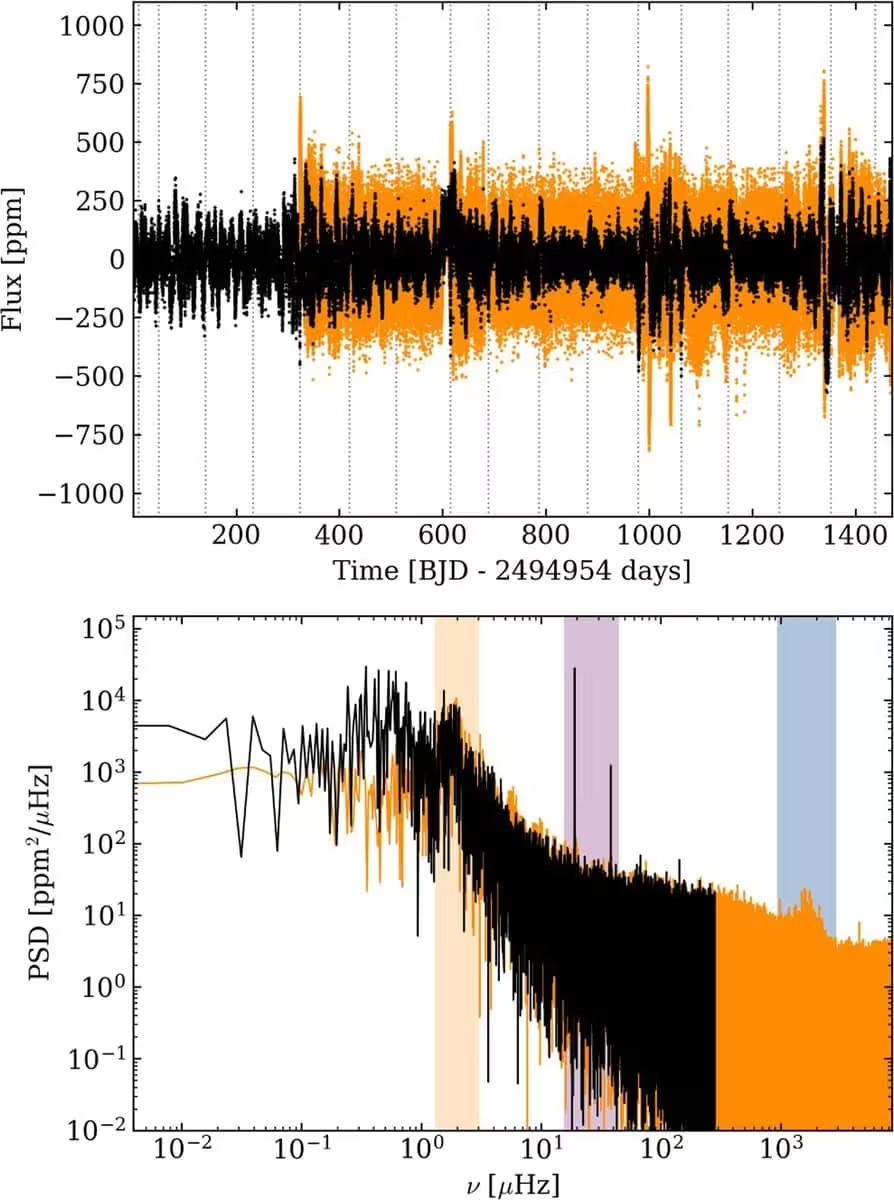
This study not only expands our understanding of exoplanetary composition but also demonstrates that researchers can characterize worlds that remain invisible to standard survey methods. By meticulously tracking light variations over time, astronomers are opening a new window into the complex atmospheric behaviors of planets in the most extreme reaches of our galaxy.
This article has been fact checked for accuracy, with information verified against reputable sources. Learn more about us and our editorial process.
Last reviewed on .
Article history
- Latest version
Reference(s)
- <https://www.aanda.org/articles/aa/full_html/2026/08/aa58643-25/aa58643-25.html>.
- Cermak, Alicia. “Kepler / K2 - NASA Science.”, May 24, 2023 NASA <https://science.nasa.gov/mission/kepler/>.
- Kazmierczak, Jeanette. “TESS (Transiting Exoplanet Survey Satellite) - NASA Science.”, April 22, 2025 NASA <https://science.nasa.gov/mission/tess/>.
- “High Accuracy Radial velocity Planet Searcher.” Instituto de Astrofísica de Canarias • IAC <https://www.iac.es/en/observatorios-de-canarias/telescopes-and-experiments/high-accuracy-radial-velocity-planet-searcher>.
- “Telescopio Nazionale Galileo.”, February 25, 2025 Instituto de Astrofísica de Canarias • IAC <https://www.iac.es/en/observatorios-de-canarias/telescopes-and-experiments/telescopio-nazionale-galileo>.
Cite this page:
- Posted by Aisha Ahmed