NASA Is Designing A Giant Space Shadow To Finally Image Earth Like Planets Directly
NASA researchers are developing an innovative starshade concept designed to block blinding starlight and finally reveal hidden, Earth-like exoplanets.
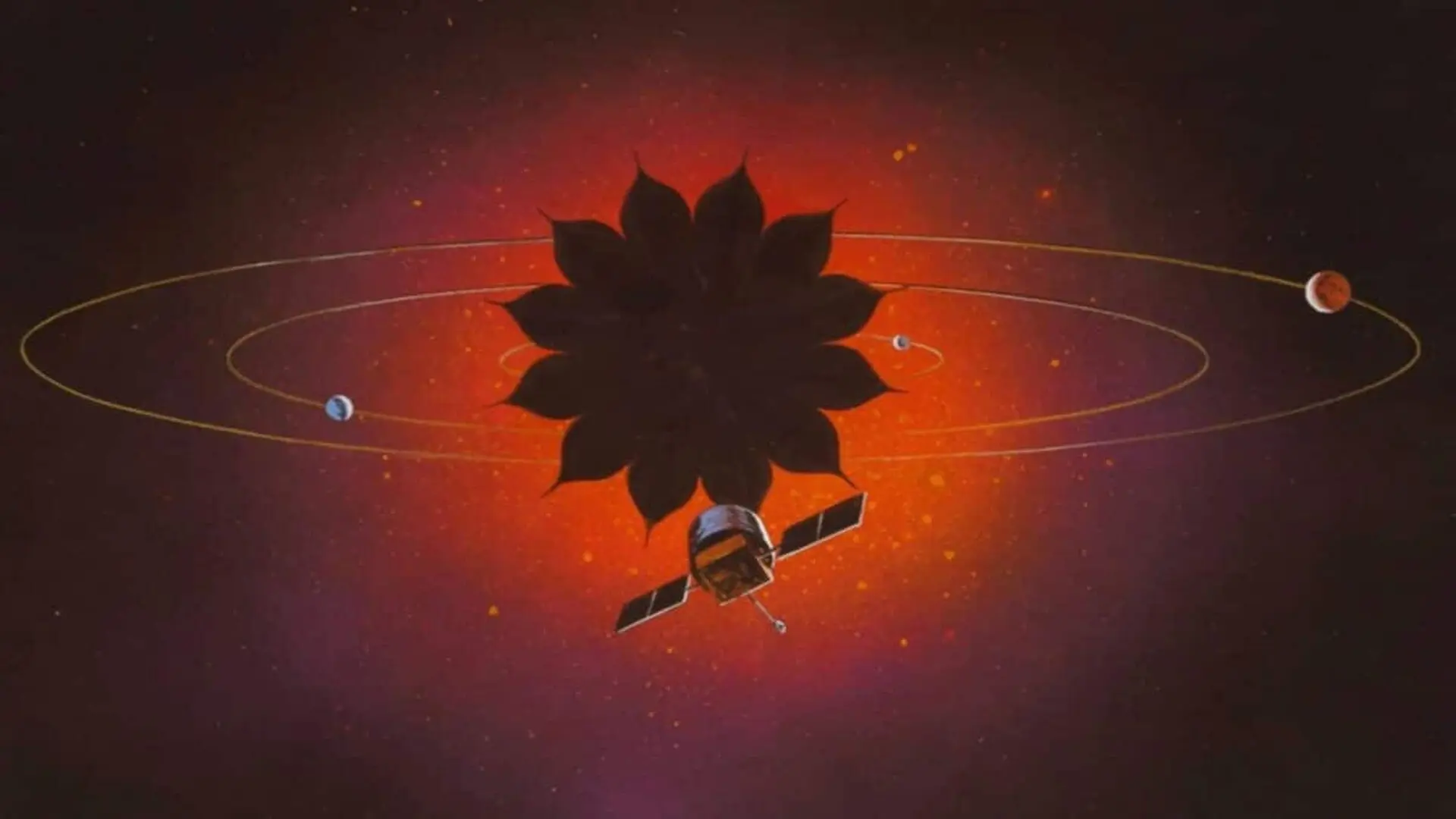
Cutting Through Stellar Glare: The Quest to Image Earth-Like Worlds
Astronomers have long faced a fundamental obstacle in the search for extraterrestrial life: the sheer, blinding brilliance of stars. Because stars are billions of times brighter than the small, rocky planets that orbit them, capturing a direct image of an Earth-sized world remains one of the most daunting technical hurdles in modern space science. To bypass this, researchers at NASA are advancing a specialized concept known as the Habitable Worlds Observatory Exoplanet Explorer (HOEE), which utilizes a deployable, spacecraft-sized starshade to mask the glare of distant suns.
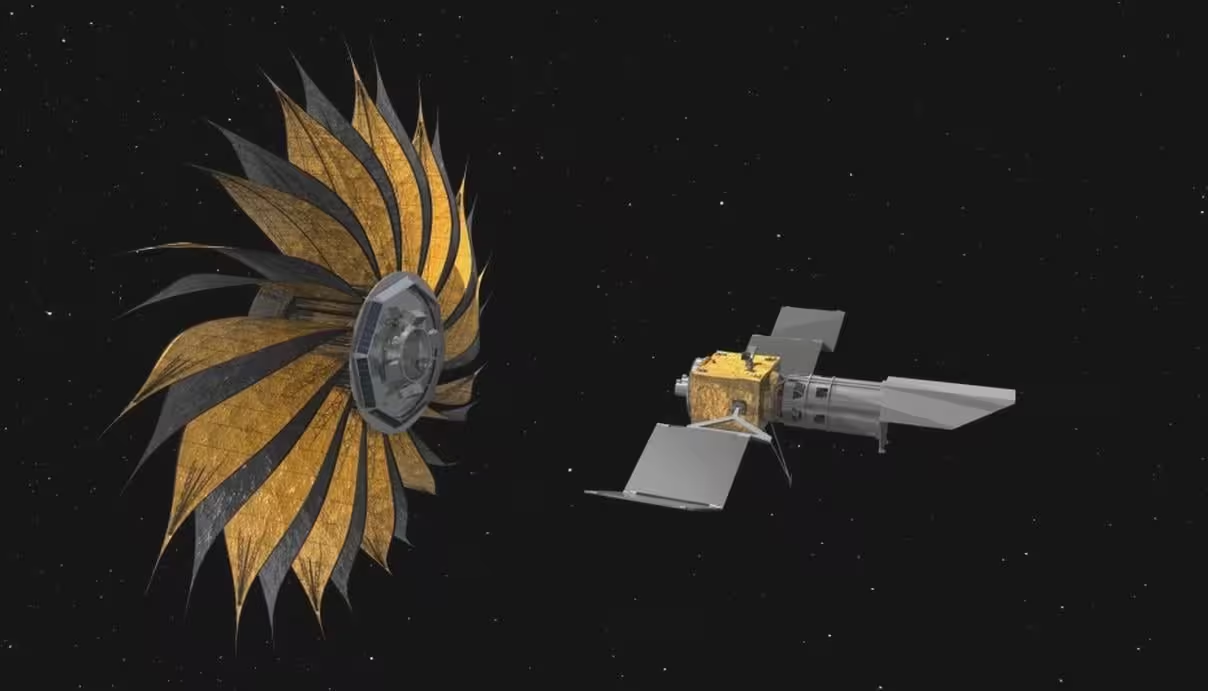
The strategy hinges on placing an expansive, precision-engineered screen thousands of kilometers away from a telescope. By perfectly positioning itself between the observatory and a target star, the starshade creates a controlled shadow that effectively blots out the star’s direct radiation. This allows the telescope to capture the faint, reflected light of hidden planets, providing a clear window into their atmospheres and surface environments that traditional, indirect detection methods simply cannot achieve.
A Hybrid Path Toward Direct Observation
While many current exoplanet detection methods rely on observing how a planet affects its host star—such as the subtle dip in light during a transit—the HOEE project seeks to move beyond data-driven inference into direct visual analysis. According to reporting from Universe Today, the team is looking to bridge the gap between existing telescope hardware and the ambitious requirements of future exoplanet missions.
“We need to go for something that is more efficient and available now: a hybrid observatory that can observe the exoplanetary system in optical light,” Vladimir Airapetian, a senior astrophysicist at NASA Goddard Space Flight Center and a HOEE project team member, told me in Paris.
By suppressing stellar interference before it reaches the telescope’s optics, the starshade would enable a much higher level of spectroscopic detail. Airapetian emphasizes that the goal is to filter out the noise before it ever enters the system, a process that requires extreme engineering precision. Maintaining a stable, perfectly aligned formation between a distant star, a starshade, and an observatory over vast distances is a significant hurdle, though recent progress in autonomous navigation and propulsion is making such operations increasingly feasible.
Decoding Atmospheric Signatures
The scientific payoff for such a mission would be profound. By isolating the light from an exoplanet, researchers could perform detailed atmospheric characterization. Rather than simply confirming a planet’s mass or orbital period, scientists hope to detect the chemical fingerprints of potential habitability.
“We’re going for the spectral lines from red and green auroras that would signal that the atmospheres of these planets can support nitrogen and oxygen,” Airapetian notes. While the presence of these gases does not provide a definitive signature of biology, they are essential components for life as we know it. Identifying these specific chemical markers would allow astronomers to narrow their focus to the most promising targets within the galaxy, specifically those rocky worlds orbiting within the habitable zones where liquid water might be sustained.
As the scientific community continues to explore how common Earth-like environments are in the cosmos, the starshade concept represents a critical step in the technological evolution of deep-space observation. By turning the blinding light of stars into a manageable variable, NASA aims to finally bring hidden, distant worlds into clear view.
This article has been fact checked for accuracy, with information verified against reputable sources. Learn more about us and our editorial process.
Last reviewed on .
Article history
- Latest version
Reference(s)
- Dorminey, Bruce. “NASA Starshade Would Enable Astronomers To Directly Image Rocky Exoworlds.”, August 24, 2026 Universe Today <https://www.universetoday.com/articles/nasa-starshade-would-enable-astronomers-to-directly-image-rocky-exoworlds>.
Cite this page:
- Posted by Aisha Ahmed