Webb Telescope Reveals The Truth Behind Two Mysterious Dyson Sphere Signals
NASA’s James Webb Space Telescope has debunked two potential Dyson sphere candidates, revealing that distant galaxies caused the unusual infrared signals.
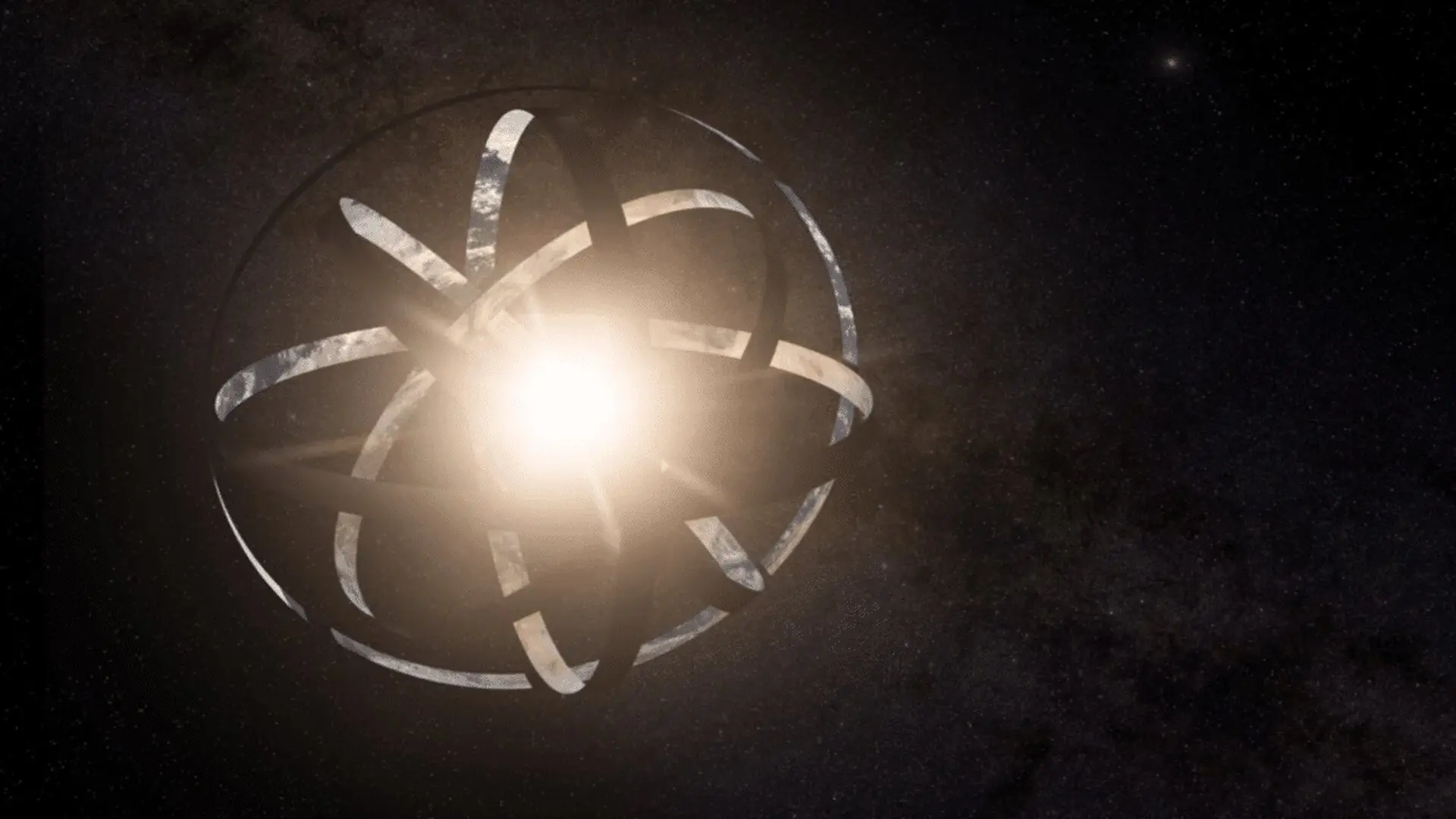
NASA’s James Webb Space Telescope (JWST) has effectively debunked two prominent candidates for potential Dyson spheres. Fresh, high-resolution imagery confirms that the anomalous infrared signatures previously attributed to alien megastructures were, in fact, emissions from distant background galaxies that had been obscured by lower-resolution data.
Refining the Search for Alien Technosignatures
The findings, detailed in research submitted to the Monthly Notices of the Royal Astronomical Society (MNRAS) and highlighted by Universe Today, underscore the limitations of earlier survey technology. Astronomers initially flagged these targets using data from the European Space Agency’s Gaia satellite and NASA’s Wide-field Infrared Survey Explorer (WISE). While these missions are instrumental in mapping stellar populations, their limited spatial resolution occasionally blends the light from a foreground star with unrelated objects positioned far behind it in deep space.
“We find that the infrared excess does not originate from Dysonian megastructures, or other radiation mechanisms close to these stars, but from background galaxies projected to be within an arcsec of the M dwarfs,” the authors noted in their MNRAS submission.
Upon closer inspection by the Webb telescope, one of the sources was identified as a Hot Dust Obscured Galaxy, while the second appeared as an extended, dusty star-forming region. Andreas Korn, an astrophysicist at Uppsala University and a member of the Project Hephaistos research team, emphasized that these follow-up observations were critical for resolving the “blending” effect inherent in older surveys. “This is a follow-up with the Webb telescope to observe two stars that we identified in a survey of some 1 million stars within about 1,000 light-years of Earth,” Korn explained.
The Complexity of Detecting Artificial Waste Heat
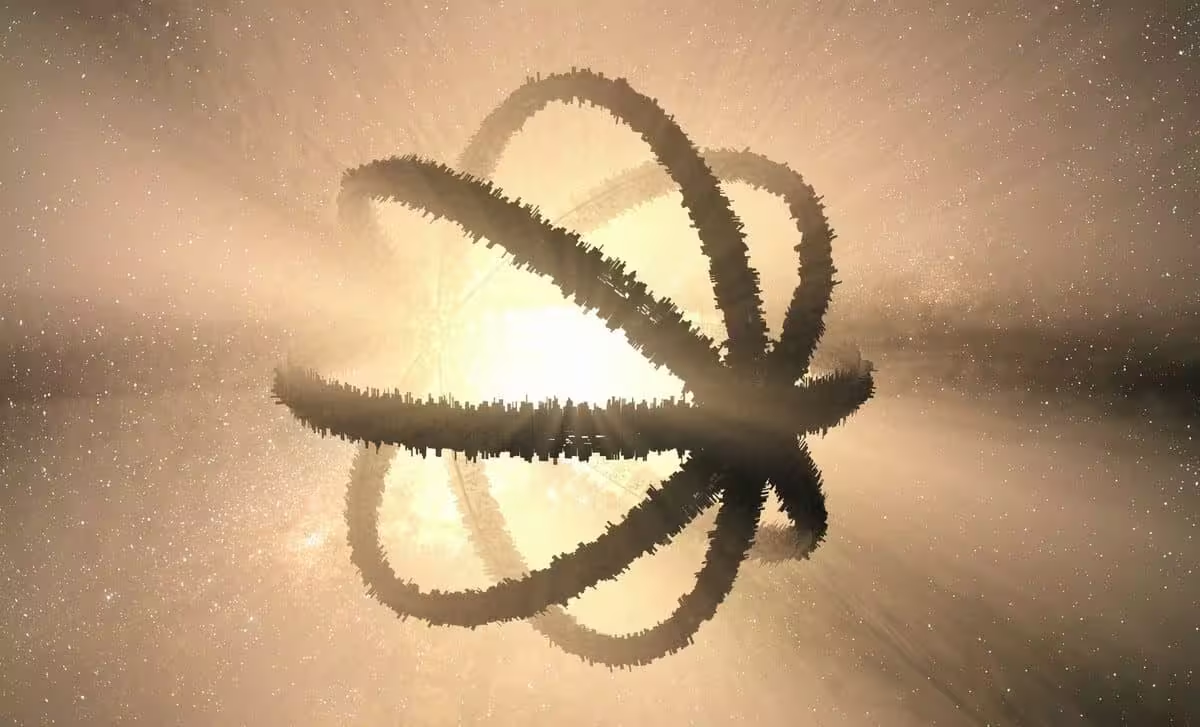
The pursuit of Dyson spheres—hypothetical structures designed to capture the total energy output of a star—relies on a fundamental thermodynamic principle. Any advanced civilization operating on a stellar scale would inevitably produce waste heat, which would be radiated into space as infrared light. By identifying stars that appear dim in the optical spectrum but exhibit a strong infrared glow, researchers hope to isolate the signatures of these massive artificial engineering feats.
However, nature frequently produces “false positives.” Dust, stellar flares, and background galaxies often mimic the thermal profiles that scientists seek. Korn noted that while WISE provided the initial map, its “coarse” imaging capability meant that the photons from distant, dusty galaxies and the foreground M-dwarf stars were indistinguishable. Webb’s superior sensitivity allows for the separation of these signals, ensuring that researchers can conduct isolated, accurate analyses of both the star and the surrounding environment.
Looking Ahead: Swarms and Future Surveys
While the search for a solid Dyson shell continues, many theorists focus on the more feasible “Dyson swarm”—a collection of millions of independent satellites orbiting a star. These swarms would be significantly easier to construct and could manifest as periodic dips or variations in a star’s brightness, rather than a continuous, static thermal signature.
Korn suggests that by studying the periodicity of light variations, astronomers could theoretically characterize the geometry of such structures. As the community waits for next-generation infrared observatories in the 2030s, the current work serves as a vital filter. By methodically eliminating natural explanations, the scientific community is building a more robust framework for eventually identifying genuine technosignatures among the stars.
This article has been fact checked for accuracy, with information verified against reputable sources. Learn more about us and our editorial process.
Last reviewed on .
Article history
- Latest version
Reference(s)
- Dorminey, Bruce. “NASA’s Webb Telescope Rules Out Two New Dyson Sphere Candidates.”, August 27, 2026 Universe Today <https://www.universetoday.com/articles/nasas-webb-telescope-rules-out-two-new-dyson-sphere-candidates>.
Cite this page:
- Posted by Aisha Ahmed