A Rare Near Total Lunar Eclipse Is Coming This Week To Turn The Moon Blood Red
A rare lunar eclipse is coming as the Moon passes through Earth’s shadow. Check when and where you can witness this striking celestial event in the sky.
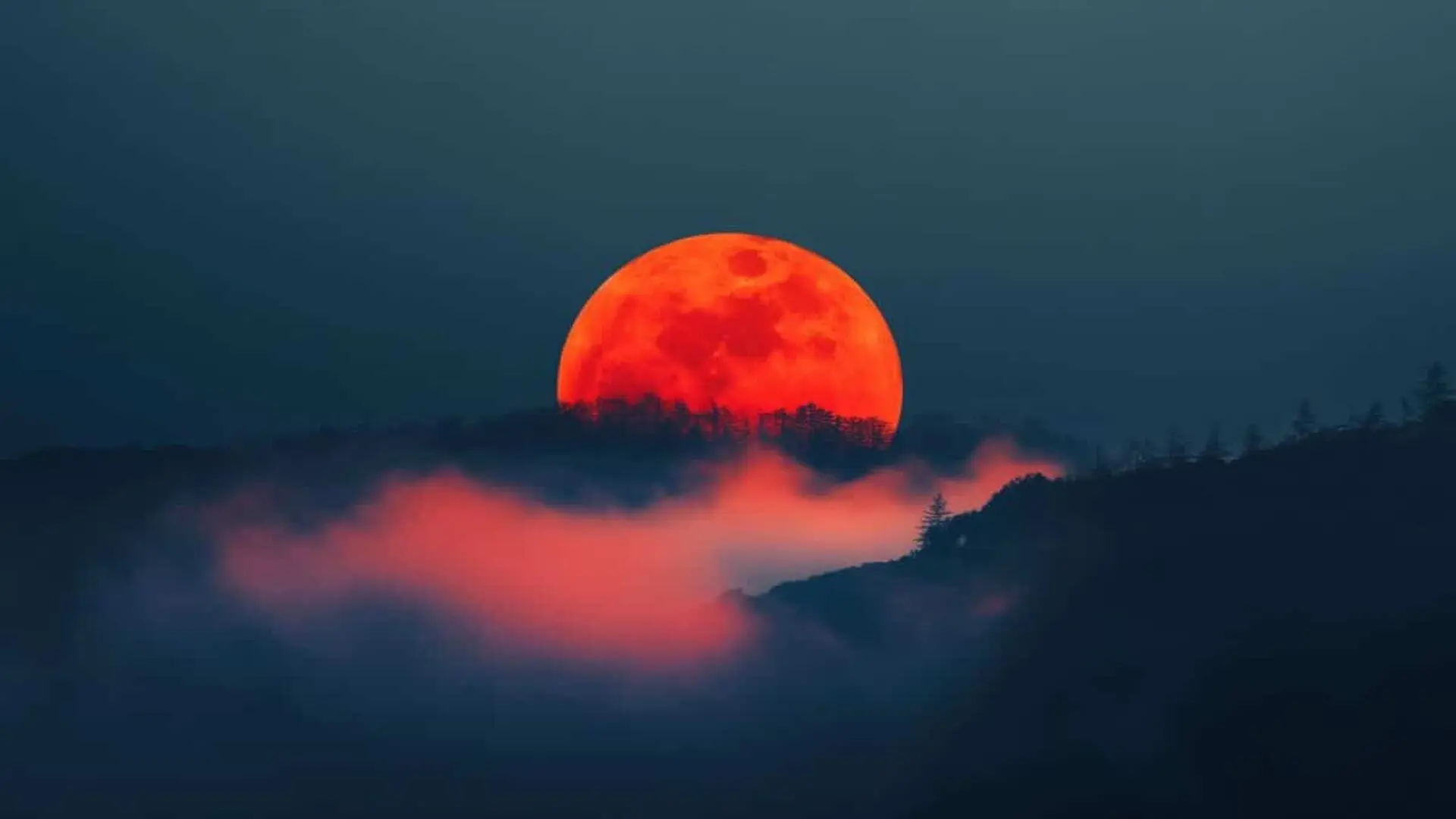
Skywatchers across the Americas, Europe, and Africa are preparing for a striking celestial display this week, as a near-total lunar eclipse sweeps across the night sky. The event will see Earth’s shadow cloak 96.3 percent of the lunar surface, bathing the Moon in the deep, rusted hues often referred to as a blood moon.
Unlike solar eclipses, which demand specialized eye protection, this lunar event is perfectly safe to view with the naked eye. Observers will have a front-row seat to the orbital dance of the Sun, Earth, and Moon as our planet slides directly between its star and its natural satellite.
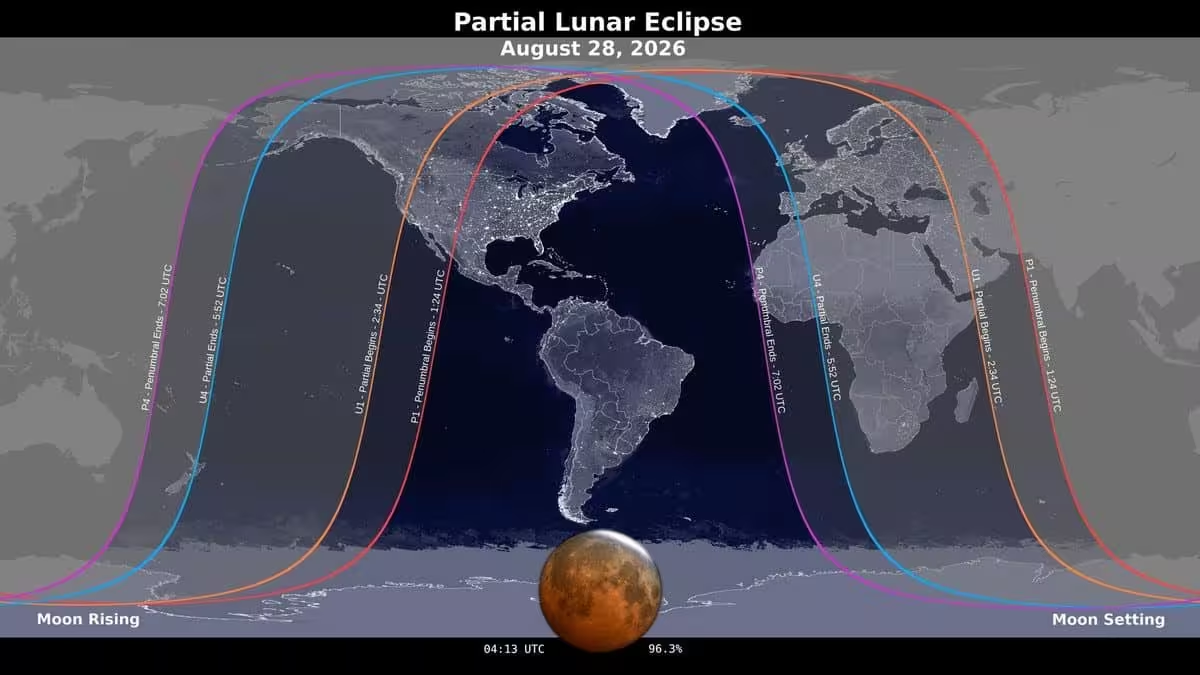
According to data from NASA, the eclipse will be visible in varying stages across most of the United States, with the notable exception of some parts of Alaska. The NASA Scientific Visualization Studio has released detailed tracking maps to help enthusiasts determine exactly when the Moon will dip into the darkest portion of the Earth’s shadow, known as the umbra.
Tracking the Earth’s Shadow Across the Moon
The cosmic progression begins on Thursday evening, August 27, with the initial phase starting at approximately 9:23 P.M. EDT. The most dramatic transformation begins at 10:34 P.M. EDT, when the Moon makes its first true entry into the umbra. The event reaches its zenith at 12:13 A.M. EDT on August 28, when the maximum coverage will occur.
The visibility of this progression is entirely dependent on an observer’s geographical position. Because the eclipse unfolds over several hours, the Moon’s position relative to the local horizon will dictate whether viewers see the entire cycle or only specific segments. Factors such as local light pollution and cloud cover will also influence the clarity of the phenomenon.
This map shows the global visibility of the partial lunar eclipse on August 28, 2026. Credit: NASA Scientific Visualization Studio
The Physics Behind the Crimson Glow
The iconic blood moon appearance is a direct result of how our atmosphere handles sunlight. While Earth physically obstructs the direct solar rays that would usually illuminate the lunar surface, a fraction of that light is bent, or refracted, through the edges of our atmosphere.
As sunlight passes through these gas layers, the shorter blue wavelengths are scattered away, leaving the longer red wavelengths to continue their journey to the Moon. This filtered light provides the reddish tint that defines the peak of a lunar eclipse, a process Scientific American notes as a simple consequence of celestial alignment and atmospheric scattering.
How to Observe the Event
For those hoping to catch the best view, experts recommend moving away from city lights and finding a location with an unobstructed view of the sky. While the event is visible to the naked eye, binoculars or a telescope can provide a much richer look at the shadow’s progression across the lunar craters.
This week’s event marks the second and final lunar eclipse of 2026. Looking ahead, the NASA eclipse schedule shows that 2027 will feature three penumbral eclipses—which result in a much fainter dimming of the Moon—before the next total lunar eclipse arrives on New Year’s Eve in 2028.
On August 27–28, don’t miss the deep partial lunar eclipse
At its peak, about 96% of the Moon will be covered by Earth’s dark shadow, making it look almost like a Blood Moon.
Where to watch: The Americas will get the best views, while observers in Europe and Africa can… pic.twitter.com/qS0wgTJ9qE
This article has been fact checked for accuracy, with information verified against reputable sources. Learn more about us and our editorial process.
Last reviewed on .
Article history
Latest version
Reference(s)
Mogensen, Jackie. “How to see the 2026 ‘blood moon’ eclipse this week.”, August 25, 2026 Scientific American <https://www.scientificamerican.com/article/how-to-see-the-2026-blood-moon-eclipse-this-week/>.
Ahmed, Aisha. “A Rare Near Total Lunar Eclipse Is Coming This Week To Turn The Moon Blood Red.” BioScience. BioScience ISSN 2521-5760, 26 August 2026. <https://www.bioscience.com.pk/en/subject/astronomy/earth-is-about-to-hide-96-of-the-moon-during-a-rare-lunar-eclipse-this-week-that-will-create-an-almost-blood-moon>.
Ahmed, A. (2026, August 26). “A Rare Near Total Lunar Eclipse Is Coming This Week To Turn The Moon Blood Red.” BioScience. ISSN 2521-5760. Retrieved August 26, 2026 from https://www.bioscience.com.pk/en/subject/astronomy/earth-is-about-to-hide-96-of-the-moon-during-a-rare-lunar-eclipse-this-week-that-will-create-an-almost-blood-moon
Ahmed, Aisha. “A Rare Near Total Lunar Eclipse Is Coming This Week To Turn The Moon Blood Red.” BioScience. ISSN 2521-5760. https://www.bioscience.com.pk/en/subject/astronomy/earth-is-about-to-hide-96-of-the-moon-during-a-rare-lunar-eclipse-this-week-that-will-create-an-almost-blood-moon (accessed August 26, 2026).