Webb Telescope Reveals What Is Really Hiding Inside The Universe’s Mysterious Little Red Dots
New observations suggest that mysterious, ancient cosmic objects may actually be compact galaxies hiding around supermassive black holes.
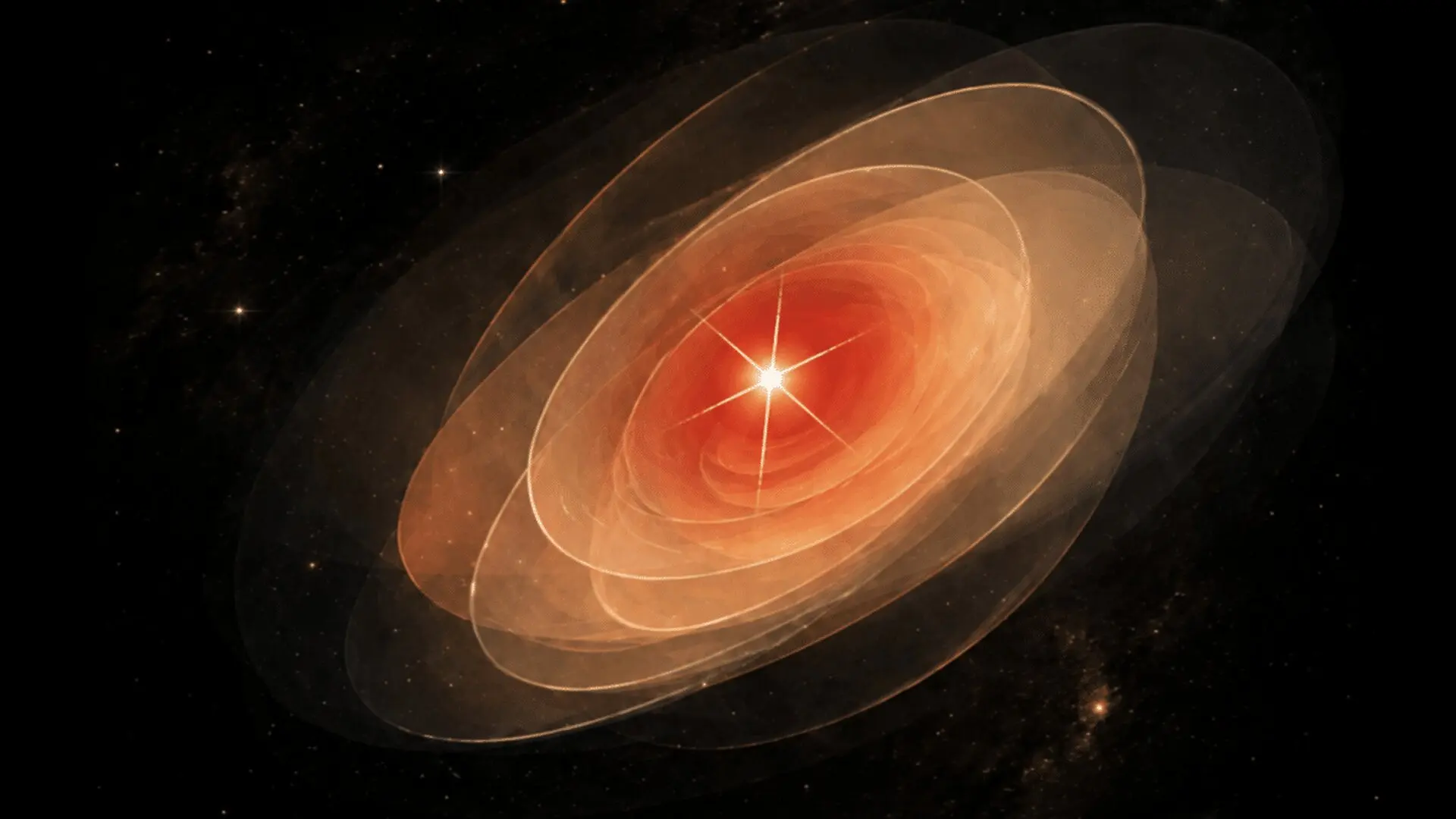
Astronomers have uncovered compelling evidence that the enigmatic “little red dots” observed in the early universe are not isolated phenomena, but rather dense, compact galaxies centered around powerful black holes. New research published in Nature Astronomy indicates that the faint, extended light surrounding these distant sources reveals a history of intense star formation occurring within the first billion years of cosmic time.
Unmasking the Early Universe’s Hidden Structures
For some time, these reddish, highly luminous objects have presented a puzzle to the scientific community. While their distinct color and intensity were apparent in early deep-space surveys, their precise nature remained obscured. Previous attempts to identify their origins were often hindered by the sheer brightness of the central emission, which effectively masked any potential host galaxy structures nearby.
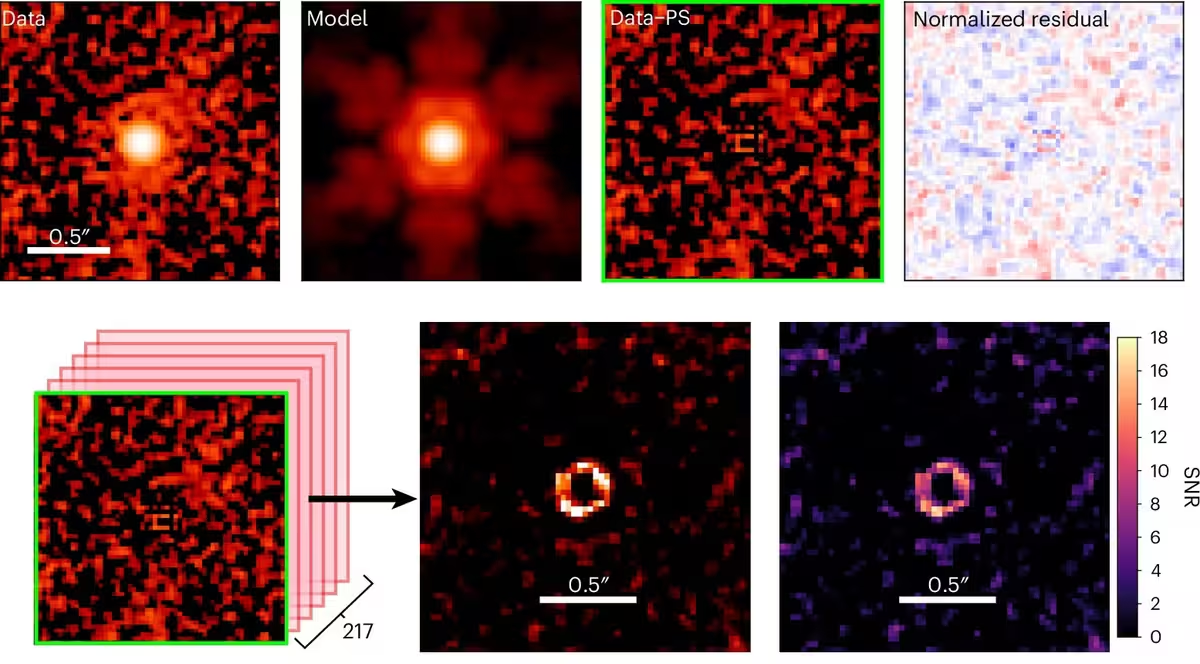
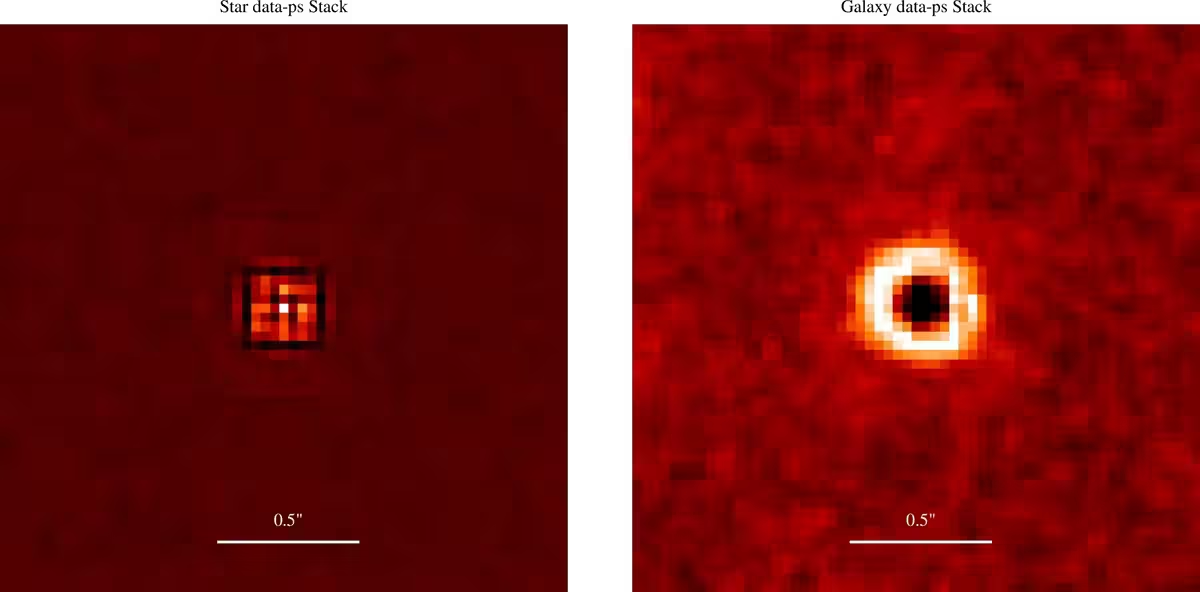
To bypass these limitations, a research team leveraged the unprecedented capabilities of the James Webb Space Telescope. By employing a stacking technique on data from 217 individual “little red dots,” researchers were able to isolate faint, consistent patterns that would have been invisible in single-source analysis. The resulting data confirms that these objects are embedded within compact galaxies, likely driven by supermassive black holes actively consuming surrounding matter.
Unusual Characteristics of Primordial Galaxies
The study highlights that these host galaxies possess physical traits that set them apart from other galaxies of the same epoch. With an average radius of approximately 210 parsecs—or roughly 685 light-years—these systems are significantly more compact, measuring roughly 2.5 times smaller than other star-forming galaxies of comparable mass from the same era.
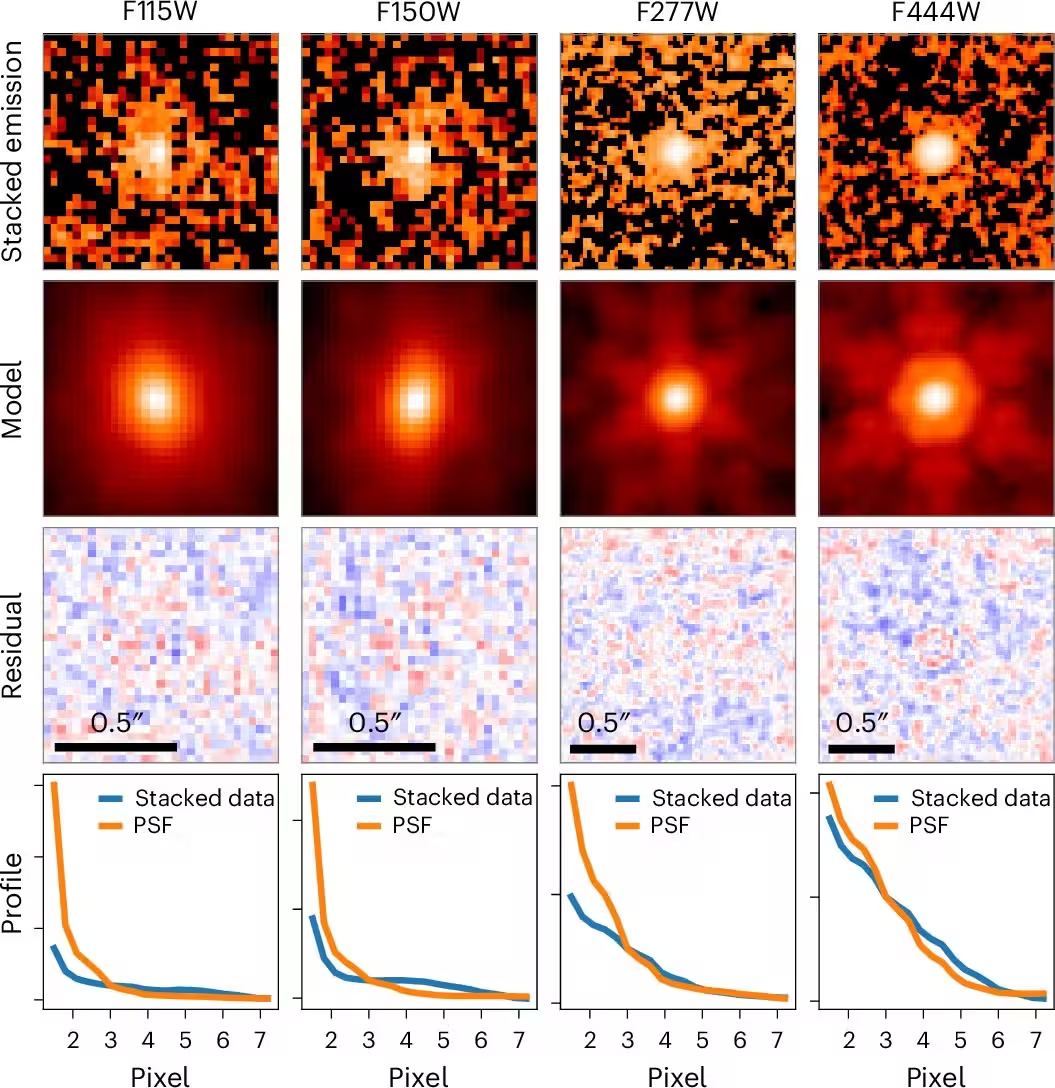
Despite their diminutive size, these galaxies contain approximately 1 billion times the mass of our Sun, providing a dense environment conducive to robust star formation. This density offers a compelling explanation for the unique light signatures that previously baffled astronomers. The findings underscore the efficacy of statistical stacking methods in modern astrophysics, allowing for the detection of signal structures that defy standard observation.
Implications for Cosmic Evolution
The existence of such compact, active systems during the infancy of the universe challenges existing paradigms regarding how galaxies and black holes co-evolved. These structures may represent a crucial, transitional phase in the growth of the larger galactic systems observed in the modern universe.
While the current data marks a significant leap forward, the mystery is not entirely solved. Future spectroscopic investigations will be essential to confirm the precise distances and compositions of these objects, ultimately refining our understanding of the high-energy processes that shaped the early cosmos.
This article has been fact checked for accuracy, with information verified against reputable sources. Learn more about us and our editorial process.
Last reviewed on .
Article history
- Latest version
Reference(s)
- Zhang, Yiyang. “Extended components of little red dots in the rest-frame optical - Nature Astronomy.”, August 24, 2026, pp. 1-11. Nature, doi: 10.1038/s41550-026-02945-z. <https://www.nature.com/articles/s41550-026-02945-z>.
Cite this page:
- Posted by Aisha Ahmed