ESA’s Hera Spacecraft Poised for Critical 93 Minute Burn to Reach Target Asteroid System
ESA’s Hera mission is preparing for a critical 93-minute engine burn as it approaches the asteroid system reshaped by NASA’s historic DART impact.
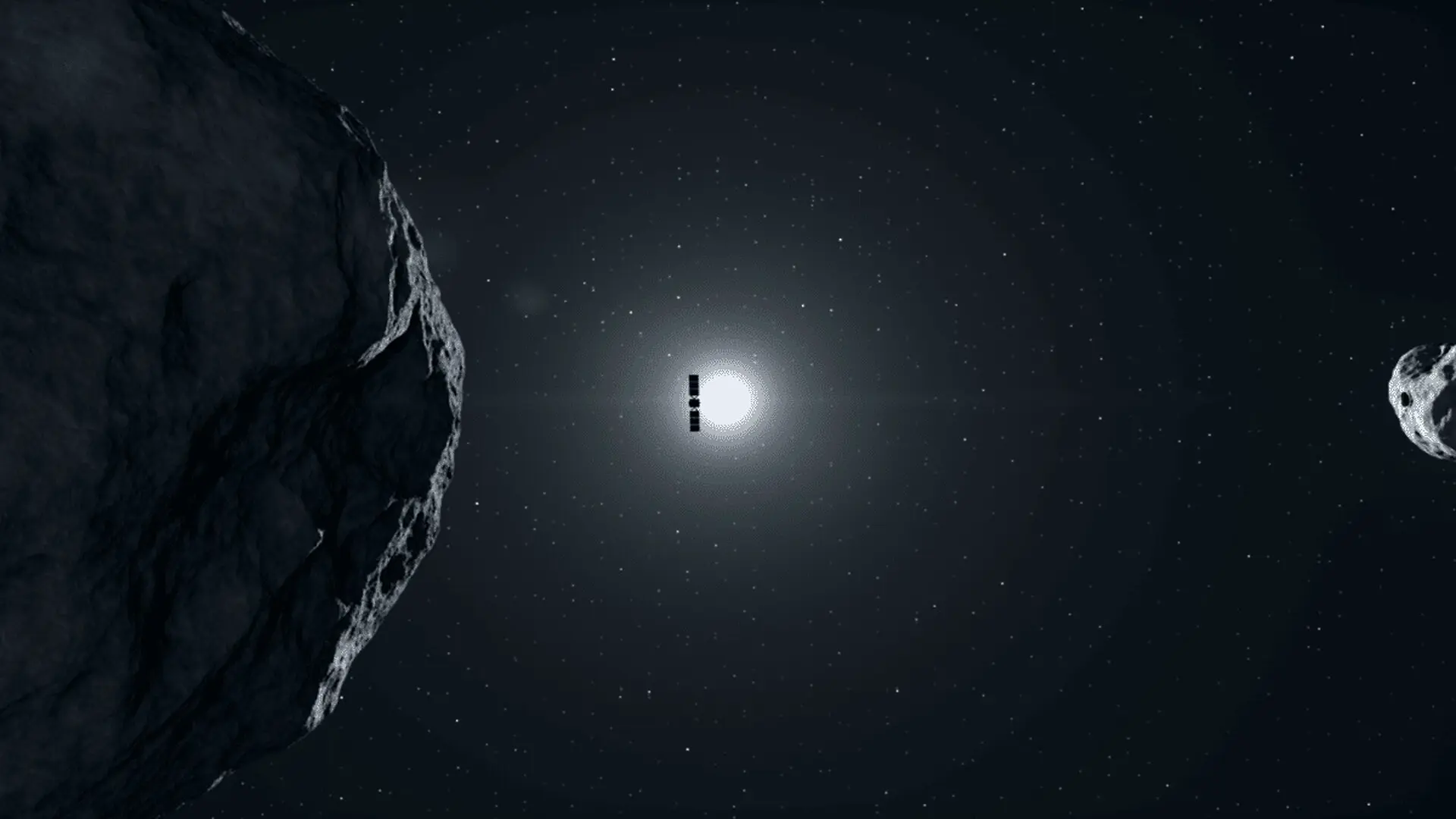
The European Space Agency (ESA) is initiating a critical phase in its Hera mission, with a scheduled 93-minute engine burn on October 15. This maneuver serves as a pivotal bridge between the spacecraft’s long-distance cruise and its arrival at the binary asteroid system previously targeted by NASA’s DART mission in 2022.
Precision Maneuvers for a Binary Target
To successfully navigate toward the Didymos system and its moon, Dimorphos, the Hera spacecraft must perform a sustained firing of its Orbit Control Thrusters. This 93-minute burn is intended to synchronize the craft’s velocity with the asteroid pair, moving it from a standard interplanetary trajectory into a complex, high-stakes proximity environment. Following this initial adjustment, mission controllers plan a secondary, shorter burn about a week later to refine the flight path based on real-time data analysis.
The operation is overseen by the Flight Dynamics Division at the European Space Operations Centre (ESOC) in Darmstadt, Germany. The team, consisting of over 50 experts, faces the daunting task of calculating precise trajectories around celestial bodies where gravitational and rotational characteristics remain subject to ongoing study. This effort is supported by six distinct teams tasked with performing independent cross-checks to minimize the risk of navigation errors.
Navigating Concurrent Deep-Space Missions
The Hera team is managing these requirements amidst a crowded calendar of international space exploration. According to Flight Dynamics Engineer Michael Mueller, the division is simultaneously juggling several complex projects. As Hera reaches its target, the team is also managing the BepiColombo mission’s approach to Mercury and the upcoming launch of the Plato exoplanet observatory, which is destined for the Sun-Earth Lagrange point L2.
“The team performs Flight Dynamics operations for all ESA operated Science missions, including interplanetary missions and observatories, and now our agency’s first Space Safety mission as well!”
The navigation strategy relies on a combination of radio tracking and optical data. ESA’s deep-space antenna network monitors radio signals to determine distance and velocity via Doppler shifts and delta-Differential One-way Range measurements. As Hera closes the gap to its target, its onboard cameras will become increasingly vital, allowing the craft to use surface landmarks on the asteroids to calculate its position relative to the irregular, rotating bodies.
A Multi-Phase Approach to Proximity Operations
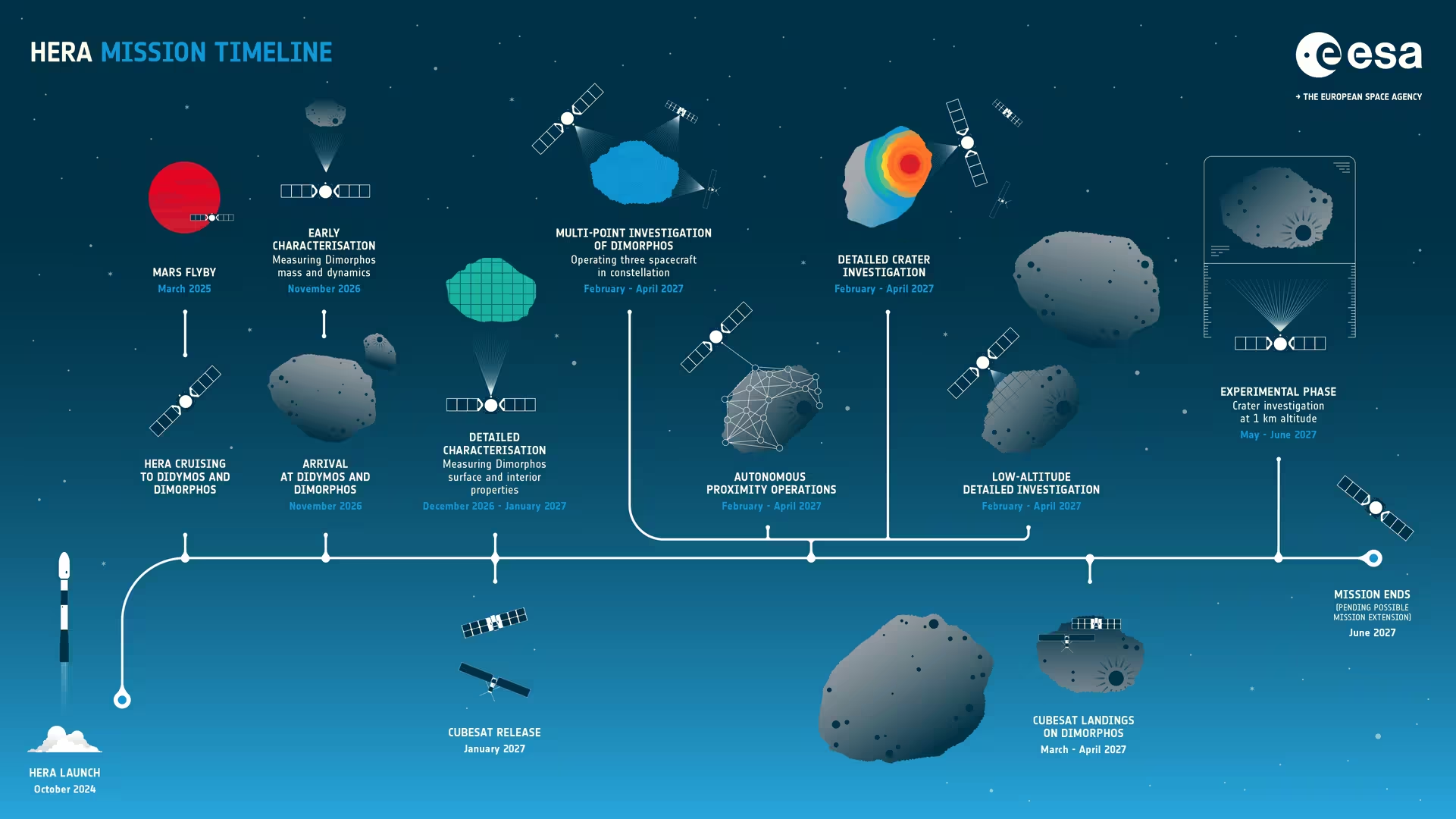
Once the spacecraft enters the vicinity of the asteroids, its mission will unfold in stages. Starting in late 2026, Hera will maintain a “safe” distance of 25 to 30 kilometers to perform baseline observations. By late December 2026, it will move closer—within 10 kilometers—to sharpen its data collection on the asteroid surfaces and gravitational environments.
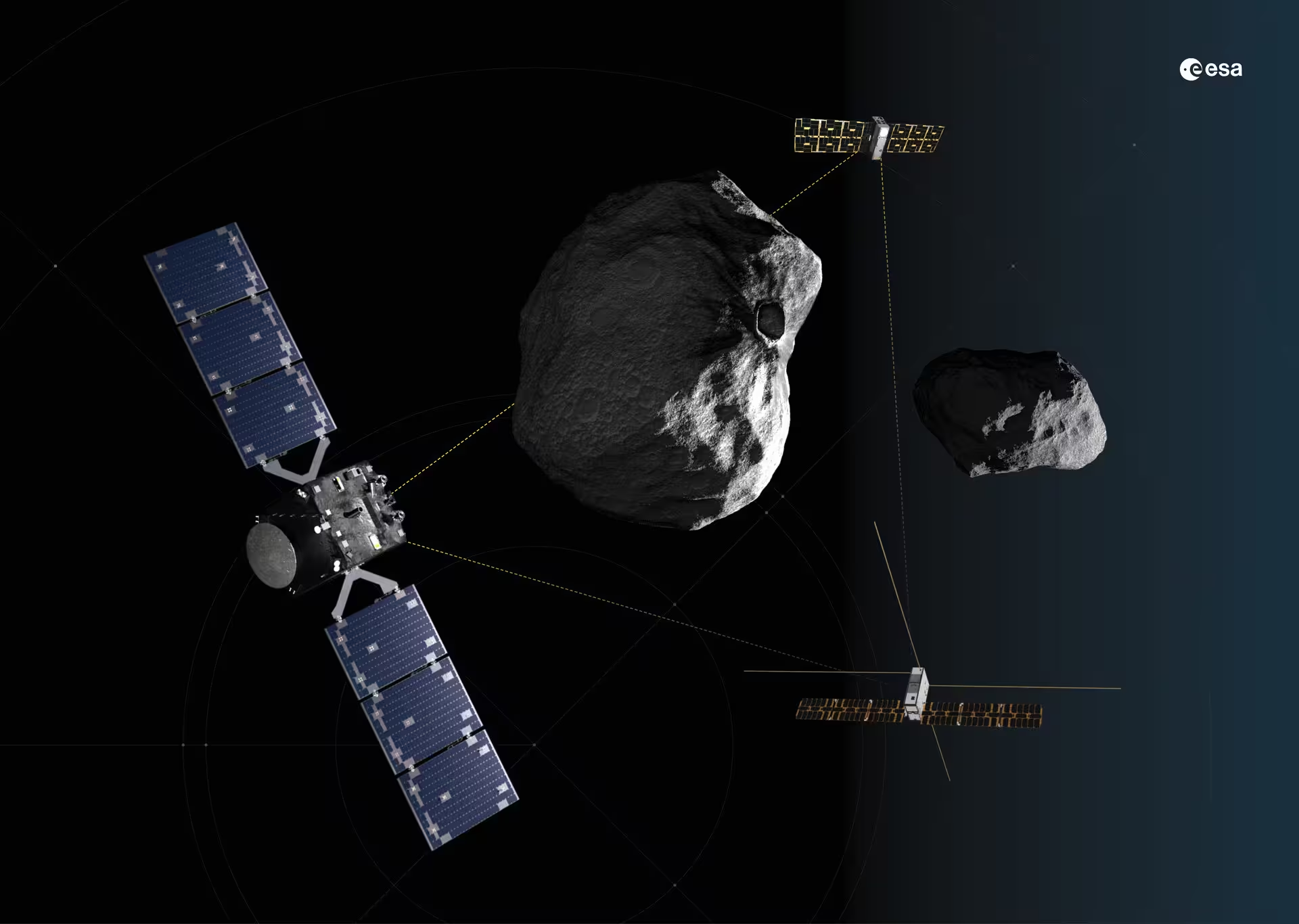
The mission will grow in complexity in 2027 with the deployment of two CubeSats. These small companions will expand the scientific scope of the mission, though they add another layer of navigation difficulty. Engineers must track not only the main spacecraft but also the separate orbits of the two CubeSats.
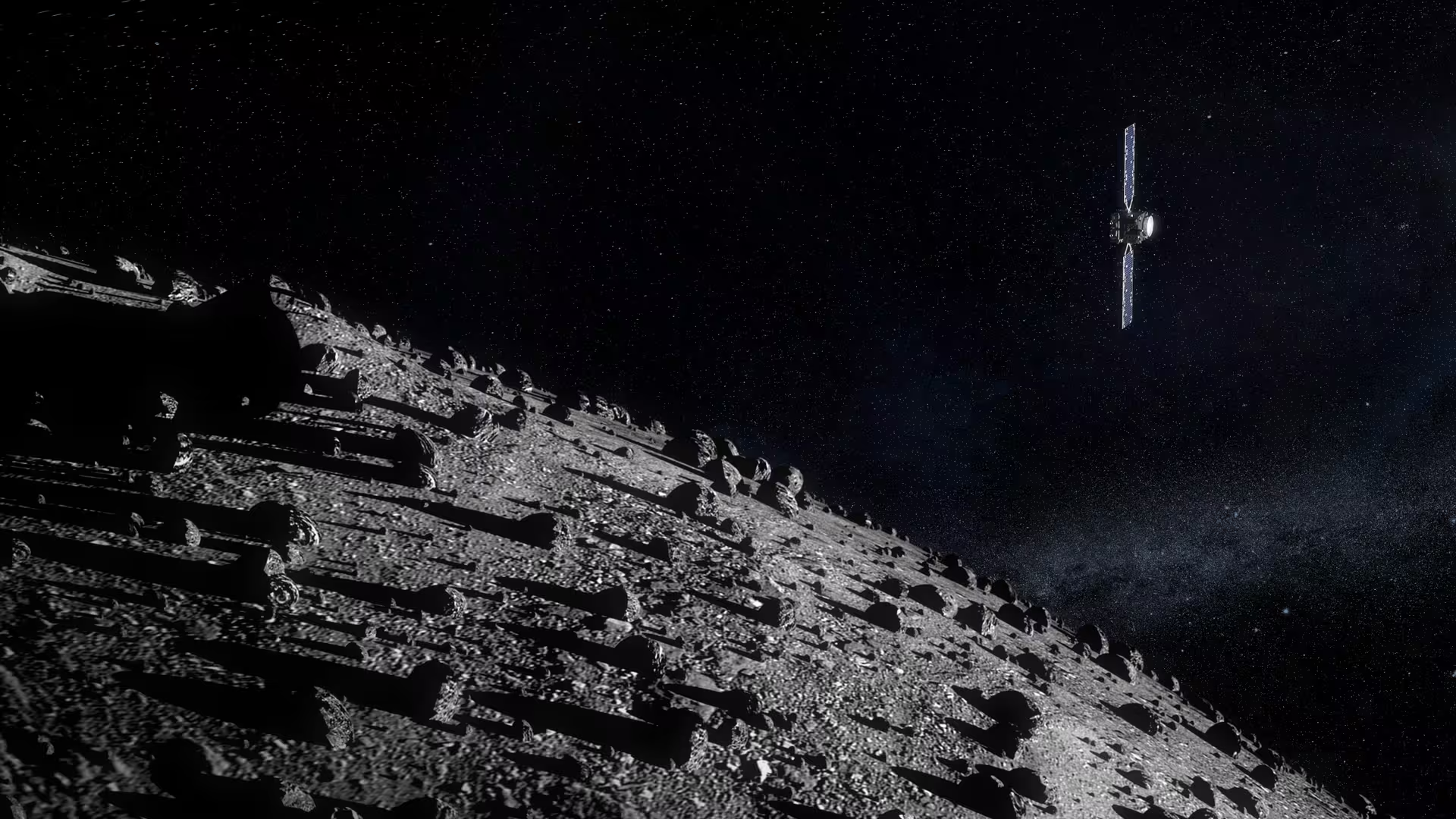
Following the deployment of the CubeSats, the mission plan calls for Hera to perform increasingly bold maneuvers, eventually reaching a distance of four kilometers and, in an experimental final phase, coming as close as one kilometer to Dimorphos. This operation represents a coordinated effort between teams at ESOC, the CubeSat Mission Operation Centre in Redu, Belgium, and the French space agency (CNES) in Toulouse, all working to maintain the delicate balance of three spacecraft orbiting two small, dynamic worlds.
This article has been fact checked for accuracy, with information verified against reputable sources. Learn more about us and our editorial process.
Last reviewed on .
Article history
- Latest version
Cite this page:
- Posted by Karan Das