NASA Is Simplifying Its Moon Spacesuit Design To Keep The Artemis Timeline On Track
NASA and Axiom Space are developing a streamlined lunar spacesuit to ensure the Artemis missions stay on track for a successful return to the Moon.
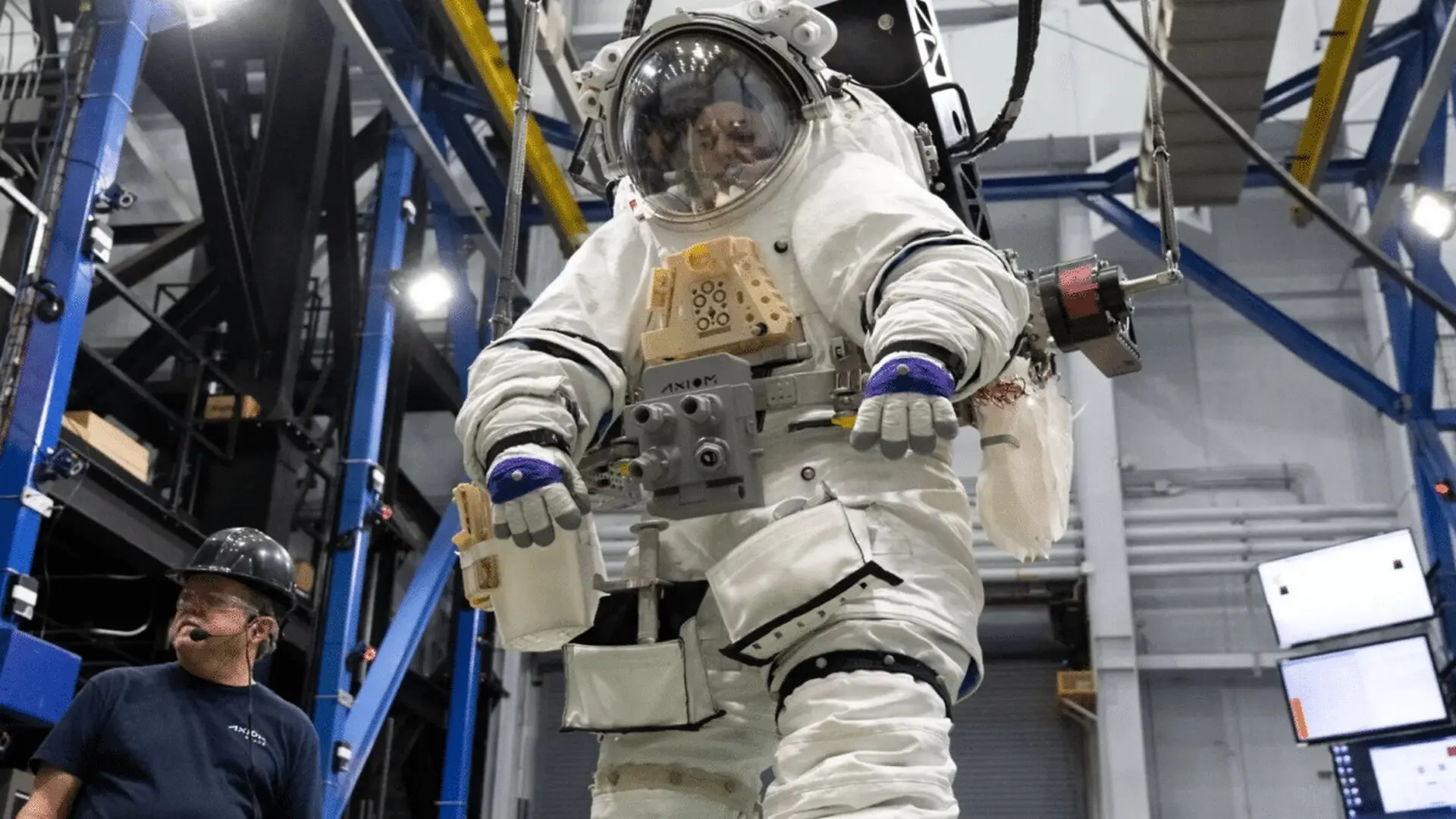
NASA is recalibrating its technical requirements for the next-generation lunar spacesuit, a strategic pivot designed to prevent development hurdles from jeopardizing the timeline for the inaugural Artemis Moon landings. Under this new initiative, Axiom Space is exploring a streamlined iteration of its Axiom Extravehicular Mobility Unit (AxEMU), a move that could potentially accelerate the return of astronauts to the lunar surface while the company continues to refine the fully featured version of the suit.
Shifting Development Priorities for Artemis Missions
The decision to ease certain certification standards reflects an evolving strategy to align hardware capabilities more closely with the immediate goals of the NASA’s Artemis program. By distinguishing between the rigorous, long-term durability required for extended lunar exploration and the more modest demands of initial sorties, NASA aims to expedite the qualification process. This nuanced approach allows the agency to defer some of the most stringent, time-consuming testing protocols for later missions, focusing instead on the specific operational necessities of the first crewed landing.
As reported by SpaceNews, Axiom Space confirmed in early September that NASA has commissioned a study into a simplified configuration dubbed the “Sortie” version of the AxEMU. The adjustment follows internal guidance from NASA’s Aerospace Safety Advisory Panel, which underscored the need to tailor requirements to near-term mission parameters. During a late-August meeting, panel member Charlie Precourt emphasized that qualifying the initial suits to standards intended for multi-year usage is an unnecessary constraint for early, short-duration flights.
“Requirements are being adjusted to reflect near-term mission needs, including shortening the spacesuit certification duration requirements, rather than qualifying the initial suit to longer-duration standards that won’t be required for the first few missions,” said Charlie Precourt, a member of the panel.
Engineering a Leaner Lunar Suit
Speaking at the International Astronautical Congress in Antalya, Turkey, on October 6, Axiom Space president and CEO Jonathan Cirtain explained that the Sortie configuration does not necessitate a complete architectural overhaul. Instead, engineers are scrutinizing the baseline design to identify which subsystems can be scaled back or streamlined while still meeting the safety benchmarks for early Artemis operations.
“NASA has now defined the architecture requirements for Artemis 4. The consequence of that is that it now lets us tailor the technology of the suit to meet those specific objectives,” he said. “With those mission requirements, what of the baseline suit’s full capabilities is needed to meet the sortie configuration?”
The technical challenge lies in managing redundancy. The AxEMU is designed as an integrated system, meaning that modifications to one component often ripple across the entire suit’s performance profile. Axiom is currently evaluating whether it can reduce the quantity of specific components—rather than replacing entire systems—to achieve the desired reduction in complexity without compromising the structural integrity or safety of the suit.
Testing Procedures in Low Earth Orbit and Beyond
To validate the hardware, Axiom Space is targeting a significant test aboard the International Space Station (ISS) in 2027. This planned excursion will see two astronauts perform a limited set of tasks, with one wearing the new Axiom gear and the other in a traditional NASA suit. By observing the suit’s performance in the vacuum of space, engineers will gain critical operational data that ground-based simulations cannot replicate. Axiom still expects to deliver a fully qualified version of the primary AxEMU to NASA by the end of 2026.
Beyond orbital testing, the company is also looking at the Artemis 3 mission as a platform for engineering data. Cirtain noted that an engineering model of the suit could potentially fly inside the cabin of a Blue Origin lunar lander. This would allow the team to subject the hardware to the intense mechanical stresses of launch and space travel—such as high-frequency vibration and G-forces—without the risks associated with a live, unpressurized spacewalk. This flight would also serve as a vital evaluation of how crews manage the logistical challenge of donning and doffing the equipment within the tight quarters of a lunar lander.

The Intersection of High Fashion and Aerospace
A notable, if unconventional, element of the AxEMU development is the involvement of Italian fashion house Prada. While the collaboration initially surprised observers, the luxury brand’s expertise in textile engineering and material science has proven highly relevant. Prada has been instrumental in designing the suit’s undergarment—the vital layer responsible for cooling and ventilation.
In the extreme thermal environment of the Moon, effective heat management is a life-critical function. By leveraging techniques used in high-performance apparel, the partnership aims to create a cooling system that manages body heat effectively while allowing for the range of motion necessary for lunar exploration. This blend of aerospace rigor and advanced garment construction represents a modern approach to the complex challenge of human-centered engineering in space.
Axiom Space working to revise lunar spacesuit for early Artemis missions https://t.co/mbHTFxrrXj https://t.co/yWpELC4whW
— SpaceNews (@SpaceNews_Inc) October 7, 2026
This article has been fact checked for accuracy, with information verified against reputable sources. Learn more about us and our editorial process.
Last reviewed on .
Article history
- Latest version
Cite this page:
- Posted by Karan Das