Solar Orbiter Just Uncovered Thousands of Hidden Waves Powering the Sun
A solar spacecraft has uncovered a long-hidden phenomenon on the Sun, revealing new insights into the mysterious behavior of our star.
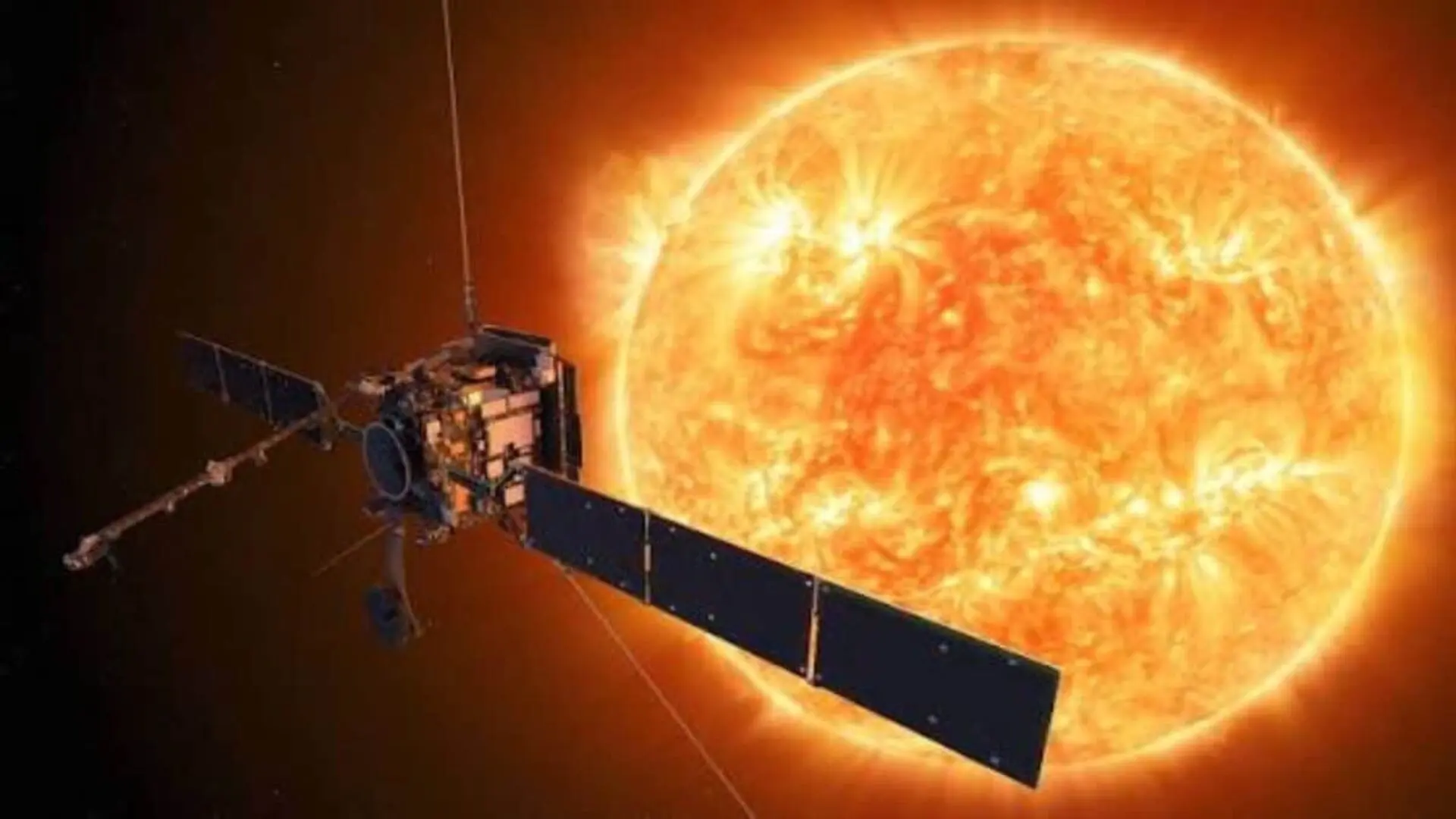
A team of researchers led by Yuhang Gao and Professor Hui Tian from Peking University has identified thousands of high-frequency magnetic waves within the sun’s polar atmosphere that had previously evaded detection. By analyzing high-resolution data from the Solar Orbiter spacecraft, the team revealed that these rapid, small-scale movements in solar plumes were largely hidden from earlier instruments due to limitations in imaging speed and spatial resolution.
The solar poles are defined by complex magnetic environments known as polar coronal holes, where magnetic field lines extend into the vacuum of space. These regions serve as the launchpads for the solar wind, the stream of charged particles that continuously flows from the sun. Despite extensive study, the mechanisms responsible for accelerating this wind and heating the corona to temperatures exceeding one million degrees Celsius have remained elusive.
High-Resolution Imaging Reveals Hidden Solar Dynamics
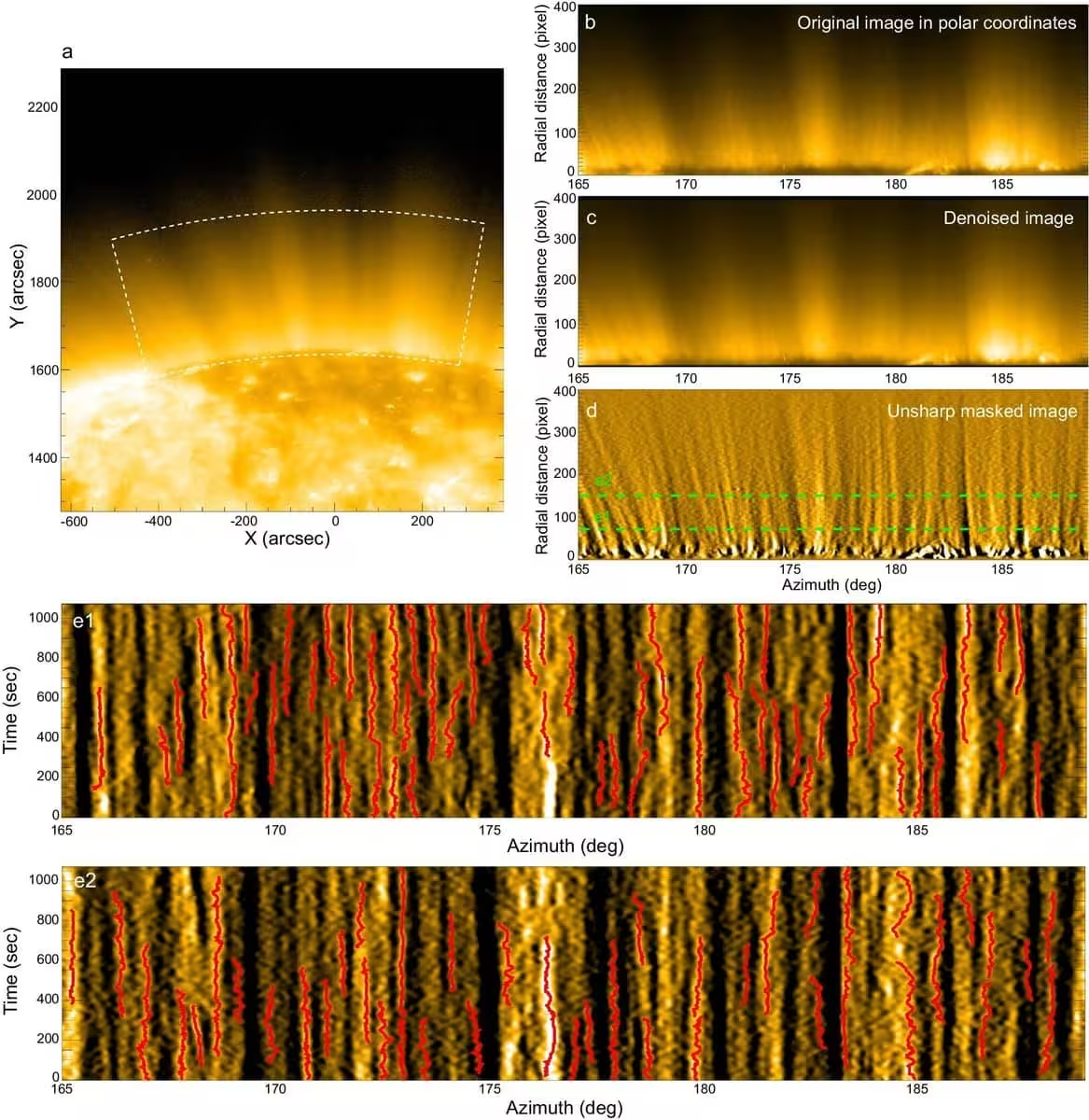
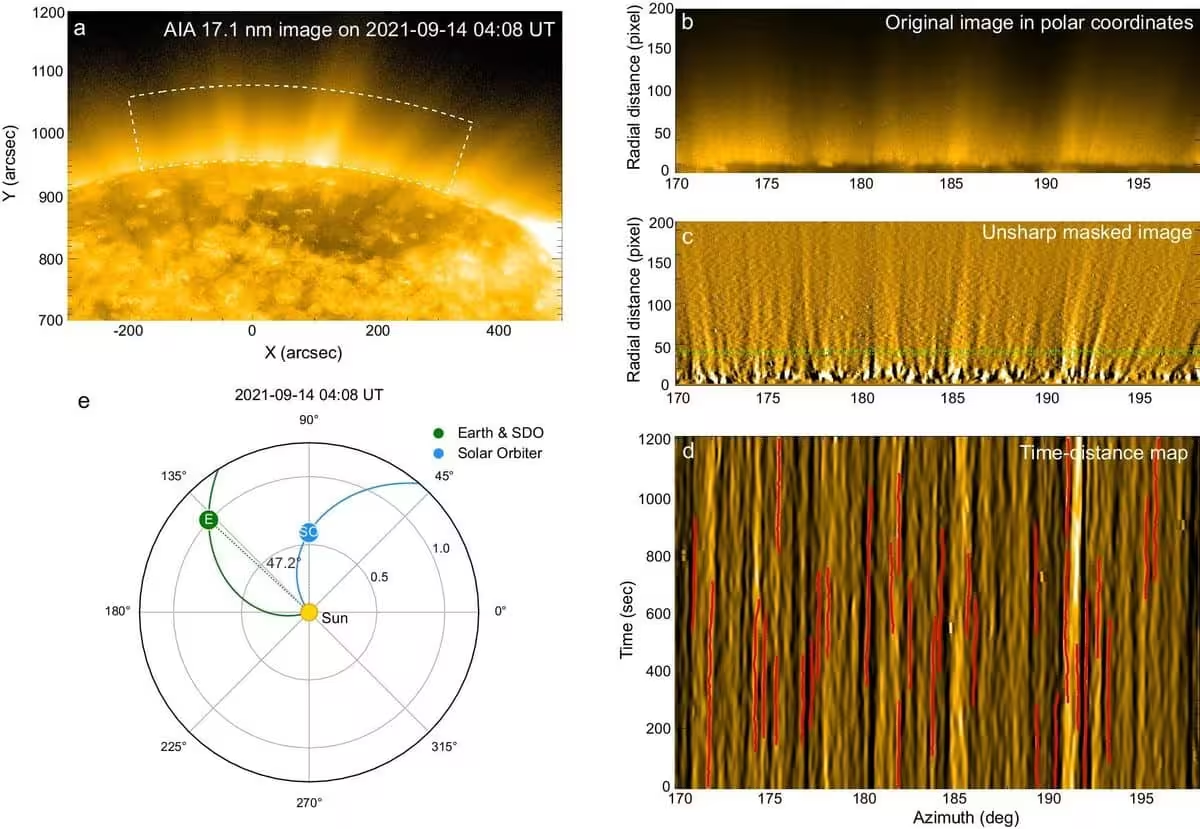
The research, published in the National Science Review, relied on a comparative analysis between the Solar Orbiter and NASA’s Solar Dynamics Observatory (SDO), specifically targeting data gathered in September 2021. The investigation focused on solar plumes, which are elongated magnetic features emanating from the north pole.
The technical disparity between the two observatories proved pivotal. The Extreme Ultraviolet Imager (EUI) on the Solar Orbiter captures imagery every five seconds with a resolution of 420 kilometers per pixel. In contrast, the SDO operates on a 12-second cadence with a resolution of approximately 1,100 kilometers per pixel.
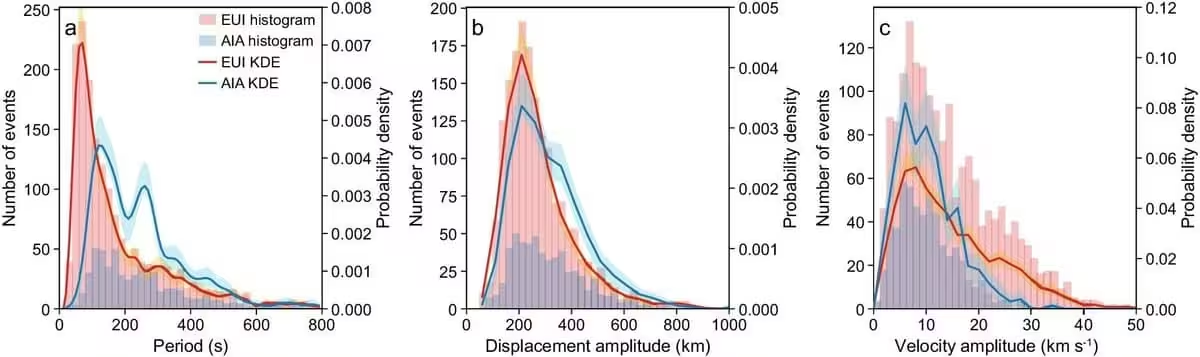
Utilizing the Northumbria University Wave Tracking (NUWT) system, the researchers identified 2,318 distinct wave events in the Solar Orbiter data, a significant increase over the 560 events detected by SDO. The data revealed that 38% of the waves observed by the EUI possessed periods of less than 100 seconds, compared to only 9% for the SDO.
Significant Energy Transport in the Solar Atmosphere
The study further observed that plasma structures within these plumes moved at an average speed of 15.4 kilometers per second, notably higher than the 9.9 kilometers per second recorded by the SDO. This increased velocity indicates that these waves transport roughly 2.6 times more power than previously estimated.
While the exact origins of these high-frequency waves remain under investigation, researchers suggest several contributing factors. Magnetic reconnection, the process by which magnetic field lines reorganize and release energy, is a primary candidate. Additionally, spicules—narrow jets of plasma shooting from the lower atmosphere—may act as conduits for these waves. Turbulence, which causes larger waves to cascade into smaller, more rapid oscillations, is another potential mechanism.
These waves appear to distribute energy through processes like phase mixing and resonant absorption, potentially providing the thermal energy required to sustain the corona’s extreme temperatures. Furthermore, this energy may facilitate the kinetic acceleration of ions as they depart the solar surface, contributing to the fast solar wind.
Although the measured energy remains below the levels predicted by some theoretical models for solar wind acceleration, the findings demonstrate that significant solar activity has been overlooked due to technical constraints. Future missions, such as the Solar Polar-orbit Observatory (SPO) currently scheduled for 2029, promise to offer deeper insights into these phenomena from unique vantage points above the sun’s poles.
This article has been fact checked for accuracy, with information verified against reputable sources. Learn more about us and our editorial process.
Last reviewed on .
Article history
- Latest version
Reference(s)
- Gao, Yuhang., et al. “High-frequency magnetohydrodynamic waves with substantial energy in the solar polar corona.” National Science Review, vol. 13, no. 14, June 24, 2026 Oxford University Press (OUP), doi: 10.1093/nsr/nwag370. <https://dx.doi.org/10.1093/nsr/nwag370>.
- <https://www.esa.int/Science_Exploration/Space_Science/Solar_Orbiter>.
- “SDO | Solar Dynamics Observatory.” <https://sdo.gsfc.nasa.gov/>.
- “The Solar Polar Orbiter - TRS - Science Portal.” TRS <https://sci.esa.int/web/trs/-/36025-the-solar-polar-orbiter>.
Cite this page:
- Posted by Karan Das