Mysterious Black Spheres Washing Up On Australian Beach Identified As Space Debris
A mysterious orb split into six, triggering a major hazmat response before investigators uncovered a surprising explanation linked to Earth’s upper atmosphere.
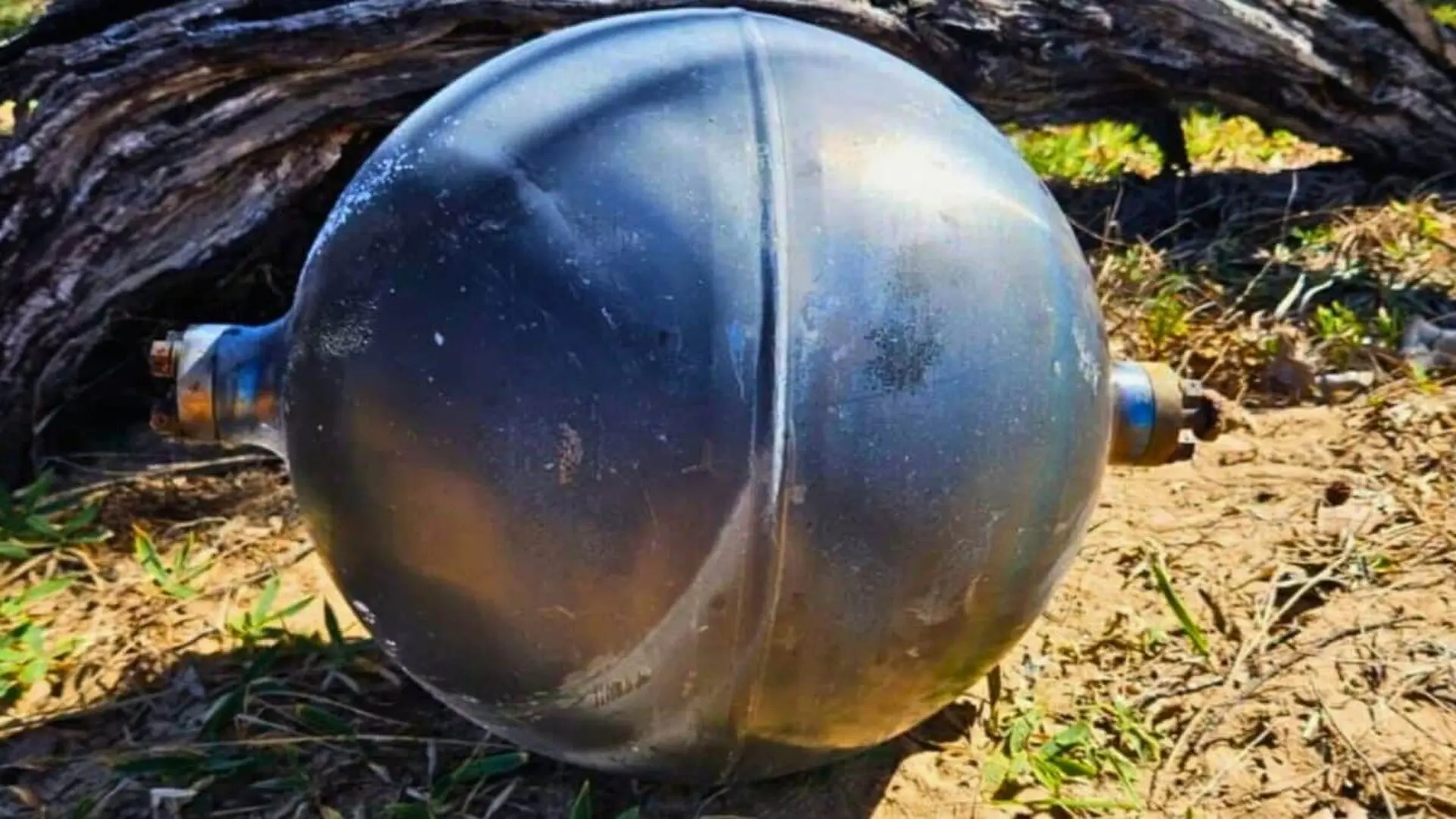
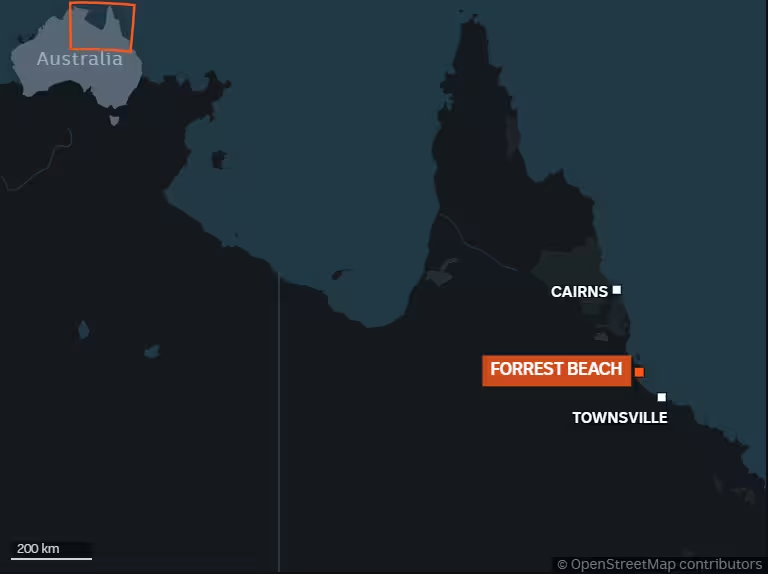
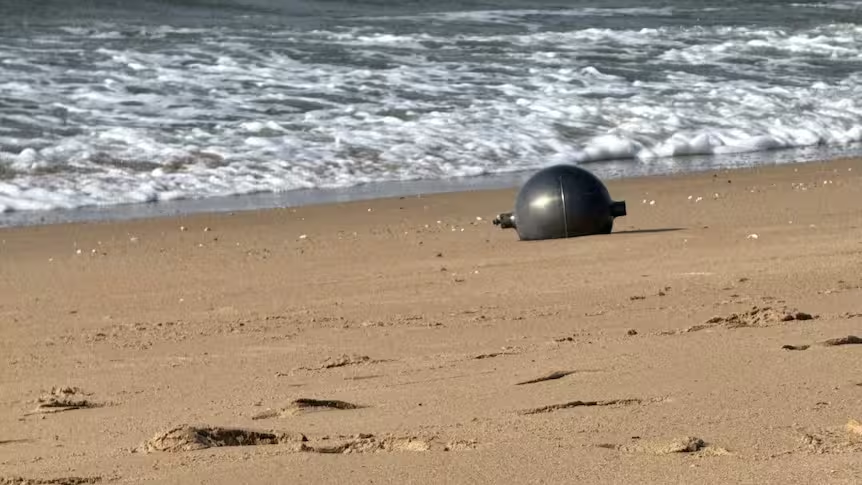
A routine day of crab fishing on a remote stretch of Forrest Beach in north Queensland turned into an international mystery in early July, when a local fisherman discovered a dark, spherical object washed up on the sand. The discovery triggered a significant emergency response, with local authorities initially cordoning off an 800-metre radius to manage potential hazards.
The situation escalated quickly as more objects appeared. Trevor Kyle, a local resident who assisted police at the site, witnessed additional spheres emerging from the surf. By the end of that first weekend, a total of six mysterious, metallic vessels had been recovered by crews, who secured the items in drums while local residents faced temporary evacuations.
On July 6, the Australian Space Agency issued a formal assessment, identifying the items as likely pressure vessels from a space launch vehicle. These components are critical parts of rocket fuel systems, and while the agency deemed the recovered hardware safe, it continues to coordinate with international partners to determine the exact origin of the debris and the specific rocket body from which they originated.
Engineering for the Heat of Re-entry
The survival of these vessels during a descent through Earth’s atmosphere is a testament to their robust construction. While the immense heat and atmospheric drag of re-entry typically incinerate most of a rocket’s structure, pressure vessels are designed to withstand extreme stresses. Space archaeologist Alice Gorman of Flinders University noted that these items, colloquially known as “space balls,” are among the most frequent remnants of orbital hardware discovered on Earth’s surface.
Their appearance on a beach does not necessarily indicate a nearby re-entry point. Because these vessels are buoyant when empty, they can drift across vast stretches of ocean, carried by currents far from their initial landing site. For the community at Forrest Beach, the arrival of the black spheres was a startling, albeit not entirely unprecedented, event in a region where the ocean frequently deposits everything from weather buoys to lost maritime equipment.
A Recurring Global Phenomenon
Australia has long served as a landing ground for space debris, with high-profile historical incidents including the 1979 return of the Skylab space station, as well as more recent debris linked to the SpaceX Dragon trunk in 2022 and a launch vehicle vessel in 2023. These events have prompted the development of the AUSSPREDPLAN, a national framework designed to help state and territory authorities manage the recovery and technical evaluation of fallen space hardware.
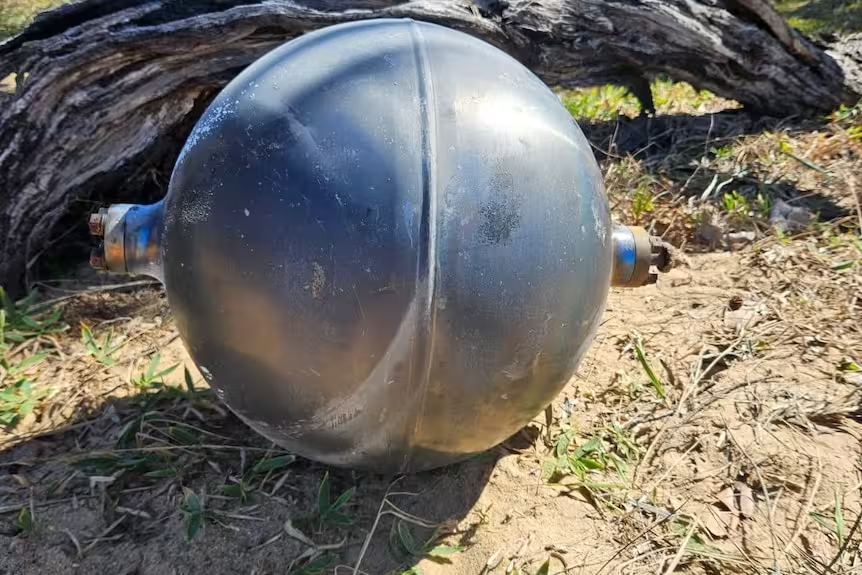
While the immediate area has been cleared, officials warn that further debris may surface. The Australian Space Agency advises members of the public to treat any suspected space hardware as potentially hazardous, urging them to maintain a safe distance and alert local authorities rather than attempting to handle or move the objects themselves. Beyond public safety, the identification of the debris carries legal weight: under international space treaties, Australia must report such discoveries to the original launching state, which may subsequently request the return of the hardware.
This article has been fact checked for accuracy, with information verified against reputable sources. Learn more about us and our editorial process.
Last reviewed on .
Article history
- Latest version
Reference(s)
- “Discovery Of Space Debris In Australia.” <https://www.space.gov.au/discovery-of-space-debris-in-australia>.
Cite this page:
- Posted by Karan Das