Mystery Black Spheres on Queensland Beach Identified as Rocket Debris From Space
Six mysterious black spheres wash up on an Australian beach, prompting a hazmat alert before investigators discover an extraordinary offshore origin.
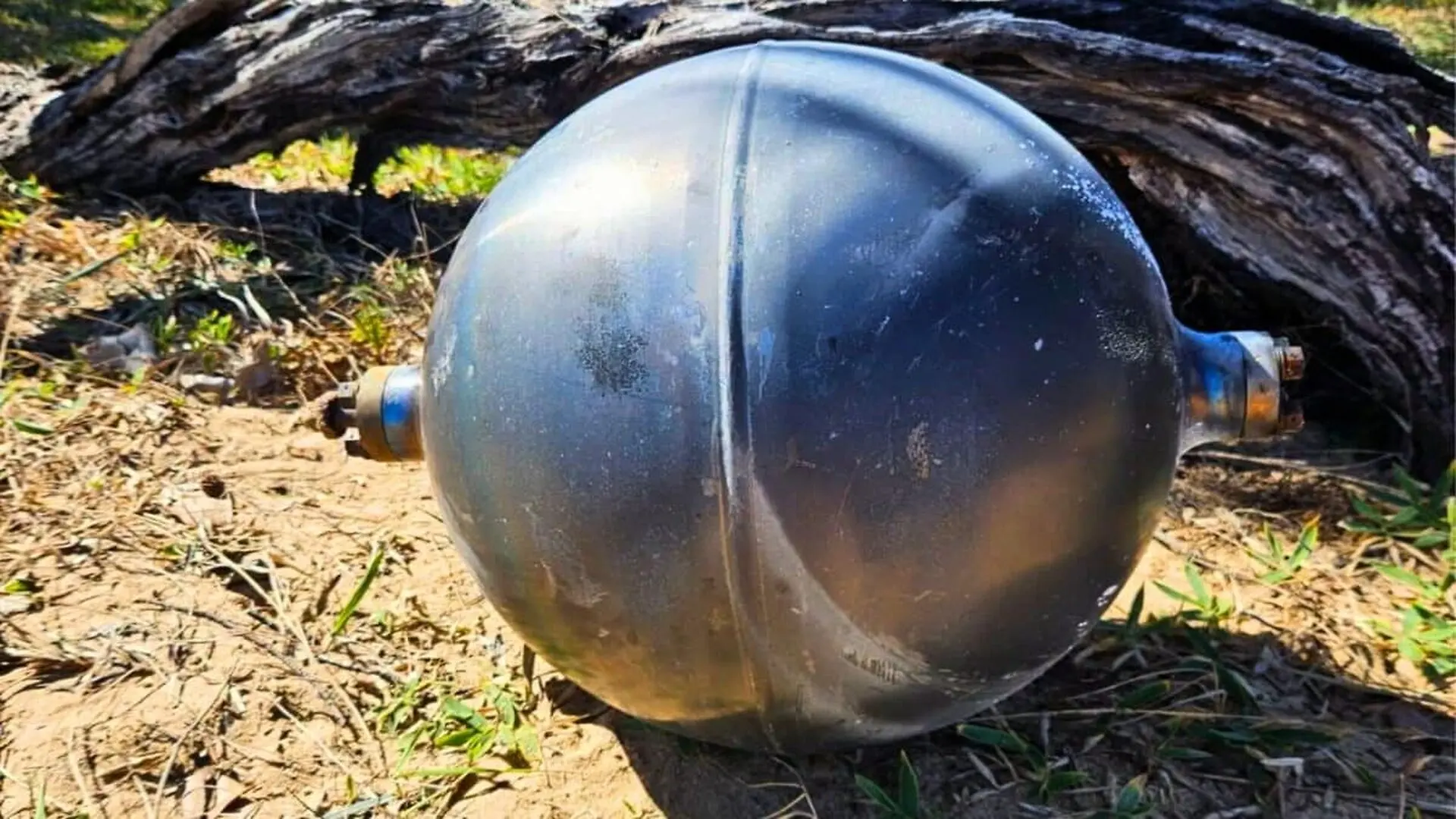
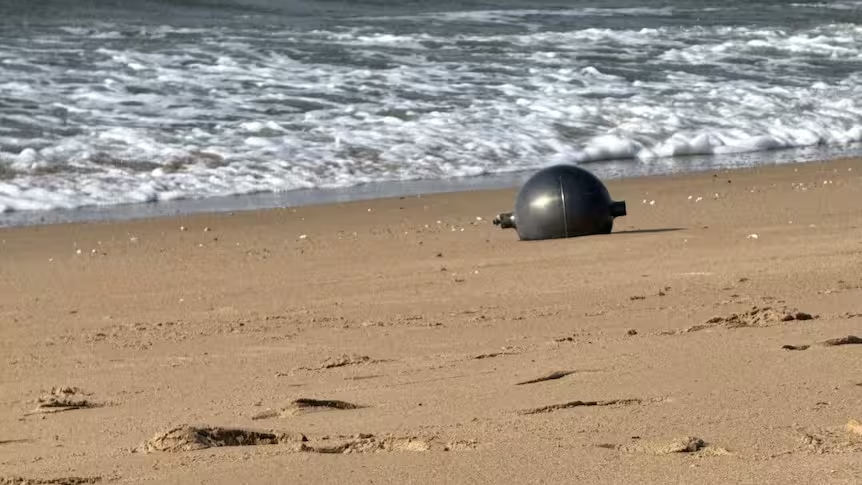
Early on July 6, a fisherman near Forrest Beach, north Queensland, stumbled upon a dark, smooth sphere that seemed out of place among the sand and driftwood. The object’s metallic sheen and perfect roundness prompted immediate alerts from local authorities.
Police instructed the crew to abandon their gear and clear the shoreline, while emergency responders in hazardous‑material suits established a cordoned‑off area. As the scene grew, additional units arrived, and a local resident, Trevor Kyle, recounted how the incident escalated after officers reported the find up the chain of command. “You could see that it was getting bigger and bigger,” he told ABC News.
Within hours, three more black spheres emerged from the surf, startling onlookers. “I wasn’t looking for them, they just jumped out of the water,” Kyle added. By the end of the day, six of the objects had been secured by authorities.
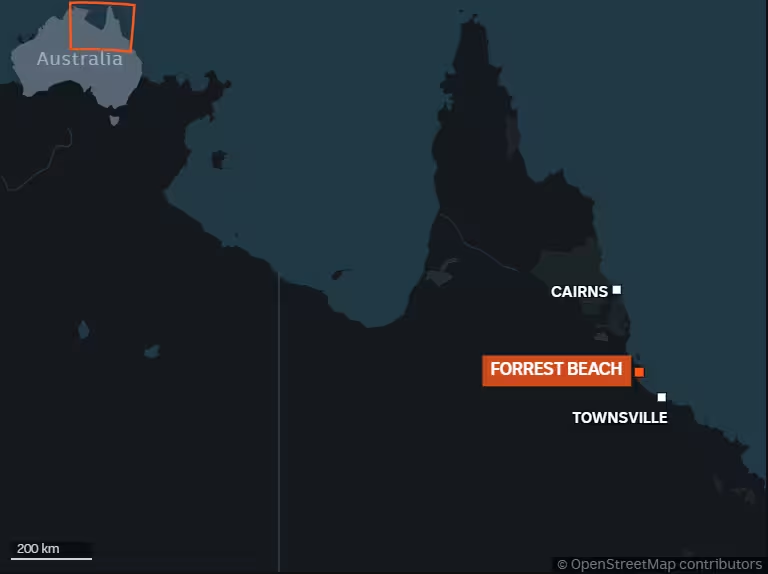
The Australian Space Agency later announced that the recovered items are most likely pressure vessels from a space launch vehicle, matching debris patterns from a recent foreign rocket re‑entry. While investigators continue to work with overseas partners to pinpoint the launch vehicle and its originating nation, the agency emphasized that the objects posed no immediate danger.
Local Beach Turns Into a Scientific Investigation Hub
Forrest Beach residents are no strangers to marine litter; overturned boats, buoys, and even a yacht have washed ashore in the past, according to takeaway owner Lisa Scobie. However, the black spheres stood out for their pristine condition and unfamiliar origin, sparking speculation across community social‑media channels while emergency crews assessed potential hazards.
“I never imagined something like this could fall from the sky,” Scobie remarked. The objects were later declared safe, yet officials warned that more potentially hazardous fragments could still be drifting along the coast.
Why Reinforced Tanks Survive Re‑Entry
Pressure vessels are robust containers designed to hold gases or liquids at high pressure, a critical component of rocket propulsion systems. Their thick, heat‑resistant construction enables them to endure the intense thermal and mechanical stresses of atmospheric re‑entry, often outlasting lighter structural elements that vaporize or fragment.
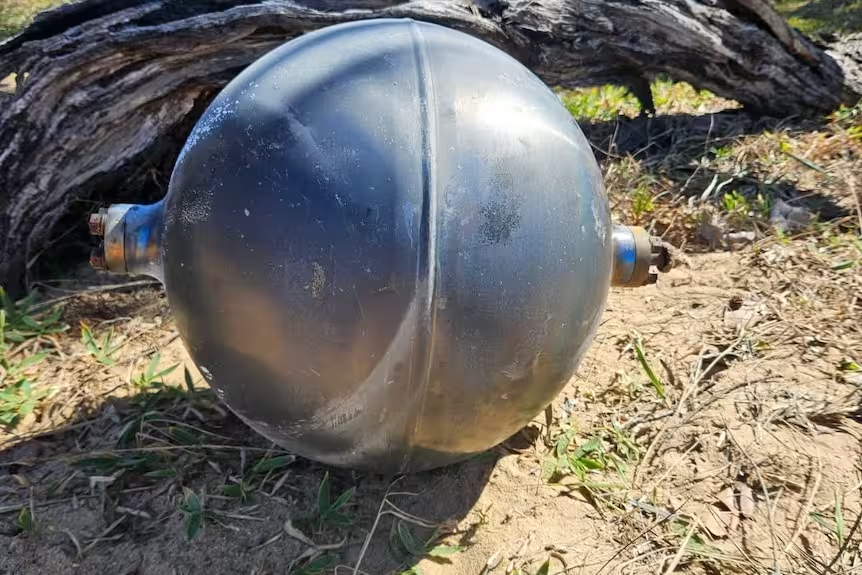
Flinders University space archaeologist Alice Gorman described the Queensland findings as classic examples of “space balls,” a term for spherical pressure vessels that frequently survive re‑entry due to their high melting points. “These parts of the fuel system often survive because their melting points are higher than the temperature coming back through the atmosphere,” she explained.
How Empty Tanks Reach the Shoreline
Once emptied, such vessels can become buoyant, allowing ocean currents, wind, and wave action to transport them far from the original breakup zone before they eventually wash up on coastlines. Over time, exposure to seawater can erode surface markings, complicating efforts to trace the debris back to its launch source.
“Things like these pressure vessels can be buoyant if there is no fuel in them, so they are likely to wash ashore,” Gorman noted, highlighting the challenge of identifying the precise origin of recovered fragments.

Australia has a documented history of space‑debris encounters, including Skylab fragments that landed in Western Australia in 1979, a SpaceX Dragon component recovered in New South Wales in 2022, and a pressure vessel found north of Perth in 2023. In October 2025, authorities identified carbon‑fiber remnants from a Chinese Jielong‑3 rocket in Western Australia, a case also examined by Gorman in The Conversation.
Australia’s Protocol for Unidentified Space Objects
When an unknown object arrives on land or emerges from the sea, emergency services treat it as a potential safety hazard. Rocket remnants may retain chemical residues, sharp edges, or damaged composites, even if they appear empty.
The Australian Space Agency advises the public to avoid handling or moving suspected space‑flight debris and to contact authorities immediately. The response is coordinated under the Australian Government Space Re‑entry Debris Plan (AUSSPREDPLAN), which supplies technical expertise to state agencies, assists in hardware identification, and liaises with international partners when foreign launch vehicles are involved.
Most re‑entering objects either burn up or land in pre‑designated recovery zones, but uncontrolled entries can scatter fragments across wide areas. The six spheres recovered at Forrest Beach illustrate how such debris can surface unexpectedly, prompting swift scientific and safety assessments.
This article has been fact checked for accuracy, with information verified against reputable sources. Learn more about us and our editorial process.
Last reviewed on .
Article history
- Latest version
Reference(s)
- Chomicki, Chloe. “Australia's Space agency says beach objects likely fuel pressure vessels from launch vehicle.”, July 6, 2026 ABC News <https://www.abc.net.au/news/2026-07-06/qld-space-agency-identifies-source-of-mysterious-fuel-vessels/106883746>.
- Gorman, Alice. “How does a flaming piece of space junk end up on Earth? A space archaeologist explains.”, October 21, 2025 The Conversation, doi: 10.64628/AA.d4ekrvjeg. <https://theconversation.com/how-does-a-flaming-piece-of-space-junk-end-up-on-earth-a-space-archaeologist-explains-267856>.
Cite this page:
- Posted by Vikram Desai